The Electrical Emergencies Chicago Homeowners Can’t Afford to Mishandle
When you need an emergency electrician, here’s what matters most:
| Question | Quick Answer |
|---|---|
| What counts as an emergency? | Burning smells, sparking outlets, exposed wires, partial power loss, or buzzing panels |
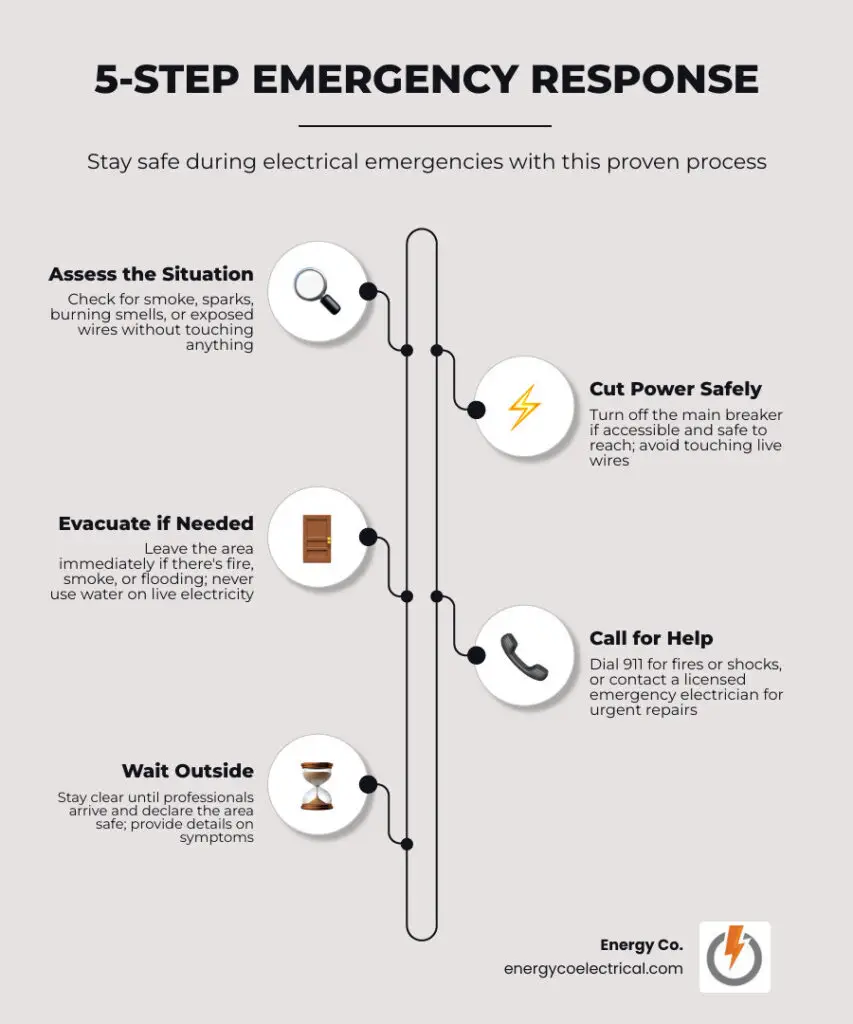
| What should you do first? | Turn off the main breaker if safe, evacuate if there’s smoke or fire, call 911 if needed |
| Can you fix it yourself? | No — DIY electrical repairs during emergencies are dangerous and often illegal |
| How fast can help arrive? | Typically 30–90 minutes depending on your location and time of day |
| What does it cost? | Diagnostic visits usually run $150–$300, with repairs ranging from $200 to $800 or more |
Electrical problems cause roughly one-third of all structure fires in the US. In Chicago, where many homes and commercial buildings run on older wiring, that risk is even harder to ignore.
The scary part? Most electrical emergencies don’t start dramatically. They start with a flicker. A faint burning smell. A breaker that trips once too often. And then — if the wrong decisions are made — they escalate fast.
This guide covers the five most common mistakes people make when facing an electrical emergency, and exactly how to avoid them.
I’m Michał Napieralski, a licensed electrician and the expert behind Energy Co., specializing in residential and commercial electrical services across the Chicago suburbs — including emergency electrician response for everything from panel failures to urgent rewiring. I’ve seen how the wrong move during an electrical emergency can turn a small problem into a dangerous — and expensive — disaster.
Mistake 1: Ignoring Early Warning Signs of System Failure
The most dangerous mistake you can make is assuming that a small electrical “quirk” will resolve itself. In our experience servicing older properties in areas like Cicero and Arlington Heights, electrical systems rarely give a “final warning” before a total failure or a fire.
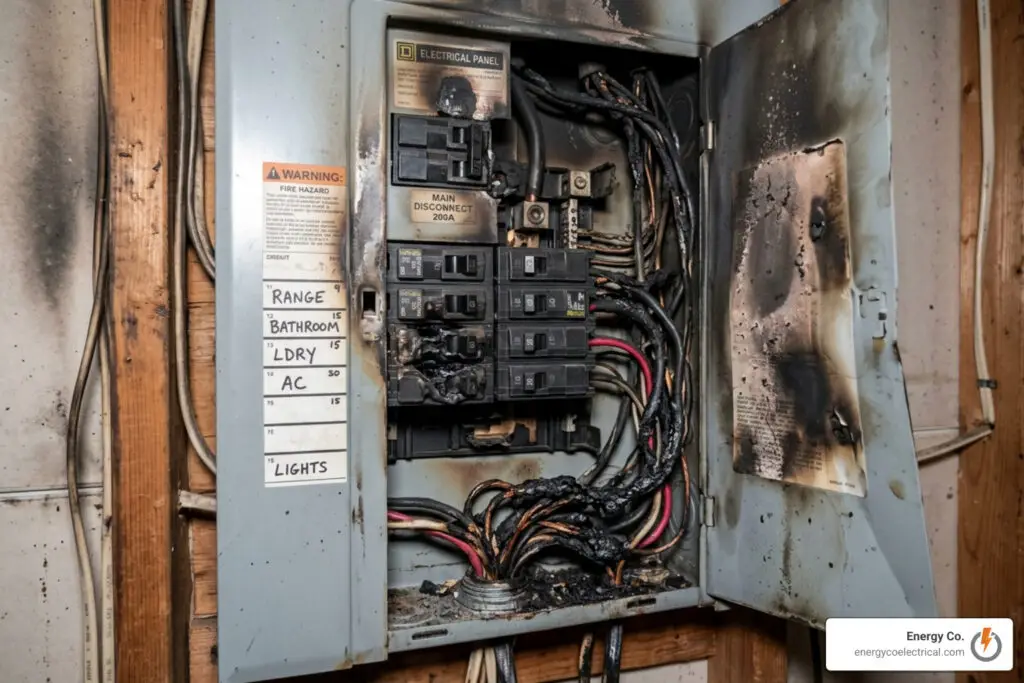
Ignoring these symptoms is like ignoring a chest pain—it might be nothing, but it’s usually a sign of a deeper, more systemic issue.
- Burning Smells: If you detect an ozone-like odor or the smell of burning plastic near an outlet or your panel, this is an immediate red flag. It often indicates that plastic insulation is melting due to a short circuit or an overloaded wire.
- Flickering Lights: While sometimes caused by a loose bulb, persistent flickering or dimming (especially when an appliance like the AC kicks on) suggests your system is struggling to handle the load.
- Buzzing Sounds: Electricity should be silent. A buzzing or humming sound coming from a switch or the breaker box often points to a loose connection or a failing breaker.
- Hot Outlets: If a switch plate or outlet feels warm to the touch, or if you see soot or discoloration around the plug holes, stop using it immediately.
For more details on how to handle these specific component failures, check out our Circuit Breaker Repair guide.
Comparing Normal vs. Emergency Electrical Signs
| Sign | Normal / Non-Emergency | Emergency (Call Now) |
|---|---|---|
| Breaker Trips | Once every few months after plugging in a vacuum. | Trips immediately after being reset or trips multiple times a day. |
| Lights | A slight flicker during a massive thunderstorm. | Persistent flickering or dimming accompanied by a buzzing sound. |
| Outlets | A device plug feels slightly warm after hours of use. | The outlet plate is hot, discolored, or emitting a “fishy” smell. |
| Power Loss | The entire neighborhood is dark (Utility issue). | Only your house is dark, or only half of your house has power. |
When to Call an Emergency Electrician
Knowing when to pick up the phone can save your home. You should reach out for 24/7 Emergency Electrical Services if you encounter:
- Partial Power Outages: If your neighbors have lights but you don’t, or if half your house is dark, you likely have a “dropped leg” or a failed main breaker.
- Sparking Switches: Seeing blue or orange sparks when you flip a switch or plug in a toaster is a sign of arcing.
- Exposed Wiring: Damaged or frayed wires, especially after a storm or due to rodent damage, are an immediate shock and fire hazard.
- Wet Panels: If your basement in Hoffman Estates or Schaumburg floods and water reaches the electrical panel, do not touch anything. Moisture causes rapid corrosion and creates a deadly electrocution risk.
Mistake 2: Attempting Dangerous DIY Electrical Repairs
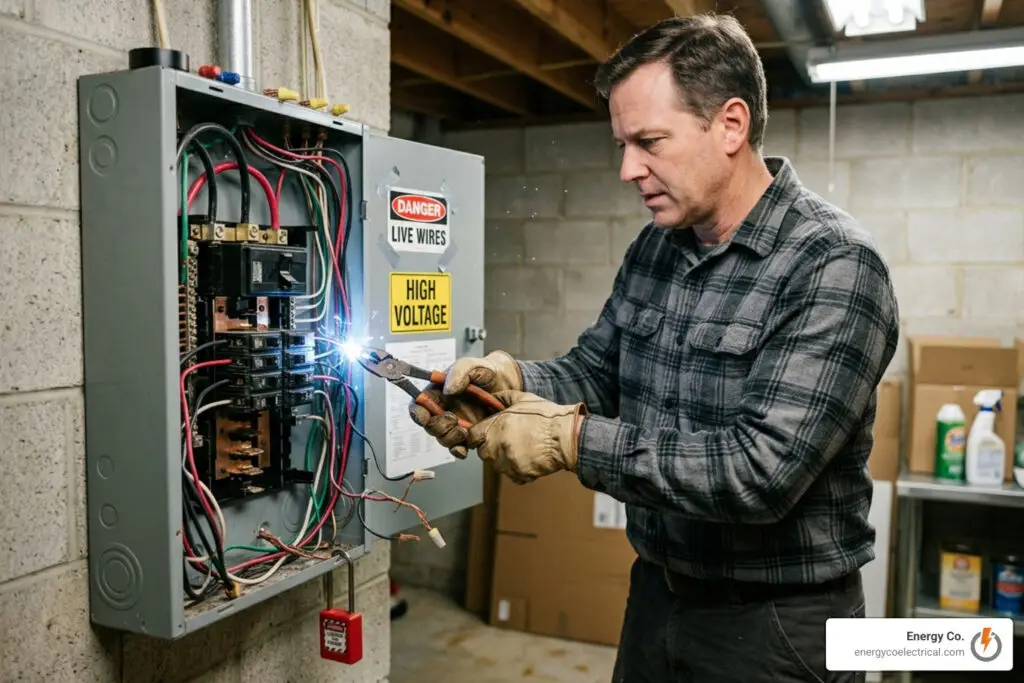
Unlike a leaky faucet or a clogged drain, electricity doesn’t give you a second chance. Here is why DIY is a disaster waiting to happen:
- Arc Faults and Shocks: A simple slip of a screwdriver can cause an arc flash—a burst of heat and light that can reach temperatures hotter than the surface of the sun. This can cause severe burns or instant cardiac arrest.
- Fire Risk: Even if you “fix” the problem and the lights come back on, a loose wire or an improperly rated breaker can generate heat over time, leading to a house fire days or weeks later.
- Code Compliance: Chicago and the surrounding suburbs have strict building codes to ensure safety. DIY repairs often violate the National Electrical Code (NEC). If you ever sell your home, these “hacks” will be flagged during inspections, and your insurance company may deny claims if they find unpermitted work caused a fire.
When it comes to your family’s safety, leave it to the pros who handle Residential Electrical Services every day. We have the specialized diagnostic tools—like thermal imagers and multimeters—to find the “hidden” problems that a pair of pliers simply can’t fix.
Mistake 3: Hiring Unlicensed or Uninsured Technicians
In an emergency, you might be tempted to call the first “handyman” who answers the phone. This is a massive liability risk. In the Chicagoland area, a reputable emergency electrician must carry specific credentials to protect you and your property.
The Dangers of Unlicensed Labor
If an unlicensed worker is injured on your property in Elk Grove Village or Palatine, you could be held liable for their medical bills. Furthermore, if their work causes a fire, your homeowner’s insurance might refuse to pay because the work wasn’t performed by a licensed professional.
At Energy Co., we pride ourselves on maintaining the highest Professional Electrical Standards. This includes:
- Full Licensing and Bonding: Ensuring we are recognized by local municipalities.
- Liability Insurance: Protecting your home and our team.
- NFPA 70E Training: This is the gold standard for electrical safety in the workplace, ensuring our technicians know how to handle high-voltage emergencies safely. You can learn more about these safety requirements through the NFPA 70E standard.
- Background Checks: You should feel safe knowing who is entering your home at 3:00 AM.
Choosing a Reliable Emergency Electrician
When you’re searching for help, look for these markers of a quality service:
- Upfront Pricing: Avoid companies that won’t give you a clear diagnostic fee over the phone. You deserve to know what the visit costs before the van pulls into your driveway.
- Local Reviews: Check Google reviews for Chicago-specific feedback. For example, local services in the Northwest Suburbs often have ratings like 4.5 or 4.9 stars based on hundreds of verified customers.
- 24/7 Availability: A true emergency service doesn’t have an “after-hours” voicemail. You should be able to speak to a live person.
- Response Times: In primary service areas like Roselle or Rolling Meadows, a reliable team should aim to be on-site within 30 to 60 minutes.
To see the full scope of what a professional team can do, visit Our Services.
Mistake 4: Mismanaging Electrical Fires and Water Intrusion
Panic is the enemy of safety. When water and electricity mix, or when a wire actually catches fire, many people make the mistake of using the wrong tools to fight back.
The “Never” List for Electrical Fires
- NEVER use water on an electrical fire. Water conducts electricity. If you throw a bucket of water on a sparking outlet, you could be electrocuted, and the fire will likely spread.
- NEVER use a standard fire extinguisher unless it is rated Class C (specifically for electrical fires).
- NEVER stay in the house if you see smoke. Electrical fires move behind walls through the studs and insulation. By the time you see flames, the structure may already be compromised.
The Right Way to Respond
- Call 911 First: If there are flames or heavy smoke, the fire department is your first call.
- Cut the Power: If—and only if—it is safe to reach your main breaker panel without walking through water or getting near the fire, turn off the main power switch.
- Check Your Smoke Detectors: Statistics show that smoke detectors should be replaced every five years to ensure reliability. They are your first line of defense during the night.
- Manage Water Intrusion: If your basement in Streamwood or Hanover Park is flooding, stay out of the water. Even an inch of water can be “live” if it touches a floor outlet or a low-hanging wire.
For business owners, managing these risks is even more complex due to high-voltage equipment. Learn more about how we protect local businesses on our Commercial Electrical Services page.
Mistake 5: Delaying the Call to an Emergency Electrician
“I’ll just wait until morning to save money.” This is perhaps the most expensive mistake of all. An electrical issue that costs $200 to fix at 9:00 PM can turn into a $50,000 fire restoration project by 3:00 AM.
In April 2026, with the increasing load on our power grids from EV chargers and modern appliances, systems are under more strain than ever. Delaying a call often leads to:
- Major Appliance Damage: Power surges or “brownouts” (low voltage) can fry the motherboards in your refrigerator, furnace, and laundry machines.
- Panel Failure: A small arc in a breaker can melt the entire bus bar in your electrical panel. What could have been a simple breaker replacement becomes a full Electrical Panel Upgrade.
- Storm Damage Escalation: If a storm damages your mast (the pipe where power enters your home), leaving it exposed to rain can cause water to run directly into your breakers.
Be Prepared: Items to Have Ready for Your Electrician
When you call for help, having these items ready can speed up the diagnostic process and save you money:
- A Flashlight: Don’t rely on your phone battery; you’ll need that to stay in touch with the technician.
- Clear Access to the Panel: Move boxes or furniture away from your breaker box.
- A Description of the Problem: Note exactly when the problem started and what appliances were running.
- The Location of Your Meter: Knowing where the outside utility meter is located helps the electrician check the incoming power lines quickly.
Frequently Asked Questions about Electrical Emergencies
What qualifies as an electrical emergency?
An emergency is any situation that poses a threat to life, limb, or property. This includes burning odors, sparking outlets, a total power loss that is unique to your home, a buzzing or hot electrical panel, and any situation where water has come into contact with your electrical system. If you feel unsafe, it is an emergency.
How much does an emergency electrician cost?
In the Chicagoland area, you can typically expect a diagnostic fee between $150 and $300. This covers the technician’s travel and the time spent using specialized tools to find the root cause. Once the problem is identified, standard repairs often range from $200 to $800. Larger projects, such as replacing a compromised 200-amp panel, can range from $1,500 to $3,500 depending on the complexity and local permit fees.
How quickly can an electrician respond to my home?
Response times vary based on traffic and your specific suburb, but we prioritize emergency calls. In primary areas like Schaumburg or Chicago, we often arrive within 30 to 60 minutes. During major weather events or storms, response times may be slightly longer, but we operate a 24/7 dispatch system to ensure no one is left in the dark.
Conclusion
Electrical emergencies are stressful, but they don’t have to be catastrophic. By avoiding these five common mistakes—ignoring warnings, DIY repairs, hiring the wrong people, mismanaging fire/water, and delaying the call—you protect your home and your loved ones.
Whether you’re dealing with an older home in Chicago’s city limits or a modern commercial facility in the Northwest Suburbs, Energy Co. is here to help. Our team of licensed, insured, and highly trained master electricians is ready to respond to any crisis with the local expertise Chicago buildings require.
Don’t gamble with your safety. If you smell smoke, see sparks, or lose power, Contact our 24/7 Emergency Electrical Services team today for fast, reliable, and guaranteed repairs.