
Generator Installation in Schaumburg, Illinois
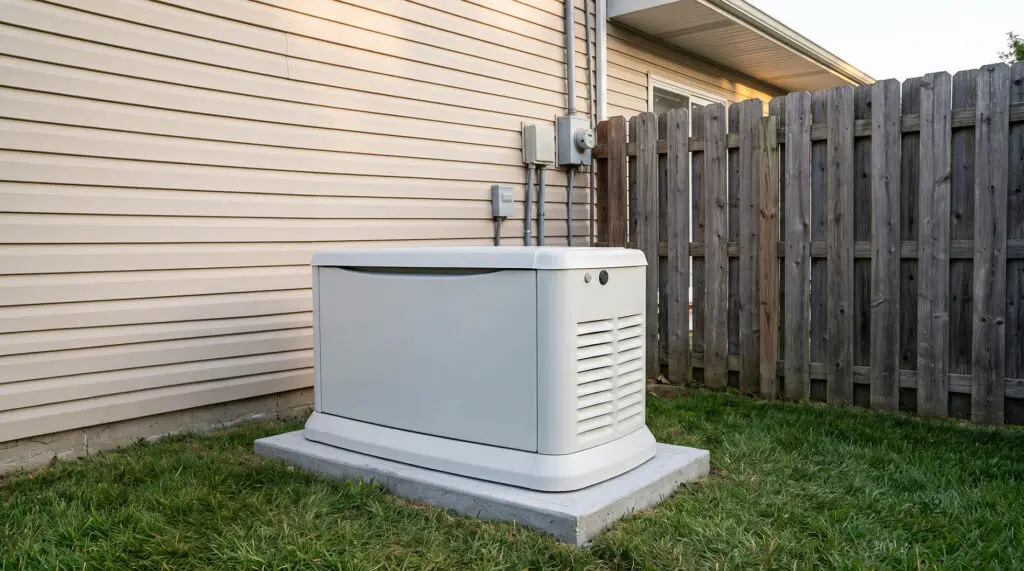
Schaumburg sits in Cook County’s storm corridor, and ComEd outages that run for hours – or days – are not rare events here. A permanently installed standby generator starts automatically within seconds of a grid failure and runs on natural gas from your existing utility line. No extension cords, no carbon monoxide risk from a portable unit in the garage, no manual startup in the dark during a storm. Energy Co. handles the complete turnkey installation: load calculation, generator sizing, automatic transfer switch, concrete pad, gas line coordination, Village of Schaumburg permits, and final inspection – everything in-house, nothing subcontracted.
What Size Standby Generator Does a Schaumburg Home Actually Need?
Generator sizing is a load calculation, not a guess. The right size depends on what you need to power during an outage. Three common approaches for Schaumburg homes:
Essential loads only (7.5–10 kW) – sump pump, refrigerator, lighting, one AC zone, and phone charging. Works for smaller homes or budget-conscious installs.
Managed whole-home (14–18 kW) – covers essential loads plus central air conditioning, using load-shedding software to prioritize circuits automatically. The most popular choice for mid-size Schaumburg homes.
Full whole-home (20–22 kW+) – everything on, no compromises. Required for homes with electric heat, multiple AC units, or medical equipment that cannot share a circuit.
We perform a full electrical load calculation before recommending any size. An oversized generator is wasted money; an undersized one fails when you need it most.
The Automatic Transfer Switch: Why It’s the Heart of the System
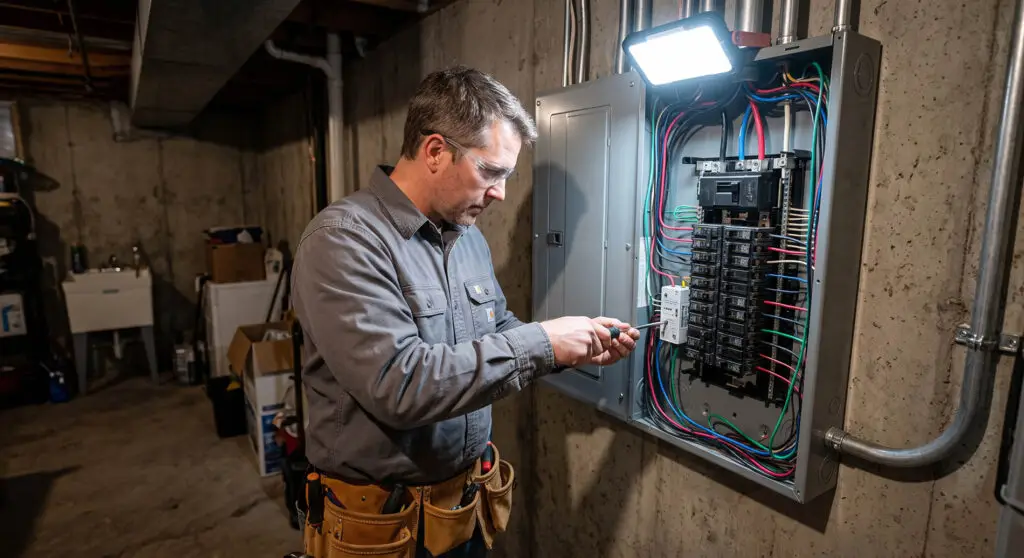
The automatic transfer switch (ATS) is the component that makes a standby generator different from a portable unit. It monitors incoming utility power continuously and detects a grid failure within seconds. When power drops, the ATS disconnects your home from the ComEd grid, starts the generator, and transfers the load – all automatically, typically within 10–30 seconds of the outage. When utility power returns and stabilizes, the ATS transfers the load back and shuts the generator down.
Illinois law requires a licensed electrician to install the transfer switch. This is not optional – connecting a generator to your home’s electrical system without a proper transfer switch can backfeed the grid and seriously injure or kill utility workers restoring power. We install the ATS integrated with your existing panel, or alongside a new 200-amp panel upgrade if your current service can’t support the generator connection.
What Generator Installation Costs in the Chicagoland Area
Turnkey standby generator installation in the Chicagoland area typically runs $6,000 to $13,500 for standard residential projects, with larger whole-home systems reaching $17,000 or more. The main cost variables for Schaumburg installations:
Generator unit – $2,500 to $7,500 depending on kW output and brand (Generac is the most widely installed in Illinois, with strong parts availability throughout the Chicago metro).
Automatic transfer switch – $500 to $1,500 installed, depending on type and panel configuration.
Gas line extension – varies by distance from the meter to the generator pad; longer runs cost more.
Concrete pad and site prep – included in our turnkey scope.
Schaumburg permit fees – typically $150-$400 for electrical and gas permits combined.
If your home still has a 100-amp panel, add $1,500-$2,500 for a 200-amp upgrade – required before the ATS can be properly integrated. We include every line item in our estimate before work begins.
Satisfied Customers
0
%
How a Standby Generator Installation Works, Step by Step
A standby generator installation in Schaumburg follows a defined sequence. Here’s exactly what happens from first contact to first automatic startup:
Load calculation and site assessment – we visit your home, measure your electrical loads, evaluate the panel, and identify the best generator placement within Schaumburg’s setback rules.
Generator sizing and proposal – you receive a written estimate with itemized costs, recommended kW output, and brand options.
Permit application – we submit the electrical and gas permit applications to the Village of Schaumburg and coordinate ComEd notification before any work begins.
Concrete pad and generator placement – we pour and cure the pad, position the unit, and connect it to the gas supply line.
ATS and panel integration – the transfer switch is installed and wired to your panel. If a panel upgrade is needed, it happens at this stage.
Load test and commissioning – we simulate a grid failure, confirm the ATS transfers within spec, and run the generator under full load before closing out the job.
Final inspection – Schaumburg’s building department inspects the installation. You receive copies of all permits and the inspection approval.
Schaumburg Permit and Placement Requirements for Standby Generators
The Village of Schaumburg has a published Generator Resource Guide that outlines local engineering requirements, utility clearance rules, and the municipal submission process for standby generator installations. Key requirements for Schaumburg homeowners:
A building permit is required before installation begins. Schaumburg’s permit fee schedule applies to both the electrical and gas connection permits.
Generators must be placed in the side or rear yard, within setback distances from property lines and building openings specified in the local zoning code.
ComEd must be notified before the transfer switch is installed. We handle that coordination as part of the project.
All electrical work – transfer switch, panel integration, wiring – must be performed by a licensed Illinois electrician. Gas line work requires a licensed gas fitter. We have both on staff.
NEC Article 702 and NFPA 37 standards govern the installation. Schaumburg’s inspection verifies compliance with both.
Don’t wait for the next ComEd outage to find out your home isn’t protected.
COMMON QUESTIONS
Frequently Asked Questions
Generator installation raises questions that most homeowners haven’t had to think about before. Here are the ones we answer most often for Schaumburg customers:
From permit submission to final inspection, a standard residential standby generator installation in Schaumburg takes one to three weeks. The permit review and approval process runs three to seven business days. The physical installation - pad, generator placement, gas connection, ATS wiring, and load test - typically takes one to two days on site. If a panel upgrade is needed, that adds half a day. We give you a specific timeline during the estimate walkthrough so you know exactly what to expect.
It depends on the generator size. A 7.5–10 kW unit can typically run one smaller AC zone but not a full central system under heavy load. A 14–18 kW managed whole-home system handles central air using load-shedding software that momentarily drops the AC compressor when another high-draw appliance starts, then restores it. A 20–22 kW unit runs everything simultaneously with no restrictions. We calculate your actual AC load during the site assessment so the generator we recommend can handle it.
Yes — standby generators require annual maintenance to stay reliable: oil and filter changes, spark plug inspection, air filter replacement, and valve clearance checks. Most Generac and Kohler units also run a weekly self-test cycle automatically, which exercises the engine and flags any faults to the unit’s monitoring system. Annual maintenance contracts for Schaumburg homeowners typically run $200–$600 per year depending on unit size and scope. Skipping maintenance is the most common reason a generator fails to start during an actual outage.
Most Schaumburg homes connect their standby generator to the existing natural gas utility line — the same supply that feeds the furnace and water heater. This means the fuel supply doesn’t run out during an extended outage the way a portable generator’s tank does. Homes without natural gas service can use liquid propane (LP), which requires an on-site tank. We assess your gas line capacity and pressure during the site visit to confirm the existing service can support the generator’s demand.
No. Illinois law requires a licensed electrician for all transfer switch and panel wiring work, and a licensed gas fitter for the fuel connection. The Village of Schaumburg requires permits and inspections for the entire project. Beyond the legal requirements, the safety risks are real: improper transfer switch wiring can backfeed the grid and injure utility workers; improper gas connections create explosion and carbon monoxide risks. Most manufacturers also void the product warranty for units not installed by a certified professional. This is not a project where unlicensed work saves money — it creates liability.
A permitted and inspected standby generator installation typically does not increase your insurance premium and may qualify for a discount with some carriers, since it reduces the risk of sump pump failure flooding and frozen pipe damage during extended outages. Unpermitted generator installations are a different story — they can void coverage for generator-related damage and create liability if the unit causes a fire or gas incident. Always use a licensed contractor and pull the required Schaumburg permits.
Generac is the most widely installed residential standby brand in Illinois, and we work with it regularly — parts availability is strong throughout the Chicago metro and service technicians are readily available. We also install Kohler and Briggs & Stratton units. During the estimate we walk you through the current options at your required kW output, including pricing and lead times, so you can make an informed choice. We don’t push a single brand — we recommend what fits your home’s load and your budget.