Why Commercial Lighting Services Matter for Your Bottom Line
Commercial lighting services cover everything a business needs to plan, install, upgrade, and maintain its lighting systems — from a single office to a multi-site national portfolio.
Here’s a quick overview of what they include and why they matter:
| What They Cover | Why It Matters |
|---|---|
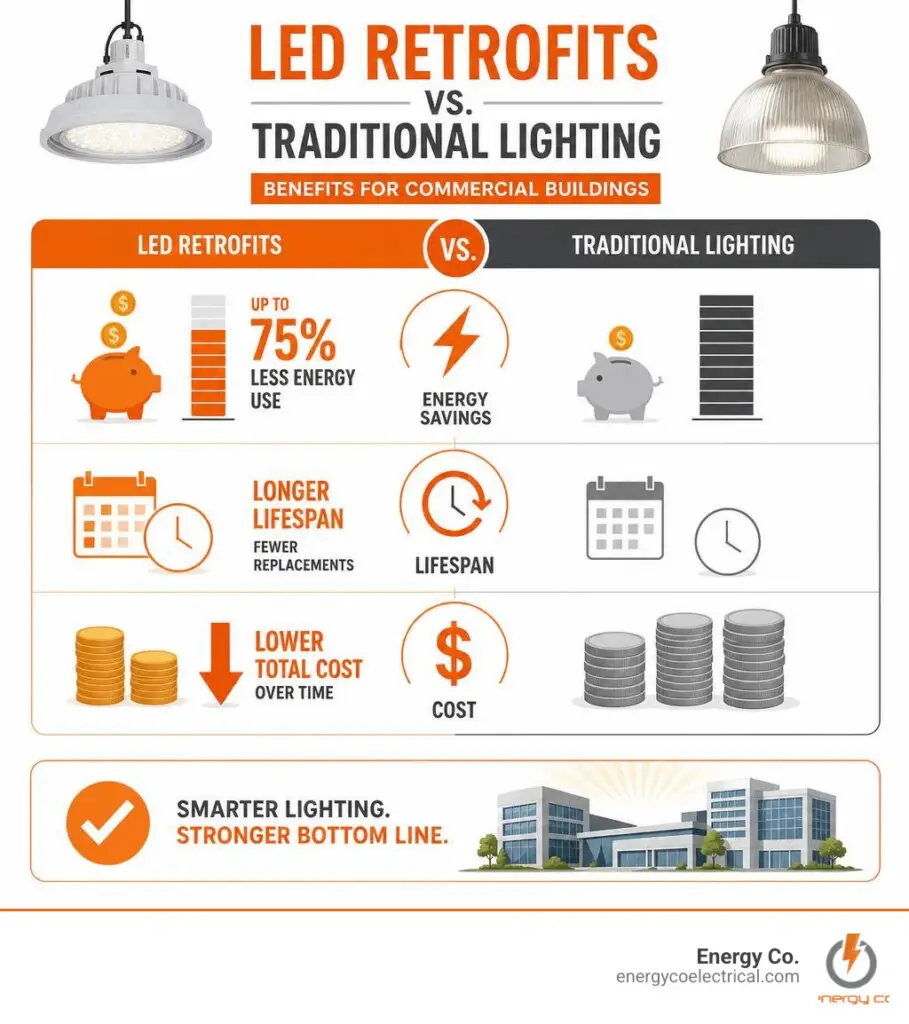
| LED retrofits and upgrades | Cut energy use by up to 75% |
| New fixture installation | Ensures code-compliant, optimized lighting |
| Preventive maintenance | Prevents costly failures and downtime |
| Emergency lighting and exit signs | Required by NFPA and OSHA for occupant safety |
| Lighting controls and smart systems | Automate savings with sensors and scheduling |
| Utility rebate management | Reduces upfront project costs significantly |
Lighting accounts for an average of 17% of electricity consumption in U.S. commercial buildings. That’s a significant overhead cost — and one that’s highly controllable. A well-executed lighting upgrade doesn’t just trim your utility bill. It improves safety, boosts employee productivity, and can even influence how long customers stay in your space.
Consider this: one NYC high-rise saved $100,000 per year simply by retrofitting its lighting. That kind of return is more common than most business owners realize.
I’m Michał Napieralski, a licensed electrician and the expert behind Energy Co., with hands-on experience delivering commercial lighting services across Schaumburg and the greater Chicago area. In the sections ahead, I’ll walk you through everything you need to know — from LED retrofits to smart controls to navigating utility rebates.
What are Commercial Lighting Services?
When we talk about commercial lighting services, we are referring to a broad spectrum of specialized electrical solutions designed specifically for businesses, public institutions, and industrial facilities. Unlike residential lighting, which focuses on aesthetics and low-volume usage, commercial systems operate under demanding conditions. They run for longer hours, require higher voltages, and must comply with strict municipal safety codes.
Every facility has unique operational needs. A retail showroom requires high-color-rendering index (CRI) spotlights to make merchandise pop, while a heavy industrial plant needs explosion-proof, high-bay fixtures that can withstand dust and vibration. Our team works across a diverse range of local facilities, ensuring that each space is equipped with tailored solutions.
Typical facilities that require professional lighting services include:
- Commercial Offices and Corporate Headquarters: Proper workspace illumination directly impacts employee focus, reduces eye strain, and cuts down on midday fatigue.
- Retail Stores and Showrooms: Good lighting acts as a silent salesperson, guiding customer foot traffic and highlighting key products.
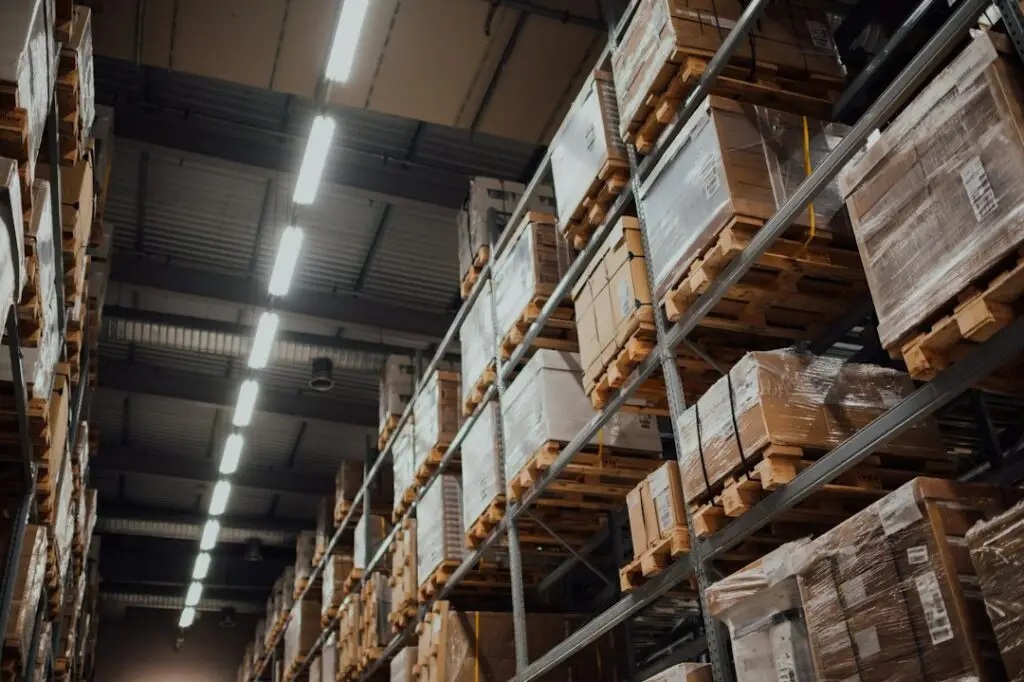
- Warehouses and Distribution Centers: High-ceiling spaces require powerful, reliable fixtures to keep workers safe and ensure accurate inventory handling.
- Healthcare and Educational Facilities: Schools, universities, and medical clinics require highly reliable, specialized lighting designed for focus, hygiene, and emergency preparedness.
- Hospitality and Restaurants: Warm, inviting illumination sets the right mood and directly influences customer dining comfort.
If you are looking to optimize your workplace, exploring the top commercial electrician services in Chicago is the first step toward aligning your physical space with your financial goals.
The Core Types of Commercial Lighting Services
To keep a business running smoothly, commercial electrical contractors offer several key services. These can be broken down into four primary categories:
- New Construction and Tenant Build-Out Installations: Building a new facility or remodeling an existing office in Schaumburg or Elk Grove Village requires a clean-slate design. This involves running new conduit, mounting heavy-duty fixtures, and establishing robust electrical panels that can handle the load. For high-quality results, partnering with a professional team ensures you meet all local professional lighting installation standards.
- LED Retrofits and Energy Upgrades: This is the process of replacing outdated, power-hungry fluorescent, metal halide, or high-pressure sodium bulbs with modern, energy-efficient LED fixtures. In many cases, we can complete these upgrades using the existing housing, saving you money on hardware.
- Scheduled and Preventive Maintenance: Over time, even the best systems experience lumen depreciation, driver failures, or ballast wear. Regular maintenance programs—including scheduled inspections, lens cleaning, and proactive component replacement—help businesses avoid sudden outages.
- On-Demand and Emergency Repairs: When a parking lot pole goes dark or an electrical fault occurs inside a busy retail store, you need fast action. Reliable commercial contractors offer 24/7 rapid response to keep your operations safe and secure.
If you are located in the Northwest Suburbs, including Schaumburg, Hoffman Estates, or Elk Grove Village, partnering with a local commercial electrical contractor ensures that your facility remains properly powered and compliant with all local municipal codes.
Specialized Commercial Lighting Services for Safety and Compliance
Beyond basic illumination, commercial properties have a legal obligation to maintain emergency and exit lighting systems. These systems are heavily regulated by the National Fire Protection Association (NFPA), the Occupational Safety and Health Administration (OSHA), and local Illinois municipal codes.
Emergency lighting must be strategically placed along all paths of egress. In the event of a power failure, these fixtures must automatically switch to battery backup power within seconds and remain illuminated for at least 90 minutes. This ensures that employees and customers can safely exit the building during a fire or blackout.
Additionally, exterior safety is highly dependent on robust commercial parking lot lighting. Well-lit parking lots, walkways, and building perimeters act as a major deterrent to crime, reduce the risk of slip-and-fall accidents, and limit your business’s liability.
For businesses in Palatine, Roselle, Streamwood, or Hanover Park, maintaining these systems requires licensed professionals who understand local codes. Working with a dedicated local team ensures your emergency systems, exterior lighting, and specialized commercial installations are fully compliant and secure.
The Financial and Environmental Power of LED Retrofits
Upgrading to LED technology is one of the most effective ways for a business to instantly reduce its operational costs. Because LEDs use up to 90% less energy and last up to 25 times longer than traditional incandescent bulbs, they offer a dual benefit: they slash your monthly utility bills while virtually eliminating the cost of replacement lamps and maintenance labor.
When you transition to LED, you aren’t just changing light bulbs; you are fundamentally upgrading your facility’s energy profile. Traditional commercial lighting systems, such as T8 fluorescent tubes or high-intensity discharge (HID) fixtures, waste a massive amount of energy as heat. LEDs, on the other hand, convert almost all of their electrical energy directly into light, remaining cool to the touch and reducing the load on your building’s air conditioning system.
If you are ready to make the transition, you can learn how to save green by going green with Chicago commercial lighting upgrades to maximize your environmental and financial returns.
To understand the differences between these technologies, consider the following comparison:
| Lighting Feature | Old Incandescent Bulbs | Standard Fluorescent Tubes | Modern LED Fixtures |
|---|---|---|---|
| Energy Efficiency | Extremely Poor | Moderate | Outstanding (Uses 90% less than incandescent) |
| Average Lifespan | 1,000 hours | 10,000 to 15,000 hours | 50,000 to 100,000 hours |
| Heat Emission | Very High | High | Minimal |
| Environmental Impact | High waste | Contains toxic mercury | Eco-friendly & fully recyclable |
| Maintenance Needs | Extremely High | Frequent replacement | Virtually None |
The real-world financial impact of these retrofits is clear. For example, in a large-scale industrial project, replacing 494 old, inefficient fixtures with modern LEDs cut energy consumption by 396,364 kWh annually and secured an incredible $220,119 utility rebate. On a different scale, an exterior school campus retrofit delivered $18,334 in annual energy savings while reducing consumption by 101,574 kWh.
Whether you operate a single retail shop in Schaumburg or a massive manufacturing plant in Elk Grove Village, these savings add up quickly, often paying for the entire project within 12 to 24 months.
Smart Controls and Modern Lighting Technology
Modern commercial lighting is no longer just about turning switches on and off. Today, the most efficient buildings integrate advanced lighting controls, sensors, and smart building automation networks to maximize energy savings without human intervention.
These smart systems utilize several key technologies:
- Occupancy and Vacancy Sensors: These sensors detect when a room is empty and automatically turn off or dim the lights, preventing energy waste in infrequently used areas like conference rooms, restrooms, and storage closets.
- Daylight Harvesting: This technology uses photosensors to measure the amount of natural light coming through windows. The system then automatically dims the artificial overhead lights to maintain a consistent light level, saving energy during peak daylight hours.
- Dusk-to-Dawn Photocells: Essential for exterior safety, these sensors automatically activate parking lot and perimeter lighting as the sun sets and shut them down at sunrise.
- IoT and Building Automation Integration: Modern commercial lighting can be connected to your central building management system (BMS). This allows facility managers to monitor energy usage in real-time, adjust schedules via smartphone apps, and receive automatic alerts when a fixture requires maintenance.
By combining LED retrofits with smart controls, businesses can achieve up to 75% energy savings compared to their legacy systems.
Maximizing ROI with Utility Rebates and Financing
The upfront cost of a commercial lighting upgrade can sometimes feel daunting to business owners. However, when you factor in utility rebates, tax incentives, and flexible financing options, the return on investment (ROI) becomes incredibly attractive.
In northern Illinois, major utility providers like ComEd offer substantial financial incentives for businesses that upgrade to energy-efficient lighting. These rebate programs are designed to cover a significant portion of your project’s material and installation costs, dramatically shortening your payback period.
Additionally, some businesses choose to leverage the Lighting-as-a-Service (LaS) model. Under this agreement, a provider installs, manages, and maintains your entire lighting system with zero upfront capital expenditure. Instead, you pay a predictable monthly service fee over a set term (often up to 10 years), allowing the energy savings themselves to pay for the upgrade from day one.
To explore how these financial benefits can apply directly to your facility, you can learn more about our comprehensive commercial electrical and industrial services.
The Commercial Lighting Project Process: Assessment to Installation
A successful commercial lighting project requires a structured, data-driven approach. Here is the step-by-step process we follow to ensure your installation delivers maximum performance and compliance:
Step 1: The Energy Audit and Lighting Assessment
Our team visits your facility to inventory every existing fixture, measure current energy draw, and evaluate light levels. We look at how your spaces are used and identify immediate opportunities for energy savings.
Step 2: Photometric Analysis and Digital Design
We don’t guess where lights should go. Using advanced software, we create a 3D digital model of your facility to perform a photometric analysis. This allows us to map out light distribution, eliminate glare, ensure consistent illumination, and guarantee that the design meets Illuminating Engineering Society (IES) standards before a single wire is run.
Step 3: Rebate and Incentive Optimization
We handle the paperwork. We identify all available utility rebates and local incentives to ensure you get the maximum financial return, building these direct savings into your project proposal.
Step 4: Professional Installation and Wiring
Our licensed, insured electricians handle the physical installation. We schedule our work to minimize disruption to your daily operations, often working in phases or after hours. If your project involves extensive infrastructure changes, we ensure all work aligns with the principles outlined in the complete guide to commercial wiring.
Step 5: Final Testing and Commissioning
We test every sensor, control panel, and emergency backup battery to ensure the entire system operates flawlessly and complies with all local building and safety codes.
Frequently Asked Questions about Commercial Lighting
How much can a business save by upgrading to LED lighting?
Most businesses see an immediate and measurable reduction in their lighting energy bills of 25% to 50%. When combined with advanced smart controls, total energy savings can reach up to 75%. Because LEDs last up to 25 times longer than legacy bulbs, you will also save thousands of dollars in ongoing maintenance and replacement labor.
What is photometric analysis in lighting design?
Photometric analysis is the computer-aided simulation of light in a 3D space. It creates a digital map of your facility to show exactly how light will behave. This process helps us identify dark spots, eliminate hazardous glare, and ensure your building meets IES standards for safety, productivity, and code compliance before installation begins.
How often should commercial lighting systems be maintained?
While LED systems require far less maintenance than older technologies, we recommend scheduling a professional inspection at least once or twice a year. During these visits, technicians will test emergency battery backups, clean dirty lenses (which can block up to 30% of light output), inspect exterior photocells, and replace any failing drivers or controls to prevent unexpected system downtime.
Conclusion
Upgrading your commercial lighting is one of the smartest operational investments your business can make. By transitioning to energy-efficient LED fixtures, integrating smart controls, and utilizing local utility rebates, you can instantly lower your overhead costs, improve safety, and create a more productive environment for your team.
At Energy Co., we bring licensed expertise, deep knowledge of local Chicago and suburban building codes, and a satisfaction guarantee to every project we touch. Whether you are operating out of Schaumburg, Palatine, Hoffman Estates, or anywhere in the greater Chicagoland area, we are here to help you design, install, and maintain a lighting system that works as hard as you do.
When you are ready to take control of your energy costs, partner with local commercial electricians who understand your unique business needs, or schedule your commercial electrical services today to get started with a customized lighting assessment.