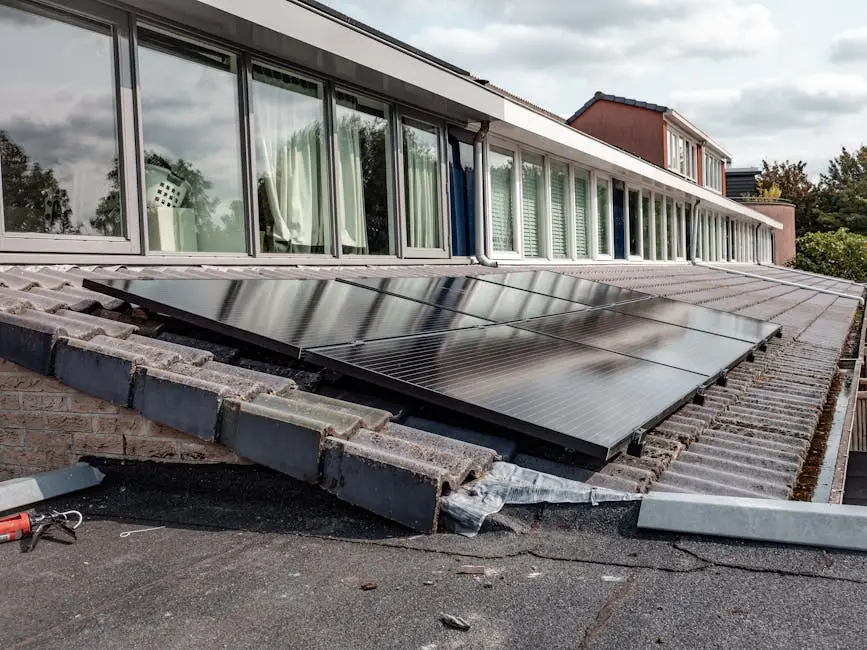
Why Getting Solar Panel Wiring Chicago Right Matters From Day One
Solar panel wiring Chicago installations must meet a specific set of local rules, climate demands, and code requirements before your system can legally connect to the grid. Here’s a quick snapshot of what that involves:
- Permit pathway: Most homes qualify for the City of Chicago Express Permit Program (systems ≤13.44 kW)
- Electrical code: All wiring must comply with the 2018 Chicago Electrical Code (based on the 2017 NEC with local amendments)
- Licensed professionals: A Chicago-licensed supervising electrician and an ICC Distributed Generation Installer Certification are both required
- Climate considerations: Components must be rated for -30°F to 120°F, and panels should be tilted 30–40 degrees to shed snow
- Cost & savings: The average Chicago system costs around $37,200 before incentives and saves roughly $23,756 over 25 years
Chicago’s older housing stock, dense urban shading, harsh winters, and strict municipal codes make solar wiring here more complex than in most U.S. cities. Get it wrong and you risk permit rejections, failed inspections, or a system that underperforms every January.
The good news? With the right wiring configuration, a code-compliant plan set, and a licensed local electrician, most Chicago homeowners can get their system approved, installed, and producing power without major headaches.
I’m Michał Napieralski, a licensed electrician serving the Chicago metro area with hands-on experience in solar panel wiring Chicago projects across both older residential buildings and commercial properties. My team at Energy Co. handles everything from panel upgrades to full solar electrical installations, so you’re in good hands from permit to power-on.
Understanding Solar Panel Wiring Chicago Basics
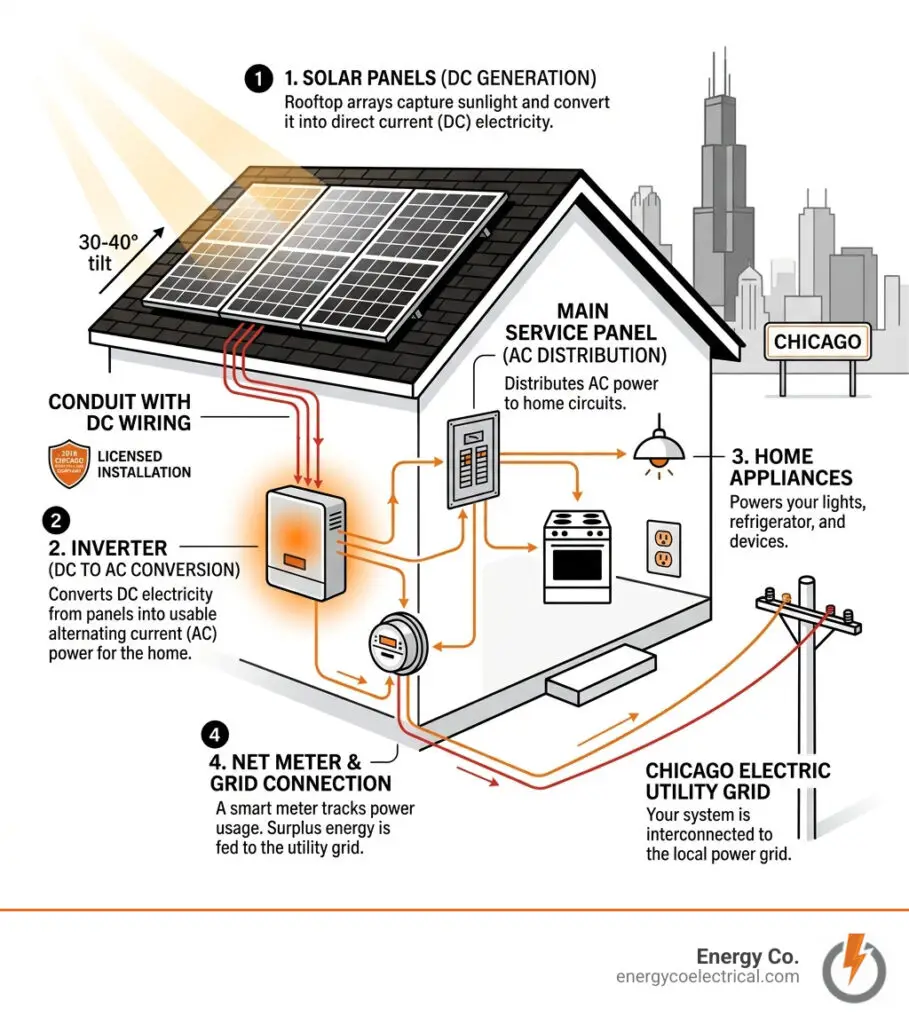
When we talk about Solar panel wiring Chicago, we are essentially discussing how we connect individual photovoltaic (PV) modules to create a circuit that feeds power into your home. In electrical physics, there are two main ways to “string” these panels together: series and parallel.
Think of your solar panels like batteries in a flashlight. If you stack them end-to-end, you are increasing the “push” (voltage). If you side-load them, you increase the “volume” of energy (amperage). In the Windy City, choosing the right configuration is the difference between a system that wakes up early in the morning and one that struggles to stay on during a cloudy Tuesday in November.
Series vs. Parallel: Which is Right for Cook County?
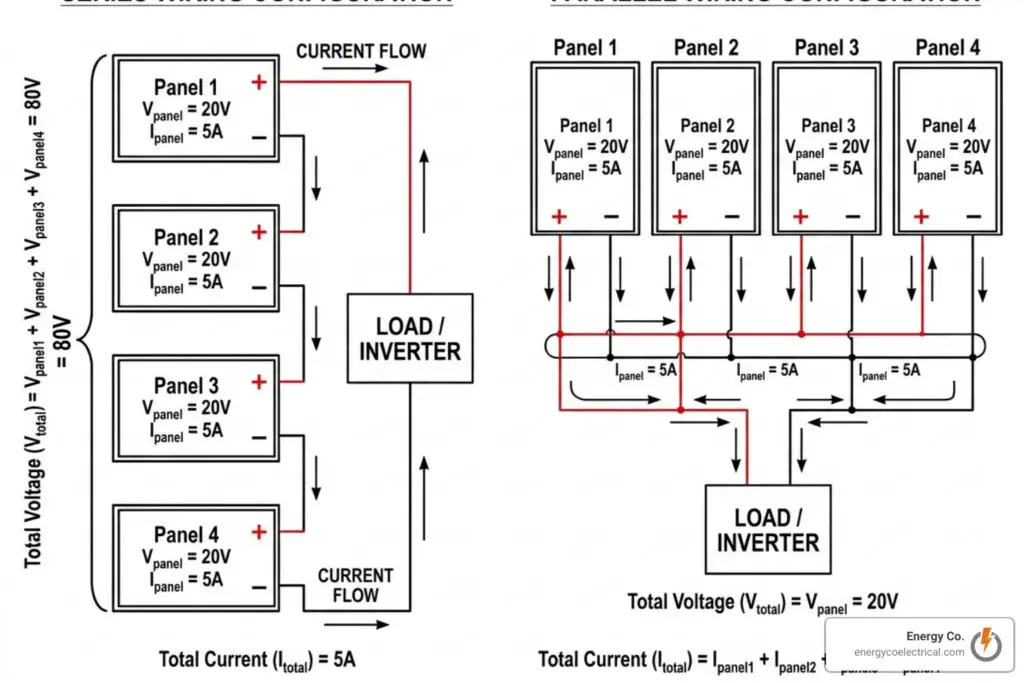
In a series configuration, we connect the positive terminal of one panel to the negative terminal of the next. This “stacks” the voltage. For example, Series-Connected Solar Panels: Maximizing Power Output in Illinois Homes – Illinois Renewables notes that connecting three 24V panels in series results in a 72V output while keeping the amperage consistent.
Why Series Wiring often wins in Chicago:
- Higher Efficiency over Distance: Many Chicago homes, especially in neighborhoods like Edgewater or the Loop, have long wire runs from the roof to the basement electrical panel. Higher voltage travels more efficiently over these distances with less power loss.
- Thinner Wire: High-voltage, low-current systems allow us to use thinner (and less expensive) wiring while still meeting safety codes.
- Inverter “Wake Up”: Most string inverters need a minimum voltage to start working. Series wiring helps reach that threshold faster as the sun rises.
However, parallel wiring has its place too. In parallel, all positives are connected together, and all negatives are connected together. This keeps voltage low but increases amperage. This is often used in smaller off-grid setups or very specific residential electrical services where shading is a constant, unavoidable issue.
Inverter Compatibility for Series-Connected Solar Panels in Chicago
Your inverter is the “brain” of your solar system, converting the DC power from your roof into the AC power your fridge and TV use. When wiring in series, we have to be incredibly careful about the inverter’s limits.
In Chicago, we deal with extreme cold. Interestingly, solar panels actually produce more voltage when it’s freezing outside. If we wire too many panels in a series string without a “cold-weather buffer,” a sunny but frigid January day could send a voltage spike that fries your inverter. We always recommend an inverter with a maximum input voltage at least 20% higher than the panel array’s total rated voltage to account for this Illinois chill.
Inverter Technology Comparison
| Feature | String Inverter | Microinverter | Power Optimizer |
|---|---|---|---|
| Wiring Style | Series (Strings) | Parallel-like | Series with DC-DC |
| Shade Tolerance | Low | High | High |
| Chicago Climate | Good (kept indoors) | Tough (exposed to ice) | Moderate |
| Rapid Shutdown | Needs extra hardware | Built-in | Built-in |
| Cost | Lowest | Highest | Mid-range |
Navigating Chicago’s Climate and Structural Requirements
Chicago weather is legendary, and not always in a good way for electrical components. From the humid 90-degree summers in Cicero to the -20°F wind chills in Schaumburg, your Solar panel wiring Chicago must be built to last.
Managing Snow, Shade, and Seasonal Variations
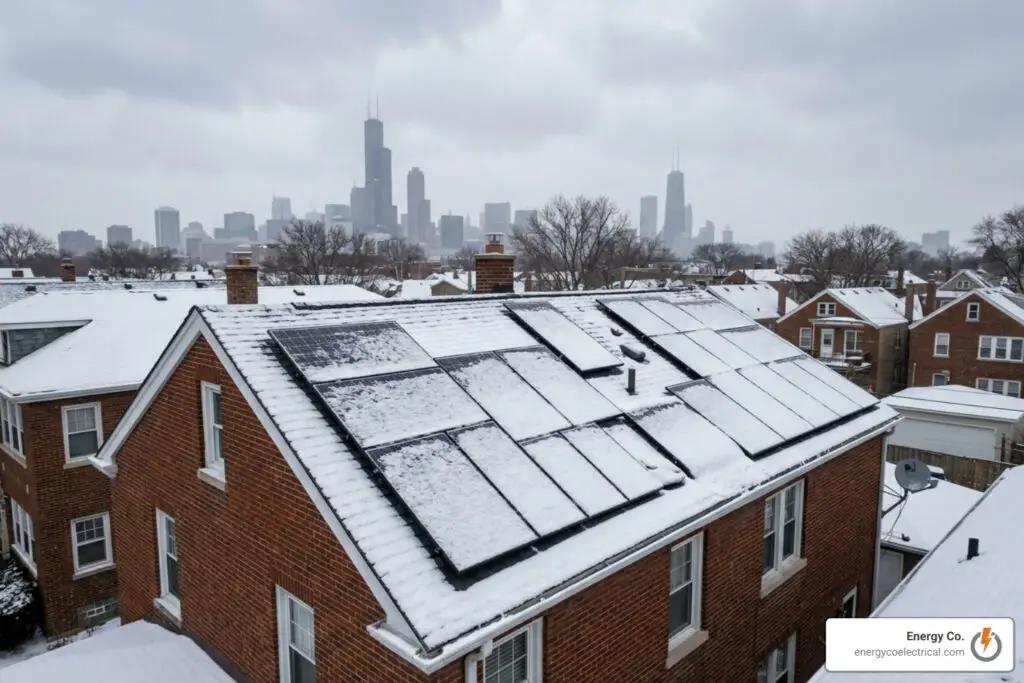
Snow is a major factor in Illinois. If one panel in a series string is covered in snow while the others are clear, it can act like a “kink in a garden hose,” slowing down the energy flow for the whole string.
To combat this, we utilize:
- Optimal Tilt: We install panels at a 30-40 degree south-facing tilt. This is the “sweet spot” for catching Chicago sun while encouraging snow to slide off naturally.
- Bypass Diodes: Modern panels have internal “detours” that allow electricity to flow around a shaded or snow-covered section of a panel.
- Strategic Placement: In dense areas like the Loop or Elk Grove Village, we perform a shade analysis to ensure chimneys or taller neighboring buildings don’t kill your production.
Roof Integrity and Mechanical Fastening Standards
Before a single wire is pulled, we have to ensure your roof can handle the load. Chicago building codes are very specific:
- No Adhesives: You cannot simply “glue” solar mounts to a roof in Chicago. We must use mechanical fasteners (screws and bolts) that tie directly into the structural rafters.
- Rafter Photos: When we apply for your permit, the City of Chicago often requires photos of your rafters with a tape measure showing their size and spacing to prove structural adequacy.
- Height Limits: For the Express Permit Program, the roof cannot exceed an average height of 40 feet.
If your electrical system is older, we often perform an electrical panel upgrade simultaneously to ensure your home can handle the two-way flow of electricity.
Compliance with Chicago Electrical Codes and Permitting
This is where many DIY-ers and out-of-state “fly-by-night” installers get their wires crossed. Chicago does not follow the standard National Electrical Code (NEC) blindly. We use the 2018 Chicago Electrical Code, which contains local amendments that are often stricter than what you’ll find in the suburbs or other states.
The City of Chicago Express Permit Program (EPP)
The City of Chicago has made great strides in making solar accessible through the Small-Scale Solar Photovoltaic (PV) System Express Permit Program.
If your system meets these criteria, we can often get permit approval in a fraction of the usual time:
- Inverter Output: Must be 13.44 kW or less.
- Panel Capacity: The DC output of the panels cannot exceed 155% of the inverter’s AC rating.
- Energy Storage: We can include batteries up to 20 kWh, though some battery types are limited to 10 kWh.
- Mounting: Must be rooftop-mounted (ground mounts are generally not allowed in residential Chicago districts).
Safety Standards for Solar Panel Wiring Chicago Installations
Safety isn’t just a suggestion; it’s the law. To pass a Chicago inspection, your system must include:
- Rapid Shutdown: A way for first responders to quickly de-energize the solar panels on the roof in case of a fire.
- The 120% Busbar Rule: This is a technical calculation we use to ensure the combined power from the grid and your solar panels doesn’t melt your main electrical panel’s busbar.
- Ground-Fault Protection: Crucial for preventing electrical fires.
- ICC Certification: The lead installer must hold an Illinois Commerce Commission (ICC) Distributed Generation Installer Certification.
At Energy Co., we provide emergency electrical services if a system was installed incorrectly by a previous contractor and begins to fail or create a hazard.
Incentives and Cost Savings for Illinois Homeowners
While the upfront cost of Solar panel wiring Chicago might seem high—averaging around $37,200 for a 12.12 kW system—the incentives in Illinois are among the best in the country.
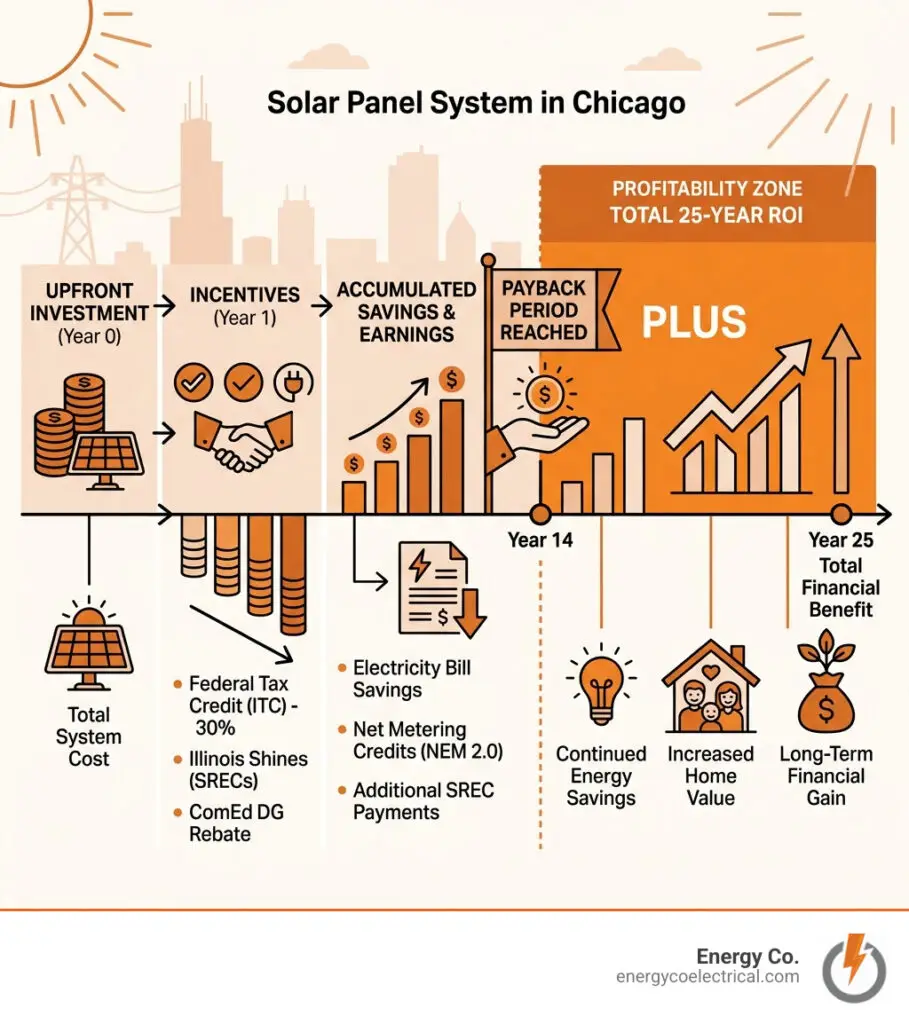
- Federal Tax Credit (ITC): You can currently deduct 30% of your total system cost from your federal taxes.
- Illinois Shines (SRECs): This state program pays you for the “green-ness” of the energy you produce. It can often cover 20-30% of the system cost over time.
- ComEd DG Rebate: ComEd offers a “Distributed Generation” rebate, currently around $300 per kW of solar power and $300 per kWh of battery storage.
- Net Metering (NEM 2.0): While the rules changed slightly in 2025, you still receive credits on your bill for the excess energy your wires send back to the grid.
On average, Chicago systems pay for themselves in about 14.5 years, leaving you with over a decade of essentially free electricity.
Frequently Asked Questions about Chicago Solar Wiring
What is the maximum system size for the Chicago Express Permit Program?
To qualify for the streamlined EPP, your inverter output must be 13.44 kW or less. This is typically enough to cover the needs of a standard Chicago single-family home. If you want a larger system or have a roof higher than 40 feet, you must go through the Standard Plan Review, which takes significantly longer (usually 4-8 weeks).
How does Chicago’s winter affect my solar wiring?
Winter is actually a double-edged sword. While the days are shorter, the cold air makes your wiring more efficient. However, you must use components rated for -30°F. Your inverter must also be sized to handle the voltage “boost” that happens when sun hits freezing-cold panels. We also ensure all outdoor conduits are properly sealed to prevent ice expansion from cracking your pipes.
Do I need a licensed electrician for solar wiring in Chicago?
Absolutely. The City of Chicago requires a Chicago-licensed supervising electrician to sign off on the electrical drawings and oversee the work. Furthermore, the State of Illinois requires the installer to have ICC Distributed Generation certification. DIY solar wiring is not only dangerous in our climate but will result in your system being denied a connection to the ComEd grid.
Conclusion
Wiring a home for solar in Chicago is about more than just connecting “Point A” to “Point B.” It’s about understanding the unique marriage between the 2018 Chicago Electrical Code and the realities of a Lake Michigan winter. Whether you are in a historic bungalow in Cicero or a modern condo in the Loop, your wiring is the foundation of your energy independence.
At Energy Co., we specialize in the quirks of Chicago’s older buildings. We know how to navigate the Express Permit Program to get your lights on faster, and we stand behind every wire we pull with a satisfaction guarantee.
Don’t get your wires crossed by trying to navigate the complex world of Solar panel wiring Chicago alone. Contact us for a solar wiring consultation today, and let our licensed pros build a system that stands up to everything Chicago throws at it.