What Does It Cost to Rewire a 1500 Sq Ft House? (Quick Answer)
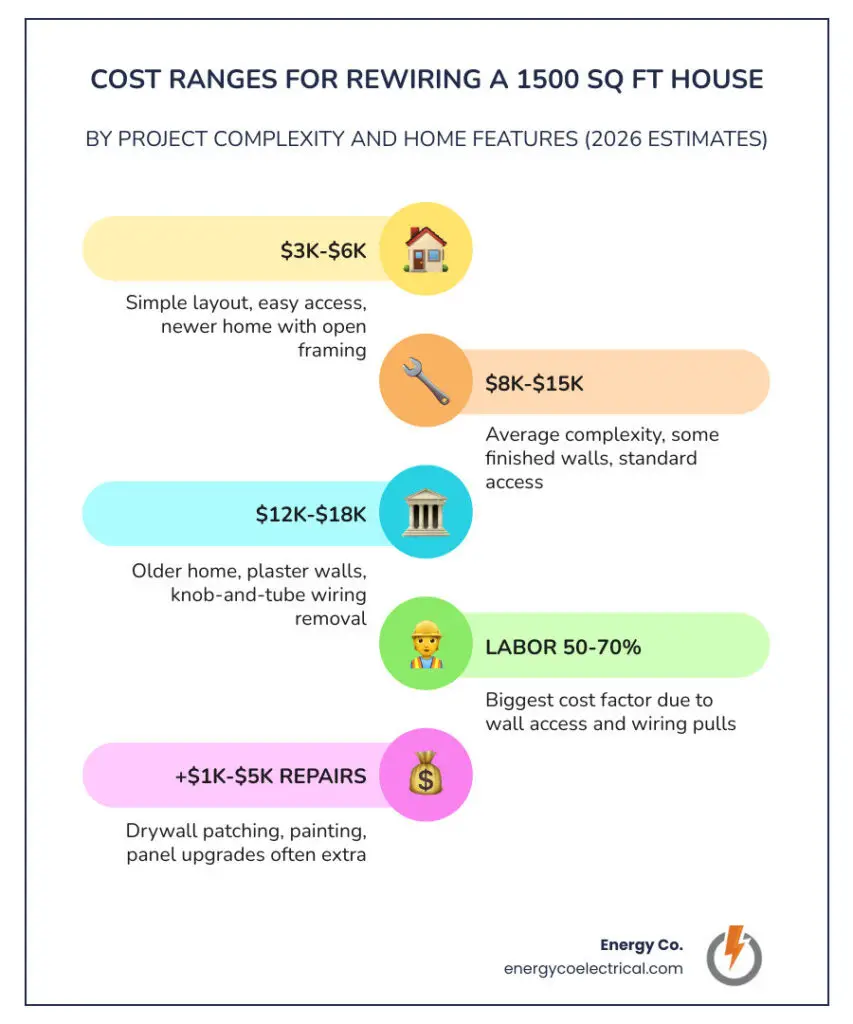
The average cost to rewire a 1500 sq ft house falls in a wide range depending on your home’s age, wall type, and local labor rates. Here’s a quick snapshot so you can budget before reading further:
| Scenario | Estimated Cost |
|---|---|
| Simple layout, easy access, newer home | $3,000 – $6,000 |
| Average complexity, some finished walls | $8,000 – $15,000 |
| Older home, plaster walls, knob-and-tube wiring | $12,000 – $18,000 |
Key cost drivers at a glance:
- Labor makes up 50-70% of the total bill
- Permits and inspections typically add $75 – $1,000
- Panel upgrades can add another $1,500 – $3,000
- Drywall repair after wiring work often runs $1,000 – $5,000+
Older Chicago-area homes are a perfect example of why costs vary so much. A 1,500 sq ft bungalow in the suburbs with original knob-and-tube wiring and plaster walls is a very different project than a newer ranch home with an open basement and accessible framing. One electrician put it simply: homeowners often forget to budget for the drywall repair and painting that follows a rewire — and that can add thousands to the final bill.
I’m Michał Napieralski, licensed electrician and founder of Energy Co. in Schaumburg, IL, with years of hands-on experience helping Chicago-area homeowners navigate the average cost to rewire a 1500 sq ft house safely and within budget. In this guide, I’ll walk you through everything you need to know to plan your project with confidence.
What Is the Average Cost to Rewire a 1500 Sq Ft House?
If you have been searching for one clean number, here is the honest answer: there usually is not one.
For a 1,500 sq ft house, published 2026 cost data commonly lands in three broad bands:
- $3,000 – $6,000 for a straightforward rewire with easy access
- $8,000 – $15,000 for a typical whole-home project
- $12,000 – $18,000 for older homes with difficult access and more code upgrades
Why the spread? Because “rewire” can mean very different things. In one house, it means replacing a few circuits. In another, it means removing outdated wiring, adding grounded outlets, replacing the panel, updating bonding, and patching half the plaster in the house. Same square footage, very different headache level.
Average cost to rewire a 1500 sq ft house in 2026
In 2026, we think of the cost in layers:
- Base electrical rewiring work
- Access difficulty
- Required code upgrades
- Finish repairs after the electrical work is done
For homes in Chicagoland, especially older housing stock in Chicago, Cicero, Arlington Heights, Mount Prospect, Schaumburg, and nearby suburbs, the middle and upper ranges are often more realistic than the low-end internet number. Older homes tend to have plaster walls, tighter framing, more finished spaces, and outdated service equipment.
Cost per square foot for a 1,500-square-foot rewire
A common shorthand is cost per square foot.
Typical published ranges include:
- $2 – $4 per sq ft for simpler jobs
- $4 – $12 per sq ft for more complex full rewires
For 1,500 sq ft, that works out to:
- $3,000 – $6,000 at $2 – $4 per sq ft
- $6,000 – $18,000 at $4 – $12 per sq ft, depending on complexity
Per-square-foot pricing is useful for ballpark budgeting, but electricians do not price homes like carpet installers. Circuit count, panel size, access, and wall repair can matter just as much as square footage.
Full rewire vs partial rewire cost for a 1500 sq ft house
A partial rewire can cost about $2,000 – $8,000 depending on how much of the system is being updated. That may include:
- Replacing wiring in a kitchen or bathroom
- Rewiring a few overloaded circuits
- Upgrading specific rooms
- Replacing unsafe aluminum branch wiring connections in limited areas
A full rewire costs more upfront, but it gives you a consistent, code-compliant system. Partial rewiring is viable in some homes, but mixing new wiring with old wiring is not always ideal. It can leave hidden weak points behind, which is a bit like buying new tires for a car with a failing transmission.
How Rewiring Costs Are Calculated for a 1500 Sq Ft Home
When we estimate a rewire, we do not just multiply 1,500 by a random number and hope for the best. We look at the home as a system.
The main factors behind the average cost to rewire a 1500 sq ft house
The biggest price drivers are:
- House age
- Existing wiring type
- Number of circuits needed
- Service panel capacity
- Wall and ceiling access
- Layout complexity
- Whether the basement, attic, or crawlspace is open and usable
- Local permit and inspection requirements
Here is a quick comparison:
| Factor | Lower-Cost Scenario | Higher-Cost Scenario |
|---|---|---|
| House age | Newer home | Pre-1950 home |
| Wall type | Drywall | Plaster and lath |
| Access | Open basement/attic | Finished walls and ceilings |
| Wiring type | Modern copper needing updates | Knob-and-tube or aluminum |
| Panel | Adequate modern panel | 60-100 amp panel needing replacement |
| Layout | Single-story, simple plan | Two-story with additions |
Typical cost breakdown: labor, materials, permits, and repairs
A realistic breakdown often looks like this:
- Labor: 50-70%
- Materials: 20-30%
- Permits and inspections: small but necessary slice
- Wall/ceiling repair and painting: often separate and easy to underestimate
Materials usually include:
- Copper wire
- Breakers
- Receptacles and switches
- Boxes
- Grounding and bonding materials
- AFCI and GFCI protection where required
Permit fees and inspections often range from $75 to $1,000 depending on scope and municipality.
Repair costs after the electrical work can be significant:
- Drywall repair: often $1,000 – $5,000+
- Plaster repair: often higher than drywall
- Painting: additional cost if you want the walls to look like nothing happened
Additional costs homeowners often miss
The electrical quote is not always the final project cost. Common add-ons include:
- Panel upgrade to 200 amps: about $1,500 – $3,000 or more
- New grounding and bonding work
- Whole-house surge protection
- New dedicated circuits for kitchens, laundry, HVAC, sump pumps, or EV charging
- Replacing old two-prong outlets with properly grounded receptacles
- Floor protection and cleanup
- Temporary lodging if power is off for part of the project
If you want a broader look at home electrical upgrades, see our Residential Electrical Services/.
House Age, Access, and Drywall: Why One 1500 Sq Ft Rewire Costs More Than Another
A 1,500 sq ft house is not always a 1,500 sq ft problem. Sometimes it is a 1,500 sq ft puzzle.
How older wiring systems affect the average cost to rewire a 1500 sq ft house
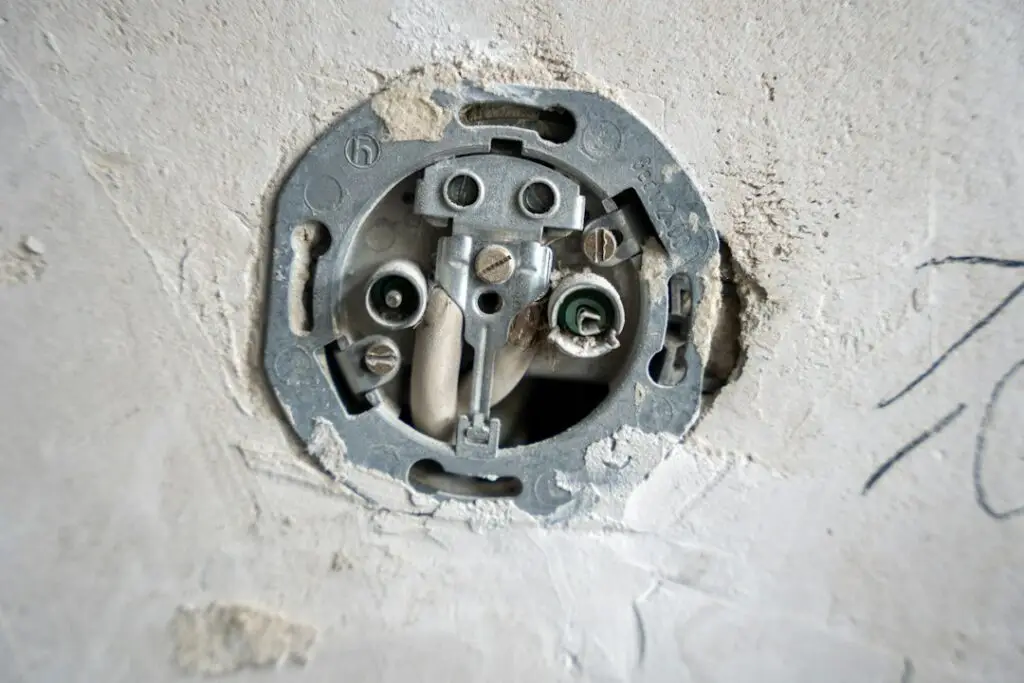
Older homes often come with outdated systems that increase labor and safety requirements.
Common examples include:
- Knob-and-tube wiring in very old homes
- Aluminum wiring from roughly 1965 to 1973
- Ungrounded two-prong outlets
- Undersized service panels
- Fuse boxes or 60-amp service
These systems can create real safety concerns. Research commonly notes that electrical failures contribute to tens of thousands of home fires annually in the U.S. Insurance companies may also be reluctant to insure homes with knob-and-tube or aluminum wiring, or they may require upgrades before writing or renewing coverage.
Can you rewire without removing drywall?
Sometimes, yes.
Electricians can often “fish” new wires through:
- Attics
- Crawlspaces
- Unfinished basements
- Wall cavities
This approach reduces demolition, but it does not always eliminate it. Small access holes are still common, and complex routes can increase labor time. So while less wall damage may save on patching, the labor can cost more. In older homes with finished ceilings, blocked framing, fire stops, or plaster walls, there may be no magic trick that avoids openings entirely.
The best approach is to ask how the contractor plans to access the wiring before work starts.
Regional pricing differences and Chicago-area cost considerations
National averages are helpful, but Chicagoland has its own realities:
- Many homes are older
- Plaster walls are common
- Multi-story layouts are common
- Some jurisdictions have stricter permit and inspection processes
- Local code and wiring methods can affect labor and materials
Research also notes that some cities, including Chicago, may have specific wiring method requirements such as conduit or metal-clad cable in certain situations. That matters because conduit-based work is often more labor-intensive than simply pulling standard cable through open framing.
In short, local experience matters. A contractor who understands older Chicago-area homes can usually price the work more accurately and plan access with less damage.
Timeline, Process, and Signs Your Home Needs Rewiring
Rewiring is not a one-hour service call. It is a coordinated project.
How long it takes to rewire a 1500 sq ft house
Typical timelines for a 1,500 sq ft home are:
- 3-10 days for simpler projects
- 1-2 weeks for many full rewires
- Up to several weeks if access is difficult or repairs are extensive
What affects the schedule:
- Crew size
- Whether the home is occupied
- Panel replacement
- Inspection timing
- Plaster repair needs
- Whether circuits are being added, not just replaced
A simple ranch with open access moves much faster than a lived-in two-story home with finished ceilings and an old panel.
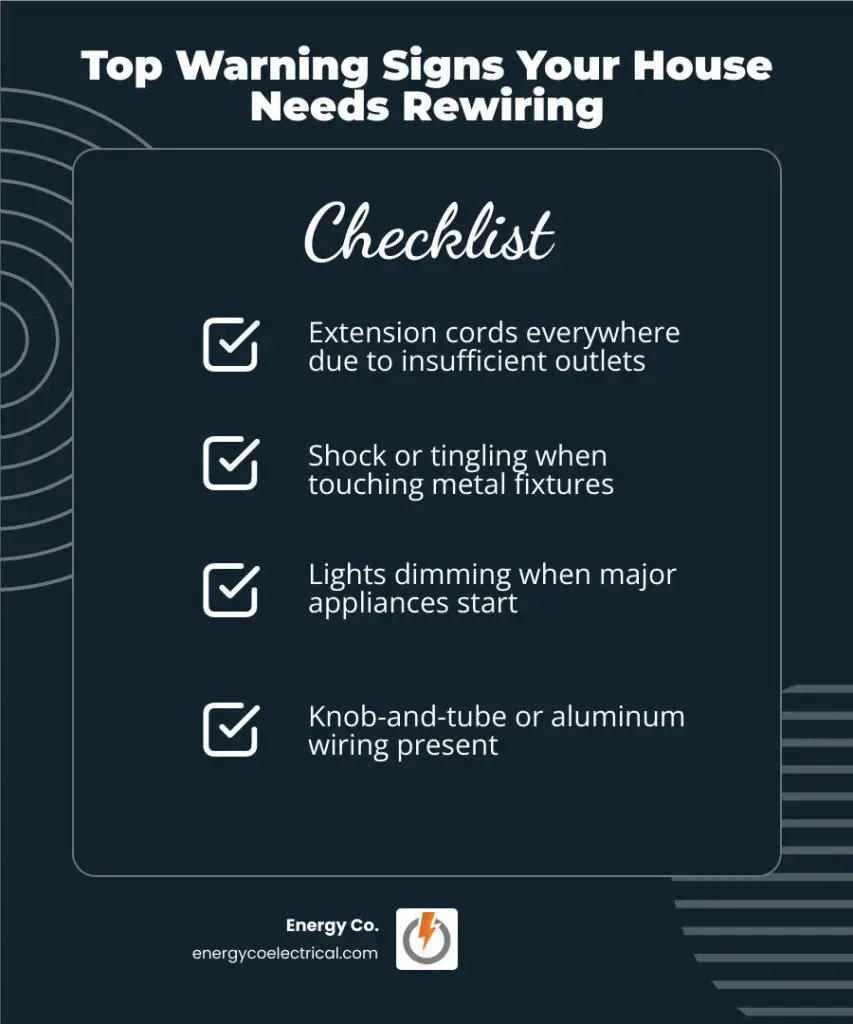
Warning signs a 1500 sq ft house needs rewiring
If your house is showing any of these signs, it is worth scheduling an evaluation:
- Flickering or dimming lights
- Breakers that trip often
- Buzzing sounds from outlets or panels
- Burning smell or scorch marks
- Warm outlets or switches
- Two-prong, ungrounded outlets
- Extension cords everywhere because there are not enough outlets
- Shock or tingling when touching metal fixtures
- Lights dimming when major appliances start
- Wiring known to be knob-and-tube or aluminum
Homes built before 1960 deserve extra attention, and homes with systems over 50 years old should be assessed carefully.
Why hiring a licensed electrician is essential
A whole-house rewire is not a DIY weekend project. It involves:
- Load calculations
- Safe terminations
- Grounding and bonding
- Permit requirements
- Code compliance
- Inspections
- Fire and liability risk
Even when the main breaker is off, parts of the service can still remain energized. That is one reason this work is so dangerous.
Hiring a licensed electrician helps protect:
- Your safety
- Your insurance eligibility
- Your resale value
- Your chance of passing inspection the first time
For more on safe electrical practices, read Electrical Repairs Dos And Donts For Beginners/.
How to Save Money on a 1500 Sq Ft Rewire Without Cutting Corners
Saving money is good. Saving money by creating a fire hazard is less good.
Smart ways to lower rewiring costs
The best cost-saving strategies are practical, not risky:
- Get at least 3 itemized quotes
- Clear access to attics, basements, and panel areas
- Move furniture and stored items before the crew arrives
- Rewire during a planned remodel so demolition and patching costs overlap
- Keep outlet and switch locations logical instead of relocating everything
- Handle painting separately if you have a trusted painter
- Schedule in slower seasons when possible
It is also smart to ask each contractor:
- Does the quote include permits?
- Does it include panel work?
- Who handles drywall repair?
- Will old wiring be removed or abandoned where allowed?
- How many new circuits are included?
Financing options, rebates, and insurance considerations
Because rewiring is a major safety upgrade, homeowners sometimes use financing such as:
- Home improvement loans
- FHA 203(k) rehabilitation financing
- HUD Title 1 loans
- USDA Section 504 programs for eligible homeowners
Availability depends on the homeowner and property, so verify current eligibility before relying on any program.
Insurance can also play a role. Some insurers may offer better terms or lower premiums after hazardous old wiring is replaced. Others may require rewiring before they will bind or renew coverage. If your home has knob-and-tube or aluminum wiring, checking with your carrier early can save you surprises later.
How rewiring can increase home value
Rewiring rarely gives the flashy appeal of a new kitchen, but it can absolutely improve value in practical ways:
- Fewer inspection issues during a sale
- Better buyer confidence
- Modern electrical capacity for today’s appliances
- Improved safety perception
- Potential insurance benefits
- Easier future upgrades like EV chargers, smart home systems, or finished basements
A safe, updated electrical system can help prevent a sale from falling apart over inspection concerns. That matters a lot in older Chicago-area homes.
For more general cost context, you can also review How Much Does It Cost to Rewire a House? (2026) .
Frequently Asked Questions About the Average Cost to Rewire a 1500 Sq Ft House
Is partial rewiring a viable option for a 1500 sq ft home?
Yes, sometimes. Partial rewiring can make sense when:
- Only one section of the house has unsafe wiring
- You are remodeling a kitchen, bath, or basement
- The panel and some circuits are already modern
- Budget requires a phased approach
But it is not always the best long-term move. If the rest of the house still has old, ungrounded, or deteriorated wiring, you may simply be postponing the inevitable. We usually recommend evaluating the whole system before deciding.
Does rewiring include drywall repair and painting?
Not always.
Many electricians include only the electrical scope:
- Opening access points as needed
- Installing new wiring and devices
- Coordinating inspections
Drywall repair, plaster patching, and painting are often separate. Always get this clarified in writing. This is one of the most common sources of surprise in rewiring budgets.
Will rewiring help with home insurance or failed inspections?
Often, yes.
Replacing outdated wiring can help with:
- Insurance underwriting
- Policy renewals
- Inspection reports during a sale
- Buyer negotiations
- Peace of mind, which is not a line item but still counts
If you are trying to understand general house rewiring costs from another published source, see Average Cost To Rewire A House .
Conclusion
The average cost to rewire a 1500 sq ft house can range from a modest few thousand dollars for a simple job to well over $15,000 for an older home with plaster walls, outdated wiring, and panel upgrades. For most homeowners in Chicago and the northwest suburbs, the real cost comes down to access, age, code requirements, and how much of the system truly needs updating.
The good news is that rewiring is not just an expense. It is a safety investment, a resale advantage, and a way to make your home work better for modern life.
At Energy Co., we help homeowners across Schaumburg, Hoffman Estates, Elk Grove Village, Palatine, Arlington Heights, Chicago, and the surrounding Chicagoland area plan rewiring projects with clear expectations and code-compliant work. If you want to learn more about our broader capabilities, visit Commercial Wiring/, explore Our Services/, learn About Us/, or Contact Us/ to discuss your home.