What Does a 200 Amp Electrical Panel Replacement Cost in 2026?
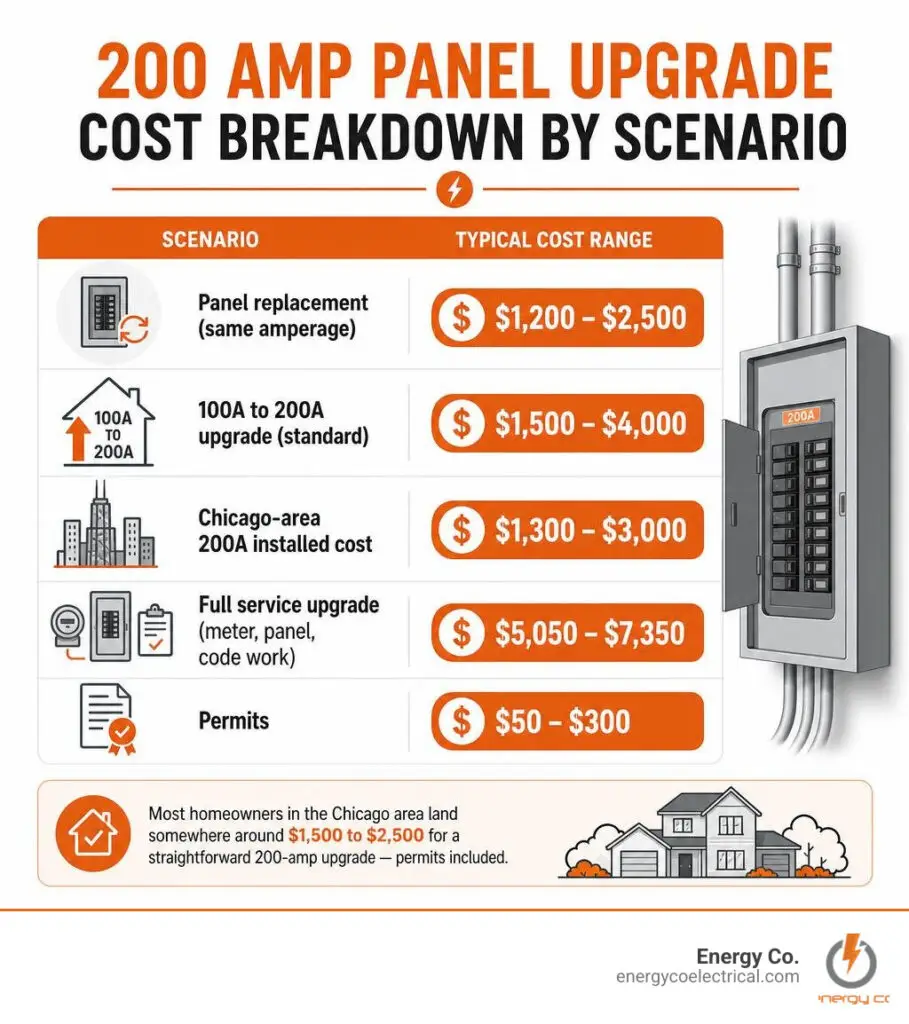
The 200 amp electrical panel replacement cost typically falls between $1,300 and $3,000 for most homeowners — but the final number depends on where you live, what your home needs, and whether you’re doing a simple panel swap or a full service upgrade.
Here’s a quick snapshot to answer your question right away:
| Scenario | Typical Cost Range |
|---|---|
| Panel replacement (same amperage) | $1,200 – $2,500 |
| 100A to 200A upgrade (standard) | $1,500 – $4,000 |
| Chicago-area 200A installed cost | $1,300 – $3,000 |
| Full service upgrade (meter, panel, code work) | $5,050 – $7,350 |
| Permits | $50 – $300 |
Most homeowners in the Chicago area land somewhere around $1,500 to $2,500 for a straightforward 200-amp upgrade — permits included.
Your electrical panel is the nerve center of your home’s power. Every outlet, appliance, and light fixture runs through it. If your panel is old, undersized, or struggling to keep up with modern demands — like an EV charger, central AC, or a home renovation — it may be telling you it’s time for an upgrade.
And if you’re in an older Chicago home, that conversation is happening sooner than you think.
The good news: understanding what drives the cost puts you in control before you ever pick up the phone to call an electrician.
I’m Michał Napieralski, lead electrician at Energy Co. in Schaumburg, IL, and helping Chicago-area homeowners navigate the 200 amp electrical panel replacement cost — from aging fuse boxes to full service upgrades — is exactly what our licensed team does every day. In this guide, I’ll walk you through everything you need to budget, plan, and make the right call for your home.
What is the 200 Amp Electrical Panel Replacement Cost in 2026?
When planning your budget, it helps to look at how different capacities stack up. The national average to replace or upgrade an electrical panel is roughly $2,200, but the price swings dramatically based on the total amperage you are bringing into your home.
In Chicago and surrounding suburbs like Cicero, Arlington Heights, and Mount Prospect, strict local building codes require all wiring to run through rigid metal conduit (EMT) rather than flexible Romex cables. This makes our local installations safer and highly durable, but it also means local labor and material dynamics differ slightly from national averages.
To give you an idea of how the 200 amp electrical panel replacement cost compares to other common residential capacities, here is a detailed breakdown of estimated costs in 2026:
| Panel Amperage | Best Suited For | Equipment Cost | Estimated Installed Cost |
|---|---|---|---|
| 100 Amps | Small homes (under 1,200 sq. ft.), gas heating, minimal heavy appliance loads. | $100 – $200 | $800 – $1,500 |
| 200 Amps | Standard 3-4 bedroom homes, central AC, electric vehicle (EV) chargers, hot tubs. | $250 – $350 | $1,300 – $3,000 |
| 400 Amps | Large estates (over 3,500 sq. ft.), multiple EV chargers, all-electric heating/cooling. | $800 – $1,500 | $3,000 – $7,000+ |
As detailed in How Much Does It Really Cost to Replace an Electrical Panel? , a standard 200-amp panel remains the baseline recommendation for modern living. While a 100-amp panel might keep the lights on, it leaves virtually no room for future electrification. Upgrading directly to a 200-amp unit is the most cost-effective way to future-proof your home, as the labor cost to install a 100-amp panel is almost identical to a 200-amp upgrade.
Key Factors That Influence Your Panel Upgrade Budget
No two homes in the Northwest Suburbs are wired exactly alike. A mid-century split-level in Palatine will present different installation challenges than a historic bungalow in Chicago or a newer build in Hoffman Estates. Several key variables will determine where your final estimate lands within the typical $1,300 to $3,000 range:
- Amperage Capacity: Moving from an existing 100-amp service to 200-amp service requires heavier gauge wires, a larger physical panel box, and more robust safety components.
- Panel Location and Accessibility: If your current panel is tucked away in a cramped crawlspace, an attic, or a closet that violates modern clearance codes, we may need to relocate it. Moving a panel to an easily accessible wall can add $1,000 to $2,700 to the project due to the extensive rewiring required to extend existing circuits.
- Utility Coordination: Upgrading your service size means coordinating with Commonwealth Edison (ComEd). While ComEd handles the external connection, we must install a compatible meter socket and service entrance cables to safely accept the higher current.
- Age and Condition of the Home: Older homes often harbor hidden electrical surprises. If we find deteriorating cloth insulation, ungrounded circuits, or hand-spliced junction boxes behind the walls, those safety issues must be resolved to bring the system up to the 2026 National Electrical Code (NEC) standards.
For a broader look at how these elements impact pricing nationwide, you can review the Cost To Upgrade Electrical Panel | Angi resource.
Understanding Labor and Permit Fees
Labor is the single largest component of your overall bill, frequently accounting for 60% to 80% of the total cost. Licensed, insured residential electricians in the Chicagoland area generally charge between $75 and $150 per hour. A standard 200-amp panel installation takes anywhere from 6 to 10 hours of active labor, translating to a labor cost of $600 to $1,500.
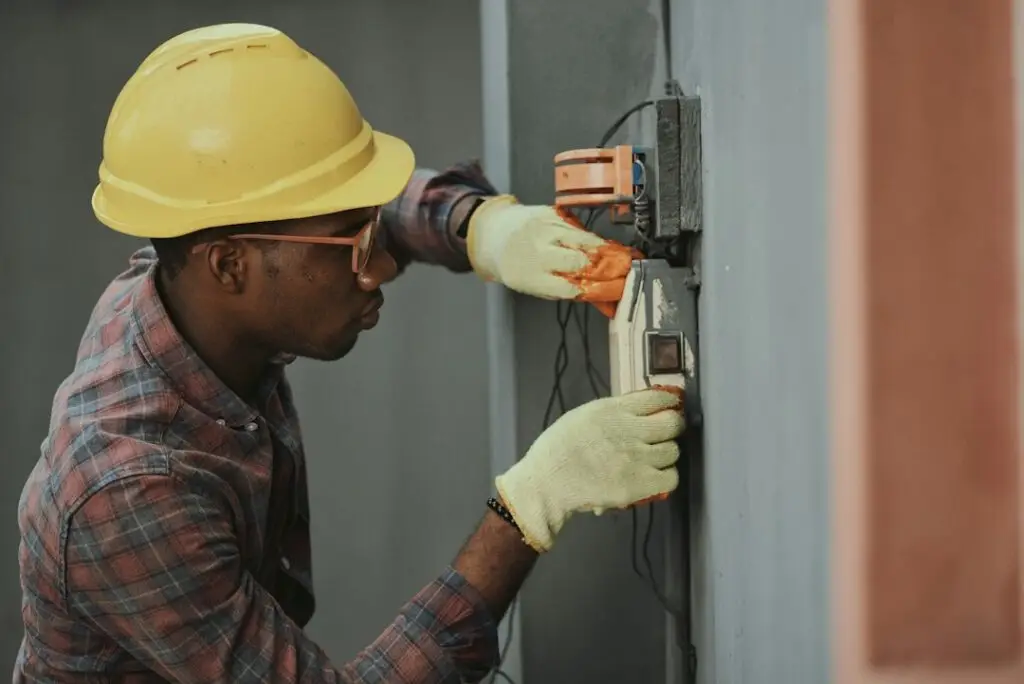
Permits are another non-negotiable expense. In Cook County and surrounding municipalities like Roselle, Streamwood, and Hanover Park, you must secure an electrical permit before replacing a panel. Municipal permit fees typically range from $50 to $300.
While some cut-rate contractors might offer to do the work “under the radar” without a permit, this is a massive risk. Unpermitted electrical work can void your homeowner’s insurance policy, create severe liabilities if a fire occurs, and complicate your home sale when a buyer’s inspector flags the unpermitted panel. At Energy Co., we handle the entire permitting and inspection process from start to finish to ensure your home is fully compliant and safe.
Panel Swap vs. Full Service Upgrade
When comparing quotes, it is vital to understand the difference between a simple “panel swap” and a “full service upgrade.”
A panel swap means we are replacing your old, worn-out 200-amp breaker box with a brand-new 200-amp panel. Because the service wires coming from the utility pole and the exterior meter box are already rated for 200 amps, we only need to replace the interior box and breakers. This is a highly straightforward job that typically costs between $1,200 and $2,500.
A full service upgrade (often called a “heavy-up”) occurs when we are increasing your home’s capacity — usually from 100 amps to 200 amps. This requires a much broader scope of work, including:
- Installing a new, larger 200-amp main breaker panel.
- Replacing the exterior meter socket with a modern, code-compliant meter base.
- Running new, thicker service entrance conductors from the utility hookup to the meter, and from the meter to the panel.
- Upgrading the home’s grounding system, which involves driving two copper grounding rods into the earth and bonding the system to your cold-water main.
Because of the extensive materials and utility coordination involved, a full service upgrade typically ranges from $3,900 to $7,050.
Signs Your Home Needs a 200-Amp Panel Upgrade
How do you know if your current panel is crying out for retirement? Your electrical system will usually give you several warning signs before it fails completely:
- Flickering or Dimming Lights: If your lights flicker or momentarily dim when your refrigerator, clothes dryer, or central AC kicks on, your panel is struggling to distribute the sudden demand for power.
- Frequently Tripping Breakers: Circuit breakers are designed to trip to prevent wires from overheating. If you find yourself constantly walking down to the basement or garage to reset a breaker, your circuits are overloaded.
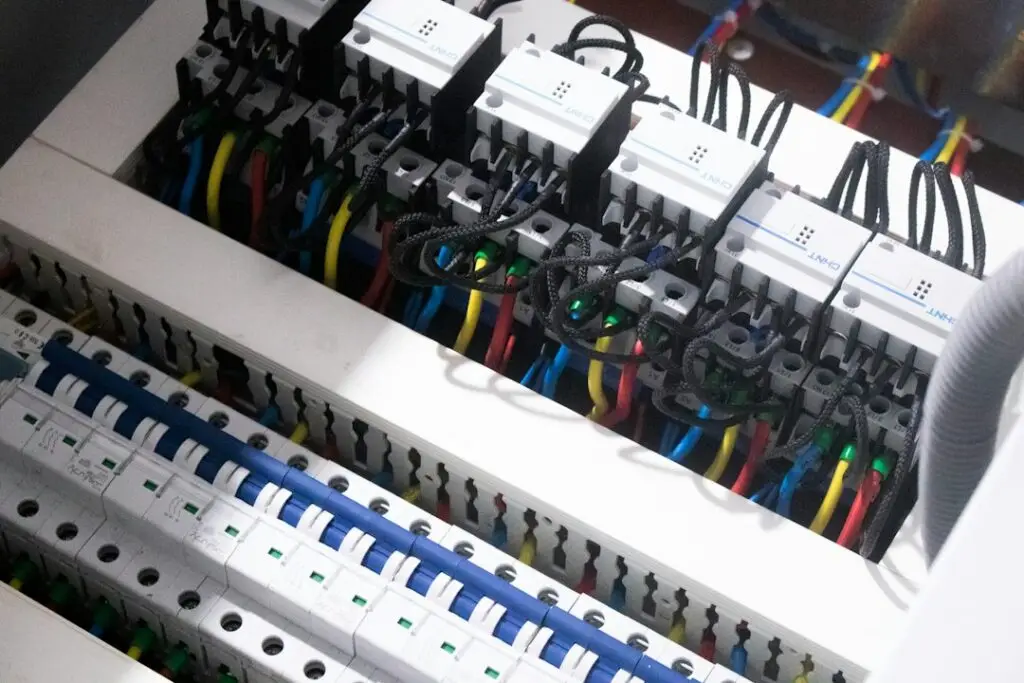
- An Outdated Fuse Box: If your home still relies on screw-in fuses rather than modern toggle breakers, your system is likely 50+ years old. Fuse boxes were designed for an era when a household’s primary electrical demands were a few lightbulbs and a radio. They are not equipped to handle modern appliances safely.
- A Warm or Noisy Panel: If the door of your electrical panel feels warm to the touch, smells faintly of burning plastic, or makes a faint buzzing or hissing sound, you have a serious electrical emergency. This indicates loose connections or arcing, which can quickly lead to an electrical fire.
- Adding an EV Charger or Heat Pump: Installing a Level 2 EV charger requires a dedicated 40-amp to 60-amp circuit. If your home only has a 100-amp service, adding this load will easily push your system over its safe operating limit.
Why Outdated Panels Pose a Serious Safety Risk
If your home was built between the 1960s and the 1980s, it might contain a specific brand of electrical panel that has been proven to be highly hazardous. Federal Pacific Electric (FPE) Stab-Lok panels and Zinsco panels have documented design flaws.
In independent testing, FPE Stab-Lok breakers failed to trip in response to overloads up to 60% of the time. When a breaker refuses to trip, the current continues to flow, overheating the wires inside your walls and creating a massive fire hazard. If you have one of these legacy panels, a complete replacement is not just a convenience upgrade — it is an urgent safety necessity.
In some cases, you might only need a targeted Circuit Breaker Repair or a quick fix to resolve minor issues. However, if the underlying panel structure is compromised, outdated, or unsafe, a full replacement is the only reliable path forward. You can learn more about managing these repairs in our guide on The Cheapest Ways to Repair a Circuit Breaker.
What to Expect During a Professional Installation
A panel replacement is a highly coordinated project, but we work hard to make the process as seamless as possible for you. Here is what a typical installation day looks like:
- Preparation: Before we arrive, we ask that you clear a 3-foot path of clearance in front of your current panel so our team has a safe, unobstructed workspace.
- Utility Disconnection: We coordinate with ComEd to temporarily shut off power to your home. This ensures our team can safely remove the old equipment without working on live, high-voltage lines.
- The Tear-Out: We carefully disconnect and label every individual circuit wire, remove the old panel enclosure, and prep the wall for the new system.
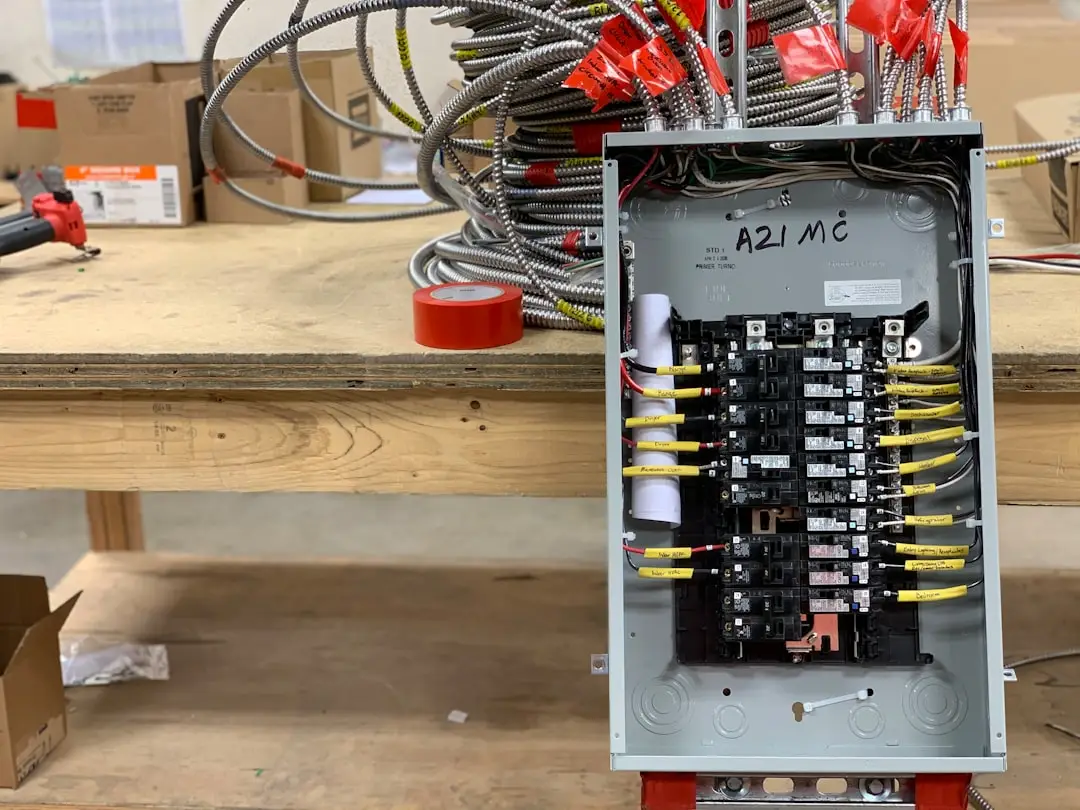
- The Rebuild: We mount the new 200-amp panel, install a new main breaker, run the heavy service entrance cables, and wire in brand-new circuit breakers.
- Grounding and Bonding: We upgrade your grounding system to meet modern safety codes, installing new ground rods and bonding clamps.
- Power Restoration: Once the work is complete and verified, we coordinate with the utility to restore power to your home. We then test every single circuit to ensure perfect functionality.
- Inspection: We schedule a final inspection with your local municipal inspector to sign off on the permit, certifying that the work meets all local building codes.
From start to finish, the actual physical installation typically takes 6 to 10 hours. Your power will be off for the majority of this window, so we recommend planning ahead by charging your devices and keeping your refrigerator and freezer doors closed to preserve cold air.
What is Included in a Professional 200 Amp Electrical Panel Replacement Cost Quote?
When you receive a professional quote from Energy Co., we believe in absolute transparency. A comprehensive, code-compliant quote for a 200-amp panel replacement should always include:
- All Materials: The 200-amp main breaker panel box, a complete set of new circuit breakers (including specialized AFCI/GFCI breakers where required by code), service entrance cables, and grounding materials.
- Licensed Labor: The skilled labor of our background-checked, highly trained residential electricians.
- Grounding Upgrades: Upgrading your water pipe bonds and installing dual earth grounding rods.
- Surge Protection: Modern building codes in many areas now require whole-home surge protection to protect your sensitive electronics from utility spikes.
- Permit and Inspection Fees: We pull the permits, coordinate with the city inspectors, and handle all the paperwork so you don’t have to.
How to Save Money on Your 200 Amp Electrical Panel Replacement Cost
While upgrading your electrical system is a significant investment, there are several practical ways to keep your costs under control:
- Bundle Your Electrical Projects: If you plan to install an EV charger, run a new circuit for a hot tub, or add recessed lighting, bundle those projects with your panel upgrade. Because we will already have your power shut off and your panel open, we can run the pre-wiring for these systems at a fraction of the cost of a separate service call.
- Pre-Wire for Future Needs: Even if you aren’t ready to buy an electric vehicle today, ask us to run the conduit and pre-wire for a future charger while we are upgrading your panel. This simple step adds just $100 to $300 to your bill now but saves you thousands in future drywall repairs and labor.
- Claim Federal Tax Credits: Under the Energy Efficient Home Improvement Credit, homeowners can claim a 30% federal tax credit up to $600 for qualifying panel upgrades that enable the installation of energy-efficient appliances or heat pumps.
- Take Advantage of Local Rebates: Depending on your municipality and current state programs, you may be eligible for additional Illinois energy rebates to help offset the cost of modernizing your electrical system.
To explore the full range of options we offer to keep your home running efficiently, browse our complete list of Our Services and learn more about our dedicated Residential Electrical Services.
Frequently Asked Questions about Electrical Panel Upgrades
Can I replace an electrical panel myself?
No. Under no circumstances should a homeowner attempt to replace or upgrade an electrical panel as a DIY project. Working inside an electrical panel exposes you to live service cables that carry enough voltage to be instantly fatal.
Furthermore, panel replacements require strict adherence to local building codes and mandatory municipal inspections. Unprofessional installation can lead to catastrophic electrical fires, voided home insurance policies, and severe code violations that will prevent you from selling your home in the future. Always leave this high-risk work to a licensed, insured professional who can guarantee a safe, code-compliant installation.
How long does it take to replace a 200-amp panel?
The physical installation of a new 200-amp panel typically takes 6 to 10 hours on-site, meaning your power will be temporarily shut off for most of a single day. However, the entire process — from your initial consultation and pulling municipal permits to coordinating with ComEd and scheduling the final city inspection — usually takes between 2 and 4 weeks to complete.
Will upgrading my panel increase my home’s value?
Yes. While a new electrical panel might not have the visual appeal of a remodeled kitchen, it is a highly valued upgrade for potential home buyers. A modern 200-amp panel signals to buyers and home inspectors that your property’s electrical system is safe, up to code, and fully prepared to handle modern electronic demands without expensive immediate upgrades. It is a powerful selling point that often recovers 50% to 80% of its initial cost upon resale.
Conclusion
Upgrading to a 200-amp electrical panel is one of the smartest investments you can make for your home’s safety, efficiency, and future value. By choosing a licensed team that understands the unique architectural demands and strict building codes of the Chicagoland area, you ensure the job is done right the first time — without any hidden surprises.
At Energy Co., we have spent years serving homeowners across Schaumburg, Elk Grove Village, Palatine, Rolling Meadows, and the entire Northwest Suburbs. We stand behind our work with licensed professionals, deep local expertise, and a complete satisfaction guarantee.
If you are ready to modernize your home’s power safely and reliably, we are here to help. Explore our specialized services for an Electrical Panel Upgrade or reach out to our team to request a personalized, permit-based quote today. If you are dealing with an urgent electrical issue in the city, we also offer fast, reliable help through our Expert Electrical Repair Service in Chicago: Fast & Reliable Solutions.