Why Circuit Breaker Repair Is One of the Most Important Electrical Decisions You’ll Make
Circuit breaker repair is something every Chicago homeowner or facility manager will likely face at some point — and knowing your options can save you hundreds, or even thousands, of dollars.
Quick answer: What are your circuit breaker repair options?
| Situation | Best Action |
|---|---|
| Breaker trips occasionally | Reset and monitor; call an electrician if it repeats |
| Breaker is hot, buzzing, or scorched | Replace immediately — do not reset |
| Residential molded-case breaker is faulty | Replace (reconditioning is prohibited by NEC 240.88) |
| Industrial or commercial power breaker | Repair, recondition, or remanufacture depending on condition |
| Breaker is 25+ years old | Replace or have it professionally evaluated |
Circuit breakers are mechanical devices with moving parts. That makes them the most likely component in your electrical system to wear out over time. When one fails — or starts showing warning signs — the stakes are high: we’re talking about potential fires, equipment damage, and unexpected outages.
The good news? Not every failing breaker needs a full replacement. And not every “repair” is safe to attempt on your own.
This guide breaks down the cheapest, safest ways to handle circuit breaker issues — whether you’re dealing with a tripping breaker in a Chicago bungalow or managing aging switchgear in a commercial facility.
I’m Michał Napieralski, and through my work at Energy Co. serving the Chicago suburbs, I’ve helped hundreds of homeowners and businesses navigate circuit breaker repair, panel upgrades, and code-compliant electrical solutions. Let’s walk through exactly what you need to know.
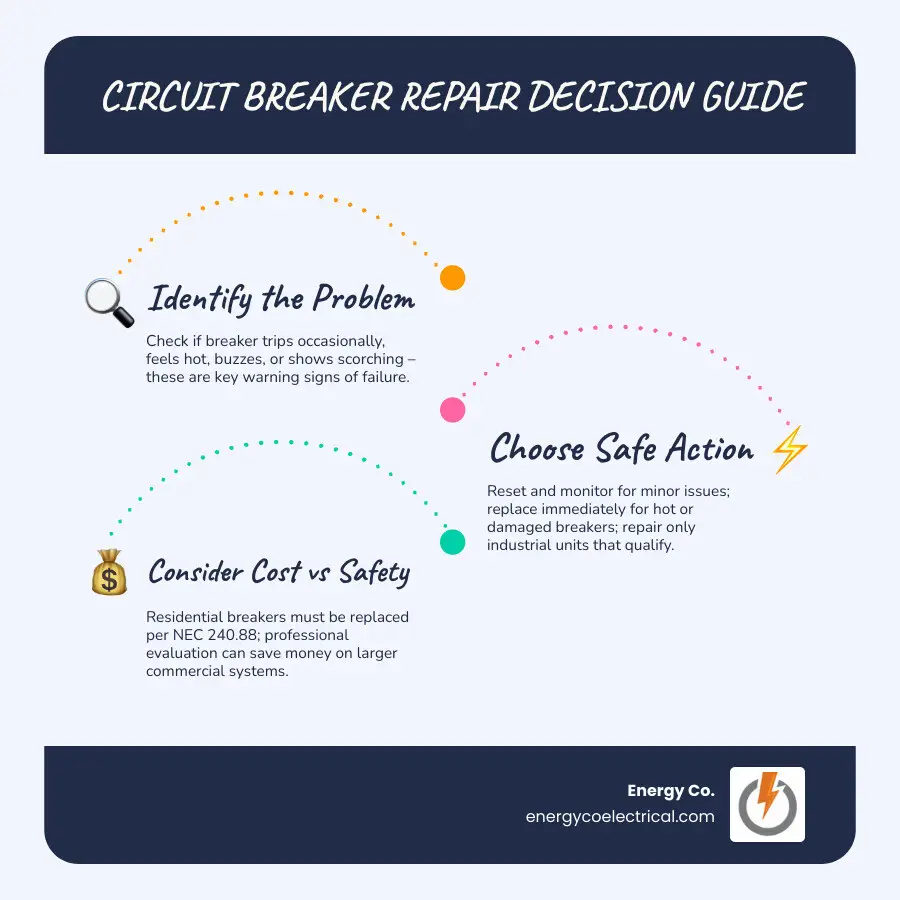
Understanding Circuit Breaker Repair vs. Replacement
One reason people overpay is that the word “repair” gets used for several very different services. In practice, the cheapest safe option depends on the breaker type, age, damage level, and whether parts are still available.
Here is the plain-English breakdown:
| Service | What it means | Best for | Usually cheapest? |
|---|---|---|---|
| Repair | Fixing a specific issue, sometimes without full teardown | Isolated defects in serviceable power breakers | Yes, if damage is minor |
| Reconditioning | Disassembly, cleaning, inspection, part replacement, testing | Aging commercial or industrial breakers with wear | Often cheaper than new |
| Remanufacturing | Full rebuild to like-new condition using approved parts and testing | Mission-critical or obsolete power breakers | Cheaper than replacement in many cases |
| Replacement | Removing old breaker and installing a new matching unit | Faulty residential breakers or severely damaged units | Cheapest only when repair is not allowed or practical |
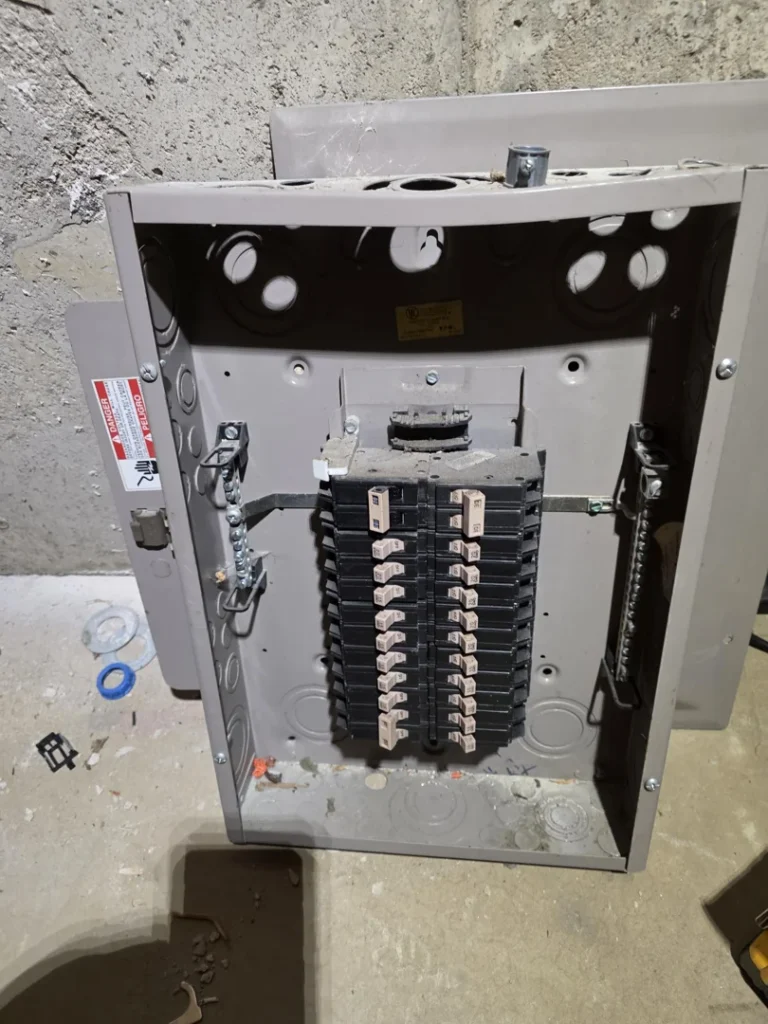
For homeowners, the biggest money-saving rule is simple: residential molded-case breakers are generally replaced, not rebuilt. Current code guidance matters here. NFPA 70B and NEC Article 240.88 do not permit molded-case circuit breakers to be reconditioned. So if a standard home panel breaker is bad, the budget-friendly and code-compliant answer is usually replacement, not a “repair” experiment with a screwdriver and optimism.
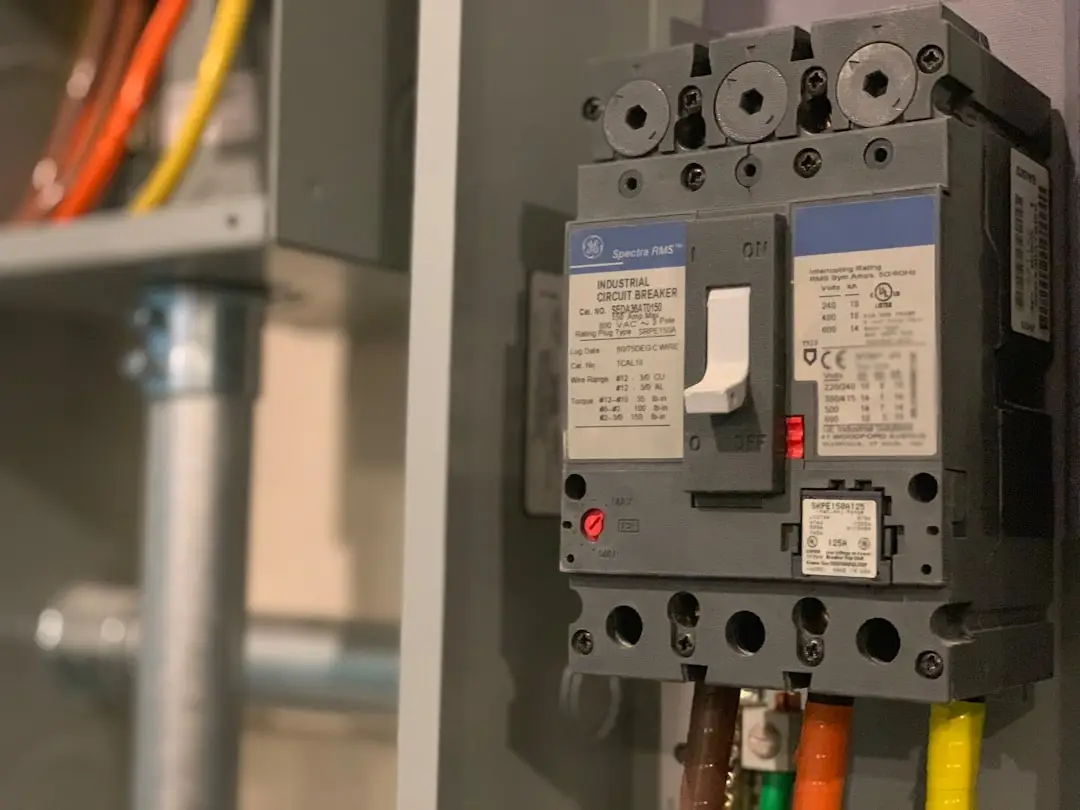
For commercial and industrial systems, it is different. Low-voltage and medium-voltage power breakers may be repairable, reconditionable, or remanufacturable depending on condition and standards compliance. That is where professional evaluation can save serious money. In some cases, refurbishment avoids replacing the entire switchgear lineup.
If you want a broader look at what we handle across residential, commercial, and industrial work, see our electrical services.
Identifying the Most Cost-Effective Refurbishment Levels
In larger electrical systems, refurbishment is often offered in levels. Names vary by provider, but the concept is usually similar:
Level 1 service
- Basic inspection
- Cleaning
- Lubrication
- Minor adjustments
- Best when the breaker is still operating well and just needs a tune-up
Level 2 reconditioning
- More complete disassembly
- Detailed inspection
- Replacement of worn components
- Mechanical and electrical testing
- Good for breakers showing wear but not catastrophic failure
Level 3 remanufacturing
- Full teardown
- Rebuild to like-new condition
- Major component replacement
- Calibration and final testing
- Often chosen for critical breakers where replacement is expensive or lead times are long
The cheapest level is not always the best value. A light tune-up on a badly worn breaker is like putting a bandage on a leaky roof. It may look thrifty for about five minutes.
For power breakers, using proper parts and documented testing matters. In some OEM-style programs, higher-level remanufacturing may also include longer warranty coverage, which can make a bigger upfront spend cheaper over the breaker’s remaining life.
When to Choose Modernization Over Full Replacement
If the breaker is part of older switchgear, replacing only the breaker may not be the smartest move. Sometimes modernization is the better value.
Modernization can include:
- Reconditioning existing power breakers
- Upgrading trip units
- Improving arc-flash safety features
- Converting obsolete components to supported designs
- Performing a custom retrofill when direct replacement is no longer available
A key industry insight is that switchgear modernization can extend useful equipment life by up to 30 years. That is a big number, especially for facilities trying to avoid the cost, downtime, and disruption of a full electrical distribution replacement.
Modernization makes the most sense when:
- The switchgear enclosure and busbar are still in good condition
- New direct replacement breakers are unavailable or have long lead times
- Downtime must be minimized
- Capital budgets are tight
- The facility needs safety or reliability improvements without gutting the whole system
The important caveat: not every “retrofit” is automatically safe. Compatibility, short-circuit ratings, and design verification matter. This is where professional engineering review pays for itself.
Warning Signs and Cost-Saving Maintenance Strategies
The cheapest breaker problem is the one you catch before it becomes an emergency.
Common signs a breaker needs repair, evaluation, or replacement include:
- Frequent or repeated tripping
- A breaker that will not reset
- Heat at the breaker or panel
- Burning smell
- Buzzing or humming
- Flickering lights on the affected circuit
- Visible scorching, melting, or discoloration
- Rust or corrosion
- Mechanical sluggishness
- Age-related wear, especially around 25 years or older
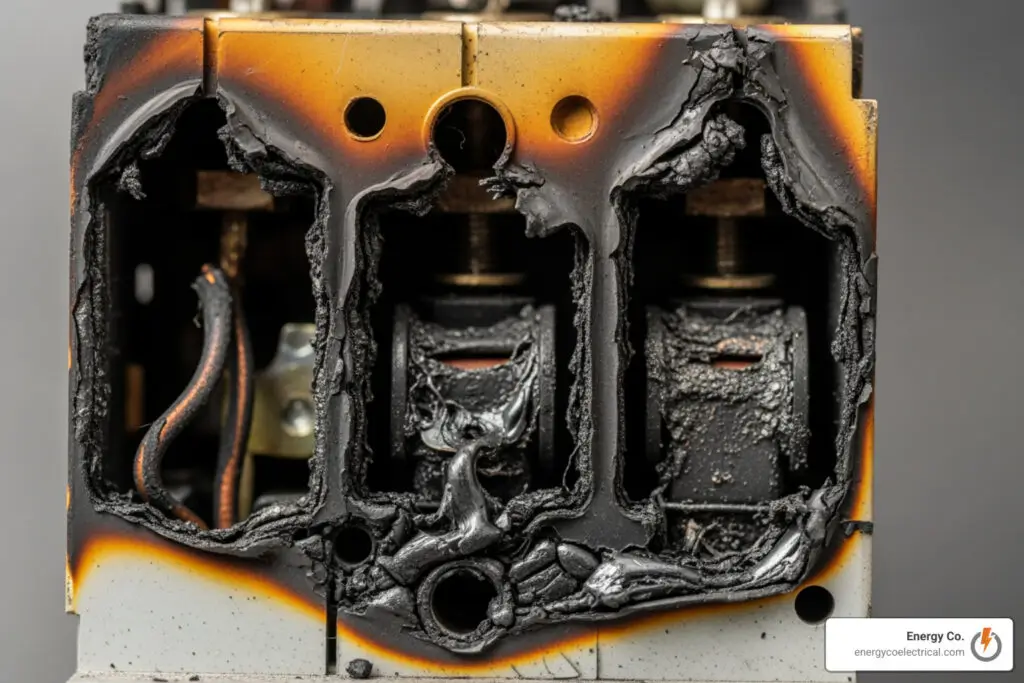
Repeated tripping does not always mean the breaker itself is bad. It can also signal:
- Circuit overload
- Short circuit
- Ground fault
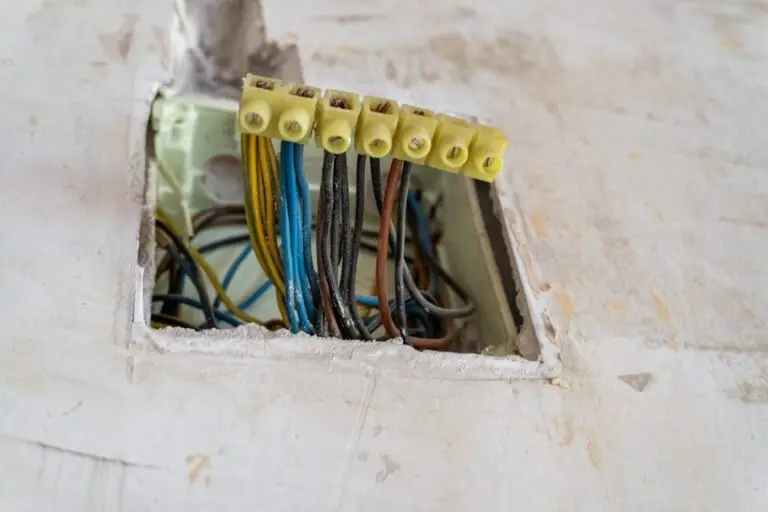
- Loose connection
- Damaged appliance
- Failing wiring in an older Chicago-area home
That is why the cheapest path starts with correct diagnosis. Replacing a breaker when the real problem is a failing appliance or loose neutral is not saving money. It is buying the wrong answer.
For homeowners, one safe first step is to reset a breaker once after unplugging or turning off loads on that circuit. If it trips again, or if you notice heat, odor, or noise, stop there and call a licensed electrician. Our advice lines up with the basics in our guide on electrical repair dos and don’ts.
Preventive Testing to Avoid Emergency Outages
Maintenance is usually cheaper than emergencies, especially in commercial and industrial settings where one failed breaker can shut down operations.
Useful preventive testing methods include:
- Infrared inspection to spot hot connections or overheating components
- Primary injection testing to verify breaker performance under actual current conditions
- Secondary injection testing for trip unit function
- Mechanical operation checks for opening and closing speed
- Insulation testing
- Contact resistance testing
- Fleet maintenance tracking for multi-breaker sites
NFPA 70B now puts even more emphasis on documented electrical maintenance programs, with maintenance intervals based on equipment condition and environment. In plain language: dusty, damp, high-use, or mission-critical systems need more attention, not less.
If a breaker problem becomes urgent, our emergency electrical services team can help throughout Chicagoland.
The Financial Benefits of Professional Reconditioning
For the right equipment, professional reconditioning can be dramatically cheaper than full replacement. Industry sources commonly cite savings in the range of 40% to 70% compared with buying new equipment.
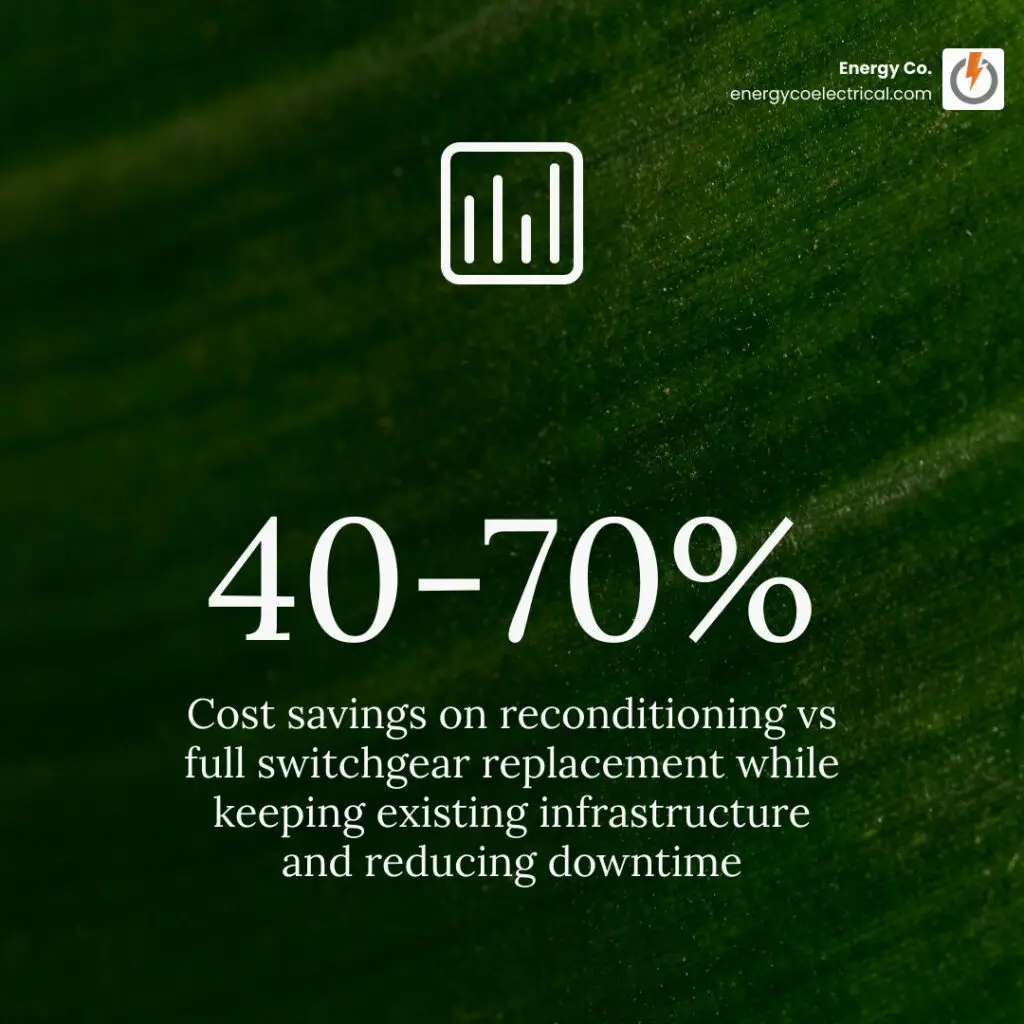
Why the savings can be so large:
- Existing switchgear stays in place
- Less demolition and reconstruction
- Shorter outages
- Lower shipping and lead-time problems
- Hard-to-find older equipment may be serviceable
- Capital spending can be deferred
There is also the hidden savings category: downtime. For a business, an outage often costs more than the breaker itself. Lost production, spoiled product, tenant complaints, and after-hours emergency labor add up fast.
The Professional circuit breaker repair and Remanufacturing Process
When a power breaker is worth saving, professional circuit breaker repair follows a structured process. The exact steps vary by breaker type, but a proper workflow usually looks like this:
Inspection and documentation
- Confirm model, ratings, and condition
- Record visible defects, wear, and previous modifications
- Decide whether repair, reconditioning, remanufacturing, or replacement makes sense
Safe isolation and removal
- De-energize equipment
- Apply lockout/tagout
- Verify absence of voltage
- Remove breaker for shop or field service
Complete disassembly
- Breaker is taken apart down to assemblies or individual components as needed
- Contacts, springs, mechanisms, arc chutes, insulation parts, and trip devices are inspected
Cleaning
- Dirt, carbon, oxidation, and old lubricants are removed
- Depending on the service, this can include precision cleaning methods and surface restoration
Repair or parts replacement
- Worn or damaged parts are repaired or replaced
- Common items include contacts, springs, linkage, bearings, coils, and trip components
Surface treatment and lubrication
- Contact surfaces may be polished or plated where appropriate
- Correct lubricants are applied to moving parts
Reassembly and adjustment
- Mechanisms are rebuilt
- Clearances and timing are adjusted
- Mechanical operation is tuned
Calibration and testing
- Trip settings are verified
- Mechanical cycling is performed
- Electrical testing confirms proper operation
Final quality review
- Documentation is completed
- Unit is approved for return to service
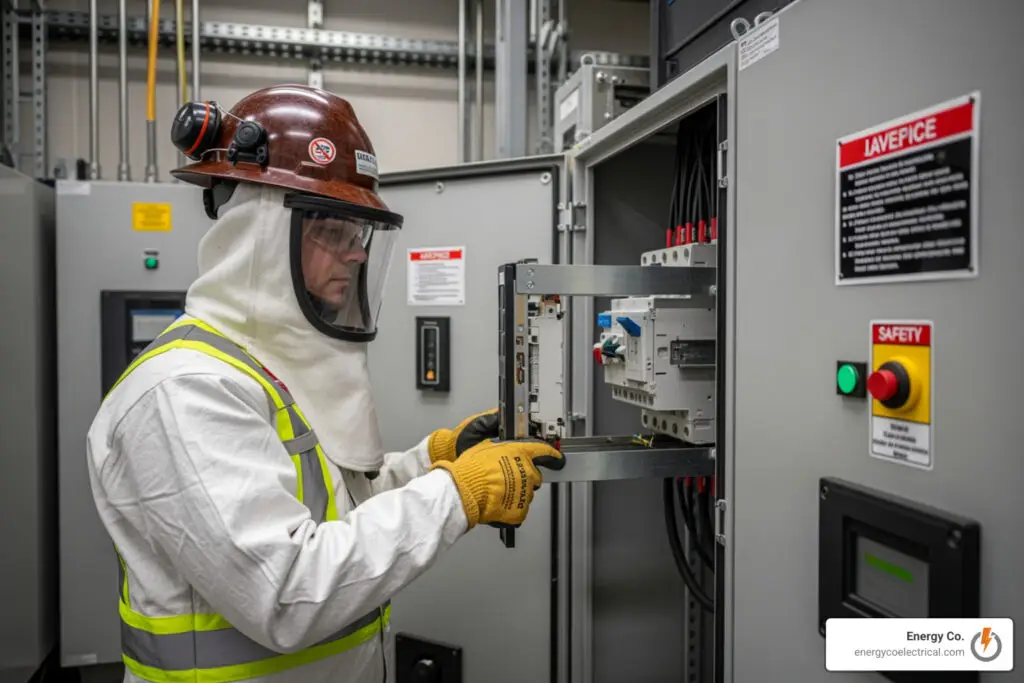
For power breakers, recognized standards matter. IEEE C37.59 is one of the key standards governing reconditioning and conversion practices, and NFPA 70B is central to maintenance program expectations. In other words, this is not a “spray it with cleaner and hope for the best” situation.
Safety Precautions and Regulatory Standards
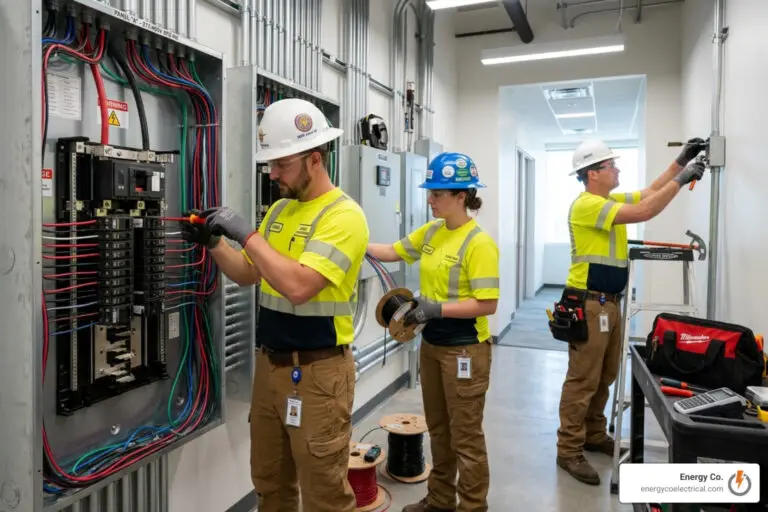
Safety comes first because circuit breaker work can expose people to shock, arc flash, blast pressure, and fire hazards.
Core precautions include:
- Lockout/tagout before work begins
- Voltage verification with properly rated test equipment
- Arc-rated PPE where required
- Face, eye, and hand protection
- Dry working conditions
- Standing to the side of equipment during operation when appropriate
- Following equipment-specific procedures
- Using only qualified electricians or trained breaker technicians
For residential work, the biggest code point is this: molded-case circuit breakers are not to be reconditioned under NEC Article 240.88. That is why homeowners should think in terms of diagnosis and replacement, not homebrew breaker surgery.
For homes in Chicago and the northwest suburbs, especially older properties with legacy panels or aging wiring, safe troubleshooting often matters more than the breaker itself. If you need help with home electrical issues, our residential electrical services page covers more.
Modernizing Fleet Maintenance and Testing
For facilities with multiple breakers, the lowest long-term cost usually comes from fleet management rather than one-off crisis calls.
Modern maintenance programs may include:
- Digital tracking of breaker condition and service history
- Scheduled exercising and testing
- Upgrades to solid-state trip units
- Arc-flash reduction features
- Remote racking or remote switching for safer operation
- Monitoring for insulating gas or pressure issues on applicable equipment
- Planned replacement of obsolete parts before failure
This approach helps spread costs over time and reduces nasty surprises. Nobody likes nasty surprises in electrical rooms.
Frequently Asked Questions about circuit breaker repair
Can residential molded-case circuit breakers be repaired?
Usually, no. In residential panels, molded-case circuit breakers are generally replaced rather than repaired or reconditioned. NEC 240.88 and NFPA 70B make this clear: molded-case breakers are not permitted to be reconditioned.
That matters because most home breakers are molded-case devices. They are compact, factory-assembled, and not intended for rebuilding in the field. Attempting to open or “fix” one can compromise its short-circuit protection and create a serious safety risk.
So for homeowners, the cheapest safe answer is usually:
- Diagnose why the breaker failed or tripped
- Replace the faulty breaker with the correct listed type
- Fix any underlying overload, wiring, or appliance issue
What are the common signs that indicate a circuit breaker needs repair?
The most common warning signs are:
- Breaker trips repeatedly
- Breaker feels hot
- Burning smell near the panel
- Buzzing or humming
- Flickering lights
- Breaker will not stay reset
- Rust, corrosion, or moisture signs
- Scorching, melting, or discoloration
- Sluggish mechanical action in serviceable power breakers
- Advanced age and visible wear
A breaker can also look normal and still fail testing. That is one reason professional evaluation matters in commercial and industrial systems.
How does professional circuit breaker repair save money?
Professional circuit breaker repair saves money in several ways:
- Prevents replacing the wrong part
- Allows repair instead of full replacement when the equipment type permits it
- Extends the life of switchgear assets
- Avoids emergency outage costs
- Helps defer major capital projects
- Reduces downtime through planned maintenance
- Improves labor efficiency by solving issues before failure cascades
For larger systems, reconditioning or remanufacturing can cost much less than buying new. For homes, professional diagnosis prevents guesswork and reduces the chance of replacing breakers when the actual problem is hidden elsewhere in the circuit.
Conclusion
The cheapest way to handle a breaker problem is not always the one with the lowest upfront price. It is the one that is safe, code-compliant, and actually fixes the root cause.
For homeowners in Chicago, Schaumburg, Hoffman Estates, Elk Grove Village, Rolling Meadows, Palatine, Roselle, Streamwood, Hanover Park, Arlington Heights, Mount Prospect, Cicero, and the surrounding Chicagoland area, that usually means replacing faulty residential breakers instead of trying to repair them.
For commercial and industrial facilities, the equation is broader. Repair, reconditioning, remanufacturing, and modernization can all be smart options depending on equipment type and condition. Done properly, these strategies can extend asset life, reduce downtime, and save substantial money.
At Energy Co., we help clients make the practical choice, not the expensive guess. We bring local experience, licensed electricians, and 24/7 emergency response across Chicagoland.
If you need help now, schedule your professional Circuit Breaker Repair today.