When the Power Goes Out in Cook County, Are You Ready?
Backup generator installation in Cook County is one of the smartest investments a homeowner can make — especially when Chicago winters, summer storms, and aging grid infrastructure can knock out power for hours or even days. This guide covers the backup generator installation Cook County homeowners need to know, from permits to power-up.
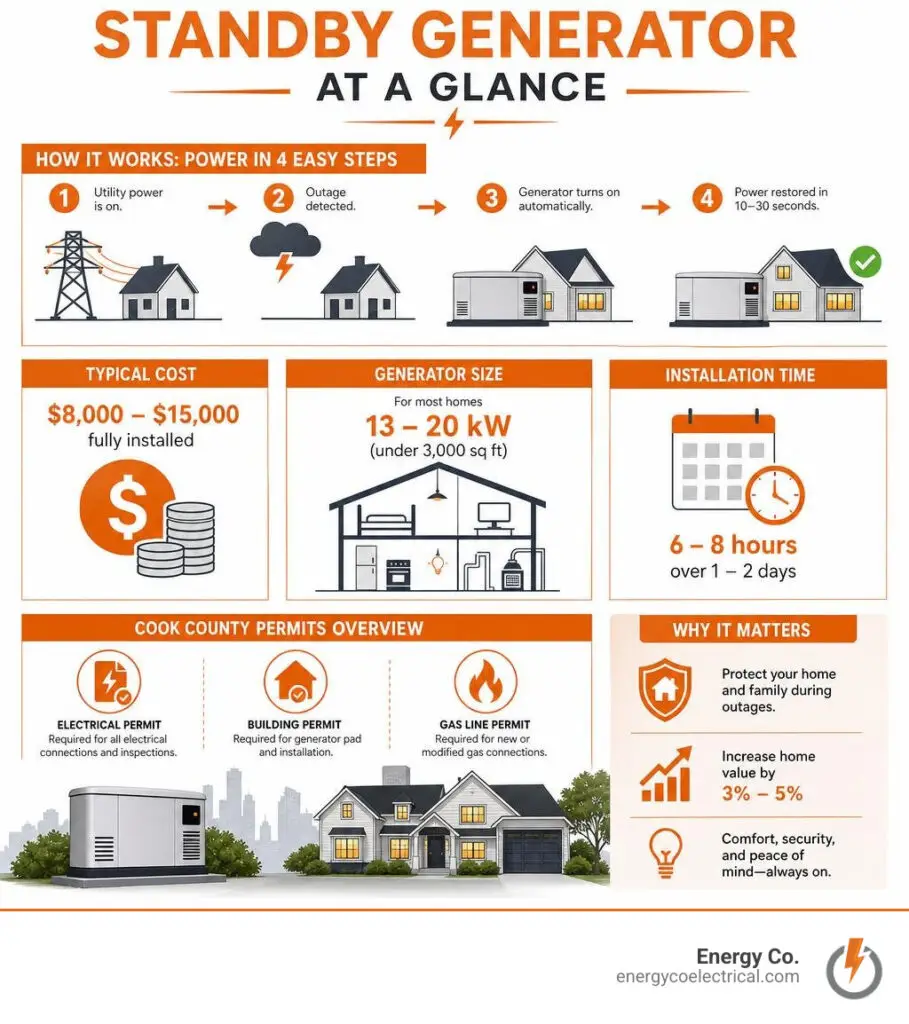
Here’s what you need to know at a glance:
| Question | Quick Answer |
|---|---|
| Typical cost | $8,000 – $15,000 fully installed |
| Best option for whole-home coverage | Standby generator (automatic) |
| Generator size for most homes | 13 – 20 kW (under 3,000 sq ft) |
| Permits required? | Yes — electrical, building, and gas line |
| How fast does power restore? | 10 – 30 seconds automatically |
| Installation time | 6 – 8 hours over 1 – 2 days |
| Home value increase | 3% – 5% |
Picture this: it’s 2 AM in January. An ice storm takes down the grid. Your sump pump stops. Your furnace shuts off. With a professionally installed standby generator, you might not even notice the outage happened — until you look outside and see every neighbor’s house sitting dark.
That’s the difference a proper installation makes.
I’m Michał Napieralski, a licensed electrician serving the Chicago suburbs with residential and commercial electrical services — including backup generator installation in Cook County — helping homeowners protect their homes from exactly these situations. In this guide, I’ll walk you through everything: costs, sizing, permits, and what a professional installation actually involves.
Standby vs. Portable: Choosing the Right System
When preparing your home for unexpected blackouts, the first decision you will face is choosing between a portable generator and a permanently installed standby generator.
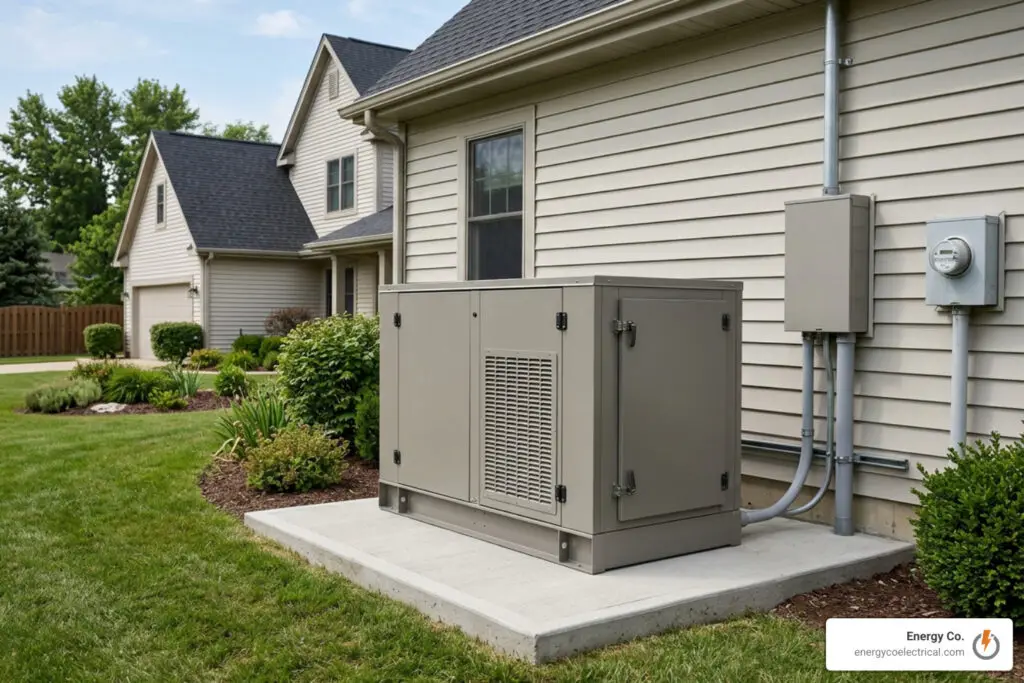
While both systems provide emergency power, they differ significantly in cost, capability, safety, and convenience.
| Feature | Portable Generators | Standby Generators |
|---|---|---|
| Average Unit Cost | $500 – $2,500 | $6,000 – $15,000 (installed) |
| Fuel Source | Gasoline, Diesel, or Liquid Propane (manual fill) | Natural Gas or Liquid Propane (continuous line) |
| Activation | Manual pull-start, running extension cords | Fully Automatic (via Transfer Switch) |
| Power Capacity | 3,000 – 10,000 Watts (Essential devices only) | 13,000 – 48,000 Watts (Whole-house coverage) |
| Safety Risks | High carbon monoxide risk if placed too close | Extremely safe, weatherized outdoor enclosure |
| Lifespan | 5 – 10 years (dependent on usage) | 20+ years (with preventive maintenance) |
Power Capacity and Wattage Calculations
To understand what size system you need, you have to look at both running wattage (the continuous power required to keep an appliance operating) and starting wattage (the brief surge of extra power required to start electric motors in appliances like your air conditioner or refrigerator).
Portable generators typically require you to prioritize and manually plug in individual devices using heavy-duty extension cords. Standby generators, on the other hand, connect directly to your home’s electrical panel. If you want a seamless transition where you don’t have to drag a heavy machine out of the garage in a rainstorm, a standby unit is the way to go.
Fuel and Carbon Monoxide Safety
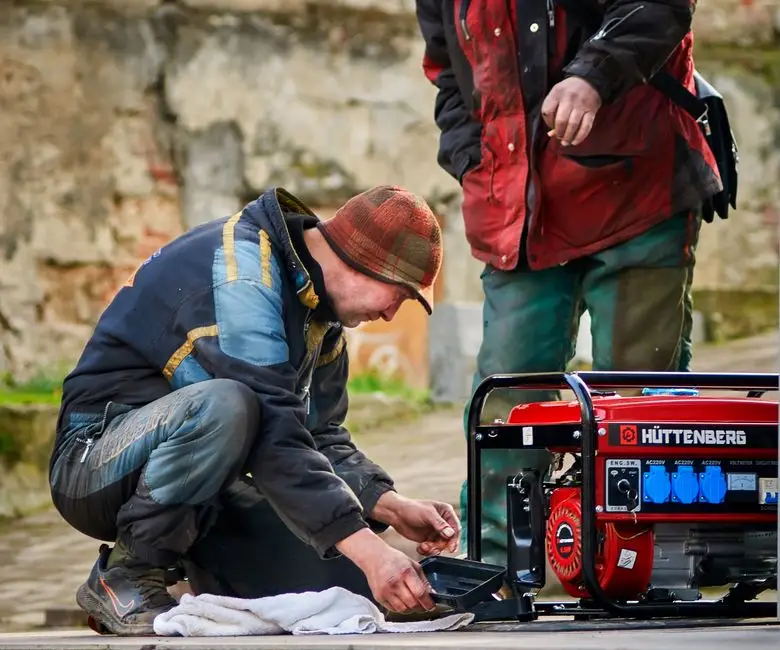
Portable units run on liquid fuels that you must store safely and refill constantly during an outage. They also present a severe risk of carbon monoxide poisoning if they are not placed at least 20 feet away from your home’s windows and doors.
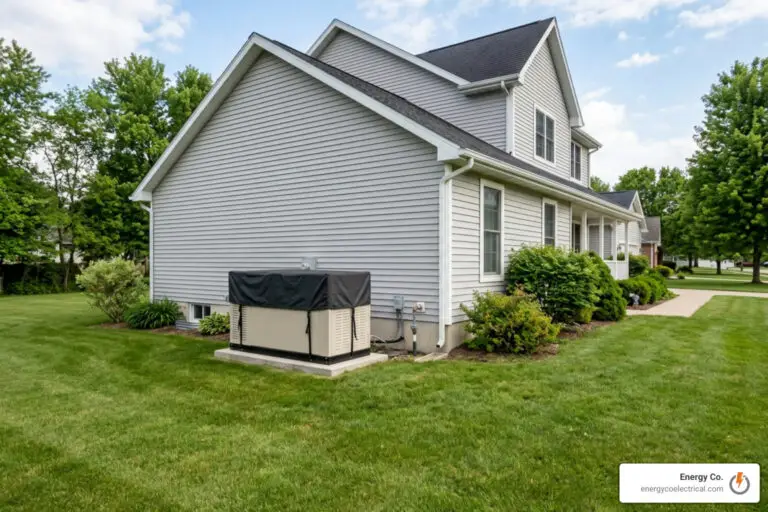
Standby units run on your existing natural gas or liquid propane lines. They sit safely outside on a permanent base, constantly monitoring your utility line.
For a deeper dive into how these systems integrate with your home’s main panel, check out our guide on Reliable Generator Installation Service in Chicago – Get Expert Help Today.
The Benefits of Backup Generator Installation Cook County Homes
Living in the Chicagoland area means dealing with unpredictable weather. From heavy summer thunderstorms in Schaumburg and Palatine to freezing winter ice storms in Streamwood and Hoffman Estates, our electrical grid is constantly put to the test.
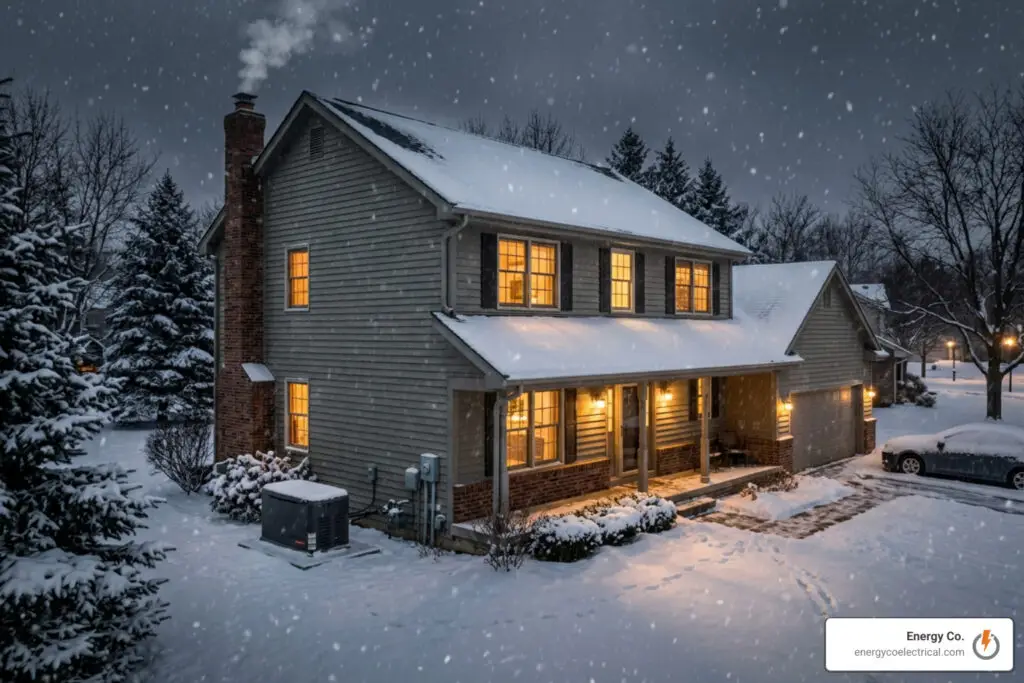
A professionally installed standby generator offers several distinct advantages:
- Financial Protection against Flooding: In Cook County, a summer power outage often means your basement sump pump goes silent. A single flooded basement can easily cause $10,000 to $30,000 in water damage. A standby generator ensures your sump pump never stops running.
- Preventing Frozen Pipes: During a sub-zero January freeze, a home without heating can experience frozen and burst water pipes in less than 24 hours. The generator keeps your furnace blower operating, maintaining a safe indoor temperature.
- Property Value Increase: A professionally installed whole-house generator can increase your home’s overall market value by 3% to 5%. On a $400,000 home, that translates to an added value of $12,000 to $20,000—often recovering the entire cost of the installation.
- High Return on Investment (ROI): Because of the added property value and protection against catastrophic home damage, homeowners typically see an ROI between 50% and 150% on their installation.
- Insurance Premium Discounts: Many major insurance companies offer premium discounts for homes with permanently installed backup generators because they significantly reduce the risk of mold, flooding, and frozen pipe claims.
- Food Preservation and Medical Security: You can avoid hundreds of dollars in spoiled food costs while keeping critical medical equipment, such as oxygen concentrators or home dialysis machines, running without interruption.
Whether you choose to power your entire house or focus only on essential circuits (like your refrigerator, HVAC, sump pump, and select lights), we can help design a system tailored to your layout. Explore our comprehensive Residential Electrical Services to see how we protect local homes.
Sizing and Cost: What to Expect for Your Standby Generator
Sizing a generator is not a matter of guesswork. It requires a precise electrical load calculation to ensure the generator can handle the startup surges of your largest appliances.
Typical Wattage Requirements for Essential Appliances
- Sump Pump (1/2 HP): 1,050 Running Watts / 2,200 Starting Watts
- Refrigerator/Freezer: 700 Running Watts / 2,200 Starting Watts
- Furnace Blower (1/3 HP): 700 Running Watts / 1,400 Starting Watts
- Central Air Conditioner (3-Ton): 3,500 Running Watts / 9,500 Starting Watts
- Electric Water Heater: 4,500 Running Watts / 4,500 Starting Watts
- Microwave Oven: 1,000 Running Watts / 1,000 Watts
Sizing Your System
- Homes under 3,000 square feet: Typically require between 13 and 20 kilowatts (kW) for complete whole-home coverage.
- Larger homes (or those with electric heating/multiple AC units): Usually require 22 to 48 kW systems.
Understanding the Cost Breakdown
A complete, turnkey backup generator installation in Cook County typically costs between $8,000 and $15,000. While the generator unit itself may cost between $3,000 and $6,000, the final price reflects the extensive professional labor, specialized equipment, and administrative requirements involved:
- The Generator Unit: $3,000 – $6,000 (depending on kW capacity and brand, with Generac commanding about 75% of the residential market share).
- Automatic Transfer Switch (ATS): $1,200 – $2,000.
- Professional Labor & Materials: $3,000 – $5,000 (includes pouring the concrete pad, running heavy-gauge electrical conduit, and completing the gas line connections).
- Permit and Municipal Fees: $100 – $500.
The active physical installation of the generator typically takes 6 to 8 hours over the course of one or two days. However, the pre-installation phase (securing permits and coordination) can add a couple of weeks to the project timeline.
For a complete breakdown of what influences these figures, check out The Definitive Guide to Standby Generator Installation Costs.
Navigating Permits and Code Compliance in Chicagoland
You cannot simply buy a standby generator, place it in your yard, and wire it up. Unpermitted electrical work can void your homeowner’s insurance policy, result in hefty municipal fines, and complicate future home sales.
In Cook County, the permitting process is rigorous and requires professional coordination.
Essential Documentation for Cook County Permitting
To secure a permit from the Cook County Department of Building and Zoning (or your local municipal building department), several documents must be prepared:
- Plat of Survey: You must submit a current Plat of Survey (usually less than 5 years old) signed and sealed by an Illinois registered surveyor. This plan must show the exact proposed location of the generator relative to your property lines and existing structures.
- Electrical Contractor Letter of Intent: A signed letter from a registered electrical contractor (like us) detailing the scope of work, specifying the generator’s capacity in kilowatts (kW), the main circuit breaker size, and providing a single-line electrical diagram.
- Plumbing Contractor Letter of Intent: Because standby generators run on natural gas or liquid propane, a registered plumbing contractor must submit a letter of intent and a detailed gas piping diagram.
- Manufacturer Specifications: Cut sheets for both the generator unit and the Automatic Transfer Switch (ATS) to verify they are certified by a Nationally Recognized Testing Laboratory (NRTL).
For official county-wide rules, you can review the Cook County Generator Installation Permit Requirements. If you live in the northern suburbs, you must also follow guidelines like the Village of Northbrook Generator Permit Guidelines.
Gas Piping Material Restrictions
Local codes dictate how gas lines must be routed to your generator. For example, steel gas pipe is strictly prohibited below grade, and PE plastic pipe is not permitted above grade. Any below-grade PE plastic line must terminate above grade using approved risers, and all exterior steel piping must be coated with rust-inhibiting paint to pass inspection.
To learn more about setting up your fuel supply safely, read Don’t Blow It: A Guide to Standby Generator Gas Line Setup.
Zoning and Setback Rules for Backup Generator Installation Cook County Properties
Zoning laws across Cook County municipalities (from R-1 through R-5 residential zones) dictate exactly where a generator can be placed on your property.
- Property Line Setbacks: Most local codes require generators to be located a minimum distance from property lines—often at least 5% of your lot’s overall width, or a minimum of 2.5 feet from side or rear property lines. Standby generators are generally prohibited in required front yards.
- Clearance from Openings (NFPA 37): National safety standards dictate that outdoor generators must be installed at least 5 feet (60 inches) away from windows, doors, vents, or any other combustible wall openings. This prevents exhaust fumes from entering your living spaces.
- Clearance from Structures: You must maintain at least 36 inches of clear space in front of and around the sides of the generator for maintenance access. There must also be a vertical clearance of 48 to 60 inches from any overhead projections or roof overhangs.
- Visual Screening: Many suburban municipalities require generators visible from a public street to be screened using approved landscaping, shrubs, or a decorative screen wall.
- Testing Hour Restrictions: Standby generators must perform regular “self-exercise” runs to keep their engines lubricated. Local noise ordinances often restrict these self-tests to once a week for a maximum of 30 minutes, strictly between the hours of 9:00 AM and 5:00 PM.
To see how these rules are applied in local jurisdictions, you can read the Standby Generator Guidelines as a helpful reference.
Step-by-Step Permit Process for Backup Generator Installation Cook County Residents
Navigating the local bureaucracy can be challenging, but we manage the entire process for our clients. Here is the typical workflow:
- Digital Submission: We compile all applications, single-line diagrams, letters of intent, and surveyor plats into a digital PDF package. For Cook County, submissions under 10MB are emailed directly to
Intake.bnz@cookcountyil.gov. - Permit Deposit: A deposit fee must be paid to initiate the review. In Cook County, this is typically 1/10th of 1% of the estimated construction cost (with a $25 minimum), while some local suburbs require a flat deposit (such as $60 in Northbrook).
- Contractor Registration Verification: The reviewing department verifies that both the electrical and plumbing contractors hold active, valid licenses and registrations within the county or municipality.
- Underground Inspection: If we are trenching gas or electrical lines for a distance greater than 5 feet, we must schedule an underground inspection with local officials before backfilling the trench.
- Final Inspection: Once the physical installation is complete, a final on-site inspection is conducted with a city inspector present to verify proper grounding (per NEC Article 250), gas connections, and clearance compliance.
Professional Installation and Ongoing Maintenance
A professional standby generator installation is a highly coordinated project. Because it involves high-voltage electricity and live gas lines, it is not a DIY job.
The Professional Installation Sequence
- Site Preparation: We clear a stable, well-drained area close to your electrical meter and gas line to minimize trenching costs.
- Pouring the Concrete Pad: We install a level concrete mounting pad to support the heavy generator unit. The concrete must cure fully before the heavy equipment is bolted down.
- Mounting and Placement: The generator unit is secured to the pad, ensuring it meets all NFPA 37 clearance requirements.
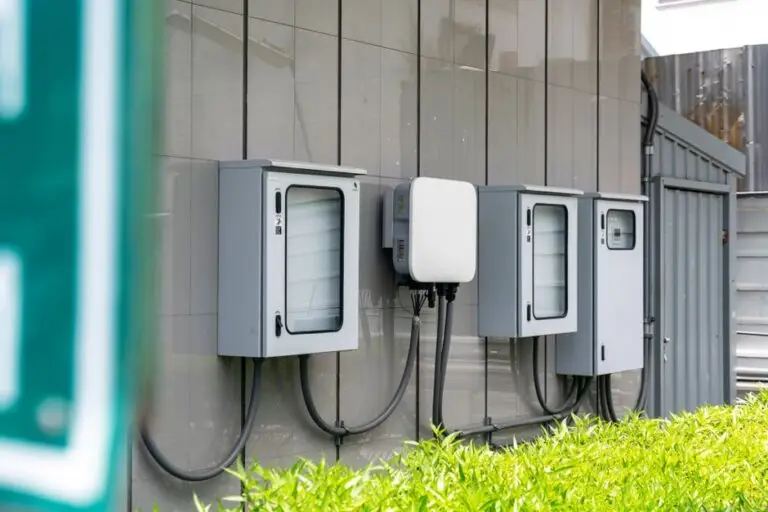
- Installing the Automatic Transfer Switch (ATS): The ATS is mounted next to your main electrical panel. This device acts as the brain of the system, safely isolating your home from the utility grid during an outage.
- Plumbing Integration: A licensed plumber runs the natural gas or propane line, sizing the pipes correctly to handle the fuel demands of the generator.
- Electrical Wiring: We run heavy-duty conduit and wire between the generator, the ATS, and your main panel.
- System Testing and Startup: We perform a full-load simulation to verify the system works perfectly and transitions power seamlessly.
Preserving Your Investment with Proper Maintenance
Standby generators can easily last 20+ years, but they require regular upkeep to remain reliable:
- The 30-Hour First Oil Change: Brand-new generator engines require their first oil and filter change after just 30 hours of initial runtime to clear out break-in debris.
- Routine Oil Changes: After the break-in period, change the engine oil and filter every 50 to 100 hours of active runtime, or at least once a year.
- Weekly Self-Tests: Your generator is programmed to run a weekly self-test (usually 15-20 minutes) to keep the battery charged and the engine parts lubricated.
- Monthly Homeowner Checks: Keep a 3-to-5-foot radius around the unit clear of dirt, leaves, snow, and shrubs to ensure proper airflow. Check the oil dipstick level monthly.
- Annual Professional Tune-ups: Schedule an annual service call to test the battery, replace spark plugs, inspect air filters, and verify the transfer switch functions properly.
If you ever experience electrical anomalies or need urgent troubleshooting, our team is available around the clock. Explore our Emergency Electrical Services for immediate support.
Frequently Asked Questions about Backup Generator Installation
How does a standby generator automatically restore power during an outage?
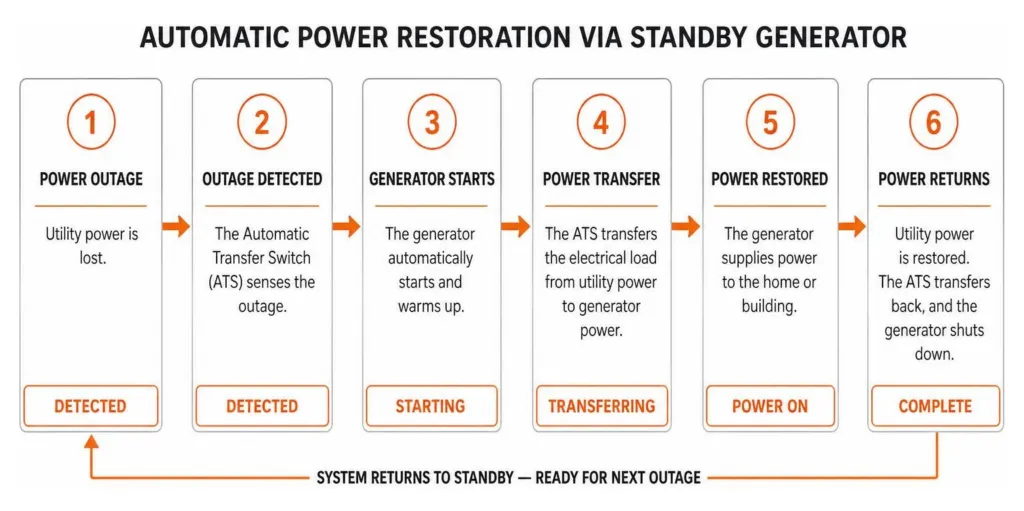
The system relies on the Automatic Transfer Switch (ATS). The ATS constantly monitors the incoming utility power. The moment it detects a drop in grid voltage, it safely disconnects your home from the utility line (preventing dangerous backfeeding into the grid).
It then signals the generator engine to start. Once the generator reaches operating speed, the ATS switches your home’s electrical load to the generator. This entire process is fully automatic and takes just 10 to 30 seconds. When utility power is restored, the system reverses the process and shuts the generator down automatically.
How long does a typical generator installation take in Cook County?
The actual physical installation—including pouring the concrete pad, mounting the unit, wiring the automatic transfer switch, and connecting the gas lines—usually takes 6 to 8 hours of active labor, often completed over one or two days.
However, you should factor in an additional 1 to 2 weeks prior to installation for our team to secure the necessary municipal permits and coordinate inspections.
What maintenance does a standby generator require to stay reliable?
Standby generators require basic preventive maintenance similar to a car engine. This includes checking the oil levels monthly, clearing debris from the outer enclosure, and scheduling an annual professional inspection.
During annual maintenance, we change the oil, replace the air filter and spark plugs, test the battery charger, and run a diagnostic check. With this simple routine, your standby generator can reliably protect your home for 20 years or more.
Secure Your Chicagoland Home with Energy Co.
At Energy Co., we bring decades of hands-on expertise to every project. We specialize in navigating the unique challenges of Chicago’s historic homes and older electrical systems, ensuring every installation is fully code-compliant, safe, and built to last.
Whether you are in Schaumburg, Hoffman Estates, Elk Grove Village, Palatine, Streamwood, or right here in Chicago, our licensed professionals handle everything from load calculations and permits to the final power-up. We stand behind our work with a comprehensive satisfaction guarantee and provide 24/7 emergency response when you need us most.
Don’t wait for the next major storm to leave you in the dark. Secure your home with professional generator installation today and enjoy true peace of mind.