Why Standby Generator Installation Is Worth Understanding Before You Buy
Standby generator installation is one of the most valuable home upgrades a Chicago-area homeowner can make — but it’s also one of the most misunderstood in terms of cost, process, and timeline.
Here’s a quick summary of what you need to know:
| Topic | Quick Answer |
|---|---|
| Total cost | $8,000 – $16,000 including equipment and labor |
| Equipment cost alone | Starting around $2,000, varies by wattage |
| Installation labor | Typically $3,000 – $5,000 |
| Time to complete | Physical install: hours; full process: weeks to months |
| Permit required? | Yes, in most municipalities |
| DIY possible? | No — requires licensed electrician and gas fitter |
| Fuel options | Natural gas, propane, or diesel |
| Activates automatically? | Yes, via automatic transfer switch (ATS) |
Power outages in the Chicago area don’t come with a warning. Storms knock out the grid, sump pumps fail, food spoils, and — for anyone on medical equipment — the stakes get even higher. A standby generator solves all of that automatically, without you lifting a finger.
But the process of buying and installing one is more involved than most homeowners expect. It’s not a weekend project. From the first consultation to the final inspection, the full journey can take several weeks.
This guide walks you through everything: real costs, the installation process step by step, sizing, permits, and what to watch out for.
I’m Michał Napieralski, and as the electrician behind Energy Co. — serving Schaumburg and the greater Chicagoland area — I’ve handled enough standby generator installation projects to know exactly where homeowners get surprised by hidden costs or delays. In this guide, I’ll share what I’ve learned so you can plan with confidence.
What is a Standby Generator and How Does It Work?
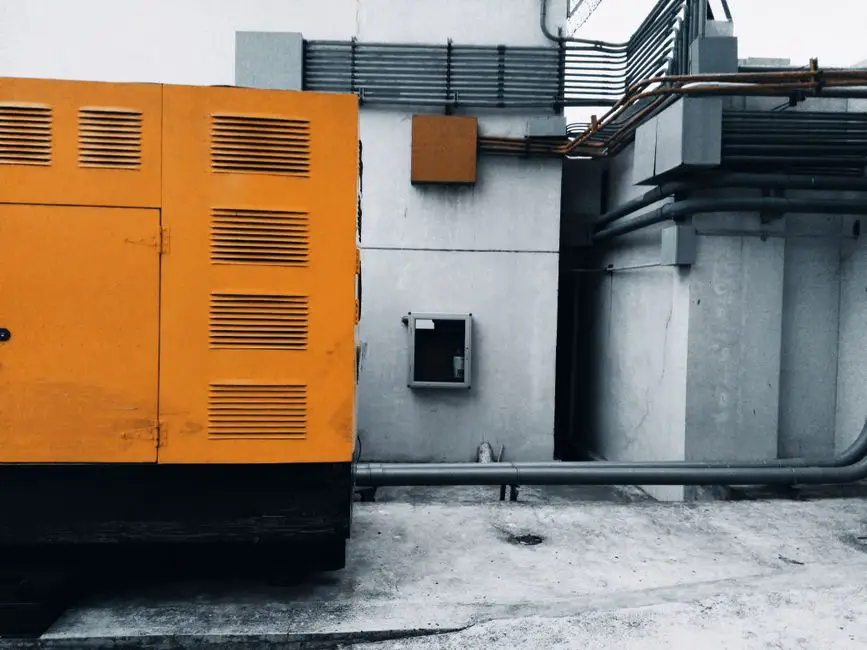
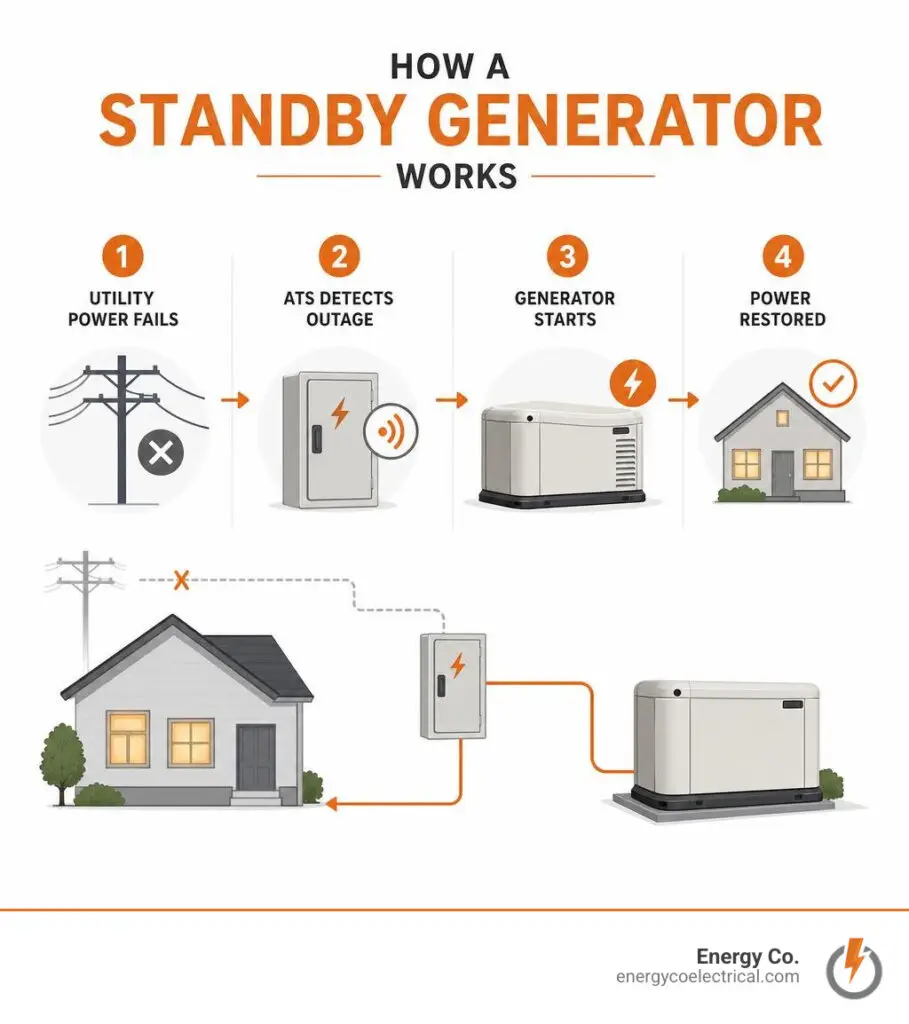
Unlike a portable unit that you drag out of the garage in the pouring rain, a standby generator is a permanent, stationary appliance installed outside your home. It looks similar to a large central air conditioning unit and is connected directly to your home’s electrical panel and fuel supply.
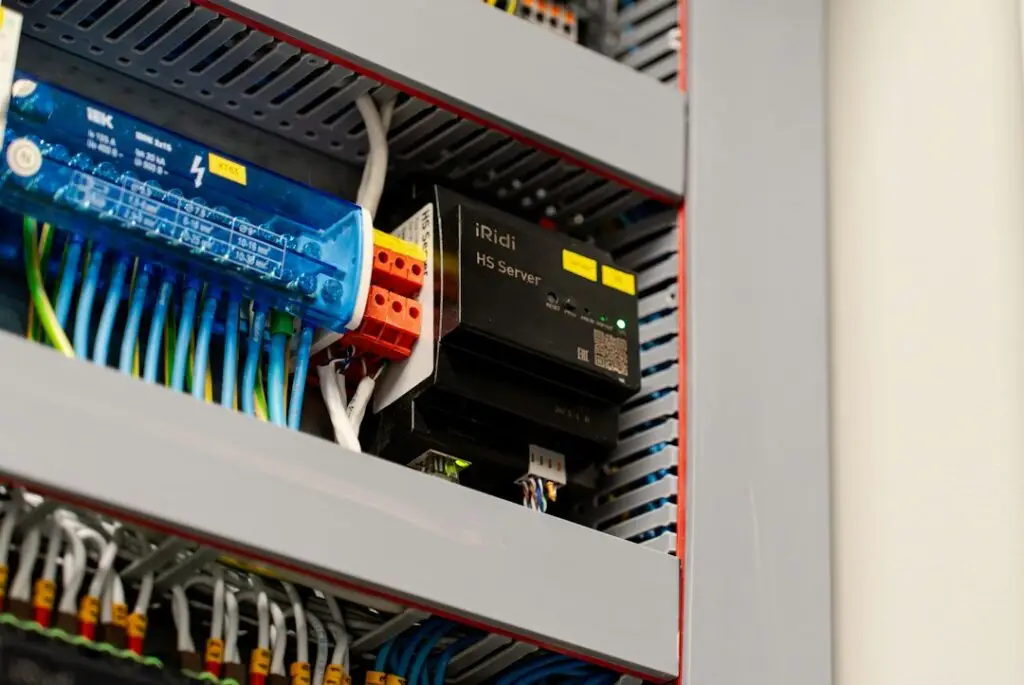
The magic behind this system is the automatic transfer switch (ATS). The ATS is the brain of your backup power setup. It constantly monitors the incoming utility power from the grid. When a storm knocks out the power line, the ATS detects the loss of voltage within seconds.
Here is exactly what happens next:
- The ATS commands the generator engine to start.
- Once the generator reaches the correct operating speed and stabilizes its voltage (usually within 10 seconds), the ATS disconnects your home from the dead utility grid.
- The ATS then connects your home’s electrical panel to the generator.
- When utility power is fully restored and stable, the ATS seamlessly switches your home back to the grid and shuts down the generator engine.
Because we connect these systems directly to your home’s existing infrastructure through our Residential Electrical Services, you do not have to run extension cords through windows or worry about running out of fuel in the middle of a winter blizzard.
Portable vs. Standby Generators
When deciding how to protect your home from blackouts, it is helpful to look at how standby units stack up against portable options. While portable generators are cheaper upfront, they come with significant logistical headaches.
| Feature | Portable Generator | Standby Generator |
|---|---|---|
| Activation | Manual (must pull-start, connect cords outside in the storm) | Automatic (starts within seconds, even if you are not home) |
| Fuel Source | Gasoline or diesel (requires frequent manual refueling) | Natural gas or liquid propane (continuous utility hookup) |
| Power Output | Limited (usually 3 kW to 12 kW; powers select appliances) | High (typically 10 kW to 26+ kW; can power the entire house) |
| Safety Risks | High carbon monoxide risk if placed too close; extension cord hazards | Low; professionally grounded, permanently placed with safety clearances |
| Lifespan | 2,000 to 3,000 running hours (with high wear and tear) | 15+ years (permanently installed and automatically exercised) |
Portable units require you to store highly flammable gasoline in your garage. During an extended power outage, you may find yourself driving around looking for an open gas station that still has electricity to run its pumps. A standby generator avoids this entirely by running on your existing natural gas line or a permanent propane tank.
Preparing for Standby Generator Installation
Before we can set up your system, a comprehensive site survey and planning phase must take place. This is not something that can be rushed. When we meet with you for a consultation, we evaluate several key factors to ensure a safe and code-compliant installation:
- Site Survey & Location Mapping: We must map out a stable, well-drained area. The generator must be close enough to your electric meter and gas line to minimize trenching costs, but far enough away from windows and doors to comply with strict safety codes.
- Load Calculation: We calculate the electrical load of your household appliances. We look at your heating, cooling, sump pumps, refrigerators, and lighting to determine the exact wattage your home requires.
- Fuel Source Capacity: We check if your current natural gas meter or propane regulator can handle the high volume of fuel required by a generator under full load. Often, the gas utility must upgrade your meter to ensure your home appliances and the generator can run simultaneously without starving each other of fuel.
- Property Restrictions: We review local property setbacks, easement lines, and homeowners association (HOA) guidelines to make sure your generator location complies with all local regulations.
For a deeper look at the technical mechanics and startup protocols of these systems, you can review the LC Operator’s Manual, GE , which outlines the rigorous specifications required for modern residential standby units.
The Real Cost of Standby Generator Installation
Let’s talk numbers. The overall cost of a standby generator installation typically ranges between $8,000 and $16,000. This range includes the generator unit itself, the automatic transfer switch, all electrical and plumbing materials, permits, and professional labor.
While that is a significant investment, many homeowners opt to finance their systems. Most U.S. home standby generators can be financed for as low as $109 per month, making reliable backup power highly accessible.
Here is a breakdown of where your money actually goes:
- The Generator Unit: $2,000 to $6,000+ (depending on the size and wattage).
- The Automatic Transfer Switch (ATS): $500 to $1,000 (often bundled with the generator).
- Electrical Labor and Materials: $1,500 to $3,000 (wiring, conduit, grounding rods, subpanels).
- Gas Plumbing Labor and Materials: $1,000 to $2,000 (extending gas lines, regulators, shutoff valves).
- Permit and Inspection Fees: $200 to $500 (varies by municipality).
- Site Prep: $300 to $600 (gravel bed, precast concrete pad).
Equipment and Sizing Costs
The price of the generator equipment is directly tied to its wattage capacity. Sizing a generator correctly is critical; a unit that is too small will stall under heavy loads, while an oversized unit will waste fuel unnecessarily.
We generally categorize residential generator sizing by the square footage of the home and your specific backup goals:
- Small Homes (Up to 1,500 sq. ft.): An essential circuit system (7.5 kW to 10 kW) is often sufficient to power your sump pump, refrigerator, furnace fan, and basic lighting.
- Medium Homes (1,500 to 2,500 sq. ft.): A managed whole-house system (14 kW to 18 kW) can handle your essential loads plus a central air conditioning unit, kitchen appliances, and home office electronics.
- Large Homes (2,500+ sq. ft.): A full whole-house system (22 kW to 26 kW) provides complete coverage, allowing you to run multiple AC units, electric water heaters, and double ovens simultaneously without power management limitations.
If you are trying to figure out which unit is right for your property size, our experienced team can help you calculate your exact electrical load and recommend the perfect system during your initial consultation.
Electrical Upgrades Required for Standby Generator Installation
An often-overlooked cost factor is the state of your existing electrical panel. To safely integrate an automatic transfer switch, your home’s electrical service must be up to modern standards.
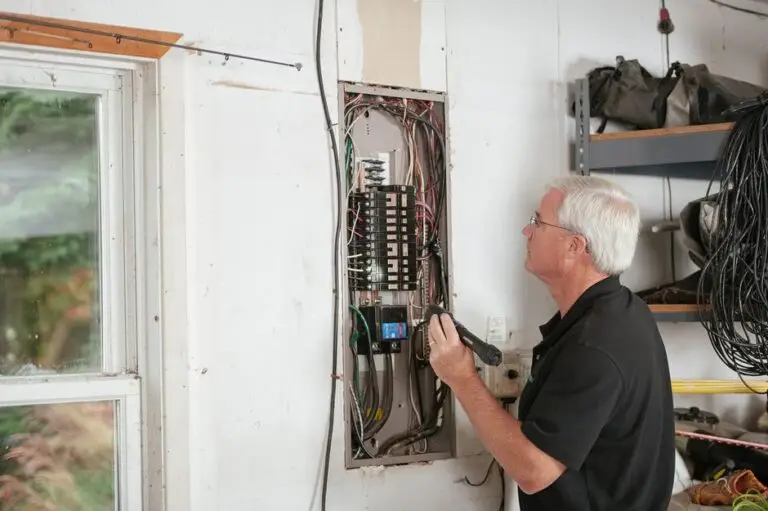
Many older homes in Chicagoland still operate on outdated 100-amp electrical panels. If your panel is full, lacks space for the generator breaker, or is physically deteriorated, we will need to perform an Electrical Panel Upgrade before the generator can be installed.
Upgrading to a modern 200-amp service is highly recommended for whole-house generator installations. To understand the financial commitment of this upgrade, check out our guide on The Cost to Upgrade to a 200 Amp Panel Without Getting Zapped. Additionally, you can review The Homeowner Guide to Buying a 200 Amp Electrical Panel to help you make an informed decision about your home’s electrical infrastructure.
Step-by-Step: What to Expect During the Installation Process
While the physical installation of the generator usually only takes a day or two of on-site work, the entire process from your initial inquiry to a fully operational system takes multiple weeks. This is because of the time required to secure permits, order equipment, and coordinate with local utilities.
Here is what the typical installation timeline looks like:
- The Site Assessment: We visit your home, perform load calculations, map out the placement, and provide a detailed quote.
- Permitting: We submit electrical, plumbing, and structural plans to your local building department.
- Site Preparation: We level the ground and prepare the foundation. We install a precast concrete pad or a compacted pea gravel bed to support the heavy generator unit.
- Delivery and Placement: The generator is delivered and carefully positioned on the pad using heavy-duty lifting equipment.
- Plumbing Hookup: A licensed gas fitter runs a new gas line from your meter to the generator, installing a sediment trap and a flexible steel fuel line to absorb engine vibrations.
- Electrical Hookup: We install the automatic transfer switch next to your main breaker panel, run conduit between the generator and the switch, and install a dedicated grounding rod.
- Outage Simulation & Testing: We perform a simulated power outage to test the system under load, ensuring the generator starts, transfers power, and shuts down correctly.
Site Selection and Clearance Requirements
To prevent dangerous carbon monoxide (CO) buildup inside your home and protect your property from fire hazards, standby generators must be positioned according to strict National Fire Protection Association (NFPA) codes and local municipal bylaws:
- Distance from Openings: The generator must be installed at least 5 feet away from windows, doors, dryer vents, and soffit vents to prevent exhaust fumes from entering the home.
- Distance from Walls: The unit must sit at least 18 inches away from the exterior wall of your home.
- Clearance Around the Unit: There must be at least 3 feet of clear space on the front and sides of the generator to allow technicians to perform routine maintenance safely.
- Overhead Clearance: A minimum of 5 feet of overhead clearance is required. The generator should never be installed under a low deck, roof overhang, or inside a breezeway.
Fuel and Electrical Connections
Connecting the fuel supply and high-voltage electrical lines requires extreme precision and adherence to manufacturer guidelines.
For the gas connection, we must verify that your gas pressure sits between 5 and 14 inches of water column at the generator frame. If the supply pressure is too high, a primary regulator must be installed to reduce it before it reaches the unit.
On the electrical side, we run line-voltage cables and control wiring inside weather-resistant conduit. We also drive a copper grounding rod deep into the earth next to the unit, bonding it directly to the generator frame to provide a safe path for electrical surges.
For highly detailed specifications on these connections, you can consult the official Generac Power Systems, Inc. guidelines or study the Installation Guidelines for automatic transfer switches.
Frequently Asked Questions about Standby Generators
Do standby generators require regular maintenance?
Yes, absolutely. Standby generators are powered by internal combustion engines that require regular upkeep to ensure they start reliably when the power goes out.
Standard maintenance tasks include:
- Oil and Filter Changes: Typically required every 100 to 200 operating hours, or at least once a year.
- Battery Inspections: The starter battery must be checked regularly and replaced every 2 to 3 years.
- Spark Plug and Air Filter Replacement: Part of an annual tune-up.
- Weekly Self-Exercise Cycles: Most modern generators are programmed to automatically start and run for 5 to 12 minutes once a week to lubricate the engine and test the electronics.
If you want to keep your backup system in peak condition, we provide comprehensive upkeep plans through Our Services.
Do I need a permit to install a standby generator?
Yes. In almost every Chicagoland municipality, you must secure an electrical permit and a building/zoning permit before installing a standby generator. Municipalities require these permits to ensure the generator is placed safely away from window openings and that the electrical wiring is up to code to protect utility workers from dangerous backfeeding.
For example, if you live in Schaumburg, you must follow the local Generator Resource Guide | Schaumburg, IL . If you live in Elk Grove Village, you can review the municipal standards via the 2026 Generator Improvements | Bids/RFPs/RFQs | Elk Grove Village portal.
Can I install a standby generator myself?
No. Installing a standby generator is 100% not a DIY project. It involves working with high-voltage electricity, natural gas or liquid propane lines, and complex transfer switch integration. A single mistake can lead to carbon monoxide poisoning, gas explosions, electrical fires, or severe shock.
Furthermore, most manufacturers will void your product warranty if the system is not installed by a certified professional. To protect your home and keep your warranty intact, you should always work with licensed, factory-trained experts who specialize in standby generator installations.
Conclusion
A standby generator is the ultimate insurance policy for your home. When severe weather strikes the Chicago area, you won’t have to worry about a flooded basement from a dead sump pump, frozen pipes, or threw-out groceries.
At Energy Co., we bring years of local expertise to every standby generator installation. We understand the unique architectural challenges of older Chicagoland homes, navigate strict municipal permitting processes on your behalf, and back all of our work with a 100% satisfaction guarantee.
If you are ready to secure your home’s power supply with a professional, code-compliant installation, visit our Reliable Generator Installation Service in Chicago Get Expert Help Today page or Contact Us today to schedule your free consultation. For immediate help during a storm or sudden power failure, you can also reach our 24/7 team via our Emergency Electrical Services.