Why Getting Generator Installation for Homes Right the First Time Matters
Generator installation for homes is one of the most impactful upgrades you can make to protect your household from power outages — but it’s also one of the most technically demanding.
Here’s what you need to know at a glance:
| Question | Quick Answer |
|---|---|
| Best generator type? | Standby (automatic) for whole-home backup; portable for occasional, short-term use |
| Typical size needed? | 14–22 kW for most homes (1,500–2,500 sq ft) |
| Total installed cost? | $8,000–$16,000 including equipment and labor |
| How long does it take? | 1–2 days of active installation; several weeks of preparation |
| Do I need a permit? | Yes — nearly always required by local code |
| Can I DIY it? | No — licensed electricians and gas fitters are required by code |
Power outages in the Chicago area aren’t rare. Severe storms, high winds, and winter ice events can knock out electricity for hours — or days. When that happens, your sump pump stops running, your HVAC shuts down, food spoils, and if anyone in your home depends on medical equipment, the stakes get even higher.
A properly installed standby generator solves all of that automatically. But the keyword here is properly. The physical installation is only part of the picture. Permits, site preparation, fuel line connections, transfer switch wiring, and local code compliance all have to come together correctly — or you risk safety hazards, voided warranties, and code violations that can actually reduce your home’s value.
This guide walks you through every step, from choosing the right system to understanding what happens on installation day.
I’m Michał Napieralski, a licensed electrician and the founder of Energy Co., with years of hands-on experience managing generator installation for homes across the Chicago suburbs — including older properties with outdated panels that require extra planning. In the sections below, I’ll share exactly what our team looks at so you can go into this process fully informed.
Related content about generator installation for homes:
- generator gas line installation
- standby generator installation
Choosing the Right System: Portable vs. Standby Generator Installation for Homes
When assessing your backup power options, the first decision is choosing between a portable generator and a permanently installed standby unit. Both serve a purpose, but they operate very differently in terms of convenience, capacity, and safety.
Portable generators are smaller, cost less upfront, and run primarily on gasoline. However, they require manual setup. When the power goes out, you must wheel the generator outside, start it up in the elements, and run heavy-duty extension cords to your appliances. Portable models are generally limited to around 12 kilowatts (kW) of power, meaning you can only run a few selected items at once.
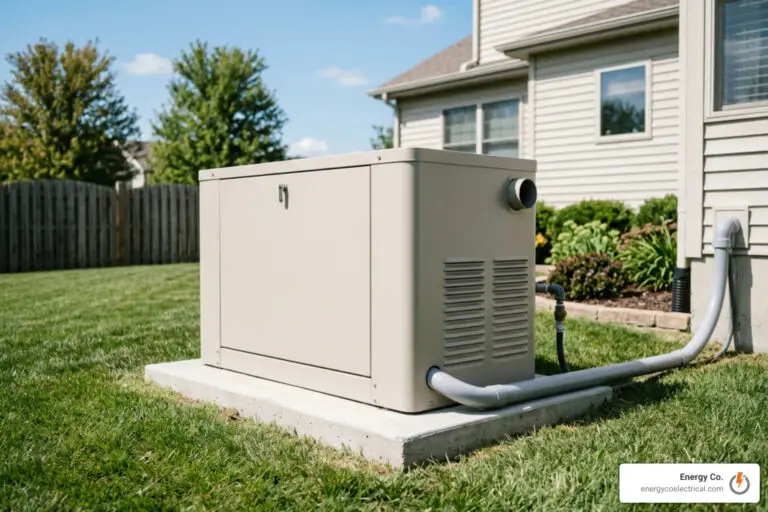
Standby generators, on the other hand, are permanently installed outside your home, much like a central air conditioning unit. They are hardwired directly into your home’s electrical panel and connected to a continuous fuel source like natural gas or liquid propane (LP). When a storm hits, the system detects the loss of utility power and automatically starts up within 7 to 10 seconds—even if you are away on vacation.
Here is a side-by-side comparison to help you weigh your options:
| Feature | Portable Generators | Standby Generators |
|---|---|---|
| Startup Mechanism | Manual (pull cord or electric start outdoors) | Automatic (via Automatic Transfer Switch) |
| Fuel Source | Gasoline, diesel, or portable propane tanks | Natural gas or liquid propane (LP) |
| Power Capacity | Typically 3 kW to 12 kW | Typically 8 kW to 26+ kW |
| Runtime | Limited by fuel tank size (requires manual refueling) | Continuous (runs on utility gas or large LP tank) |
| Weather Protection | Must be shielded from rain/snow during use | Weatherproof, sound-attenuated permanent enclosure |
| Average Lifespan | 3 to 8 years (depending on usage) | 10 to 15+ years (with regular maintenance) |
For homeowners looking for true peace of mind and seamless protection during extended outages, investing in a standby generator installation for homes is the gold standard.
Sizing Your Power Needs: Sizing a Generator Installation for Homes
Selecting the correct generator size is not about matching the physical footprint of your house; it is about calculating your electrical load. Sizing is measured in kilowatts (kW), and getting it right ensures your generator won’t overload and shut down when you need it most.
To calculate your required wattage, we must distinguish between running (rated) watts and starting (surge) watts. Electric motors—like those found in your refrigerator, sump pump, or air conditioner—require up to 300% more power to start up than they do to keep running. For example, a standard refrigerator might need 800W to run but requires 1,200W of starting power.
For a general estimate based on home size:
- Under 1,500 sq ft: Essential backup requires about 7.5 kW, while whole-house coverage typically needs 10 kW.
- 1,501 to 2,500 sq ft: Essential backup requires 14 kW, while a whole-house setup typically demands 18 kW.
- Over 2,500 sq ft: Essential backup requires 22 kW, whereas whole-house coverage ranges from 24 kW to 26 kW or more.
An average North American home needs roughly 8 to 16 kW for basic electrical needs (refrigerator, lights, sump pump, and furnace fan), and 15 to 30 kW for everyday full-capacity use. Sizing up slightly (for example, choosing a 22 kW unit instead of a 14 kW unit) prevents the motor from running at maximum capacity, which extends the lifespan of the system.
Before we can safely hook up a standby generator, we must evaluate your home’s main electrical panel. Many older Chicago-area homes in suburbs like Palatine or Rolling Meadows still operate on 100-amp service. To handle the load integration of a modern standby generator, you may need to invest in an electrical panel upgrade to 200 amps.
Selecting Your Fuel Source: Natural Gas, Propane, or Diesel
Your choice of fuel dictates both the installation complexity and the ongoing operating logistics of your system. The three primary options are natural gas, liquid propane, and diesel.
- Natural Gas (NG): This is the most common choice for residential installations in suburban Chicagoland. Because it connects directly to your municipal utility line, you never have to worry about refilling a tank. One crucial technical detail: natural gas provides roughly 10% less BTU energy than liquid propane, which slightly lowers a generator’s rated power output. Additionally, your local natural gas meter may need an upgrade from a standard 250,000 BTU model to a high-capacity 400,000+ BTU model to supply enough pressure for both the generator and your home appliances.
- Liquid Propane (LP): If you live in a rural area without natural gas access, LP is the industry standard. Propane burns cleanly, has a highly stable shelf life, and packs a high energy punch. You will need a dedicated on-site LP tank (typically 500 gallons, filled to 80% capacity to allow for gas expansion) to ensure a 72-hour runtime at a 50% load.
- Diesel: Diesel generators are highly durable and fuel-efficient, but they are rarely used for residential standby systems due to the need for large fuel storage tanks, regular fuel conditioning, and the potential for fuel to degrade over time.
For a detailed breakdown of how we run and configure these systems safely, check out our guide to standby generator gas line setup.
The Cost, Timeline, and Permitting of Professional Installation
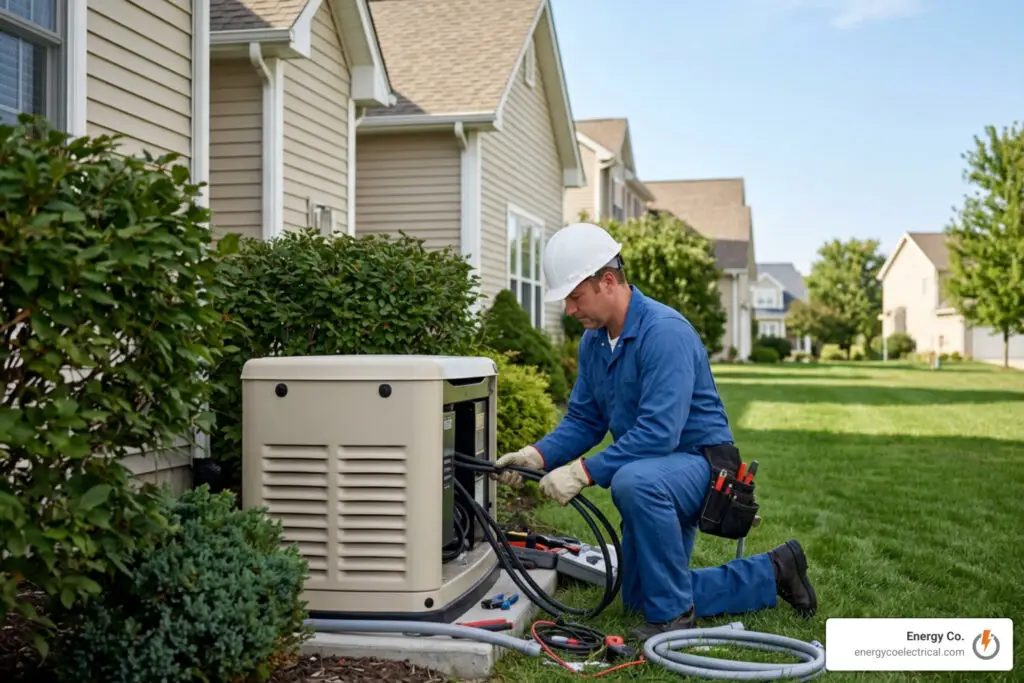
A standby generator is a significant investment that adds value, security, and convenience to your home. On average, the total cost of a residential standby generator installation ranges from $8,000 to $16,000, which includes the generator unit, system equipment, materials, permitting, and professional labor.
To make this crucial safety upgrade more accessible, many homeowners choose to take advantage of flexible financing programs, which can offer monthly payments as low as $109/month. To understand how these numbers apply to your specific property, review The Definitive Guide to Standby Generator Installation Costs.
Sizing Up the Budget: Hardware vs. Labor Costs
When planning your budget, it helps to understand that buying the physical equipment is only about 40% of the financial equation; the remaining 60% covers the specialized labor and materials required for a safe, code-compliant installation.
- Hardware Costs: A high-quality, air-cooled standby generator unit (ranging from 10 kW to 26 kW) generally costs between $2,000 and $6,000 depending on the brand, wattage, and whether it includes a bundled transfer switch.
- Labor and Material Costs: Professional installation costs average between $3,000 and $5,000. This covers pouring or placing the foundation pad, mounting the unit, running heavy-gauge electrical conduit, installing the transfer switch, trenching and running gas lines, and obtaining municipal permits.
While sourcing hardware directly can sometimes bypass contractor markups, working with a full-service, authorized electrical contractor ensures that your system is covered by a comprehensive workmanship warranty alongside the manufacturer’s warranty.
How Long Does Generator Installation Take?
A common point of confusion is the difference between the physical installation timeline and the overall project timeline. While the actual physical installation of a home standby generator usually takes only one to two days (roughly 8 to 16 hours of active on-site labor), the preparation process takes multiple weeks.
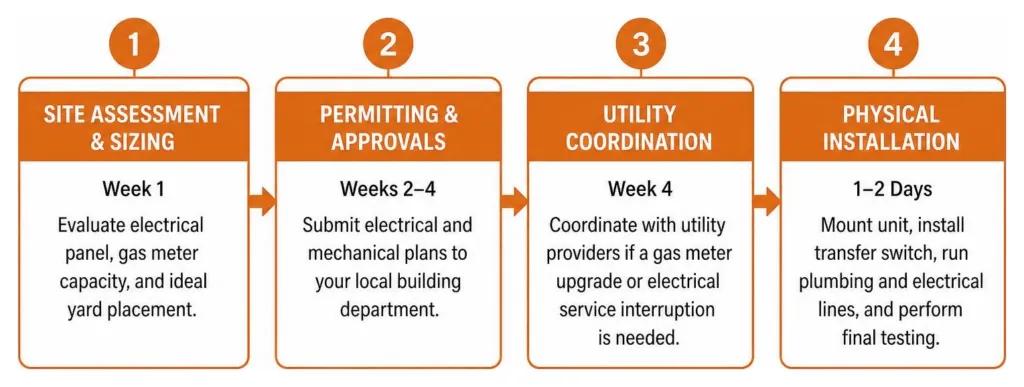
Before our team can show up at your home with the generator, we must navigate several administrative and logistical steps:
- Site Assessment & Sizing (Week 1): We evaluate your electrical panel, gas meter capacity, and ideal yard placement.
- Permitting & Approvals (Weeks 2–4): We submit electrical and mechanical plans to your local building department (such as Cook County or the Village of Schaumburg).
- Utility Coordination (Week 4): We coordinate with Nicor or Peoples Gas if a gas meter upgrade is required, and ComEd if a brief electrical service interruption is needed.
- Physical Installation (1–2 Days): Our team mounts the unit, installs the transfer switch, runs the plumbing and electrical lines, and performs final testing.
For a deeper look into preparing your home for this process, you can read the 2026 Homeowner’s Guide to Generator Installation.
Navigating Permits and Professional Requirements for Generator Installation for Homes
Can you skip the permit process to save time and money? Absolutely not. Roughly 95% of municipal codes in the United States require both electrical and mechanical permits for a home standby generator.
Filing for permits is not just a bureaucratic hoop; it is a critical safety and financial protection. An unpermitted generator installation can reduce your property’s resale value by 5% to 10% during a title search due to liability issues for future owners. Furthermore, if an unpermitted installation causes a fire or electrical damage, your homeowner’s insurance policy may completely deny the claim.
If you live in Schaumburg, for example, you can review the specific municipal guidelines in the Municipal generator resource guide.
When we handle a generator installation for homes, we take care of the entire permitting package, which typically includes:
- An Electrical Permit for wiring the transfer switch and integrating the unit into your main service panel.
- A Mechanical/Plumbing Permit for tapping into your natural gas line or connecting to your propane system.
- A Zoning/Building Permit to ensure the physical placement complies with local property line setbacks and noise ordinances (most municipal codes require standby units to operate below 70 dBA at a distance of 23 feet).
Step-by-Step Guide to the Generator Installation Process and Safety
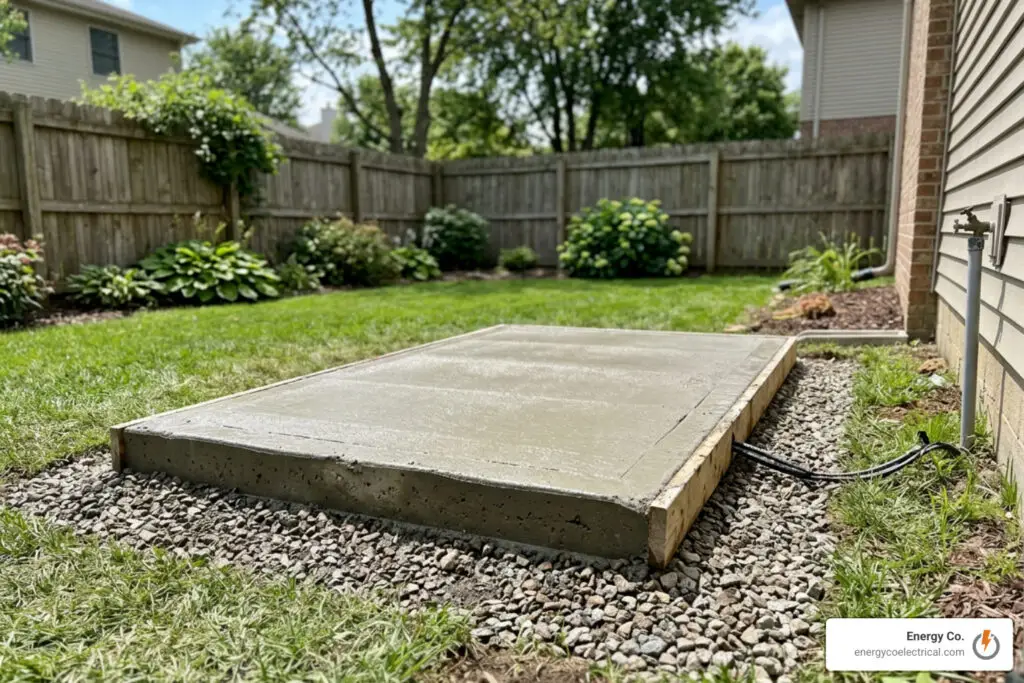
Once the permits are in hand and the equipment has arrived, the physical installation process unfolds in a structured sequence to ensure safety and system reliability.
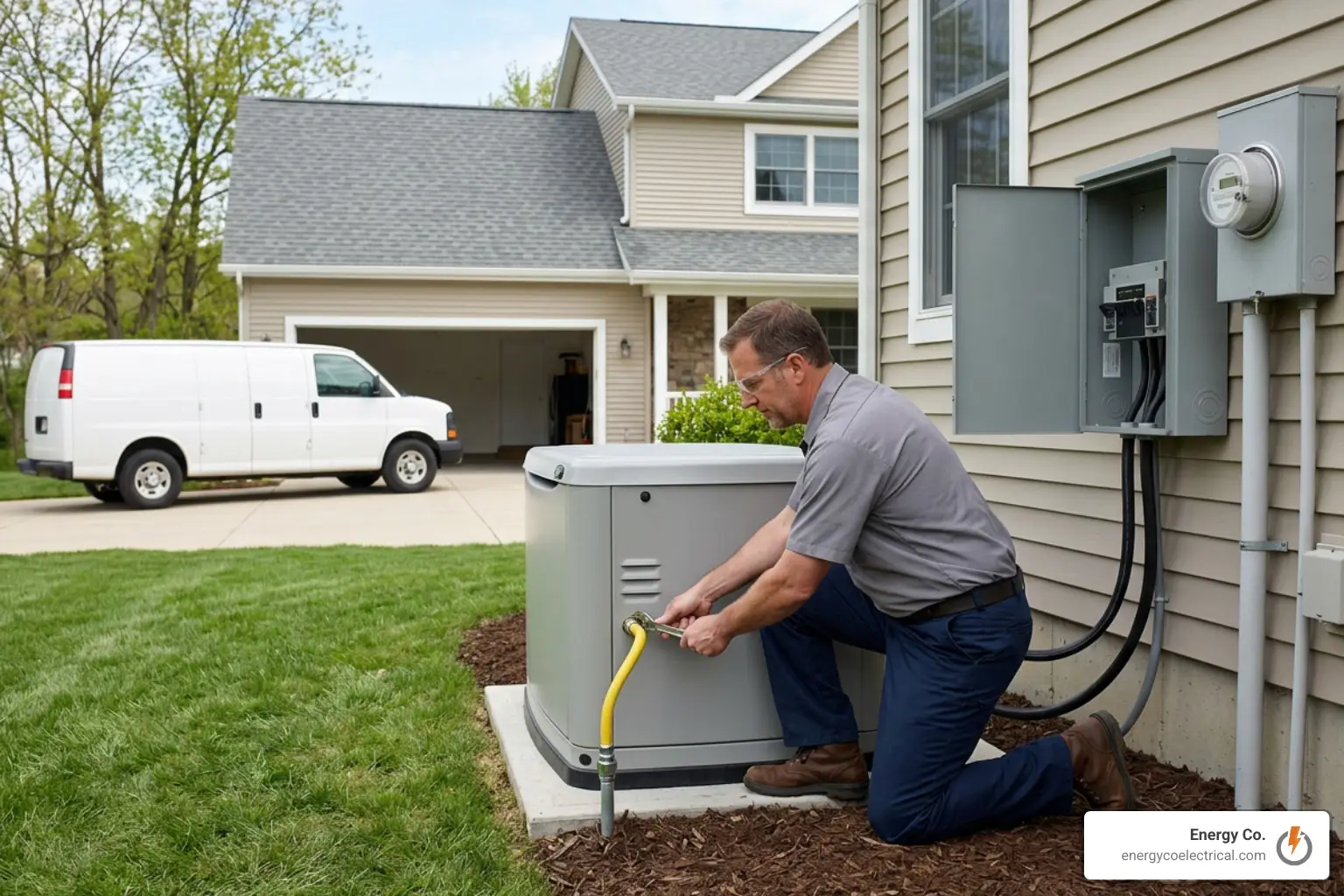
- Site Preparation: We select a stable, well-drained area of your yard that sits above the local flood plain. The ground is leveled, and we install either a pre-cast composite pad or pour a custom 4-inch-thick concrete slab over a gravel bed to prevent the generator from sinking or shifting.
- Mounting the Unit: The generator is carefully lifted off its shipping pallet (never dragged, which can crack the base) and secured to the foundation pad using 3/8-inch stainless steel bolts to absorb engine vibration.
- Trenching and Plumbing: We dig trenches to run the electrical conduit and gas lines. If gas and electrical lines share the same trench, local codes require a horizontal separation of at least 300mm to prevent thermal or electrical interference.
- Electrical Integration: Our electricians mount the automatic transfer switch and run control wiring between the generator and your home’s breaker panel.
- System Commissioning: We purge the fuel lines, test for gas leaks, connect a high-quality 12V starting battery, and perform a simulated power outage to verify that the system starts, transfers the load, and shuts down correctly.
The Critical Role of the Automatic Transfer Switch (ATS)
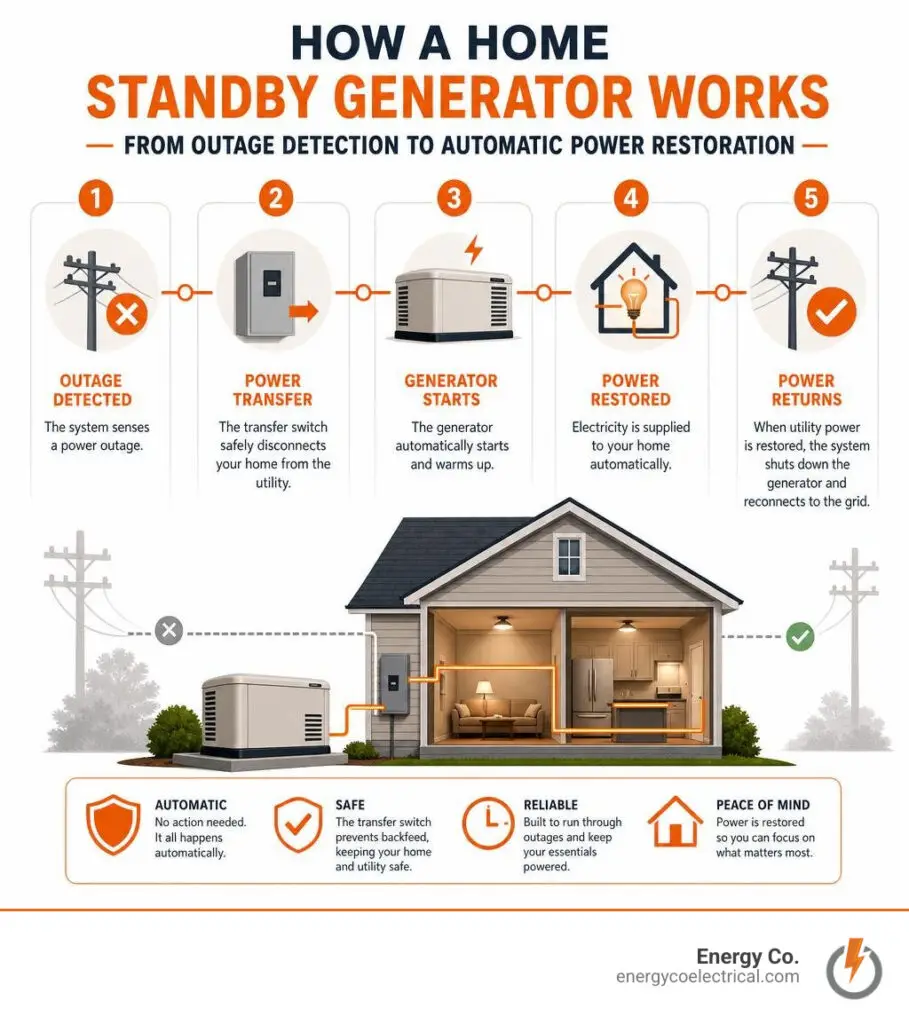
The Automatic Transfer Switch (ATS) is the brain of your backup power system. It is mounted next to your main electrical panel and constantly monitors incoming utility voltage.
If utility power drops below 65%, the ATS instantly recognizes the failure, signals the generator to start, and mechanically disconnects your home from the utility grid. Once the generator reaches its proper operating speed, the ATS safely switches your home’s electrical loads to generator power.
This physical disconnection is a mandatory safety requirement under National Electrical Code (NEC) Article 702. Without an ATS, a generator would “backfeed” electricity back into the utility lines. Backfeeding can energize downed power lines miles away at up to 7,200 volts, presenting a lethal electrocution hazard to utility linemen working to restore power.
To ensure your home’s panel can handle this integration, our team provides expert residential electrical services to map out your critical circuits safely.
Essential Safety Clearances and Carbon Monoxide Prevention
Operating an internal combustion engine right next to your home requires strict adherence to fire safety and exhaust codes. The primary hazard is carbon monoxide (CO)—a colorless, odorless, and highly toxic gas that can be lethal within minutes if allowed to accumulate indoors.
To comply with NFPA 37 (Standard for the Installation and Use of Stationary Combustion Engines) and local building codes, we enforce the following strict clearance requirements:
- Distance from Openings: The generator exhaust must be located at least 5 feet away from any operable windows, doors, vents, or dryer exhausts to prevent CO from entering the home.
- Distance from Walls: The back of the generator must sit at least 18 inches away from the home’s exterior wall (provided the wall is non-combustible and the unit has been fire-tested for close clearance).
- Clearance from Vegetation: You must maintain at least 36 inches of clear space on the front and sides of the unit for proper cooling airflow and maintenance access.
- Overhead Clearance: There must be at least 60 inches of clear, unobstructed space above the unit (never install a generator under a low wooden deck or overhanging roofline).
Additionally, we always recommend installing battery-operated carbon monoxide detectors on every level of your home before operating your new standby system.
Routine Maintenance and Long-Term Operating Costs
A standby generator is an engine, and like your car, it requires regular upkeep to remain reliable. Neglecting basic maintenance is the leading cause of startup failure when a storm hits.
The most critical maintenance window occurs immediately after installation: the 25-hour engine break-in period. When a brand-new generator runs for its first 25 hours, microscopic metal shavings naturally wear off the engine cylinders. You must change the oil and filter immediately after this break-in period to protect the engine from premature wear.
For long-term reliability, keep this essential maintenance checklist in mind:
- Quarterly: Inspect the enclosure for debris (leaves, snow, or nests), check the battery voltage (dead 12V batteries cause 80% of startup failures), and verify that there are no active warning lights on the controller.
- Semi-Annually: Check the engine oil level and inspect fuel lines for signs of wear or cracking.
- Annually (or every 100–200 run hours): Perform a full service, including changing the engine oil and filter, replacing the spark plugs, replacing the air filter, and performing a professional load-bank test.
For detailed technical specifications and manufacturer-approved maintenance intervals, you can consult the official Manufacturer installation guidelines.
Frequently Asked Questions About Home Generators
Can I install a standby generator myself?
No. Standby generator installation is not a safe or legal DIY project. It requires advanced knowledge of high-voltage electrical wiring, municipal plumbing codes for high-pressure gas connections, and local zoning laws. Attempting to install a unit yourself can result in lethal shock, gas explosions, or carbon monoxide poisoning. Furthermore, major manufacturers will completely void your system’s warranty if it is not installed and commissioned by a licensed professional.
How far must a generator be placed from windows and doors?
To comply with national safety standards and prevent toxic exhaust fumes from entering your living spaces, a standby generator must be placed at least 5 feet away from any window, door, or ventilation intake.
Does a standby generator increase home property value?
Yes. Real estate data shows that a professionally installed standby generator increases a home’s resale value by 3% to 5% on average. Buyers in storm-prone areas place a premium on homes with built-in energy security. Conversely, an unpermitted, poorly installed unit can actually reduce your home’s value and complicate a future property sale.
Conclusion
Securing your home with a standby generator is the single best way to protect your family, your appliances, and your property from the unpredictable weather patterns of the Chicago area. From preventing flooded basements by keeping your sump pump running, to protecting sensitive electronics, a professional installation delivers unmatched peace of mind.
At Energy Co., we specialize in navigating the unique challenges of Chicagoland homes—including older properties with outdated electrical systems. We handle everything from load calculations and permitting to gas line integration and final safety testing.
Don’t wait for the next major storm to leave you in the dark. Contact us today to schedule your consultation and take the first step toward complete energy independence with our Reliable Generator Installation Service in Chicago.