
When Your Generator Fails, Every Minute Counts
A generator repair service is a professional solution for diagnosing and fixing backup power systems when they stop working — or before they do.
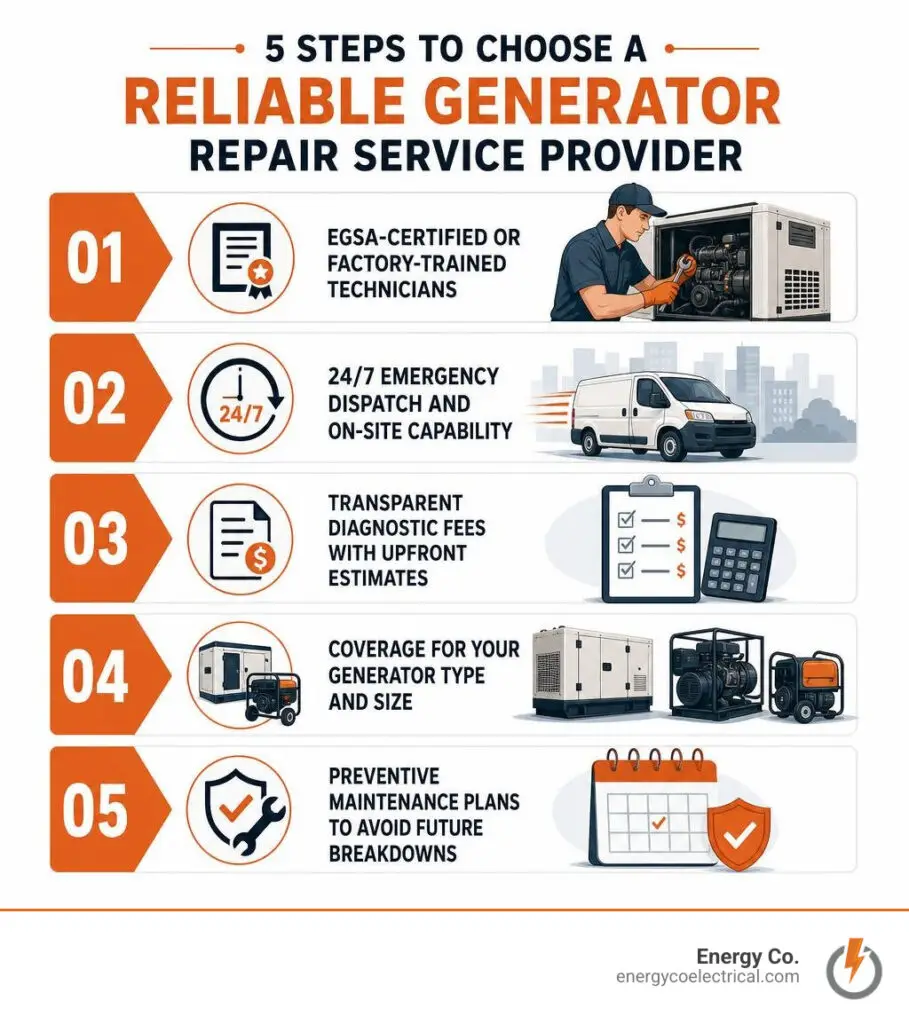
If you need a quick answer, here’s what to look for when choosing one:
- EGSA-certified or factory-trained technicians
- 24/7 emergency dispatch and on-site capability
- Transparent diagnostic fees with upfront estimates
- Coverage for your generator type and size
- Preventive maintenance plans to avoid future breakdowns
For Chicago homeowners and businesses, a failing generator isn’t just an inconvenience — it’s a real risk. A severe storm rolls through, the grid goes down, and your backup power won’t start. Heating fails. Inventory spoils. Operations stop.
The good news? The right repair service can get you back online fast. But not all providers are equal. Knowing what to look for saves you time, money, and stress.
I’m Michał Napieralski, licensed electrician and founder of Energy Co. in Schaumburg, IL — and I’ve helped countless Chicago-area homeowners and businesses navigate everything from electrical panel upgrades to generator repair service for standby and portable units. In this guide, I’ll walk you through exactly how to find a provider you can trust.
Understanding Generator Repair Service vs. Routine Maintenance
It is common to confuse routine generator maintenance with a full-fledged generator repair service, but they serve two distinctly different roles in keeping your secondary power infrastructure operational.
Routine preventative maintenance is like changing the oil and rotating the tires on your car. It involves scheduled visits where a technician conducts periodic checks—replacing oil filters, inspecting spark plugs, checking coolant levels, and running short test cycles. The primary goal is mechanical wear prevention and extending the operational lifespan of the unit.
A generator repair service, on the other hand, is reactive and specialized. When a generator suffers a mechanical breakdown or electrical failure, repair technicians must perform in-depth system troubleshooting to fix broken components. Whether it is a burnt-out alternator end, a failed starter motor, or a malfunctioning control board, repair service targets specific defects to restore power generation.
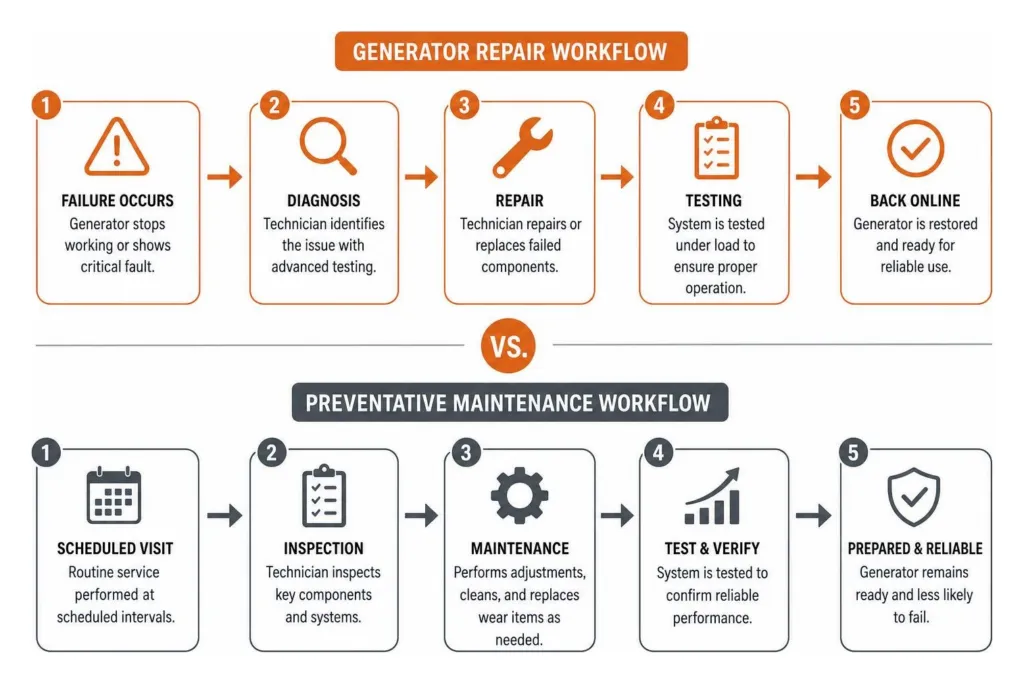
Understanding this distinction helps property owners across Cook County know when a quick filter change will suffice and when it is time for comprehensive troubleshooting. If you are struggling with power disruptions or equipment faults during an outage, knowing how to approach finding local generator repair solutions ensures you do not waste time when emergency restoration is required.
Common Signs You Need Emergency Generator Repair
Standby and commercial generators rarely fail without warning. Keeping an eye out for early indicators can save you from complete blackouts during extreme Midwestern heatwaves or severe winter freezes.
- Cranking Delays or Failure to Start: If the engine turns over slowly, clicks repeatedly, or refuses to start during its weekly exercise cycle, the battery, starter motor, or fuel solenoids are likely compromised.
- Intermittent Flickering Output: Unstable voltage or flickering lights while running under load usually signal generator end winding issues, voltage regulator failure, or automatic transfer switch (ATS) contact erosion.
- Burning Odor or Exhaust Fumes: Chemical, electrical burning, or sweet sweet-smelling coolant odors during operation indicate severe electrical arcing, overheating components, or fluid leaks touching hot manifolds.
- Visible Oil or Fluid Leaks: Puddles of oil, diesel fuel, or green coolant around the enclosure point to failing gaskets, dry-rotted hoses, or cracked fluid lines.
- Low Oil Shutdown Warnings: Modern digital control panels shut the engine down automatically if oil pressure drops. Repeated low oil shutdowns require immediate diagnosis before catastrophic engine seizing occurs.
What a Professional Generator Repair Service Involves
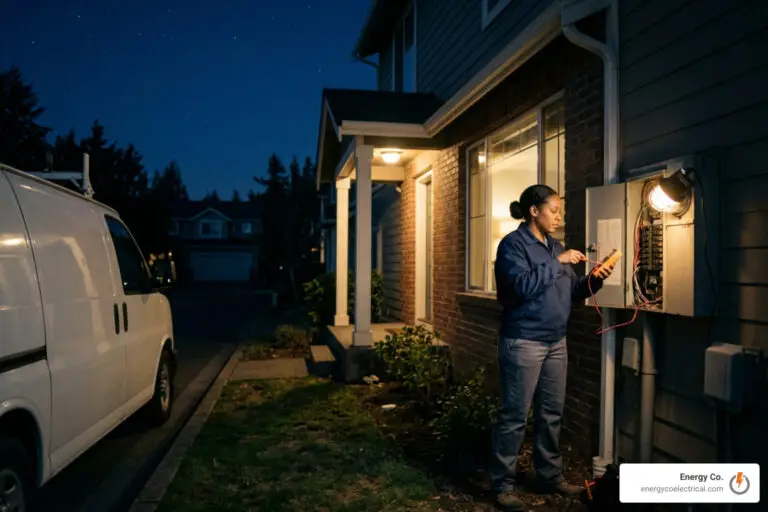
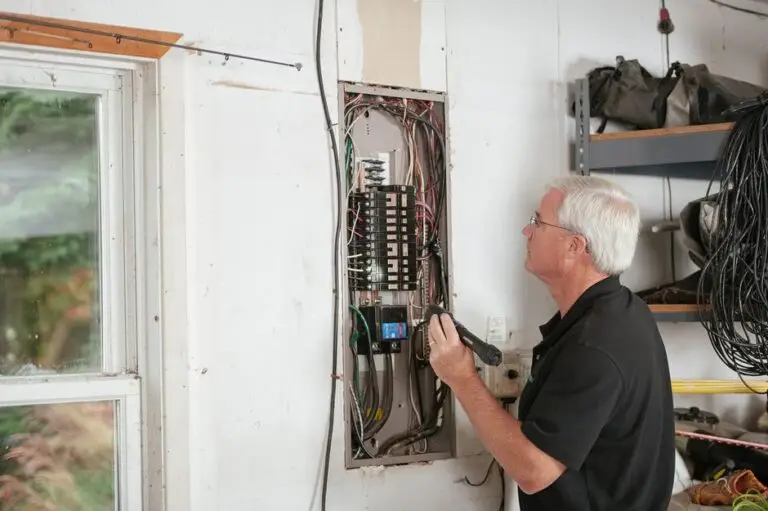
When a qualified electrician or technician arrives at your property in Hoffman Estates or Arlington Heights, they do not just guess what is wrong. A complete generator repair service follows precise diagnostic and restoration protocols:
- Engine Teardowns and Overhauls: Inspecting cylinders, replacing worn head gaskets, fixing fuel injectors, and repairing internal mechanical components on diesel or natural gas engines.
- Alternator Rewinding & Generator End Repair: Restoring degraded copper stator and rotor windings, dipping components in insulating varnish, and rebuilding exciter assemblies to stabilize electrical output.
- Fuel Line & System Flushing: Clearing gummed-up carburetors, repairing clogged fuel injectors, replacing fuel filters, and polishing degraded diesel fuel stored in long-term tanks.
- Control Panel Retrofits: Upgrading obsolete analog gauges or failing printed circuit boards (PCBs) to modern digital controllers with remote monitoring and automatic fault logging.
- Automatic Transfer Switch (ATS) Repairs: Servicing the critical switchboard mechanisms that bridge utility power and secondary emergency generator supply seamlessly.
- Routine Load Testing Procedures: Connecting an external resistive load bank to exercise the generator at full operating capacity, verifying voltage, frequency, and cooling efficiency under realistic building demand.
5 Steps to Choose a Reliable Generator Repair Service
Selecting the right professional team ensures that your emergency power investment is ready when severe weather strikes the Chicagoland area. Here is a clear five-step selection framework to vet potential electrical and generator contractors.
Step 1: Verify EGSA Certification and Factory Training
Power generation involves high-voltage electricity, pressurized fuel lines, and heavy-duty combustion engines. You should never leave these systems to general mechanics or uncertified handymen.
Look for technicians holding certification from the Electrical Generating Systems Association (EGSA). EGSA certification is the gold standard for generator technical competence across North America. It demonstrates that the technician understands complex power generation systems, load balancing, national electrical codes, and safety standards.
In addition to EGSA credentials, confirm that technicians hold factory training for major manufacturers such as Generac, Kohler, Cummins, Caterpillar, and Briggs & Stratton. Factory-trained specialists understand brand-specific error codes, proprietary ATS controls, and exact OEM repair specifications, keeping manufacturer warranties valid while ensuring reliable repair outcomes. For industrial systems, exploring Industrial Generator Service & Repair guidelines can help clarify technical standards.
Step 2: Confirm 24/7 Emergency Dispatch and On-Site Capability
Power outages do not wait for standard business hours. A storm hitting Mount Prospect at 2:00 AM requires an immediate response team, not a voicemail box.
A trustworthy generator repair service offers true 24/7 live dispatch with rapid response capabilities across Cook County and the Northwest Suburbs. Furthermore, ensure the company operates a fully stocked service fleet equipped with mobile diagnostic tools, replacement batteries, transfer switch relays, and universal control components.
When a generator component requires extended shop rebuilding, a top-tier contractor will offer temporary stopgap solutions—such as dispatching a trailer-mounted rental generator—to keep your home or business powered during major overhauls. Having immediate access to 24/7 emergency electrical services provides total peace of mind when extreme weather compromises utility power.
Step 3: Evaluate Transparent Diagnostic Fees and Cost Factors
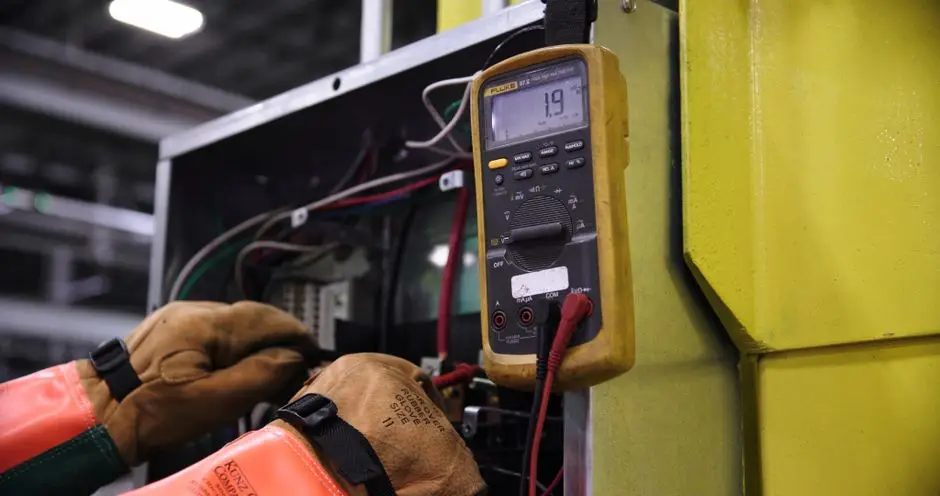
Reputable companies maintain clear, upfront pricing models without hidden fees or surprise billings.
Before authorizing work, ask about the initial diagnostic fee. Industry standards often involve a standard flat diagnostic dispatch fee (frequently ranging between $89 and $199 depending on equipment size and location), which covers the initial technician dispatch and detailed root-cause evaluation. Many customer-focused contractors waive or apply this diagnostic fee toward the total cost if you proceed with the recommended repair.
A professional contractor will provide a comprehensive, written estimate detailing labor rates, OEM parts sourcing costs, and expected completion timelines. Whether dealing with minor fuel pump replacements or complex alternator rewinding, clear financial transparency protects you from unexpected expenses.
Step 4: Check Coverage for Standby, Portable, and Industrial Units
Generator equipment varies wildly depending on property requirements. A small mobile unit powering basic home circuits differs vastly from a 2000kW diesel system backing up a commercial facility in Elk Grove Village.
Confirm that the company has proven experience with your specific unit type:
| Generator Class | Typical Output Range | Typical Applications | Common Service Needs |
|---|---|---|---|
| Mobile Portable Generators | 2kW – 12kW | Job sites, small residential backup, RVs | Carburetor cleanout, recoil starter repair, oil sensor fixes |
| Residential Standby Units | 8kW – 26kW | Single-family homes, small multi-unit housing | Battery replacements, ATS maintenance, valve adjustments |
| Commercial Standby Systems | 25kW – 150kW | Retail centers, offices, medical clinics | Control board retrofits, fuel line flushing, load bank testing |
| Industrial Power Systems | 150kW – 4000kW+ | Data centers, manufacturing, hospitals | Engine overhauls, alternator rewinding, NFPA 110 compliance |
Whether you need home standby repair or heavy commercial power restoration, work with a service provider whose staff possesses the tools and technical capacity to handle your unit’s precise electrical output and mechanical structure.
Step 5: Select a Generator Repair Service with Maintenance Plans
The best generator repair service is one that helps you avoid unexpected breakdowns in the first place. When evaluating providers in Palatine or Schaumburg, inquire about their ongoing preventive maintenance agreements.
Structured maintenance contracts should include:
- Scheduled multi-point inspection checks (checking belts, hoses, battery health, and fluid levels).
- Annual fluid, oil, and filter replacements.
- Regular load bank testing to burn off unburned fuel residue (wet stacking) in diesel units.
- Detailed written service logs and digital history records.
Enrolling in a scheduled planned maintenance program drastically reduces emergency callouts, extends overall equipment lifespan, and guarantees high readiness whenever the regional electrical grid fails.
Generator Repair Cost Factors and Diagnostics
Understanding what drives generator repair pricing helps property owners make informed budget decisions when equipment breaks down.
Diagnostic fee structures typically cover the skilled labor and specialized diagnostic equipment required to locate electrical or mechanical faults accurately. Once the technician identifies the root issue, total overall repair costs are determined by several core variables:
- Type and Capacity of the Generator: Servicing a small air-cooled residential standby generator requires less labor and lower-cost components than servicing a large liquid-cooled industrial diesel unit.
- Parts Sourcing (OEM vs. Aftermarket): Original Equipment Manufacturer (OEM) parts maintain factory warranties and fit precise engine geometries, though they may carry higher price tags than generic aftermarket equivalents.
- Extent of Engine or Electrical Damage: Simple fixes like replacing a starter battery or changing an oil pressure switch require minimal labor. Conversely, complete engine overhauls, cylinder head resurfacing, or alternator winding dipped in insulating varnish require intensive shop labor.
- Control Panel & Electrical Upgrades: Obsolete mechanical panel components often require digital retrofits, which include installing new Engine Control Modules (ECMs) and recalibrating automatic transfer switches.
- Fuel System Servicing: Neglected fuel systems often require dropping tanks, flushing line blockages, polishing contaminated fuel, or rebuilding carburetors and fuel injection pumps.
In cases where repairing an older, heavily worn generator approaches the cost of a completely new power setup, your technician may evaluate alternative back-up arrangements. Property owners considering hybrid energy strategies or supplementary storage often review modern standalone battery backup solutions alongside traditional standby generator choices.
Frequently Asked Questions About Generator Repair
How fast can emergency generator repair services arrive during an outage?
Emergency dispatch availability depends on severe weather severity and call volumes across Chicagoland. During major storm events in Cook County, reputable providers utilize 24/7 live dispatch to prioritize active outage calls—frequently dispatching technicians within hours. Regional technicians equipped with stocked service vehicles aim to diagnose and complete common repairs during their initial visit whenever possible.
What is the difference between diagnostic fees and repair costs?
A diagnostic fee is a set flat charge covering a certified technician’s travel time, initial safety evaluation, and detailed troubleshooting to pinpoint the exact root cause of a breakdown. The overall repair cost includes the additional labor, specialized shop equipment, and replacement parts needed to resolve the problem. Many quality electrical contractors waive or deduct the diagnostic fee from your bill if you choose to proceed with the recommended repair work.
How often should standby generators undergo inspection?
Homeowners and business operators should schedule comprehensive professional inspection at least once per year or every 200 hours of continuous operation. Commercial and mission-critical emergency backup units (such as healthcare or municipal infrastructure) typically require semi-annual or quarterly maintenance schedules, combined with weekly or monthly automated exercise cycles to ensure complete operational readiness.
Conclusion
When storm fronts, winter freeze events, or unexpected grid failures hit Chicago, a working backup generator is your property’s primary line of defense. Relying on an unverified mechanic when power fails can leave your home or facility stranded in the dark.
By focusing on EGSA certification, true 24/7 emergency dispatch capability, transparent diagnostic pricing, and proactive maintenance options, you can choose a generator repair service with complete confidence.
At Energy Co., our team of licensed, factory-trained electrical experts has served homeowners and commercial properties across Schaumburg, Hoffman Estates, Elk Grove Village, Rolling Meadows, Palatine, Roselle, Streamwood, Hanover Park, Arlington Heights, Mount Prospect, Cicero, and the surrounding Chicagoland area for years. We understand the unique demands placed on backup power infrastructure by local climate conditions and older structural wiring.
Whether you need rapid emergency power restoration, annual preventive maintenance, or advice on upgrading your current standby power system, we are here to help keep your lights on.
Ready to protect your property before the next major outage? Contact us today to schedule an expert diagnostic inspection or explore our comprehensive Reliable Generator Installation Service in Chicago to keep your family or business completely powered year-round.