When You Need to Fix a Generator Near Me: What Chicago Homeowners Should Know First
If you need to fix a generator near me, here’s what to do right now: If you have been searching "fix generator near me", this guide will help you find the right pro.
- Check the basics first — confirm fuel supply, reset the onboard circuit breaker, and note any fault codes on the control panel.
- Search for a licensed, insured electrician in your area who is certified for your generator brand (Generac, Kohler, Cummins, etc.).
- Call for emergency service if the unit won’t start, shows a critical fault code, or ran during an outage but delivered no power to your home.
- Expect to pay $50–$100/hr for standard repairs, or $100–$200/hr for emergency or after-hours service.
- Don’t delay — a generator that fails silently between outages gives you no warning until the next storm hits.
A generator is only useful when it actually works. That sounds obvious — but most homeowners in the Chicago area don’t find out their backup power system has a problem until the lights go out. A tripped breaker, a low-oil shutdown, or a failing transfer switch can leave your home completely dark even while the generator engine is running.
The good news: many issues have clear warning signs. And knowing what to look for — before you need emergency help — can save you time, money, and a lot of stress.
I’m Michał Napieralski, a licensed electrician serving Schaumburg and the greater Chicago suburbs, and I’ve helped dozens of homeowners fix generator issues near me through Energy Co.’s residential and commercial electrical services. In this guide, I’ll walk you through everything from spotting early warning signs to choosing the right repair professional.
Common Signs Your Generator Needs Professional Repair
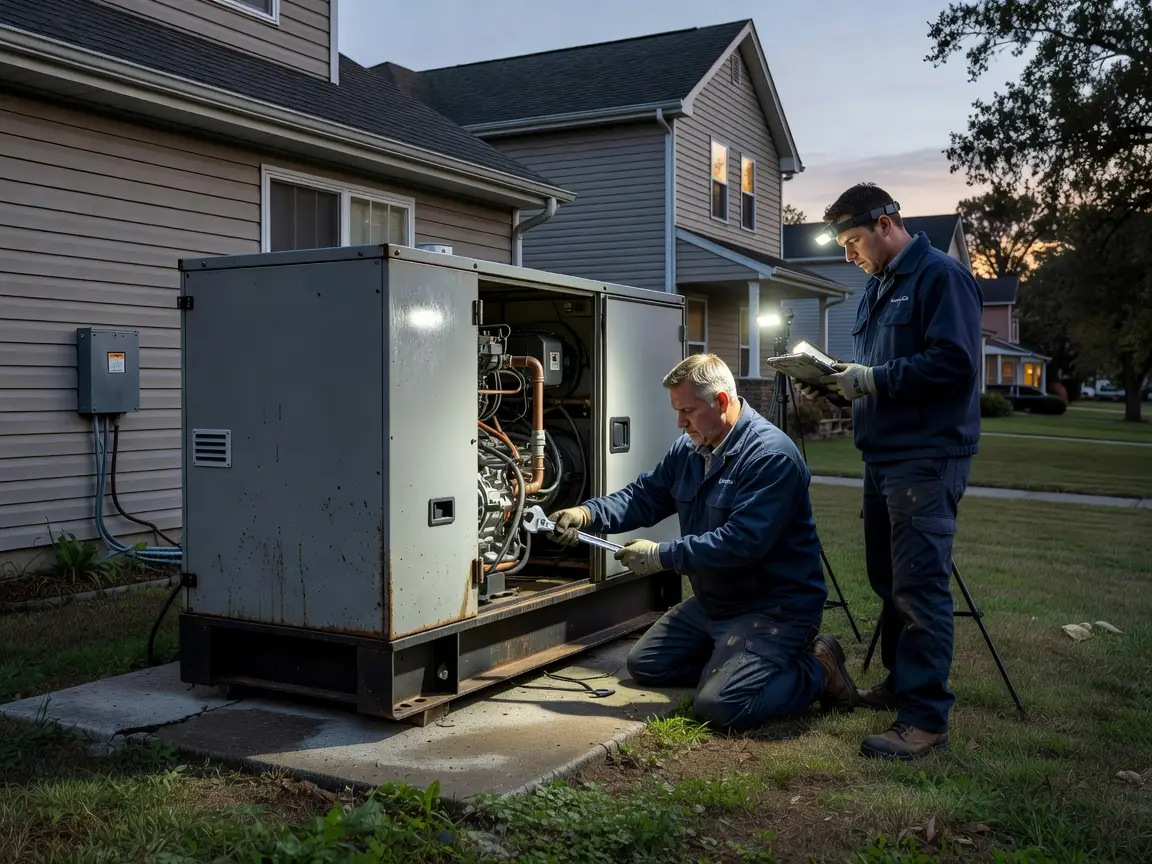
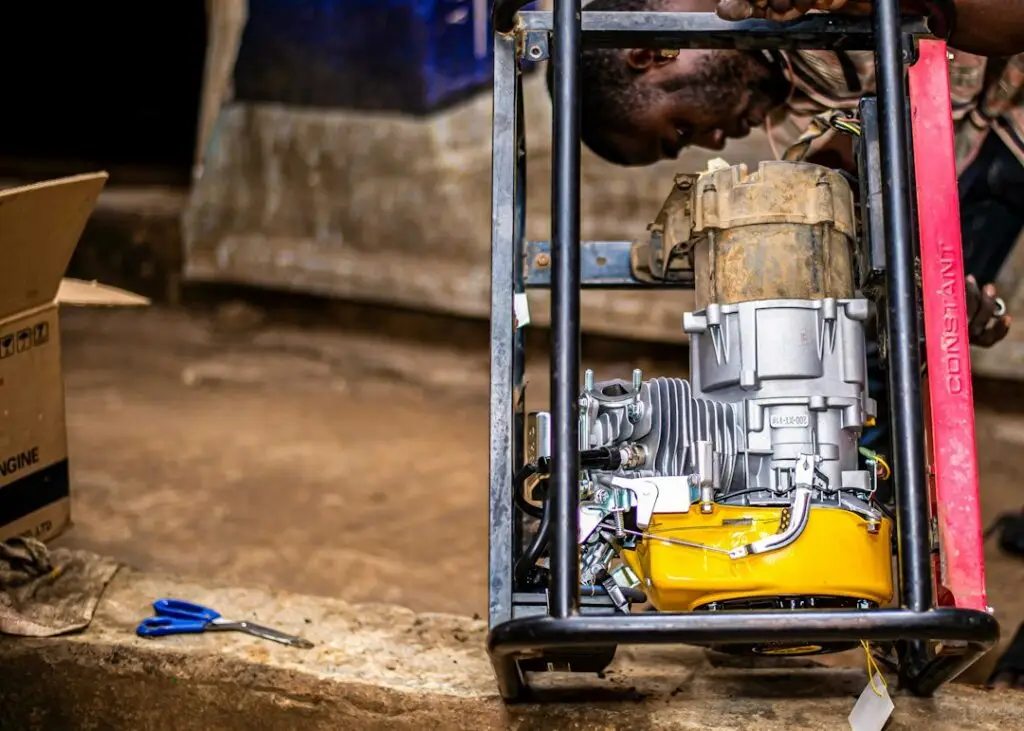
Standby and portable generators are complex machines that blend internal combustion engines with intricate electrical alternators. Because they often sit idle for weeks or months at a time, mechanical and electrical components can degrade silently. Spotting the signs of trouble early prevents a minor issue from turning into a complete system failure when a severe storm rolls through Cook County.
Here are the most common warning signs that it is time to call in professional generator repair services:
- Unusual Noises during Operation: While generators are naturally loud, they should run with a consistent, rhythmic hum. If you hear rattling, grinding, metal-on-metal screeching, or sudden popping sounds, it usually points to worn engine bearings, loose internal components, or a failing alternator stator.
- Visible Fluid Leaks: Walk around your unit regularly. Any pooling liquid underneath the enclosure is a major red flag. Green or pink fluid indicates a coolant leak (common in larger liquid-cooled units), while dark brown or black puddles indicate an oil leak. Puddles of fuel (diesel or gas) are immediate fire hazards and require urgent attention.
- Difficulty Starting or “Short-Cycling”: If your generator cranks repeatedly but struggles to turn over, or if it starts up only to shut down after a few minutes, the system is telling you something is wrong. This is often caused by a failing battery, a clogged fuel line, or faulty spark plugs.
- Flickering Lights or Inconsistent Power Output: If your generator runs but your lights flicker, or sensitive electronics fail to stay powered, the generator may be delivering unstable voltage. A malfunctioning automatic voltage regulator (AVR) can cause power fluctuations that can permanently damage your home’s appliances.
- Frequent Error Codes on the Control Panel: Modern standby systems feature digital control boards that run self-diagnostics. If your screen is flashing yellow or red, or displaying persistent fault codes, the generator has detected an internal issue and may refuse to start during the next power outage.
Whether you are dealing with a standby unit or a portable model, these symptoms require expert diagnostics. If you notice any of these signs, do not wait for the next major blackout to search for a professional to fix generator near me.
How to Fix Generator Near Me: Troubleshooting Before You Call
Before you pick up the phone to schedule an emergency service call, there are a few quick checks you can perform yourself. In our experience servicing homes from Roselle to Arlington Heights, a surprising number of service calls are resolved by simple, non-technical adjustments that take less than five minutes.
If your generator fails to start or run properly during a power outage, consult this basic checklist:
- Confirm Fuel Availability: It sounds simple, but double-check your fuel source. If your unit runs on liquid propane (LP), check the tank gauge to ensure it isn’t empty. For natural gas (NG) units, verify that the primary gas shut-off valve is fully open.
- Check the Main Circuit Breaker: Standby generators have an onboard circuit breaker located inside the main cabinet. If this breaker trips, the engine will run perfectly, but no electricity will flow to your home. Flip the breaker firmly to the “OFF” position, then back to “ON.”
- Inspect Battery Health: Just like your car, a standby generator relies on a 12-volt battery to crank the engine. Check the battery terminals for white or blue powdery corrosion. If the connections are loose, tighten them. If the battery is more than 3 to 4 years old, it may simply need to be replaced.
- Clear Airflow Obstructions: Generators require massive amounts of fresh air to cool the engine and support combustion. Ensure that blowing snow, fallen leaves, overgrown shrubs, or piled mulch are not blocking the intake and exhaust vents on the outer enclosure.
- Look for Active Alerts: Note any specific warnings on the digital screen. Clearing a minor alert might get the system running, but if a hard fault code returns immediately, you will need a certified technician to diagnose the root cause.
For more guidance on handling unexpected blackouts and household electrical hiccups, check out our guide on What to Do When Your Power Goes Bump in the Night.
Understanding Common Fault Codes to Fix Generator Near Me
When a standby generator experiences an operational issue, its internal controller automatically shuts the engine down to prevent catastrophic mechanical damage. It then displays a specific fault code. Understanding what these codes mean can help you communicate clearly with your repair technician.
For example, on Generac systems, you will frequently encounter these common codes:
- Code 1100 (Overcrank): This indicates that the generator tried to start multiple times but could not sustain engine ignition. This is almost always a fuel delivery issue (such as a closed gas valve or empty propane tank) or a failed spark plug.
- Code 1300 (Low Oil Pressure): To protect the engine from seizing, the controller shuts down immediately if oil pressure drops. Check the oil dipstick first. If the oil is low, top it off with the manufacturer-recommended synthetic oil. If the oil level is correct, you may have a faulty oil sensor or a failing oil pump.
- Code 1900 (Undervoltage): This code appears when the generator engine is running, but the alternator is not producing the correct amount of electrical voltage. This is typically caused by a failed automatic voltage regulator (AVR), worn brushes, or a tripped internal winding.
If you clear these codes and they immediately reappear upon startup, do not attempt to force the generator to run. Industry experts emphasize that running a generator with active critical faults can void your manufacturer warranty and cause permanent engine damage.
What to Do When Your Generator Runs But Your Home Has No Power
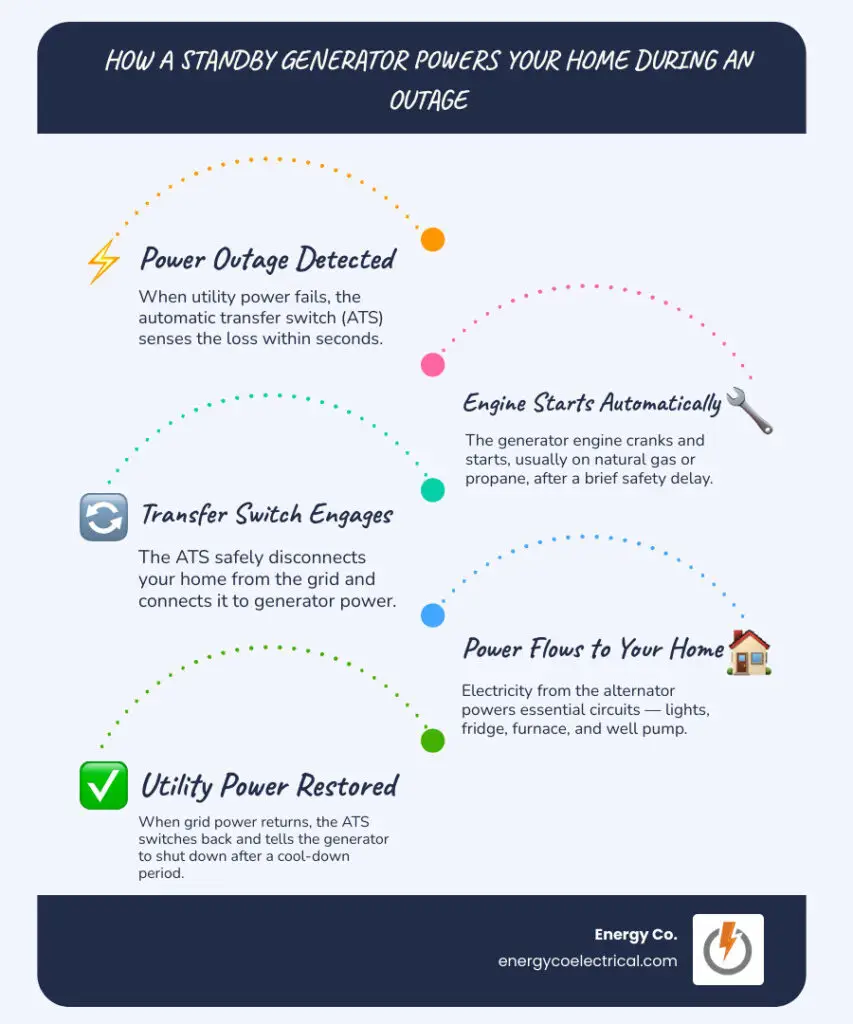
One of the most frustrating situations is watching your generator engine roar to life while your home remains completely dark. If the engine is running smoothly but your transfer switch hasn’t shifted the electrical load, there is a disconnect between the power generator and your home’s main electrical panel.
First, check the generator’s onboard circuit breaker. If it is tripped, reset it. If that doesn’t solve the problem, the issue is likely located within your Automatic Transfer Switch (ATS). The ATS is the brain of your backup system; it constantly monitors utility power and safely switches your home’s electrical circuits from the grid to the generator.
A faulty relay, a blown fuse inside the ATS cabinet, or damaged control wiring can prevent this switch from occurring. Because the ATS is directly connected to both your utility line and the generator, it contains high-voltage electrical currents that pose severe electrocution risks. If your generator runs but fails to power your home, shut the unit down and contact our team for professional Emergency Electrical Services right away.
Why You Shouldn’t DIY: When to Search for Fix Generator Near Me
While DIY home improvement projects are highly rewarding, generator repair is not one of them. Standby generators combine high-pressure fuel lines (natural gas or propane), high-voltage electrical circuits, and heavy mechanical engines into a single system.
Attempting to fix these complex systems without specialized training carries serious risks:
- Carbon Monoxide Poisoning: Improperly adjusted fuel mixtures or exhaust leaks can cause dangerous levels of carbon monoxide (CO) to build up near your home, risking your family’s safety.
- Severe Electrical Shock: Standby systems generate enough electrical current to cause fatal shocks. Even when the generator is turned off, the automatic transfer switch remains energized by utility power.
- Warranty Voiding: Major manufacturers like Generac, Kohler, and Briggs & Stratton require certified technicians to perform repairs. DIY fixes often void your remaining factory warranty.
- Escalated Repair Costs: A simple mistake, like wiring a control board incorrectly, can fry sensitive electronics and double your final repair bill.
Instead of risking your safety, leave these complex diagnostics to licensed professionals. If your generator is acting up, let us handle it safely. Learn more about our certified solutions by visiting our page on Expert Electrical Repair Service in Chicago – Fast, Reliable Solutions.
Choosing the Right Generator Repair Service
When searching for “fix generator near me” in the Northwest Suburbs or Chicago area, you will be met with dozens of search results. However, not all service providers have the specialized training required to work on standby power systems.
To protect your investment, ensure any company you hire meets these strict criteria:
- Proper Licensing and Insurance: Always verify that the contractor holds an active electrical license in your local municipality (such as Cook County) and carries comprehensive liability insurance.
- Factory Certifications: Generator brands have unique mechanical tolerances, electrical layouts, and proprietary firmware. Look for a team whose technicians hold factory-certified credentials for your specific brand.
- Comprehensive Local Footprint: Choose a local provider with deep roots in your community. Here in the Chicagoland area, you want a team that understands local municipal codes, weather patterns, and the specific electrical needs of our historic homes.
For a deeper look into selecting the right contractor, read our detailed guide on Finding a Reliable Electrician Near Me – What You Need to Know.
Questions to Ask Before Hiring a Generator Repair Pro
Before authorizing any repair work on your backup system, protect yourself by asking these essential screening questions:
- Are your technicians factory-trained and certified for my specific brand?
- Do you carry liability insurance and worker’s compensation?
- Will you provide a written diagnostic report and clear pricing before starting repairs?
- Do you offer a “do-not-exceed” clause to prevent unexpected costs?
- Do you handle the permitting process with my local building department if major component replacements are required?
By asking these questions upfront, you ensure that you are working with a transparent, professional service provider. To learn more about screening emergency technicians, check out The Ultimate Guide to Finding a Local Emergency Electrician Without Losing Your Spark.
Emergency Generator Repair Costs and Response Times
When a major storm hits Chicago, demand for emergency generator repair spikes dramatically. During these peak periods, pricing and technician availability can change. Standard hourly rates for qualified, licensed electricians typically range from $50 to $100 per hour, while emergency, holiday, or storm-response visits can range from $100 to $200 per hour.
| Service Type | Average Hourly Rate | Typical Response Window (Metro Areas) | Typical Response Window (Suburban/Rural) |
|---|---|---|---|
| Standard Scheduled Repair | $50 – $100 | 24 – 48 Hours | 48 – 72 Hours |
| Emergency Outage Repair | $100 – $200 | Within 2 Hours | Within 4 Hours |
During widespread outages, emergency technicians prioritize critical infrastructure (like medical facilities) and residential customers with urgent medical needs. To learn more about navigating emergency electrical situations when the grid goes down, read our article on Spark of Hope: Finding a Weekend Electrician When Things Go Dark.
Standby Generator Maintenance: Agreements vs. Pay-Per-Service
When it comes to keeping your generator in top condition, you have two primary options: signing a preventive maintenance agreement or paying per service visit.
Industry data shows that preventive maintenance programs can reduce emergency breakdowns by up to 90% and extend equipment life by 5 to 10 years. While pay-per-service might seem cheaper upfront, a structured maintenance agreement offers superior long-term value, locked-in rates, and priority dispatch during regional storm emergencies.
A comprehensive, professional generator maintenance service plan should include:
- Full Engine Service: Replacing engine oil with high-grade synthetic oil, changing the oil filter, installing fresh spark plugs, and replacing the air filter.
- Cooling System Inspection: For liquid-cooled units, checking radiator coolant levels, verifying proper coolant flow, and inspecting belt tension and hose integrity.
- Battery Diagnostics: Testing battery voltage, checking cold cranking amps (CCA), cleaning terminals, and verifying the onboard battery charger is functioning.
- Fuel System Checks: Inspecting flexible fuel lines, testing gas pressure regulators, and checking for leaks.
- Automatic Transfer Switch (ATS) Testing: Cleaning the ATS cabinet, checking electrical connections, and performing a simulated power outage to verify seamless transfer.
- Operational Performance Testing: Running the generator under load to verify stable voltage and frequency (Hertz) output, and checking all safety shutdown sensors.
A comprehensive maintenance plan ensures that every critical component of your backup power system is inspected, tested, and tuned for peak performance when you need it most.
Preparing Your Generator for Storm Season and Warranty Compliance
Preparing your generator for Chicago’s harsh winter blizzards and spring thunderstorms is essential for reliable operation. The best time to schedule preventive maintenance is during the off-season (typically late winter or mid-summer) when service demand is lowest.
Furthermore, keeping detailed records of professional maintenance is a critical requirement for maintaining your manufacturer’s warranty. If a major component fails under warranty, manufacturers will ask for documented service history to prove the system was not neglected.
To ensure your backup power setup is fully compliant and safely integrated with your home’s electrical panel, review our guide on How to Safely Install a Backup Generator for Your Home.
Frequently Asked Questions about Generator Repair
How often should a standby generator be serviced?
At a minimum, your standby generator should receive a professional service visit once per year. However, for optimal reliability in areas with extreme weather, we recommend a semi-annual schedule: a comprehensive service in the spring and a mid-year checkup in the fall to ensure cold-weather readiness.
Do I need annual maintenance to keep my generator warranty active?
Yes. Most major manufacturers require regular, documented maintenance performed by certified technicians to keep your warranty valid. Failing to service your unit annually can result in denied warranty claims if a major component fails.
What is the typical cost of emergency generator repair?
Emergency repairs typically cost between $100 and $200 per hour for labor, plus the cost of any replacement parts. Diagnostic trip fees may also apply, particularly for after-hours, weekend, or holiday dispatch during major storms.
Conclusion
When severe weather strikes the Chicago area, having a reliable backup generator isn’t just about convenience — it’s about protecting your home, keeping your family safe, and maintaining peace of mind. If your standby system is showing signs of wear, displaying error codes, or failing to start, don’t wait for the next blackout to search for a professional to fix generator near me.
At Energy Co., our licensed, factory-trained electricians provide expert generator repairs, installations, and 24/7 emergency services across Schaumburg, Palatine, Cicero, and the entire Chicagoland area. We understand the unique challenges of local electrical systems and are dedicated to keeping your backup power system completely storm-ready.
Ready to secure your home’s power? Contact us today to schedule your diagnostic visit or learn more about our Reliable Generator Installation Service in Chicago – Get Expert Help Today.