Why Your Home’s Electrical System Deserves More Attention Than It’s Getting
Residential electrical services cover everything your home’s electrical system needs to stay safe, efficient, and up to code — from routine repairs to full rewiring.
Here’s a quick overview of what’s included:
| Service Category | Common Examples |
|---|---|
| Repairs & Troubleshooting | Flickering lights, tripped breakers, faulty outlets |
| Inspections | Panel checks, thermal imaging, GFCI/AFCI testing |
| Installations | Lighting, outlets, ceiling fans, smoke detectors |
| Upgrades | Panel replacement, EV chargers, surge protection |
| Rewiring | Knob-and-tube removal, aluminum wiring, older homes |
| Backup Power | Generator hookups, transfer switches |
| Smart Home | Smart switches, dimmers, home automation |
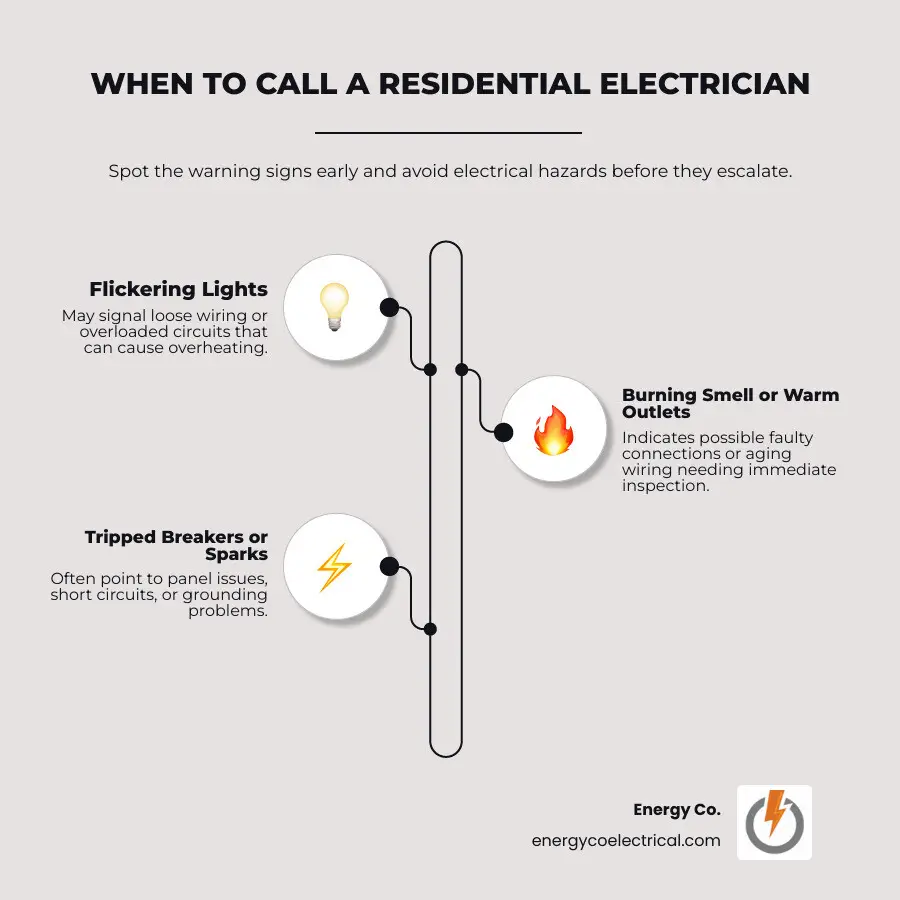
When should you call a residential electrician? Any time you notice burning smells, warm outlets, sparking, frequent breaker trips, or flickering lights — or when buying, renovating, or adding major appliances to your home.
Electrical problems are easy to ignore — until they aren’t.
In the U.S., electrical failures are the second leading cause of home fires, responsible for an estimated 51,000 fires, 500 deaths, and $1.3 billion in property damage every year. Roughly 30% of those fires trace back to faulty or outdated wiring. And if your home was built before 1970, the risk is 2.5 times higher.
For homeowners in the Chicago area — where older housing stock is common — the stakes are even higher. Many homes still have wiring systems that were never designed to handle today’s electrical loads.
The good news? Most hazards are preventable with the right service at the right time.
I’m Michał Napieralski, the licensed electrician behind Energy Co., specializing in residential electrical services across Schaumburg and the greater Chicago suburbs. With hands-on experience in everything from heavy-duty panel upgrades to EV charger installations in older homes, I’ve seen how a proactive approach to your electrical system can protect your family and your property. In this guide, I’ll walk you through exactly how to find reliable residential electrical services — and what to watch out for along the way.
Step 1: Understand Which Residential Electrical Services Your Home Actually Needs
Before you pick up the phone, it helps to know what you’re actually looking for. Not every flicker requires a full home rewire, but every small issue is a symptom of something bigger. In our experience serving the Chicagoland area, we’ve found that homeowners often group electrical work into one big bucket, but understanding the categories can help you communicate better with your electrician and get a more accurate quote.
The most common residential electrical services homeowners request
Most of the calls we receive at Energy Co. fall into a few high-priority categories. Whether you’re in Palatine or Hoffman Estates, these are the bread-and-butter residential electrical services that keep modern homes running:
- Panel Upgrades and Breaker Repair: Your electrical panel is the heart of your home. If it’s old, it likely can’t handle your new high-efficiency HVAC or that fancy double oven.
- Safety Device Installation (GFCI & AFCI): Ground Fault Circuit Interrupters (GFCI) protect you from shocks in wet areas like kitchens and baths, while Arc Fault Circuit Interrupters (AFCI) prevent fires caused by sparking wires.
- Lighting and Comfort: This includes ceiling fans, recessed LED lighting, and outdoor security lighting to keep your property bright and safe.
- Life Safety Systems: Hardwired smoke detectors and CO detectors are non-negotiable for modern safety codes.
- Dedicated Circuits: High-draw appliances like refrigerators, sump pumps, and space heaters need their own “dedicated” line so they don’t trip the breaker every time they kick on.
Repairs, installations, and upgrades: what each service category covers
We like to break our work down into three main “buckets”:
- Repairs & Troubleshooting: This is the “detective work.” If an outlet stopped working or a light is buzzing, we use diagnostic tools to find the root cause—whether it’s a loose connection or a failing breaker.
- Installations: This is adding something new. Maybe you’re remodeling your kitchen in Elk Grove Village and need under-cabinet LED retrofits, or you want smart switches installed so you can turn off the lights from your phone.
- Upgrades: This is about increasing capacity or safety. This includes service upgrades (going from 100-amp to 200-amp service), installing subpanels for a home addition, or upgrading your data cabling to Category 6 for a faster home office.
Older homes need specialized residential electrical services
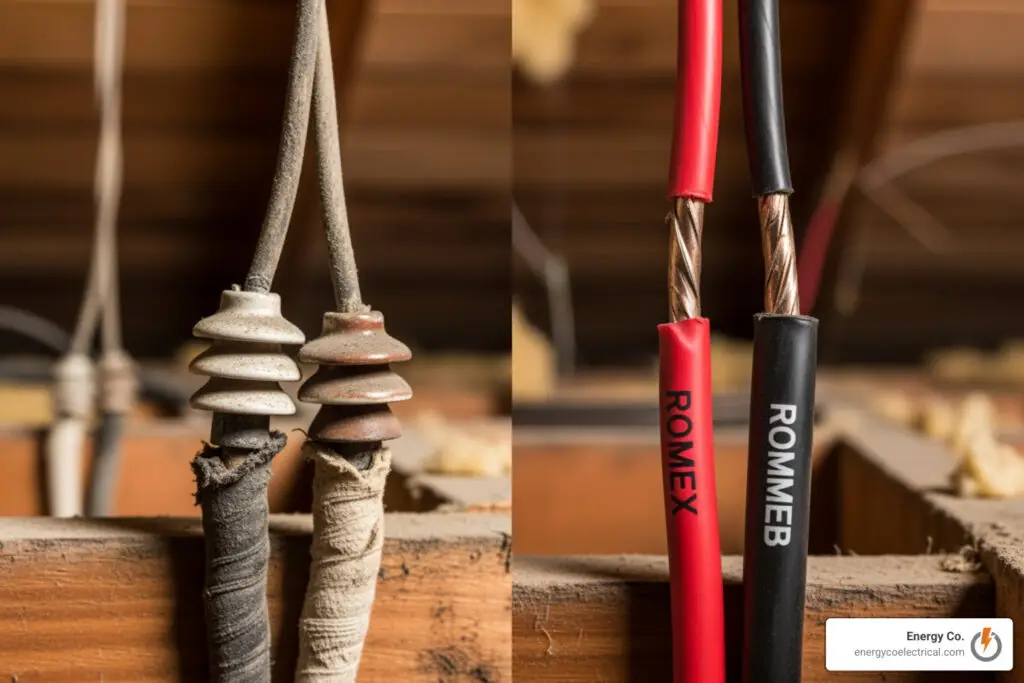
If you live in an older home in Chicago or Cicero, your electrical needs are unique. Homes built in the early to mid-20th century often feature knob-and-tube wiring or aluminum wiring. These systems weren’t designed for the sheer number of gadgets we use in May 2026.
Older systems often lack proper grounding, which can fry your expensive electronics. When we perform inspections in these homes, we look specifically at attic spaces and crawl spaces where old wires might have been chewed by pests or covered by insulation (a major fire hazard). Upgrading these systems isn’t just about convenience; it’s about bringing your home up to modern safety standards and ensuring your insurance policy remains valid.
Step 2: Schedule Inspections Before Small Problems Turn Into Fire Risks
We’ve all heard the phrase “if it ain’t broke, don’t fix it.” In residential electrical services, that’s dangerous advice. Electrical systems are largely invisible, and by the time you see a “problem” (like smoke or a fire), it’s already too late.
How often should a home electrical system be inspected?
Industry experts recommend a full professional electrical inspection every 3 to 5 years. However, you should call us sooner if:
- Your home is over 25 years old.
- You are planning a major renovation.
- You’ve just purchased a new home and want a “baseline” safety check.
- You’ve added high-power appliances like a hot tub or a Level 2 EV charger.
Statistics show that regular inspections can identify up to 70% of potential electrical hazards before they cause damage or fire.
What a thorough electrical inspection should include
A “visual check” isn’t enough. When Energy Co. comes to your home in Rolling Meadows or Mount Prospect, we perform a deep dive:
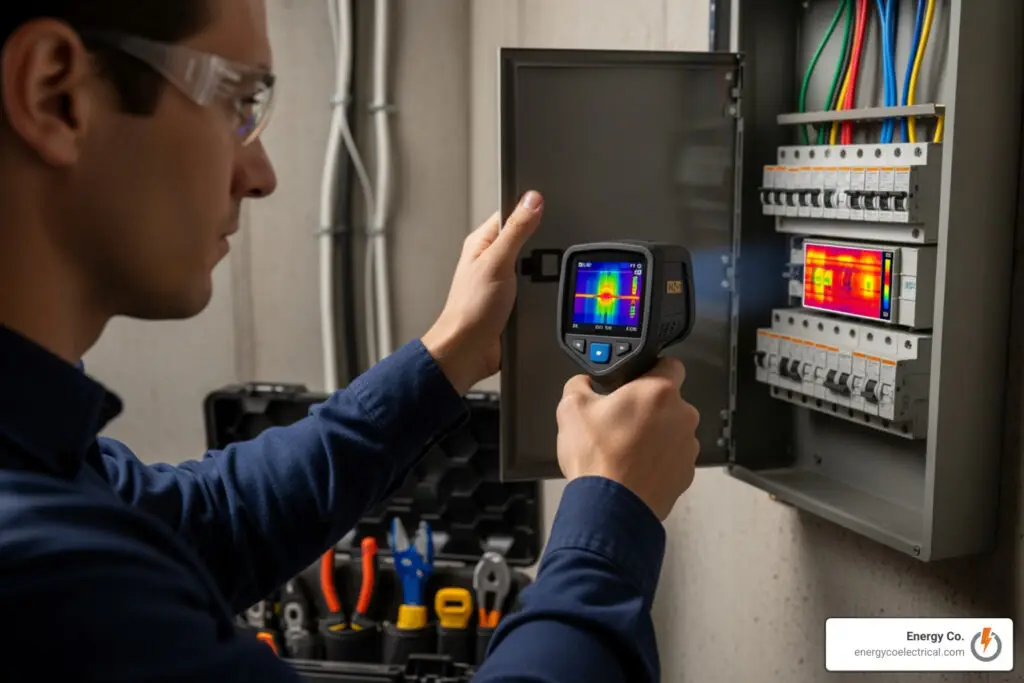
- Thermal Imaging: We use infrared cameras to look inside your walls and panels. We’re looking for “hot spots” that indicate overloaded circuits or loose connections that the naked eye can’t see.
- Panel and Grounding Review: We verify that your system is properly grounded and bonded. This protects you from lightning strikes and power surges.
- Device Testing: We manually trip every GFCI and AFCI outlet and breaker to ensure they actually shut off power when they’re supposed to.
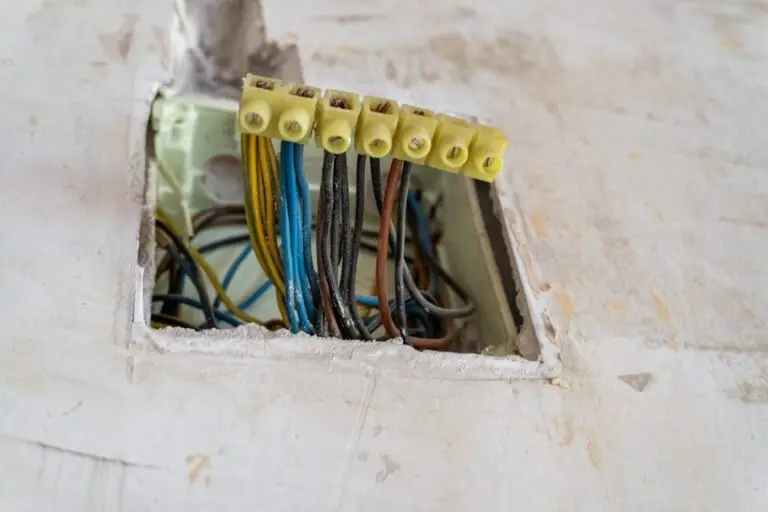
- Junction Box Management: We check for “open” junctions (wires twisted together without a protective box), which are a common cause of attic fires.
Why regular inspections matter for safety and cost control
Preventive maintenance is always cheaper than emergency repairs. By catching a corroded wire in your panel during a routine check, you avoid the $2,000+ cost of an emergency panel replacement on a Sunday night. Plus, having documented inspections can be a huge asset when it comes to insurance claims or selling your home.
Step 3: Learn the Warning Signs That Point to Repairs or Upgrades
Your home usually tries to tell you when something is wrong. The problem is that many homeowners “learn to live” with these quirks until they become dangerous.
Signs your home needs immediate electrical repairs
If you notice any of the following, stop reading and call for emergency electrical services immediately:
- A faint burning smell: This often smells like “fish” or burning plastic. It’s the smell of wire insulation melting.
- Sparking: If an outlet sparks when you plug something in, there’s a short circuit or a loose wire.
- Buzzing or Humming: Breakers and outlets should be silent. If they’re making noise, they are struggling to handle the load.
- Scorched Receptacles: If you see black or brown marks around the plug holes, the outlet is overheating.
Signs your electrical system is outdated, overloaded, or undersized
Sometimes the signs are more subtle. These don’t always mean an emergency, but they do mean you’re overdue for an upgrade:
- Flickering Lights: Does the dining room light dim when the refrigerator kicks on? That means your circuits are fighting for power.
- The “Extension Cord” Lifestyle: If you have power strips plugged into power strips, your home doesn’t have enough outlets for modern life.
- Two-Prong Outlets: These are ungrounded and unsafe for modern electronics.
- Frequent Breaker Trips: If you can’t run the microwave and the toaster at the same time, your panel is overloaded.
When circuit breaker issues mean deeper electrical problems
A circuit breaker repair might be as simple as replacing a “tired” 20-amp breaker. However, “nuisance tripping” can also be a sign of a ground fault or an arc fault somewhere deep in your walls. We don’t just swap the breaker and leave; we investigate why it tripped to ensure there isn’t a hidden fire hazard waiting to happen.
Step 4: Prioritize the Upgrades That Improve Safety, Capacity, and Resale Value
If you’re looking to invest in your home in May 2026, electrical upgrades offer some of the best returns on investment—not just in home value, but in peace of mind.
The benefits of upgrading an electrical panel or service
Many older homes in Schaumburg still run on 60-amp or 100-amp service. Today’s homes, with multiple TVs, computers, high-end appliances, and HVAC systems, really need 200-amp service. An electrical panel upgrade provides:
- Increased Capacity: Add that basement bar or home theater without worry.
- Modern Safety: New panels use AFCI breakers that detect dangerous sparking before a fire starts.
- Resale Appeal: “Updated 200-amp electrical” is a major selling point for Chicago homebuyers.
How whole-house surge protection and backup power improve home safety
We’ve all seen the little power strips under desks. They’re fine, but they only protect what’s plugged into them. A whole-house surge protector is installed directly into your main panel. It can reduce the risk of damage from external power surges (like lightning or utility spikes) by up to 80%.
Furthermore, with Chicago’s unpredictable weather, a generator hookup with a manual transfer switch ensures that when the power goes out in Hanover Park, your sump pump keeps running and your food stays cold.
EV chargers and smart home upgrades in residential settings
As of May 2026, electric vehicles are everywhere. If you’re still charging your car with a standard wall outlet, it’s taking forever. We specialize in installing Level 2 EV charging stations. This involves:
- A dedicated 240V circuit.
- A load calculation to ensure your panel can handle the extra 40-50 amps.
- Proper permitting to ensure the installation is legal and safe.
You can power up your ride with a home EV charging station and cut your charging time by 70-80%.
Typical costs and timelines for common residential projects
While every home is different, here is a general guide to what you can expect for common residential electrical services in the Northwest Suburbs:
| Project Type | Typical Cost Range (2026) | Estimated Timeline |
|---|---|---|
| Service Call / Minor Repair | $150 – $350 | 1 – 2 Hours |
| Outlet/Switch Replacement | $100 – $250 per unit | 30 – 60 Minutes |
| EV Charger Installation | $800 – $1,800 | 3 – 5 Hours |
| Panel Upgrade (200 Amp) | $2,500 – $4,500 | 1 Full Day |
| Whole-Home Rewire | $8,000 – $20,000+ | 1 – 2 Weeks |
| Surge Protector Install | $300 – $600 | 1 Hour |
Step 5: Verify Licensing, Code Compliance, and Emergency Readiness Before You Hire
Choosing an electrician shouldn’t be based on the lowest bid. Because electrical work can literally be a matter of life and death, you need to vet your contractor thoroughly.
What homeowners should look for when choosing a licensed residential electrician
When you’re looking for residential electrical services in Schaumburg or Arlington Heights, check for these “must-haves”:
- Valid License: In Illinois, electricians must be licensed. This proves they’ve passed rigorous testing on the National Electrical Code (NEC).
- Insurance: They should carry both General Liability and Workers’ Comp. If a tech gets hurt in your home and they aren’t insured, you could be liable.
- Residential Expertise: Some electricians only do commercial work. Residential wiring requires a different touch—especially when it comes to working in finished homes without destroying your drywall.
- Local References: Ask for reviews from neighbors in your specific town.
What safety standards and codes residential work must follow
All professional work must follow the National Electrical Code (NEC), as well as specific local Chicago or Cook County amendments. These codes dictate things like:
- How far apart outlets must be.
- Where GFCI protection is required.
- How wires must be secured and protected within walls.
Never hire an electrician who suggests doing the work “without a permit.” Permits involve an independent city inspector checking the work, which is your ultimate safety net.
Questions to ask before hiring for residential electrical services
Don’t be afraid to grill your electrician! Ask:
- “Are you licensed and insured in this specific municipality?”
- “Will you be pulling the necessary permits for this project?”
- “Do you offer a satisfaction guarantee on your labor?”
- “Can you provide a written, transparent estimate before starting?”
- “How do you handle panel labeling after the job is done?” (There’s nothing worse than a panel full of mystery switches!)
Step 6: Prepare Your Home for Emergencies, Outages, and Fast Service Calls
Even with the best maintenance, emergencies happen. Being prepared can prevent a stressful situation from turning into a disaster.
How to prepare for electrical emergencies or power outages
We recommend every Chicagoland family keeps a “Power Outage Kit” in an easy-to-reach spot. This should include:
- High-quality flashlights and fresh batteries.
- A portable phone charger (power bank).
- A list of emergency numbers (including Energy Co.!).
- Knowledge of where your main water shut-off and main electrical breaker are located.
What to do during an urgent electrical problem
If you see sparks, smell smoke, or hear loud popping:
- Stay Calm: Don’t touch anything with your bare hands if it looks scorched.
- Cut the Power: If it’s safe to reach the panel, flip the main breaker to “OFF.”
- Call the Pros: Contact a 24/7 electrician.
- Evacuate if Necessary: If there is an active fire or heavy smoke, get everyone out and call 911 first.
When to call for emergency residential electrical services
Not every issue is an emergency, but you should call for immediate help if:
- You have a partial power outage (this could indicate a “lost leg” of power which can damage appliances).
- Your sump pump has lost power during a heavy Chicago rainstorm.
- A breaker won’t stay reset (this is a sign of a persistent short circuit).
- You have exposed, “live” wires due to storm damage or an accident.
Conclusion: Choose Residential Electrical Services Built for Long-Term Safety
Your home’s electrical system is the invisible engine that powers your life. From the coffee maker that starts your morning in Hoffman Estates to the security lights that protect your Palatine home at night, you rely on those wires more than you realize.
At Energy Co., we don’t just fix wires; we provide peace of mind. Whether you need a simple outlet replacement or a complex whole-home rewire, our team of licensed professionals is dedicated to safety, transparency, and the unique needs of Chicago-area homes. We stand behind our work with a satisfaction guarantee and are ready to respond 24/7 when you need us most.
Don’t wait for a spark to start thinking about your electrical system. Contact us today to schedule an inspection or get a free estimate for your next project. You can also find local electrician reviews to see why your neighbors trust us with their homes.
Frequently Asked Questions About Residential Electrical Services
How much do residential electrical services usually cost?
Labor rates in the Chicago area typically range from $100 to $200 per hour, depending on the complexity of the job. Most companies also have a “trip charge” or “diagnostic fee” to cover the cost of getting a truck and a licensed tech to your door. Always get a written quote that includes both materials and labor to avoid “sticker shock.”
Is DIY electrical work ever worth the risk?
In a word: No. While you can find a YouTube video for anything, electrical work carries risks that other DIY projects don’t. A mistake in plumbing leads to a wet floor; a mistake in electrical leads to a house fire or a fatal shock. Furthermore, unpermitted DIY work can lead to your insurance company denying a claim if a fire ever occurs.
Can residential electrical services lower energy bills?
Absolutely. Upgrading to LED lighting can reduce your lighting energy usage by 80%. Installing smart thermostats and dimmers allows you to use power only when you need it. Even a panel upgrade can improve efficiency by ensuring your circuits aren’t “leaking” energy through heat caused by poor connections.