What Chicago Homeowners Need to Know About Electric Panel Upgrades
Electric panel upgrades are one of the most common — and most urgent — electrical projects homeowners face in 2026. Here is a quick snapshot of what you need to know:
| Question | Quick Answer |
|---|---|
| What is it? | Replacing or upgrading your home’s main electrical panel to handle more power |
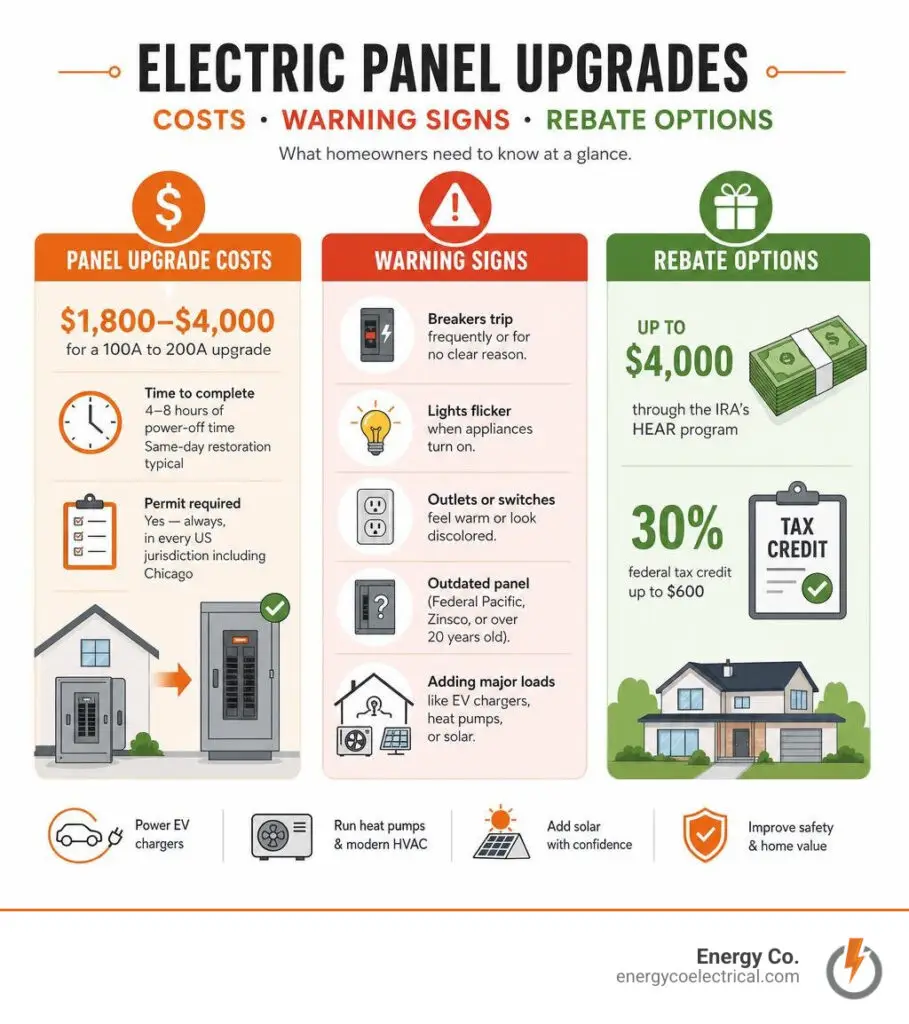
| Average cost | $1,800–$4,000 for a 100A to 200A upgrade |
| Time to complete | 4–8 hours of power-off time, same-day restoration typical |
| Do you need a permit? | Yes — always, in every US jurisdiction including Chicago |
| Who needs one? | Homes adding EV chargers, heat pumps, or solar; homes with Federal Pacific or Zinsco panels; homes with frequent breaker trips |
| Top incentive | Up to $4,000 through the IRA’s HEAR program; 30% federal tax credit up to $600 |
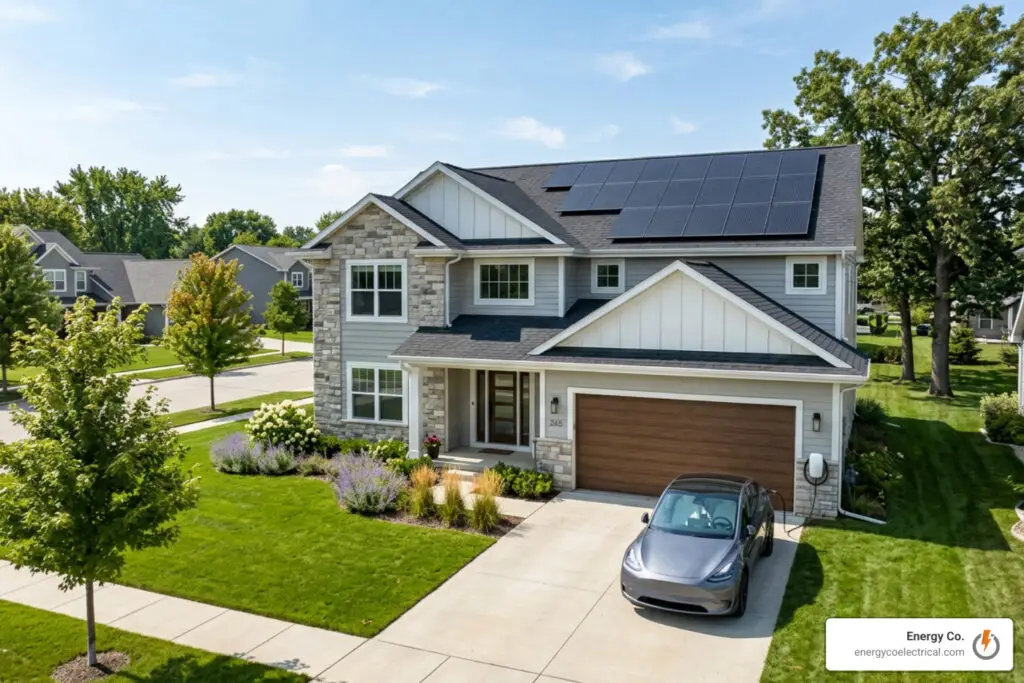
Most homes built before 2000 run on 100–150 amp service. That was fine decades ago. But today, with EV chargers pulling 40–60 amps, heat pumps drawing another 40–80 amps, and solar systems requiring their own breaker space, that old panel is often the hidden bottleneck blocking your home’s modernization.
If your lights flicker, breakers trip for no obvious reason, or you are planning any major appliance addition — your panel is likely the first place to look.
I’m Michał Napieralski, a licensed electrician and founder of Energy Co. serving the Chicagoland area, with hands-on experience completing hundreds of electric panel upgrades across older Chicago homes and commercial spaces. In this guide, I’ll walk you through exactly what an upgrade costs, when you truly need one, and how to get it done right the first time.
When Do You Need Electric Panel Upgrades?
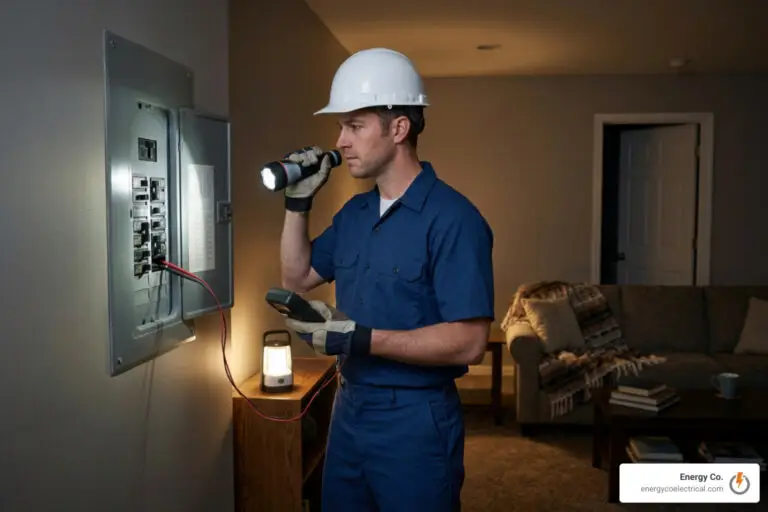
It is easy to ignore your electrical panel. Tucked away in a dark corner of your basement, garage, or utility closet, it only gets attention when a breaker trips and you have to stumble around with your phone’s flashlight. However, ignoring an outdated or overloaded electrical panel can lead to serious safety hazards and prevent you from upgrading your home with modern, energy-efficient appliances.
As we move further into 2026, our home power demands are higher than ever. If you live in an older home in Chicago or the surrounding Cook County suburbs, your panel might still be running on 60-amp or 100-amp service. While 100 amps was once the gold standard, it simply cannot keep up with a modern lifestyle that includes multiple computers, smart devices, air conditioning, and high-draw appliances.
Knowing when to pull the trigger on electric panel upgrades can save you from unexpected power outages, electrical fires, and expensive emergency service calls. If you are starting to notice performance issues or planning a home renovation, it is time to consult a professional. You can read more about the core signs and cost structures in our guide on How Much to Swap the Box Your Guide to Electrical Panel Upgrade Costs or review nationwide cost expectations in this resource on Electrical Panel Upgrade Cost 2026: $1,500–$4,000 — Signs, Permits & Getting Bids .
Depending on where you live in the Northwest Suburbs, local electrical requirements can vary slightly. We regularly assist homeowners with these transitions across local communities:
- Schaumburg: We provide full-service panel upgrades tailored to local village codes.
- Hoffman Estates: Our team handles all permitting and installation for residential upgrades.
- Elk Grove Village: We ensure your new panel meets all local standards.
- Rolling Meadows: Trusted local electrical services to keep your home safe and up to code.
- Palatine: Professional panel replacements and service upgrades.
- Roselle: Safe, efficient electrical panel installations.
- Streamwood: Reliable electrical repairs and panel modernization.
- Hanover Park: Specialized panel upgrades to support modern home appliances.
Warning Signs of an Outdated or Unsafe Panel
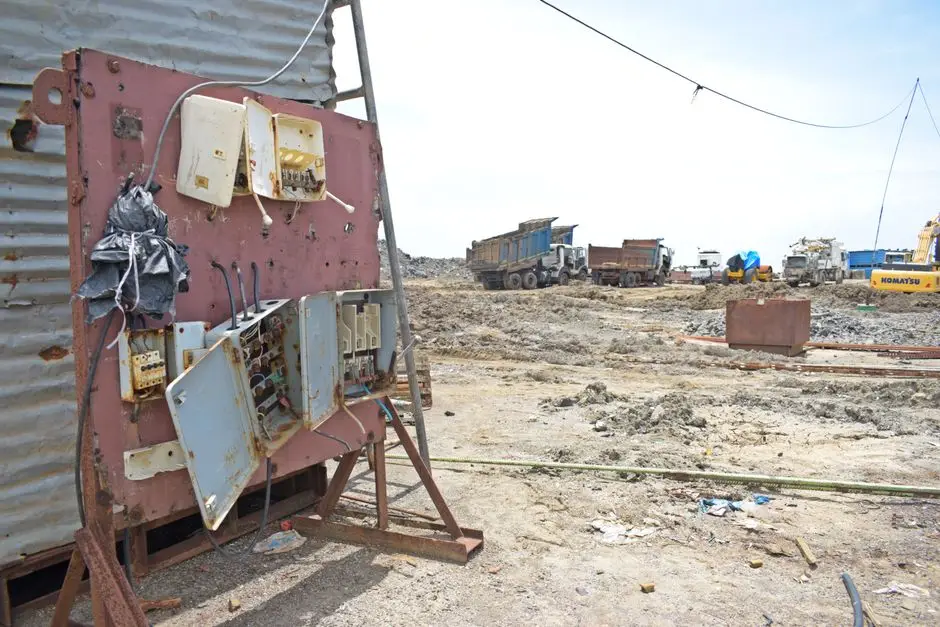
How do you know if your panel is crying out for help? Your home’s electrical system will usually drop clues before a total failure occurs. Here are the primary warning signs that your panel is outdated, unsafe, or severely undersized:
- Frequent Breaker Trips: If turning on your microwave while the vacuum is running instantly plunges your kitchen into darkness, your circuits are overloaded. Breakers are designed to trip to prevent wires from overheating, but frequent tripping means your panel has reached its capacity limit.
- Flickering or Dimming Lights: Do your lights momentarily dim when your central air conditioning or refrigerator kicks on? This is a classic sign that your appliances are temporarily starving the rest of your home of voltage because the panel cannot distribute enough current simultaneously.
- Warm Panel or Burning Smells: If you touch the door of your electrical panel and it feels warm, or if you detect a faint, sweet, or plastic-like burning smell nearby, you have an emergency. This indicates loose connections or failing breakers that are actively generating dangerous levels of heat.
- Buzzing, Hissing, or Crackling Sounds: A properly functioning electrical panel should operate in complete silence. If you hear buzzing or crackling from inside the box, it means electricity is arcing between components—a major fire hazard.
- Rust and Corrosion: Water and electricity do not mix. If your panel is in a damp Chicago basement and shows signs of rust, corrosion, or water spots, the structural integrity of the breakers and bus bars is compromised.
Dangerous Legacy Brands to Replace Immediately
Not all old panels are just “undersized”—some are fundamentally dangerous design flaws that should be replaced immediately, regardless of whether they seem to be working. If you have any of the following legacy brands in your home, call us or another licensed electrician to schedule a replacement right away:
- Federal Pacific Electric (FPE) Stab-Lok: Installed in an estimated 28 million American homes between the 1950s and 1980s, these panels are notorious. The breakers have an incredibly high failure rate—frequently failing to trip during an overload or short circuit. This means the wires keep drawing current until they melt or catch fire. Many insurance companies in Illinois will outright deny coverage if they discover an active FPE Stab-Lok panel in your home.
- Zinsco (or GTE-Sylvania): Popular in the 1970s, Zinsco panels feature bus bars made of an aluminum alloy that is highly prone to oxidation. Over time, the breakers can literally weld themselves to the bus bars. Once welded shut, the breaker cannot trip, allowing electrical current to reach unsafe levels and melt the surrounding components.
- Pushmatic (Bulldog): While not as active of an immediate fire hazard as FPE or Zinsco, Pushmatic panels are completely obsolete. They use grease-lubricated push-button breakers that stiffen up over time, making them difficult or impossible to reset. Finding replacement parts is incredibly difficult, and the panels do not have enough physical space to support modern safety components like Arc-Fault Circuit Interrupters (AFCIs).
Cost Breakdown and Sizing for a 100A to 200A Upgrade
When planning for electric panel upgrades, the most common question we get is: “What is this actually going to cost me?”
In 2026, a standard residential panel upgrade typically ranges from $1,800 to $4,000. The exact price depends heavily on the existing infrastructure of your home, the physical placement of the panel, and whether you are simply replacing the indoor box or upgrading the entire service line coming from the utility company (ComEd in the Chicagoland area).
To help you visualize the average costs based on different project scopes, we have compiled this baseline cost breakdown:
| Upgrade Type | Average Cost Range | Typical Timeframe | What is Included? |
|---|---|---|---|
| Same-Amp Panel Replacement (100A to 100A) | $1,500 – $2,500 | 4 – 6 Hours | New indoor panel, new modern breakers, labor, and basic permits. No utility service line changes. |
| Standard Service Upgrade (100A to 200A) | $1,800 – $3,500 | 4 – 8 Hours | New 200A panel, main breaker, service entrance conductors, new meter base, grounding rods, permits, and ComEd coordination. |
| Heavy-Duty Service Upgrade (200A to 400A) | $4,500 – $8,000 | 1 – 2 Days | Dual 200A panels or a single 400A panel, heavy-duty service mast, larger meter socket, and extensive utility coordination. |
| Subpanel Addition (60A to 100A) | $500 – $1,500 | 3 – 5 Hours | Secondary panel installed in a garage, basement, or addition, including feeder wire run from the main panel. |
For a deeper dive into the specific math behind these figures, check out The Cost to Upgrade to a 200 Amp Panel Without Getting Zapped and read the latest industry timeline expectations in Electrical Panel Upgrade in 2026: Cost, Timeline, and How to Decide | PermitDeck .
Key Factors Influencing the Price of Electric Panel Upgrades
Why does one homeowner pay $1,800 while their neighbor down the street pays $3,500 for what seems like the same 200-amp upgrade? Several variable factors drive the labor and material costs of this project:
- Service Line Upgrades: If the overhead wires coming from the street to your house are only rated for 100 amps, upgrading to a 200-amp panel requires replacing those service entrance cables. If your neighborhood has underground power lines, ComEd may need to trench and run new underground lines, which can increase complexity.
- Meter Base and Socket Location: Local building codes and utility requirements specify exactly where your electric meter must sit. For example, the meter socket height must typically be between 48 and 75 inches above final grade. If your old meter is too low, too close to a gas riser (which requires at least 36 inches of clearance), or too close to a window, we have to physically relocate it, adding labor and material costs.
- Drywall and Structural Repair: If your panel is located in a beautifully finished basement, we may need to cut into the drywall to run new wires and secure the new, larger panel box. Repairing and painting that drywall afterward can add $150 to $600 to your total project budget.
- Modern Code Compliance (AFCI/GFCI Requirements): Chicago and Cook County have strict electrical codes. When we perform a major panel upgrade, we are required by law to bring the affected circuits up to current code. This means installing Arc-Fault Circuit Interrupter (AFCI) and Ground-Fault Circuit Interrupter (GFCI) breakers. These advanced breakers cost $50 to $100 each, compared to just $10 to $15 for a standard breaker. You can learn more about these local safety mandates in our breakdown of The Shocking Truth About Chicago AFCI Requirements.
Sizing Your Panel for EV Chargers, Heat Pumps, and Solar
Choosing the right panel size is all about calculating your current electrical load and planning for the future. You do not want to install a 150-amp panel today only to realize next year that it cannot handle the Level 2 EV charger you want to install.
To determine your exact needs, we perform a National Electrical Code (NEC) 220.82 load calculation. This calculation adds up the square footage of your home, your general appliance loads, and your heavy heating/cooling equipment, then applies a “diversity factor” because you are highly unlikely to run every single appliance in your house at the exact same second.
- 100 Amps: Suitable only for small, older homes with gas heating, gas cooking, and no major electric vehicle charging or hot tub loads.
- 150 Amps: A solid middle ground that can comfortably support a single EV charger or a heat pump alongside normal household loads, but may struggle if you attempt full whole-home electrification.
- 200 Amps: The modern standard for single-family homes. A 200-amp panel provides plenty of breathing room to run a Level 2 EV charger (which draws 40 to 50 amps), a whole-home cold-climate heat pump (drawing 40 to 80 amps), and an induction range without overloading your system. Learn more about making this choice in The Homeowner Guide to Buying a 200 Amp Electrical Panel.
- 400 Amps: Rarely needed for standard homes. This is typically reserved for very large properties (over 4,000 sq. ft.) with multiple EV chargers, a heated pool, a detached guest house (ADU), or extensive commercial-grade workshop equipment.
If you plan to install solar panels, the NEC’s 120% rule also comes into play. This rule limits the total amount of power that can feed into your panel from both the utility grid and your solar inverter. Upgrading to a 200-amp panel with a 200-amp bus bar provides the physical and electrical capacity required to safely tie in a standard 6 kW to 10 kW solar array.
Rebates, Tax Credits, and Smart Load Management
Upgrading your electrical panel is a significant investment, but you do not have to shoulder the entire cost alone. Because panel upgrades are a foundational step toward reducing carbon emissions and transitioning homes away from fossil fuels, there are massive federal and state incentives available in 2026 to help offset your out-of-pocket expenses.
Federal Tax Credits and State Rebate Programs
The federal government and local programs offer several excellent avenues to save money on your project:
- Energy Efficient Home Improvement Tax Credit (Section 25C): Homeowners can claim a federal tax credit of 30% of the total project cost for electric panel upgrades, up to a maximum credit of $600. To qualify, the panel upgrade must be installed in conjunction with, and enable the installation of, other qualified energy-efficient improvements (such as a heat pump, heat pump water heater, or solar panels). You can read the official eligibility guidelines directly at Electric Panel Upgrade Tax Credit | ENERGY STAR .
- Home Electrification and Appliance Rebates (HEAR) Program: Part of the Inflation Reduction Act, this program is administered at the state level. For qualifying low-to-moderate-income households in Illinois, the HEAR program can cover up to $4,000 for electrical panel upgrades and up to $1,600 for associated electrical wiring. This means some homeowners can have their entire panel upgrade completely funded through these rebates!
- Utility-Specific EV Rebates: While some regions have local utility rebates (such as Southern California Edison’s $4,200 Charge Ready Home program or Minnesota’s $3,000 income-qualified grants), Chicagoland homeowners should keep an eye on ComEd’s evolving residential rebate programs. ComEd frequently offers incentives and special Time-of-Use (TOU) rate structures for homeowners who install smart Level 2 EV chargers, which often require a panel upgrade to support the load.
Smart Load Management vs. Physical Electric Panel Upgrades
What if your local utility grid is constrained, or the cost of running a new service line from the street to your home is prohibitively expensive? You may be able to avoid a physical service line upgrade by utilizing smart load management technology.
Instead of upgrading your physical service from 100 amps to 200 amps, you can install smart devices that actively monitor and manage your home’s electrical load:
- Smart Electrical Panels: Brands like Span or Leviton offer smart panels that allow you to monitor energy usage in real-time down to the individual circuit. If your home’s total electricity draw approaches 100 amps, the smart panel can temporarily pause (or “shed”) non-essential loads—like your EV charger or water heater—for a few minutes until your HVAC cycle finishes.
- Circuit-Sharing and Load-Shedding Devices: These are smart switches that sit between two high-draw appliances (like your electric dryer and your EV charger). They ensure that both appliances cannot run at the exact same time. If you plug in your electric vehicle, the device automatically pauses the dryer, and vice versa.
- Power-Smart Appliance Choices: Choosing highly efficient appliances, such as a 120V plug-in hybrid heat pump water heater or a low-amperage induction range, can significantly reduce your home’s baseline electrical load, allowing you to fully electrify on your existing 100-amp or 150-amp panel.
Frequently Asked Questions About Panel Upgrades
Do I need a permit and utility coordination for a panel upgrade?
Yes, absolutely. In Chicago, Cook County, and all surrounding suburbs, a building permit is legally required for any main electrical panel upgrade or replacement.
This is not just bureaucratic red tape—it is a vital safety measure. The permitting process ensures that a licensed electrician designs the system to meet local building codes and the National Electrical Code. Once the work is complete, a third-party city or county building inspector will visit your home to verify that everything was installed safely and correctly.
Furthermore, because upgrading your panel requires physically cutting the power coming from the street, we must coordinate directly with ComEd to schedule a power disconnect and reconnect. Trying to perform this work without a permit is illegal, can lead to heavy code-enforcement fines, and will give your homeowner’s insurance company a valid reason to deny any future fire-related claims.
How long does a panel upgrade take?
The physical swap of the panel itself is typically a same-day project that takes between 4 to 8 hours.
During this window, your home’s main power will be completely shut off. We recommend planning ahead: keep your refrigerator and freezer doors closed to preserve food temperature, charge your mobile devices, and make arrangements for pets or remote work if you cannot be without internet and air conditioning for the day. Once the physical installation is complete, we coordinate with ComEd and local inspectors to safely restore your power by the end of the afternoon.
Can I DIY an electrical panel upgrade?
No. Under no circumstances should a homeowner attempt to DIY a main electrical panel upgrade.
Working inside a main service panel is incredibly dangerous. Even when you turn off the main breaker, the service entrance cables coming from the street are still carrying live, lethal voltage. One wrong move with a screwdriver can cause a catastrophic arc flash, resulting in severe burns, blindness, or fatal electrocution.
Additionally, ComEd will not disconnect or reconnect power for an unlicensed homeowner, and local municipalities will only issue electrical permits to registered, licensed, and bonded electrical contractors. If you need any electrical work completed safely, always hire a professional. You can read more about why professional installation is non-negotiable in our guide to Expert Electrical Repair Service in Chicago Fast Reliable Solutions.
Conclusion
Upgrading your electrical panel is more than just home maintenance—it is a critical investment in your home’s safety, efficiency, and future value. Whether you are preparing to install a Level 2 EV charger, transitioning to an energy-efficient heat pump, or simply looking to replace a dangerous legacy panel brand like Federal Pacific or Zinsco, getting the job done right is paramount.
At Energy Co., we specialize in helping Chicagoland homeowners navigate the entire panel upgrade process. From performing precise NEC load calculations to pulling permits, coordinating with ComEd, and maximizing your federal tax credits and state rebates, our team of licensed, bonded, and insured pros handles everything from start to finish. We are proud of our deep local expertise in Chicago’s unique older homes, and we back all of our work with a 100% satisfaction guarantee.
Do not wait for a flickering light or a tripped breaker to turn into an electrical emergency. Contact us today to schedule your professional load assessment and take the first step toward future-proofing your home.
Ready to get started? Visit our dedicated Electrical Panel Upgrade service page to request your free, no-pressure quote today!