When a Generator Fix Shop Is the Safer Next Step
A generator fix shop can diagnose and repair problems that go beyond safe, basic owner maintenance – especially when your backup power will protect a Chicago home, business, refrigeration, heating, or critical equipment during an outage.
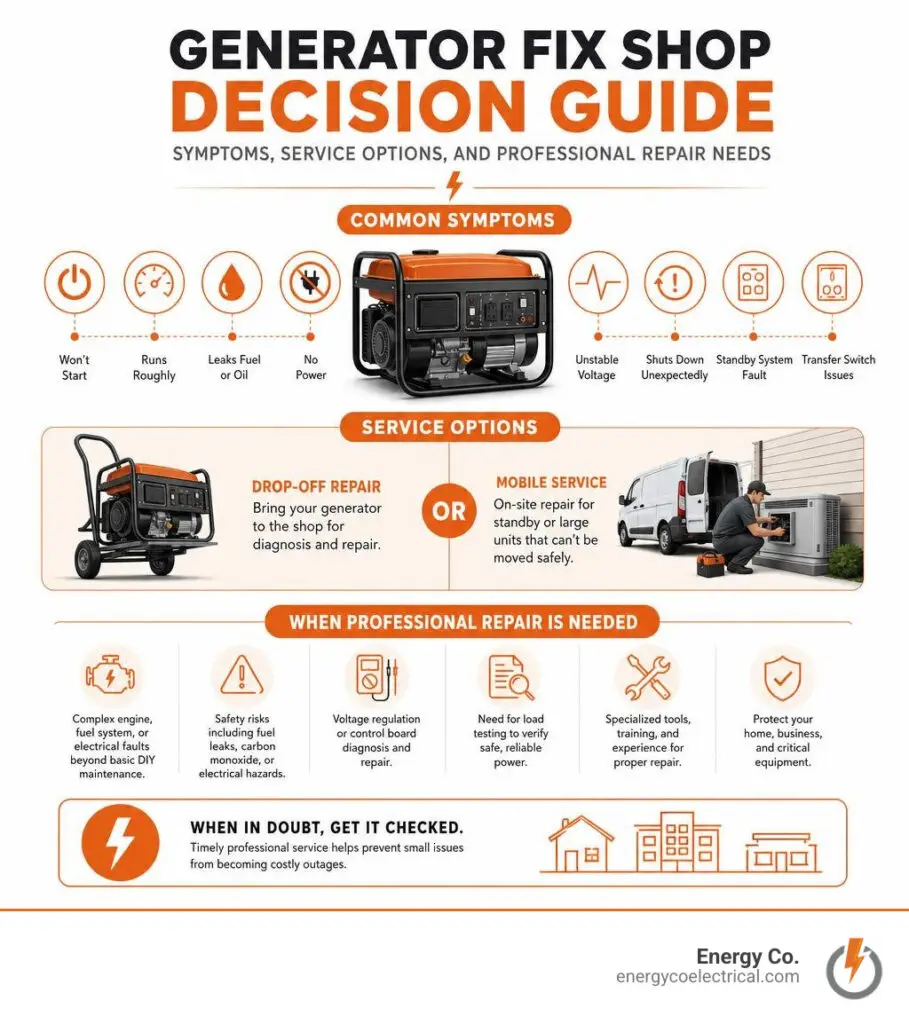
Quick answer: Choose a qualified generator repair service when your unit will not start, shuts down, runs roughly, leaks fuel or oil, produces no power, shows unstable voltage, or has a standby-system or transfer-switch fault. A reliable shop should service your generator type and brand, explain diagnostic and labor fees upfront, and offer either drop-off repair or mobile service when the unit cannot be moved safely.
Power failures rarely happen at a convenient time. Cold weather, wind, and summer storms can leave you relying on equipment that may have sat unused for months. Simple tasks such as checking oil, replacing a spark plug, or cleaning an air filter may be manageable for some owners, but fuel systems, engine controls, voltage regulation, and electrical connections need trained hands.
The right repair provider can work on portable, inverter, RV, standby, and commercial generators. They can also test whether the unit produces safe power under load – not merely whether the engine starts.
I am Michał Napieralski, an electrician serving Schaumburg and the Chicago suburbs with residential and commercial electrical work, including panel upgrades, wiring repairs, and code-focused safety inspections that connect closely with choosing a generator fix shop. Here is what to know before you schedule service or decide whether repair is worth the cost.
Explore more about generator fix shop:
Common Generator Problems Requiring Professional Repair
When power outages hit Cook County and the surrounding Chicagoland area, an operational backup generator is vital for keeping sump pumps running, food cold, and space heaters or air conditioners powered. However, when a generator sits idle in a garage or shed in Elk Grove Village or Palatine for months, severe mechanical and electrical issues can develop.
While minor maintenance like swapping out an air filter or checking oil levels is easy enough for a homeowner, complex operational failures require specialized tools and expert intervention. If you’re struggling to locate the root cause of an unexpected failure, reviewing our guide on Don’t Get Left in the Dark: Finding Reliable Generator Repair Nearby can help clarify your options.
Fuel System Failures and Carburetor Clogging
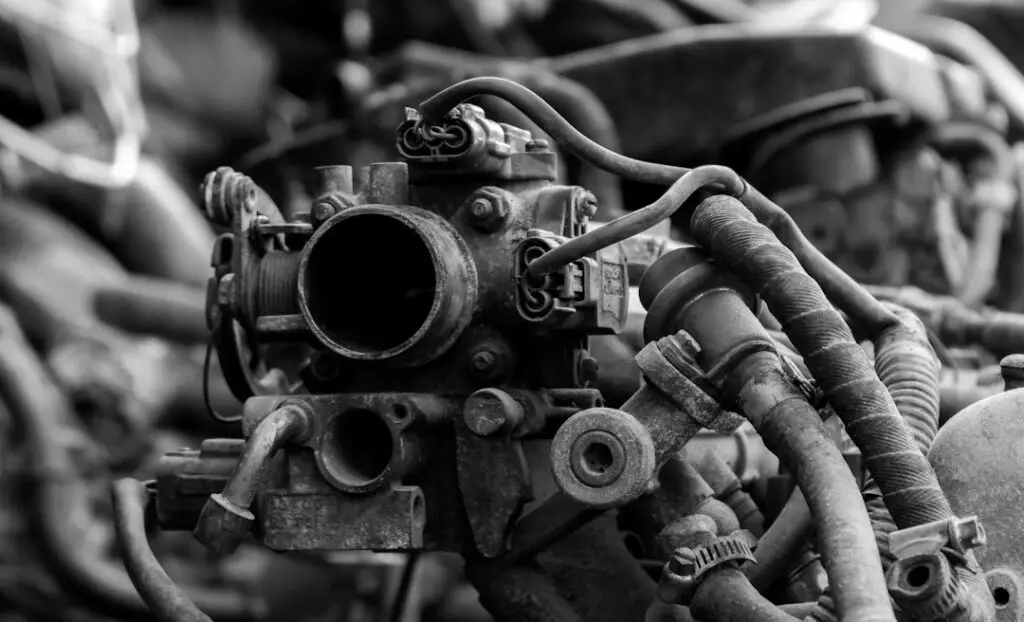
By far the most common issue encountered by any generator fix shop is fuel system contamination. Modern ethanol-blend gasolines begin degrading in as little as 30 days. As light hydrocarbons evaporate, they leave behind a thick, varnish-like gum that coats fuel lines, clogs internal carburetor jets, and glues needle valves shut.
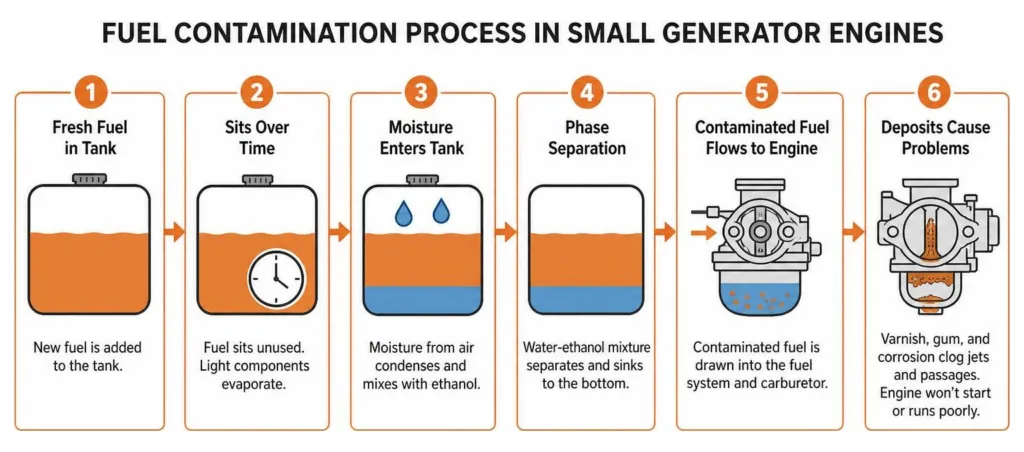
When ethanol gasoline sits inside a small engine, it attracts ambient moisture. This triggers phase separation, dropping a corrosive water-ethanol mixture directly to the bottom of the tank.
- Single-Cylinder Engines: Found on small portable and inverter units, these carburetors feature microscopic fuel orifices. Even tiny specks of varnish will prevent the engine from starting or cause it to “surge” continuously. Professional carburetor cleaning typically costs around $75 for single-cylinder models.
- Twin-Cylinder Engines: Larger portable and commercial standby units utilize dual-barrel or twin-cylinder carburetors. Cleaning and rebuilding these complex fuel assemblies runs closer to $95 in labor.
- Fuel Removal and Tank Flushing: If fresh fuel was mixed with contaminated gas, shops charge a fuel removal fee (often $2 per gallon) to safely drain and dispose of hazardous stale fuel before servicing the carburetor.
Electrical Issues, AVRs, and Brush Wear
An engine running smoothly at 3,600 RPM is only half the equation; the generator must also convert that mechanical energy into stable, clean electricity. When a generator engine runs fine but the outlets deliver zero volts (or wild voltage spikes), the problem lies within the alternator or voltage control circuit.
- Automatic Voltage Regulator (AVR): The automatic voltage regulator (AVR) monitors generator output voltage and dynamically adjusts field current to maintain a steady 120V/240V curve. When an AVR fails, connected appliances can be damaged by under-voltage or severe power surges. AVR and carbon brush repairs typically cost around $80 in labor plus components.
- Carbon Brush Wear: In brushed alternators, small carbon blocks ride against spinning slip rings to supply excitation current. Over time, these brushes wear down, build up carbon dust, or stick in their holders, leading to immediate power loss.
- Stator and Rotor Failures: Overloading a generator or running heavy inductive loads (like large compressors) can overheat internal copper windings, burning off protective varnish insulation and causing short circuits that require specialized testing tools to diagnose.
Engine Governors and Thermal Shutdowns
Generators must maintain exact engine speeds—typically 3,600 RPM for standard 60 Hz utility power—regardless of how many appliances turn on or off. Dynamic engine control is managed by either a mechanical governor linkage or an electronic stepper motor.
If a mechanical governor arm becomes misadjusted or stuck, the generator may over-rev uncontrollably, spiking system frequency far above 60 Hz and frying sensitive home electronics. Conversely, if a generator starts fine but mysteriously dies after 15 to 20 minutes of operation, it usually indicates a thermal shutdown cycle caused by:
- Low-Oil Sensor Faults: As engine oil warms and thins out during operation, a faulty or sensitive oil level switch may trigger a false low-oil safety shutdown.
- Thermal Overheating: Blocked cooling fins, broken fan impellers, or degraded coolant in standby units force high-temperature safety cutoffs to kill the engine to prevent total engine seizure.
- Clogged Fuel Cap Vents: A blocked fuel cap vent creates a vacuum inside the gas tank as fuel is consumed. After 15 minutes, the vacuum starves the carburetor of fuel, shutting the engine down until the cap is opened.
What to Look for in a Professional Generator Fix Shop
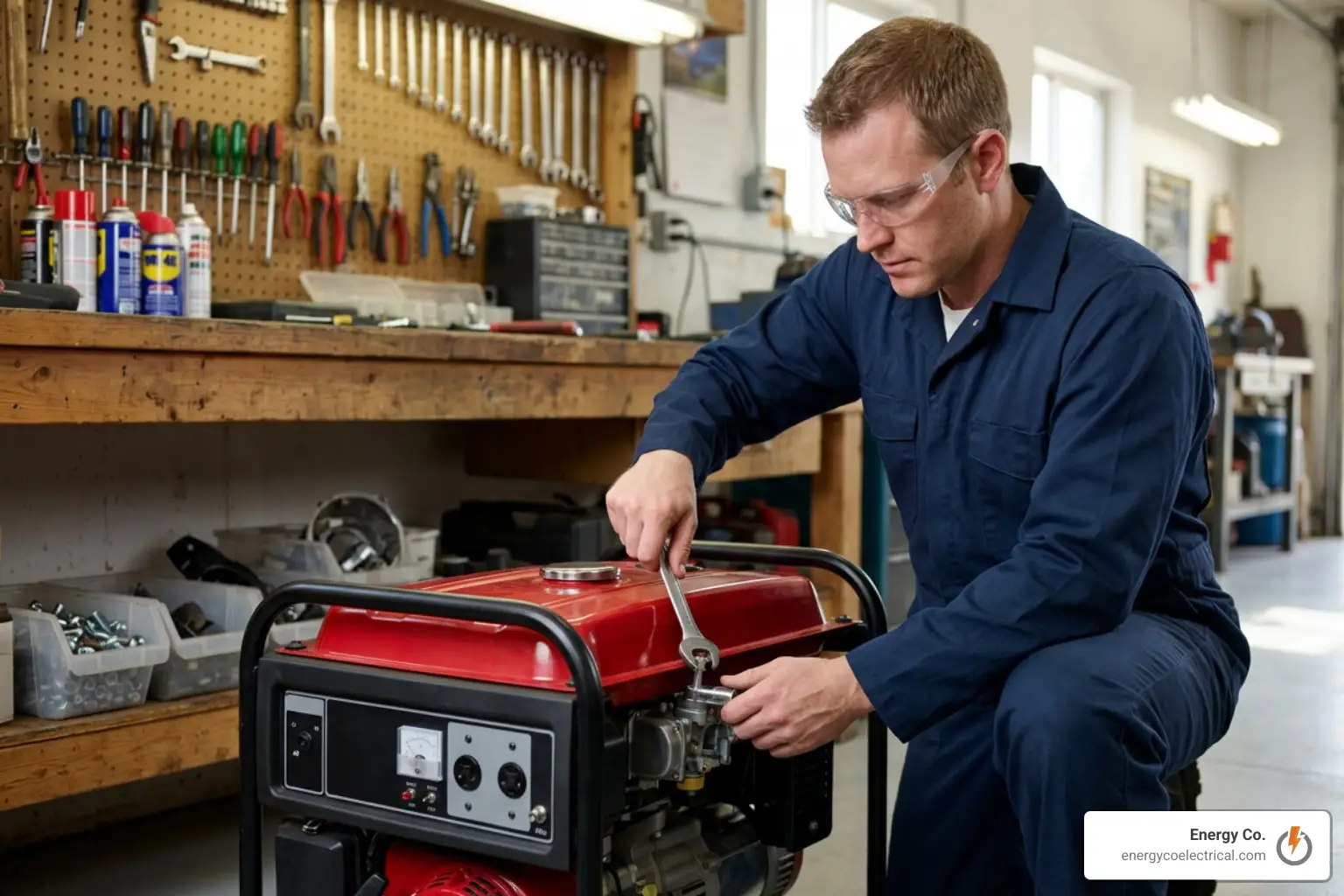
Not every small engine repair shop or local handyman is equipped to handle complex electrical generation equipment. Generator repair demands dual expertise: certified mechanical skills to service internal combustion engines, paired with advanced electrical knowledge to safely test high-voltage circuits, switchgear, and transfer switches.
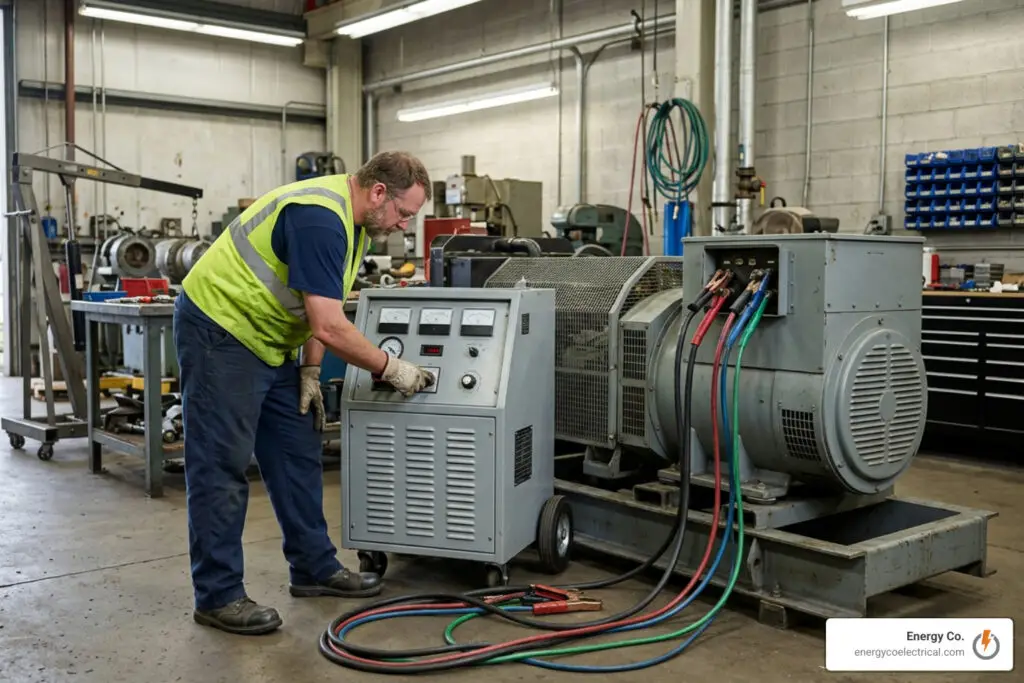
When selecting a generator fix shop in Chicagoland—whether in Schaumburg, Hoffman Estates, or Arlington Heights—look for facilities that offer dedicated load bank testing. A load bank artificially applies full electrical demand (up to hundreds of kilowatts) to verify that your unit will maintain rated output without overheating or dropping voltage during a prolonged power outage.
Mobile Service vs. Drop-Off Generator Fix Shop
Deciding between bringing your equipment to a repair facility or scheduling an on-site service call depends largely on generator size and mobility.
- In-Shop Drop-Off: Best suited for smaller portable and inverter generators (such as 2,000W to 10,000W units). Bringing your generator directly into a shop avoids field dispatch surcharges and allows mechanics full access to heavy diagnostic equipment, parts benches, and ultrasonic carburetor cleaners.
- Mobile Field Service: Essential for permanently installed residential standby generators or heavy towable commercial units. Mobile technicians travel directly to your property in fully equipped service vans. That mobile service calls typically include a field visit surcharge (often around +$125 over standard shop service rates) to cover travel time and vehicle overhead. Field service is often restricted to routine tune-ups and modular repairs because carrying complete teardown tooling for every generator model on a single van is impractical.
Evaluating Warranties and Technician Certifications
When trusting a business with emergency backup equipment, verify their technical credentials:
- Manufacturer Certifications: Look for factory-trained specialists certified by leading equipment manufacturers (such as Generac, Kohler, Honda, or Cummins). Certified technicians follow strict Original Equipment Manufacturer (OEM) service protocols and use genuine factory parts.
- Labor Guarantees: Reputable repair shops back their diagnostic work and component replacements with written labor warranties (typically 30 to 90 days minimum).
- Transparent Service Policies: A trustworthy shop provides upfront, itemized estimates before starting major repairs, clearly separating labor fees from replacement parts, fluids, and shop supplies.
Generator Repair Costs vs. Replacement
Before committing to major generator repairs, evaluate whether fixing an aging unit makes financial sense compared to replacing it with a modern, more efficient system.
If you are considering upgrading your backup setup, consult our comprehensive resource on The Definitive Guide to Standby Generator Installation Costs.
Diagnostic Fees at a Local Generator Fix Shop
Most professional service centers charge a flat diagnostic or inspection fee (typically ranging from $80 to $125, matching standard hourly labor rates). This fee covers the technician’s time to test compression, check ignition spark, measure generator winding resistance, and pinpoint the exact source of failure.
In standard shop practice, if you approve the recommended repairs, this diagnostic fee is frequently credited or waived toward the total labor cost of the job. However, if you choose to decline the repair estimate, the diagnostic fee covers the inspection time already spent.
| Service Type | Average Shop Labor Cost | Mobile Service Surcharge | Description & Inclusions |
|---|---|---|---|
| Diagnostic / Inspection Fee | $80 – $125 | Included in visit charge | Complete electrical & mechanical fault diagnosis (waived if repair is authorized). |
| Single-Cylinder Tune-Up | $125 | +$125 | Oil change, spark plug replacement, air filter cleaning, valve check (parts extra). |
| Twin-Cylinder Tune-Up | $175 | +$125 | Dual-cylinder oil service, spark plugs, fuel filter, governor check (parts extra). |
| Inverter Generator Tune-Up | $145 | +$125 | Dynamic RPM governor adjustment, oil change, spark plug, inverter panel test. |
| Carburetor Cleaning (Single) | $75 | N/A (Shop drop-off recommended) | Ultrasonic tank cleaning, jet clearing, float level adjustment, gasket replacement. |
| Carburetor Cleaning (Twin) | $95 | N/A (Shop drop-off recommended) | Dual-barrel disassembly, ultrasonic soak, passage rod clearing, re-tuning. |
| AVR & Carbon Brush Repair | $80 | +$125 | Stator excitation circuit diagnostics, carbon brush replacement, voltage tuning. |
| Dual-Fuel Conversion Kit | $350+ | +$125 | Custom regulator & manifold installation to run on Gasoline, Propane, or Natural Gas. |
| General Shop Labor Rate | $125 / hr | +$125 per visit | Custom mechanical overhauls, wiring harness repairs, stator/rotor drop-in labor. |
Repair vs. Replace: Making the Financial Decision
To determine whether to repair or replace your generator, apply the 50% Rule: If the estimated cost of repairs exceeds 50% of the price of a brand-new replacement unit with comparable wattage and features, replacing the generator is generally the smarter investment.
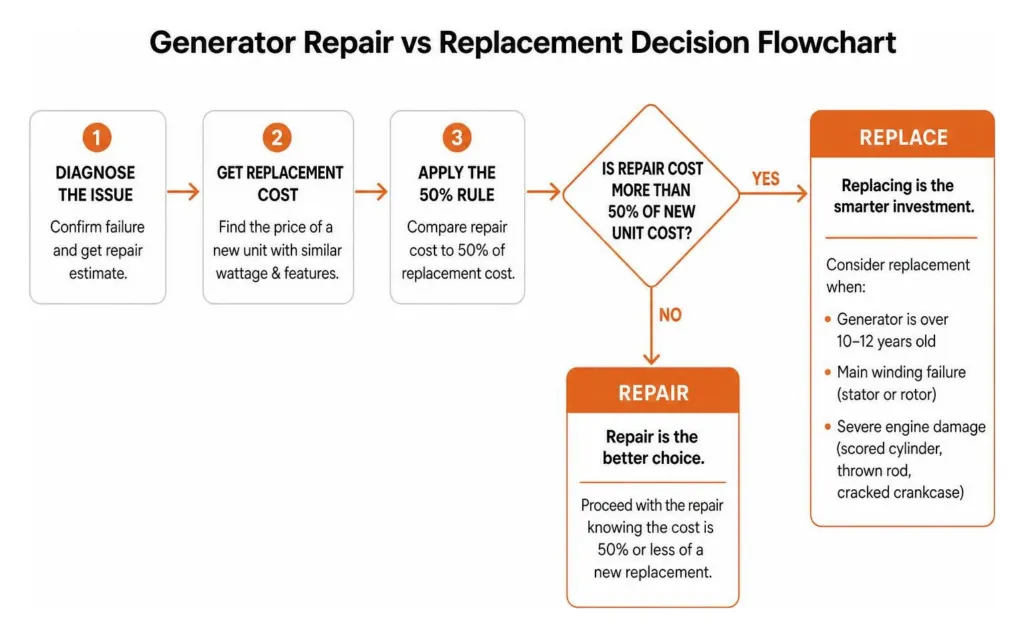
Consider replacement over repair when:
- The Generator is Over 10-12 Years Old: Older engines become unreliable, and finding replacement carburetors, AVRs, or ignition modules gets increasingly difficult.
- Main Winding Failure: If the stator or rotor windings burn out, replacement assembly parts alone often exceed $500–$800, plus several hours of shop teardown labor.
- Severe Engine Damage: Scored cylinder walls, thrown connecting rods, or cracked crankcases require full engine replacements that quickly outpace the value of portable units.
Essential Maintenance Services to Prevent Future Breakdowns
The most effective way to avoid emergency repairs during a regional power blackout in Cook County is simple preventive maintenance. Just as automobiles require regular oil changes, small engine power generators depend on routine servicing to stay reliable.
For step-by-step guidance on keeping your system running smoothly, check out our helpful guide on How to Find a Reliable Generator Repair Service in 5 Easy Steps.
Annual Tune-Up Components and Maintenance Frequency
A complete generator tune-up should be scheduled every 75 to 100 run hours or at least once per year—whichever comes first. Key service steps include:
- Engine Oil and Filter Replacement: Draining old, broken-down oil and replacing it with fresh synthetic oil engineered for high-temperature small engine operation.
- Spark Plug Service: Removing carbon deposits, setting the precise electrode gap, or replacing fouled spark plugs to ensure quick pull-start or electric ignition.
- Air Filter Cleaning/Replacement: Cleaning foam pre-filters and replacing paper filter elements to prevent dirt from entering the carburetor.
- Valve Lash Adjustment: Checking and adjusting overhead valve clearance. Proper valve lash preserves engine compression and prevents hard-starting issues.
- Fuel System Stagnation Care: Draining stale gasoline from the carburetor float bowl or treating stored fuel with fuel stabilizer.
Preventative Checks for Portable and Standby Units
To make sure your backup system powers up the moment utility grid power fails:
- Battery Care: Generator starter batteries generally last 2 to 3 years. Perform load tests on starter batteries regularly and replace weak $55+ batteries before winter freezing temperatures set in.
- Automatic Transfer Switch (ATS) Exercise: For whole-home standby installations, test the ATS regularly to verify that utility transfer contactors toggle smoothly under simulated power loss.
- Weekly/Monthly Exercise Cycles: Ensure automatic exercise timers are active on standby systems. Exercising the unit for 10-15 minutes weekly circulates oil, lubricates engine seals, and keeps battery charging systems active.
Frequently Asked Questions About Generator Repair
What types of generators can a repair shop fix?
A professional generator fix shop services a wide spectrum of equipment:
- Portable Generators: Standard 2kW to 12kW emergency open-frame units powered by gasoline, propane, or diesel.
- Inverter Generators: Ultra-quiet, high-efficiency portable generators equipped with delicate micro-processor inverter boards designed for sensitive electronics.
- Residential Standby Generators: Permanently installed 10kW to 26kW whole-home systems operating on natural gas or liquid propane (LP).
- Towable & Commercial Generators: Heavy-duty industrial diesel generators, mobile construction units, and specialized RV/commercial vehicle generators.
How much does a standard generator tune-up cost?
At an established local shop, basic tune-up labor costs vary by engine architecture:
- Single-Cylinder Portable Units: Standard tune-up labor is approximately $125.
- Twin-Cylinder Units: Dual-cylinder tune-up labor runs approximately $175.
- Inverter Generators: Specialized inverter tune-ups average $145.
- Mobile Field Service: On-site technician dispatch for standby units adds a mobile surcharge (typically +$125) on top of standard tune-up pricing, with replacement fluids, spark plugs, and filters billed separately.
What are the main risks of DIY generator repair?
While replacing an air filter is safe for basic DIY maintenance, working on internal electrical circuits and fuel systems carries real risks:
- High-Voltage Shock Hazards: Alternators produce lethal electric currents. Stored electrical energy or improperly grounded equipment can cause severe electric shock or flash burns.
- Engine Governor Misadjustment: Adjusting governor linkages incorrectly can cause high-RPM over-revving that instantly destroys connected TVs, refrigerators, and computer equipment.
- Fuel Explosion & Fire Hazards: Gasoline fumes or improper LP fuel line connections create fire risks near warm engine mufflers.
- Backfeeding the Utility Grid: Connecting a generator directly to home wiring without a transfer switch backfeeds dangerous high-voltage power into neighborhood utility lines, creating lethal electrocution hazards for line workers restoring power.
For round-the-clock safety concerns and high-voltage emergencies, consult our 24-Hour Emergency Electrical Repair Guide for Homeowners.
Conclusion
A backup generator is your home’s main line of defense against severe weather and unexpected utility grid failures. When basic DIY troubleshooting falls short, partnering with an experienced generator fix shop ensures your equipment is repaired safely, correctly calibrated, and fully tested under real load conditions before the next storm hits Chicagoland.
Whether you need a quick carburetor rebuild on a portable unit in Rolling Meadows, an AVR voltage repair in Streamwood, or comprehensive whole-home standby maintenance in Schaumburg or Cicero, working with licensed professionals guarantees peace of mind when you need power most.
If you are looking to upgrade your backup power infrastructure or need expert guidance on whole-house transfer switches and standby system safety, our licensed team at Energy Co. is standing by to help. Contact us today or visit our Reliable Generator Installation Service in Chicago – Get Expert Help Today! page to schedule your professional backup power consultation!