What Does It Actually Cost for an Electrician to Replace a Circuit Breaker?
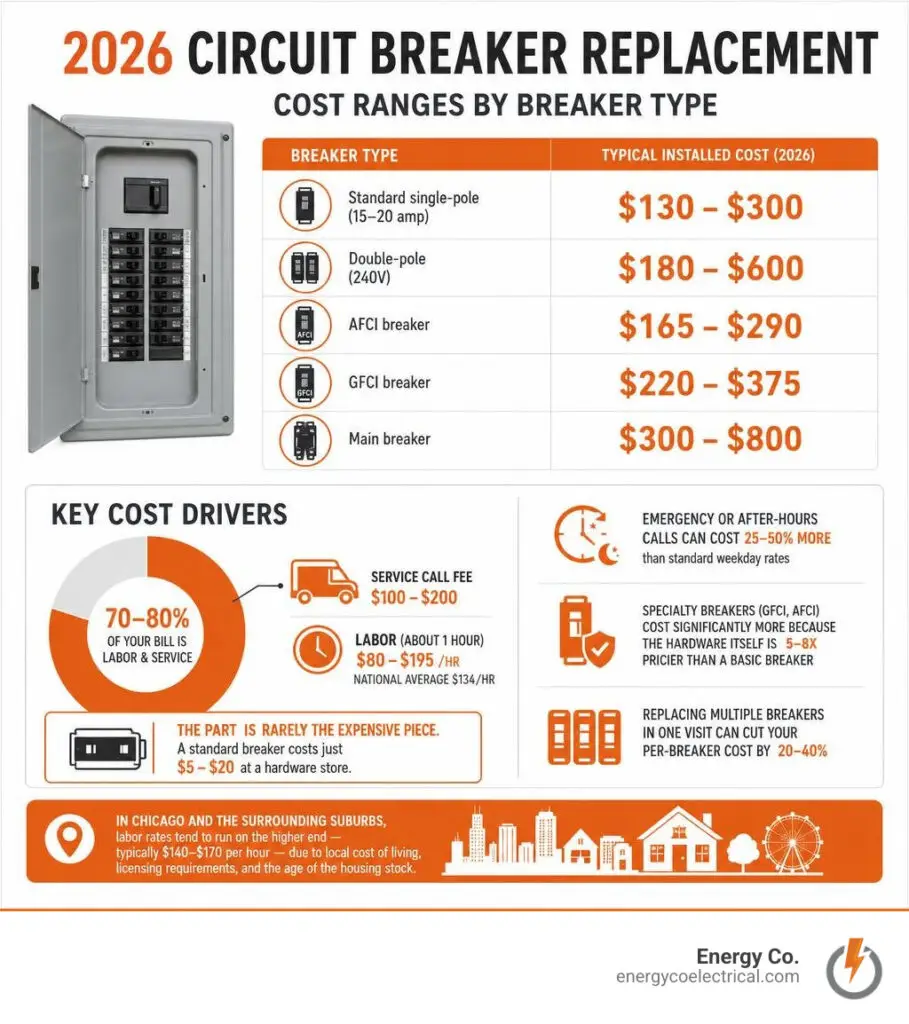
The cost for an electrician to replace a circuit breaker typically falls between $130 and $300 for a standard single breaker in 2026 — but the final number depends on your breaker type, panel condition, and where you live.
Here’s a quick snapshot so you can budget before reading further:
| Breaker Type | Typical Installed Cost (2026) |
|---|---|
| Standard single-pole (15–20 amp) | $130 – $300 |
| Double-pole (240V) | $180 – $600 |
| AFCI breaker | $165 – $290 |
| GFCI breaker | $220 – $375 |
| Main breaker | $300 – $800 |
The part itself is rarely the expensive piece. A standard breaker costs just $5–$20 at a hardware store. What drives the bill is the electrician’s service call fee ($100–$200) plus an hour of labor — which together make up 70–80% of a typical invoice.
A few other things worth knowing upfront:
- Electricians nationwide charge $80–$195 per hour, with a national average around $134/hour
- Emergency or after-hours calls can cost 25–50% more than standard weekday rates
- Specialty breakers (GFCI, AFCI) cost significantly more because the hardware itself is 5–8x pricier than a basic breaker
- Replacing multiple breakers in one visit can cut your per-breaker cost by 20–40%
In Chicago and the surrounding suburbs, labor rates tend to run on the higher end — typically $140–$170 per hour — due to local cost of living, licensing requirements, and the age of the housing stock.
I’m Michał Napieralski, licensed electrician and owner of Energy Co. in Schaumburg, IL, where my team specializes in circuit breaker replacement, panel upgrades, and residential electrical repairs across the Chicago suburbs. Over years of hands-on work in older Chicagoland homes, I’ve seen every factor that affects the cost for an electrician to replace a circuit breaker — and I’ll walk you through all of it below.
Cost for electrician to replace circuit breaker basics:
National Averages: Cost for Electrician to Replace Circuit Breaker
When researching the cost for electrician to replace circuit breaker projects, it is vital to separate the cost of the physical hardware from the professional labor required to install it safely. According to national data, the total cost including labor and materials typically averages $365, with a standard project range of $150 to $795 across all breaker types and complexity levels.
For a straightforward, single-breaker swap in a modern panel that is in good condition, you can expect to pay on the lower end of that spectrum. However, if the job involves dealing with an outdated panel, hard-to-reach wiring, or the installation of a heavy-duty main breaker, the cost will naturally trend higher.
According to the 2026 Cost Data, the national average cost to install a brand-new circuit breaker starts at $319 to $382 per breaker when factoring in the full scope of local material delivery, site preparation, tools, and professional labor setup.
To help you understand why a $15 plastic switch results in a $200+ invoice, let’s break down exactly what you are paying for:
- The Diagnostic/Service Call Fee: Most licensed electrical contractors charge a flat fee of $100 to $200 just to send a fully stocked service van to your home. This covers travel time, fuel, and the initial inspection of your electrical panel.
- The Hourly Labor Rate: Professional electricians charge between $80 and $195 per hour nationwide. In the Chicagoland area—including Cook County suburbs like Hoffman Estates, Palatine, and Cicero—the local rate typically ranges from $140 to $170 per hour due to strict licensing standards and local cost-of-living adjustments.
- The Parts and Materials: Standard branch breakers are incredibly inexpensive, but specialty safety breakers and main breakers can cost anywhere from $50 to $250 for the hardware alone.
By understanding these baseline expenses, you can see why bundling multiple small electrical repairs into a single service visit is highly cost-effective. Since you only pay the service call fee once, adding a second or third breaker replacement to the same visit can reduce your overall cost-per-breaker by 20% to 40%.
Average Cost for Electrician to Replace Circuit Breaker by Amperage
The electrical capacity of a breaker—measured in amperes (amps)—directly dictates the size of the internal components and the gauge of the wire it must protect. While standard residential breakers are generally 15-amp or 20-amp units, larger appliances require heavy-duty 30-amp to 60-amp breakers, and the entire home relies on a massive main breaker (typically 100-amp to 200-amp).
The higher the amperage, the larger the physical breaker and the more complex the installation becomes. Below is a detailed breakdown of the average professional replacement costs based on amperage:
| Amperage | Common Uses | Hardware Only Cost | Total Installed Cost (Parts & Labor) |
|---|---|---|---|
| 15-Amp | Standard lighting circuits, bedroom outlets | $5 – $15 | $130 – $250 |
| 20-Amp | Kitchen outlets, laundry rooms, bathroom circuits | $5 – $20 | $150 – $300 |
| 30-Amp | Electric clothes dryers, small air conditioners | $15 – $45 | $170 – $350 |
| 50-Amp to 60-Amp | Electric ranges, EV charging stations, hot tubs | $30 – $90 | $200 – $450 |
| 100-Amp to 200-Amp (Main) | Main power supply shutoff for the entire house | $100 – $300 | $300 – $800 |
As you can see, standard 15-amp and 20-amp breakers are the most common and affordable to replace. However, replacing a main breaker is a much larger undertaking. Because the main breaker controls the incoming power from the utility line, replacing it requires coordinating with ComEd to temporarily pull the outdoor electrical meter or shut off power at the utility pole. This added coordination and safety risk is why main breaker replacements are significantly more expensive.
Cost for Electrician to Replace Circuit Breaker by Type: Standard vs. Specialty
Aside from amperage, the specific safety technology built into the breaker is the single biggest factor influencing the hardware cost. Modern building codes require advanced safety mechanisms to prevent electrical shocks and house fires.
According to the Yelp Cost Guide, which aggregates real-world pricing from thousands of completed jobs, specialty safety breakers cost substantially more than standard single-pole models. Let’s look at the differences:
- Standard Single-Pole Breakers ($130 – $300 installed): These are the traditional switches found in every home. They occupy one slot in your panel, supply 120 volts of electricity, and protect standard household lighting and outlet circuits from overloads and short circuits.
- Double-Pole Breakers ($180 – $600 installed): These breakers occupy two slots in your panel and connect to two hot wires to deliver 240 volts of power. They are used for heavy-duty appliances like central air conditioners, electric water heaters, and well pumps.
- GFCI (Ground-Fault Circuit Interrupter) Breakers ($220 – $375 installed): GFCI breakers protect against electrical shocks by constantly monitoring the balance of current between the hot and neutral wires. If they detect even a tiny leak of electricity (a ground fault, such as water contacting an outlet), they instantly cut power. These are required by code near water sources like kitchens, bathrooms, wet basements, and outdoor areas.
- AFCI (Arc-Fault Circuit Interrupter) Breakers ($165 – $290 installed): AFCI breakers contain advanced microprocessor chips that detect dangerous electrical arcing—the primary cause of home electrical fires. Arcing occurs when electricity jumps across damaged or loose wires behind walls. The National Electrical Code (NEC) mandates AFCI protection on almost all 15-amp and 20-amp branch circuits in living areas, bedrooms, and hallways.
Specialty AFCI and GFCI breakers cost 5 to 8 times more than standard breakers because of the complex electronics inside them. When we swap an old standard breaker for a specialty one to bring your home up to modern safety standards, the material cost alone can add $50 to $100 to the final bill.
Key Factors Influencing Your Replacement Bill
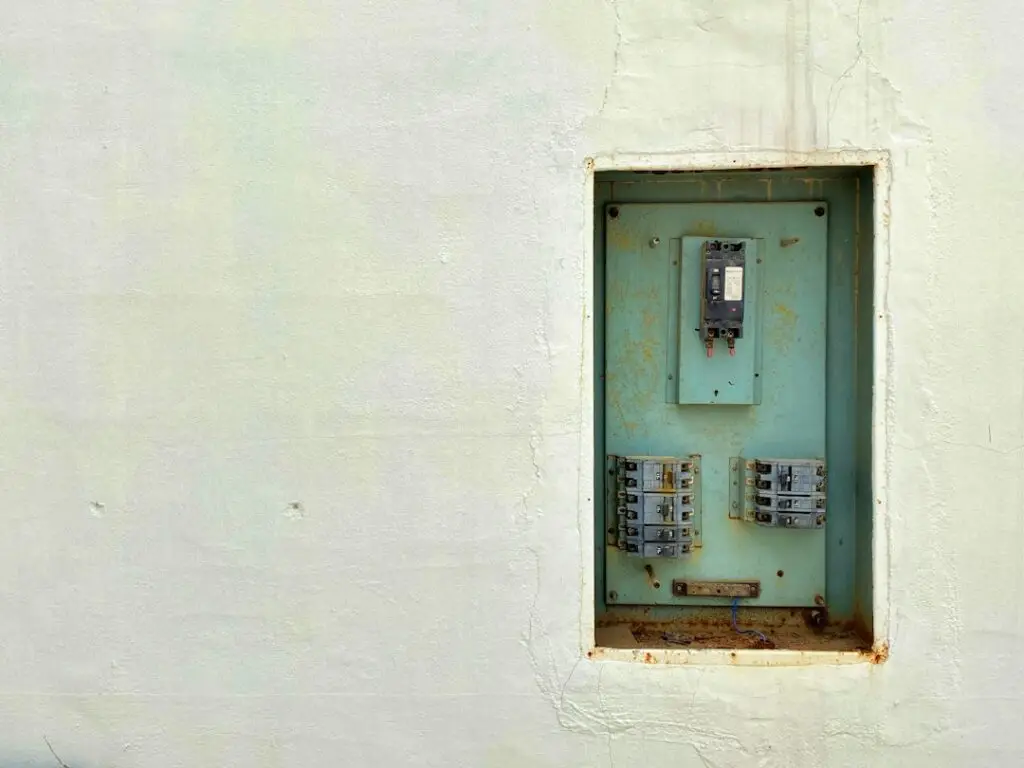
While national averages provide a helpful starting point, your actual invoice will depend on several unique variables. If your home’s electrical system is simple and up to date, your costs will remain low. However, older homes in the Chicagoland area—especially in mature neighborhoods within Rolling Meadows, Roselle, and Elk Grove Village—often present unique challenges that can increase the scope of work.
If you are experiencing electrical issues but aren’t sure if a full replacement is necessary, you can learn more about diagnostic and repair options by reading our guide on Circuit Breaker Repair.
Let’s look at the primary factors that can influence your final bill:
- Diagnostic Time: If a breaker is visibly charred or melted, the issue is obvious. However, if a breaker is tripping repeatedly and the cause is unknown, we must perform diagnostic testing on the entire circuit. Tracking down a hidden short circuit behind a wall can add 1 to 2 hours of labor to the job.
- Accessibility: If your electrical panel is located in a clear, well-lit utility room, the job is straightforward. If it is buried behind heavy shelving in a cramped basement, located in a crawlspace, or blocked by furniture, the electrician will charge for the extra time required to safely access the work area.
- Local Permitting Fees: Depending on your municipality (for example, Palatine or Arlington Heights), local building departments may require an electrical permit and a subsequent safety inspection for panel modifications. These municipal permits can add $50 to $150 to the total project cost.
Labor Rates and Service Call Fees
Understanding how electrical contractors structure their pricing can help you avoid surprise charges on your final invoice. According to the HomeGuide Cost Data, most professional electrical companies utilize one of two main billing structures:
- Hourly Rate with a Minimum Charge: The electrician charges a flat service call fee (usually $100 to $200) to cover travel and diagnostics, plus an hourly rate (typically $80 to $195 nationally) with a one-hour minimum. Even if the actual swap takes only 20 minutes, you will be billed for the full hour of labor to cover the technician’s time and expertise.
- Flat-Rate Pricing: Many modern service companies use flat-rate pricing books. Under this model, you are quoted a single, all-inclusive price for the specific task (e.g., “Replace single-pole 20-amp AFCI breaker: $245”). This protects you from paying extra if the job takes longer than expected due to minor complications.
It is also important to consider the timing of your service call. If your main breaker fails at 9:00 PM on a freezing Saturday night, leaving your home in Hanover Park or Streamwood without heat, you will need to call an emergency technician. Emergency, holiday, or after-hours service calls typically carry premium rates that are 1.5 to 2 times higher than standard weekday pricing, often with a flat emergency dispatch fee ranging from $150 to $300.
Panel Condition and Code Compliance
The age and physical condition of your electrical panel play a massive role in the final cost of a breaker replacement. Over decades of use, the metal bus bars inside your panel (the conductive strips that the breakers snap onto) can accumulate corrosion, rust, or heat damage.
If an electrician opens your panel and finds that the bus bar is pitted, corroded, or melted, simply snapping a new breaker into place is not a safe or viable option. Doing so would create a loose, high-resistance connection that poses a severe fire hazard. In these cases, the panel bus bars must be cleaned or repaired, or the entire panel box must be upgraded. You can review the average costs for these larger projects in this comprehensive guide on Breaker Box Replacement Cost.
Furthermore, older homes often contain obsolete, highly dangerous electrical panels that are no longer supported by modern manufacturers. Two notorious brands to watch out for are:
- Federal Pacific Electric (FPE) Stab-Lok Panels: These panels were installed in millions of homes between the 1950s and 1980s. Class-action lawsuits and independent testing revealed that FPE breakers fail to trip up to 60% of the time during an overload, leading to thousands of house fires.
- Zinsco Panels: Popular in the 1970s, Zinsco panels feature design flaws where the breakers melt directly onto the bus bar, rendering them unable to trip when an electrical surge occurs.
If your home in Mount Prospect or Schaumburg has an FPE or Zinsco panel, a licensed electrician will refuse to replace a single breaker. For liability and safety reasons, the only acceptable solution is a complete electrical panel upgrade to ensure your family’s safety and maintain your homeowner’s insurance coverage.
Adding a New Circuit vs. Replacing an Existing Breaker
There is a major difference between replacing a faulty breaker with an identical new one and adding a brand-new circuit to your home.
- Replacing a Breaker: This is a repair job. The wire is already run through your walls, and the electrician simply shuts off the power, removes the old breaker, and installs a new, compatible one. This typically takes 30 to 45 minutes and costs $130 to $300.
- Adding a New Circuit: This is an installation project. It requires mounting a new breaker in an empty slot in your panel, drilling holes through studs, running brand-new Romex wire through your walls or ceilings, and installing a new outlet box, switch, or appliance connection at the other end.
Adding a new, dedicated circuit typically costs $570 to $1,100 depending on the distance from the electrical panel to the new outlet and how difficult it is to fish the wire through your finished walls.
For example, if you are installing a Level 2 electric vehicle (EV) charger in your garage in Elk Grove Village or Rolling Meadows, you cannot simply plug it into a standard wall outlet. It requires a dedicated 240-volt, 50-amp circuit wired directly to your panel. Similarly, heavy-use appliances like hot tubs, central AC units, and induction cooktops require their own dedicated lines to prevent overloading existing household circuits.
If you are trying to keep costs down on minor electrical issues before committing to a major installation, read our practical tips on The Cheapest Ways to Repair a Circuit Breaker.
DIY vs. Professional Replacement: Risks and Real Costs
With home improvement videos widely available online, many homeowners are tempted to buy a $15 breaker at a local big-box store and attempt to swap it out themselves. While it is legally permissible in some jurisdictions for a homeowner to perform work on their own property, electrical work is one of the few home repairs where a single mistake can be fatal or result in the loss of your home.
Before you grab a screwdriver, consider the severe risks associated with DIY electrical panel work:
- The Fatal Danger of Live Lugs: Even when you turn off the “Main” breaker at the top of your electrical panel, the main utility wires coming into the top of the panel remain fully energized with 120/240 volts of electricity. Touching these exposed main lugs with a hand or an uninsulated tool will cause severe electrocution or a fatal shock.
- The Threat of Arc Flash: If you accidentally drop a metal screw or touch a tool across a live bus bar and a grounded metal box, it can trigger an arc flash. This is an electrical explosion that reaches temperatures hotter than the surface of the sun, causing severe burns, blindness, and instant fires.
- Insurance Voiding: Most homeowner’s insurance policies require all electrical work to be performed by a licensed, bonded, and certified electrical contractor. If you perform a DIY breaker replacement and your home later suffers an electrical fire, your insurance company can deny your claim entirely if they find evidence of unpermitted, unlicensed work.
- Compatibility Issues: Breakers are not universal. You cannot put a GE breaker into a Square D panel, even if it physically seems to fit. Installing an incompatible brand voids the panel’s UL safety listing, creates a loose mechanical connection, and poses a major fire hazard.
To understand the boundaries of what is safe for beginners and what must be left to the pros, review our guide on Electrical Repairs Dos and Don’ts for Beginners.
Paying a licensed professional $150 to $300 to swap a breaker is a small price to pay for absolute peace of mind, a written warranty, and the safety of your family.
Frequently Asked Questions About Circuit Breaker Replacement
Navigating home electrical issues can be confusing. To help you make informed decisions, we have compiled and answered the most common questions we receive from homeowners throughout the Chicagoland area.
How do I know if my circuit breaker has actually failed?
A circuit breaker is designed to trip to protect your home from electrical fires. Just because a breaker trips does not mean it is broken—most of the time, it is simply doing its job because you plugged in too many appliances at once.
However, a breaker has likely failed and needs professional replacement if you notice any of the following warning signs:
- It Won’t Reset: If you unplug everything on the circuit, flip the breaker fully to the “OFF” position, and then back to “ON,” but it instantly clicks back to the middle tripped position, the internal mechanism is likely broken.
- A Burning Odor: If you smell a plastic, chemical, or smoky burning odor coming directly from your electrical panel, call an emergency electrician immediately. This indicates overheating and an active fire hazard.
- The Panel is Hot to the Touch: The metal cover of your electrical panel should always feel cool. If a specific breaker or the panel door feels hot, electricity is meeting dangerous resistance.
- Visible Damage or Scorching: Any signs of black soot, melted plastic, rust, or corrosion on the breaker casing mean it must be replaced right away.
Ignoring these warning signs can lead to catastrophic system failures. For a detailed look at what can go wrong during an electrical crisis, check out our article on 5 Common Emergency Electrician Mistakes You Can’t Afford to Make.
Do I need a permit to replace a single circuit breaker?
In most Chicagoland municipalities—including Cook County suburbs like Cicero, Roselle, and Schaumburg—a simple, like-for-like replacement of a single broken branch breaker is considered a “repair” rather than a modification. Because of this, local building departments generally do not require a formal permit or inspection for a basic maintenance swap.
However, you will need to secure a permit and schedule a municipal inspection if your project involves:
- Adding a brand-new circuit and running new wire through your walls.
- Upgrading your electrical panel’s service capacity (such as upgrading from 100-amp to 200-amp service).
- Relocating the electrical panel to a different wall or room.
- Installing a subpanel to accommodate new household loads.
Skipping required municipal permits to save a few dollars is never worth the risk. Unpermitted electrical work can lead to municipal fines, issues when trying to sell your home, and potential denials of insurance claims.
When is it better to upgrade the entire panel instead of replacing a breaker?
While swapping a single breaker is an inexpensive quick fix, there are times when continuing to patch an old system is a waste of money. It is highly recommended to upgrade your entire electrical panel instead of replacing individual breakers if:
- Your Panel is Over 25 to 40 Years Old: Like any mechanical device, panels wear out over time. If your home still relies on an outdated fuse box or an early-generation breaker panel, it is time for an upgrade.
- You are Adding Major Electrical Loads: If you are planning to install a Level 2 EV charger, a central AC system, a heat pump, or a hot tub, a standard 100-amp panel will likely not have enough capacity. Upgrading to a modern 200-amp panel ensures your home can handle modern electrical demands.
- Your Current Panel is a Hazardous Brand: As mentioned earlier, if you have a Federal Pacific Electric (FPE) or Zinsco panel, it represents an active fire hazard and should be replaced immediately.
For fast, professional assistance with older systems, you can learn more about our local services by visiting our page on Expert Electrical Repair Service in Chicago: Fast, Reliable Solutions.
Conclusion
The cost for an electrician to replace a circuit breaker is a highly worthwhile investment in your home’s safety, efficiency, and code compliance. While the physical breaker switch is an inexpensive part, the real value lies in hiring a licensed, bonded professional who can safely handle live electrical currents, diagnose underlying wiring issues, and ensure the job is done right the first time.
At Energy Co., we have spent years serving homeowners and businesses throughout Chicago and the Northwest Suburbs—including Schaumburg, Hoffman Estates, Elk Grove Village, Palatine, and Arlington Heights. We understand the unique architectural styles and electrical challenges of Chicagoland’s older homes, and we are committed to providing transparent pricing, licensed expertise, and a complete satisfaction guarantee.
If you are dealing with a constantly tripping breaker, smelling a strange burning odor near your panel, or planning for future electrical needs like an EV charger, do not leave your safety to chance. Contact our team of local experts today to schedule your professional service or learn more about upgrading your system by visiting our Electrical Panel Upgrade Service Page.