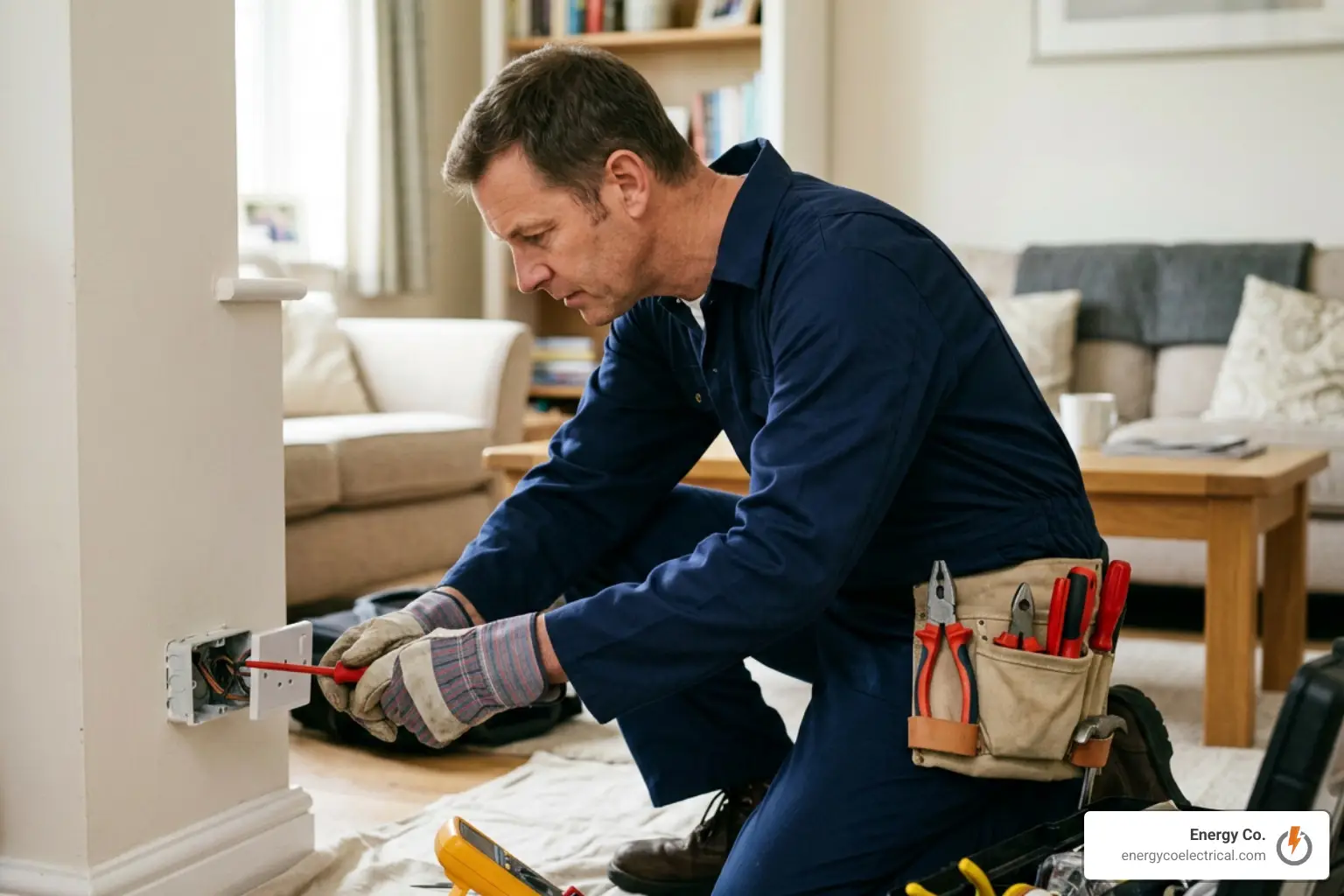
Find Safe, Licensed Home Electrical Repair Near Me
If you need home electrical repair near me, start by treating burning smells, sparks, buzzing, warm outlets, repeated breaker trips, or a partial power outage as safety issues – not DIY projects. Turn off power to the affected circuit if you can do so safely, avoid touching damaged outlets or wiring, and contact a licensed, insured electrician for diagnosis and repair.
Older Chicago-area homes may have panels, wiring, and circuits that were never designed for today’s kitchen appliances, air conditioning, home offices, EV chargers, and smart devices. A qualified electrician can find the real cause, explain your options in writing, manage permits when needed, and help prevent shock, fire, and repeat failures.
I’m Michał Napieralski of Energy Co., and our licensed team handles home electrical repair near me searches across the Chicago suburbs, from circuit breaker replacement and outlet repairs to panel upgrades, inspections, and wiring work. This guide explains what to do first, when an issue is urgent, and how to choose a contractor you can trust.
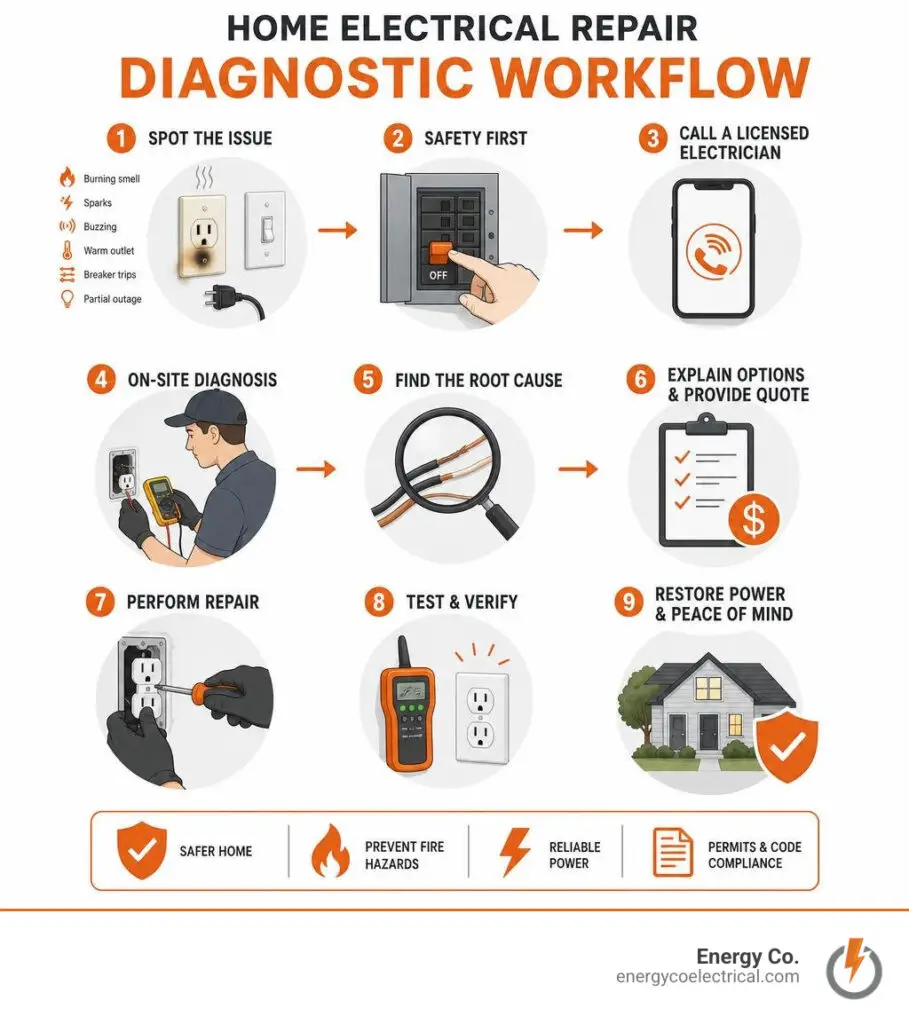
Home electrical repair near me terms to know:
Warning Signs You Need Urgent Home Electrical Repair Near Me
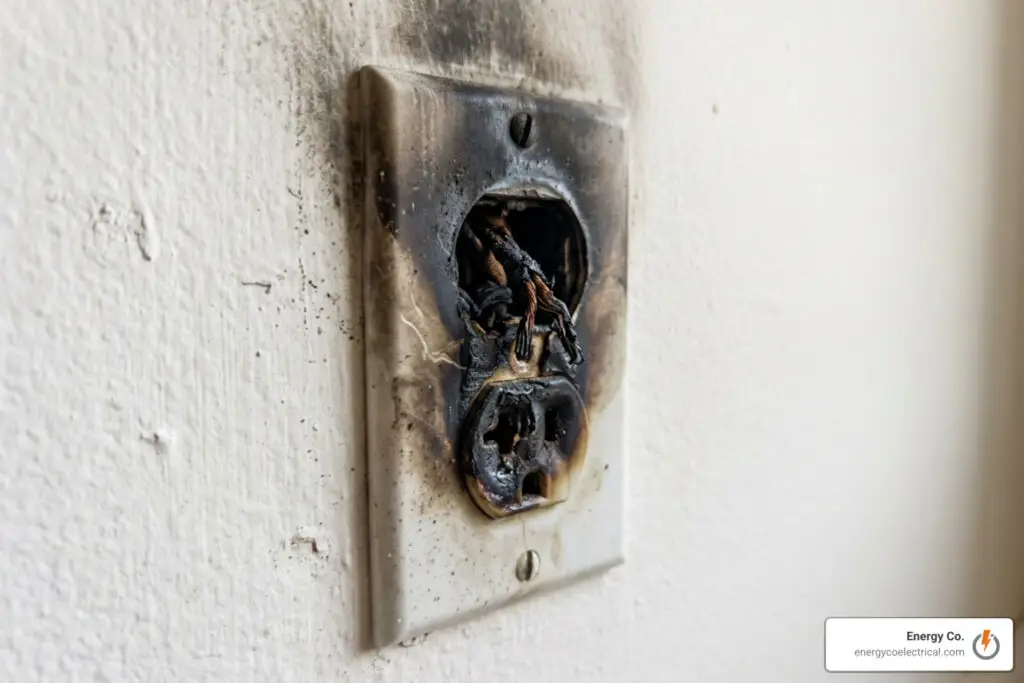
Your home’s electrical system rarely fails without giving you a few hints first. While a lightbulb burning out is normal, issues like persistent flickering, wall plates that feel hot, or a distinct buzzing sound behind your drywall are clear cries for help.
The most dangerous warning sign is a burning odor or the unmistakable sharp smell of ozone near switches or breaker boxes. Ozone smells like chlorine or a fresh thunderstorm, and in a home setting, it signals an active electrical arc. When electricity jumps across a loose connection or damaged insulation, it creates intense heat that can ignite nearby framing or insulation in minutes.
If you notice your outlets discoloring, feeling warm to the touch, or vibrating with a low hum, stop using that circuit immediately. You can review our guide on outlet switch troubleshooting to understand why loose terminal screws and failing internal contacts cause these heat spikes.
Circuit Breakers Constantly Tripping
A circuit breaker is designed to shut off power when the electrical current exceeds safe levels. If a breaker trips once after you plug in a space heater, a hair dryer, and a vacuum on the exact same circuit, that is the system doing its job.
However, if a breaker trips repeatedly under everyday use, you are likely dealing with one of three underlying problems:
- Circuit Overload: The total power draw of your connected devices exceeds the amperage rating of the breaker (typically 15 or 20 amps). This is common in older kitchens where high-wattage appliances share a single line.
- Short Circuit: A hot wire touches a neutral wire, creating an immediate surge of high current that instantly trips the mechanism.
- Ground Fault: A hot wire contacts the bare copper ground wire or the metal electrical box, presenting an immediate shock hazard.
Repeatedly flipping a stubborn breaker back on without finding the root cause is a fire hazard. Breakers can degrade with every trip, eventually failing to trip at all when a real surge occurs.
Outdated Panels and Dangerous Breaker Boxes
In older Cook County neighborhoods—from Cicero and Chicago bungalows to mid-century homes in Arlington Heights, Palatine, and Mount Prospect—many houses still run on original 60-amp or 100-amp electrical panels. Decades ago, a 100-amp panel was plenty to run a few incandescent light fixtures, a tube television, and a refrigerator. Today, homes require power for central air conditioning, induction cooktops, home theaters, and Level 2 electric vehicle chargers.
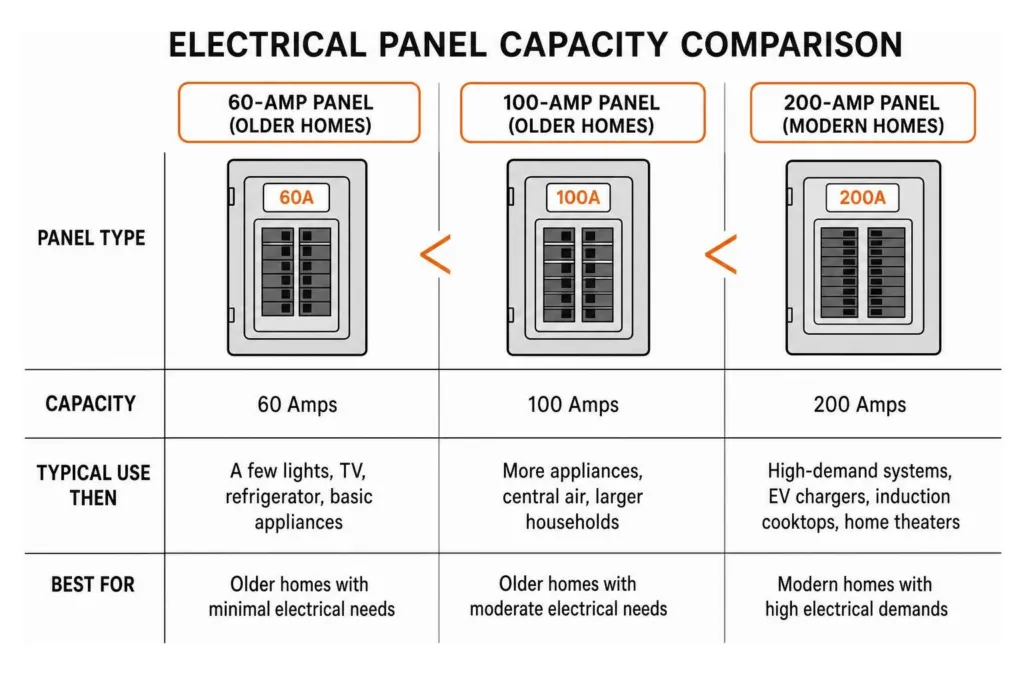
Beyond simple capacity issues, several vintage electrical panels have documented design defects that make them dangerous:
- Federal Pacific Electric (FPE) Stab-Lok Panels: Regulators and fire safety experts have documented that these breakers frequently fail to trip during direct overloads and short circuits, allowing wiring to melt inside walls.
- Zinsco (or Sylvania-Zinsco) Panels: The circuit breakers in Zinsco panels often fail to trip and can fuse directly to the aluminum bus bar, preventing the system from cutting power during an emergency.
- Challenger Panels: Certain Challenger models use bus bars that overheat and melt over time, creating intermittent power failure and arc risks.
Many insurance carriers actively flag or refuse coverage on homes that still contain these obsolete panels. If you want a closer look at how your breaker box functions and what to check safely, explore our guide to demystifying your home electric panel without getting shocked.
Evaluating Safety: DIY Limits vs. Professional Electrical Repairs
Tackling home projects can be rewarding, but working with line voltage carries high stakes. Standard 120-volt household current carries enough energy to cause severe muscular contractions, thermal burns, and fatal cardiac arrest. In addition to direct shock hazards, minor DIY mistakes—such as using the wrong wire gauge, over-stripping insulation, or failing to ground a metal box—create hidden arc-fault risks that can smolder undetected inside walls.
Before grabbing your screwdriver, review our electrical repairs do’s and don’ts for beginners to see what tasks are safe to approach and where strict limits apply.
| Project Type | Safe for DIY? | Recommended Action | Risk Level |
|---|---|---|---|
| Replacing a lightbulb | Yes | Ensure the fixture is switched off; verify wattage rating. | Very Low |
| Resetting a tripped breaker | Yes (Once) | Unplug high-draw appliances first, flip fully off, then on. | Low |
| Swapping a decorative switch plate | Yes | Avoid touching internal terminals; verify screws are snug. | Very Low |
| Replacing a single standard outlet | Conditional | Only if power is verified dead at the panel with a multimeter. | Moderate |
| Installing a GFCI or AFCI outlet | No | Requires correct line/load identification and ground integrity. | High |
| Adding a new circuit or breaker | No | Requires National Electrical Code calculations and panel access. | High |
| Diagnosing buzzing, smoke, or warm walls | No | Cut power at the main panel and call a licensed electrician. | Critical |
| Upgrading a 100A to 200A service panel | No | Requires utility disconnect, city permitting, and certified labor. | Critical |
When to Call 24/7 Emergency Electrical Services
Not every electrical issue requires an immediate midnight service call, but certain symptoms represent active emergencies. You should contact an emergency electrician immediately if you observe:
- Visible sparks, smoke, or popping sounds coming from an outlet, switch, or panel.
- A strong, chemical, or fishy burning odor near your wiring.
- An electrical shock or significant tingle when touching an appliance or switch.
- A sudden loss of power across half your home while your neighbors still have full power (a sign of a dropped utility phase).
- Standing water contacting an electrical panel, basement subpanel, or floor-level outlets.
When an emergency happens, shut off the main breaker if you can safely reach it without stepping in water or touching charred equipment. For step-by-step containment instructions, read our 24-hour emergency electrical repair guide for homeowners.
How to Choose the Best Licensed Electrician in Your Area
When you search for residential electrical help, you will encounter a mix of general handymen, unlicensed independent workers, and licensed electrical contractors. Electrical work is governed by the National Electrical Code (NEC) along with strict local municipal amendments throughout the Chicagoland area.
Hiring an unlicensed contractor to save on upfront costs often leads to improperly sized wiring, overloaded neutral conductors, and ungrounded circuits that fail municipal inspections and void your homeowner’s insurance policy.
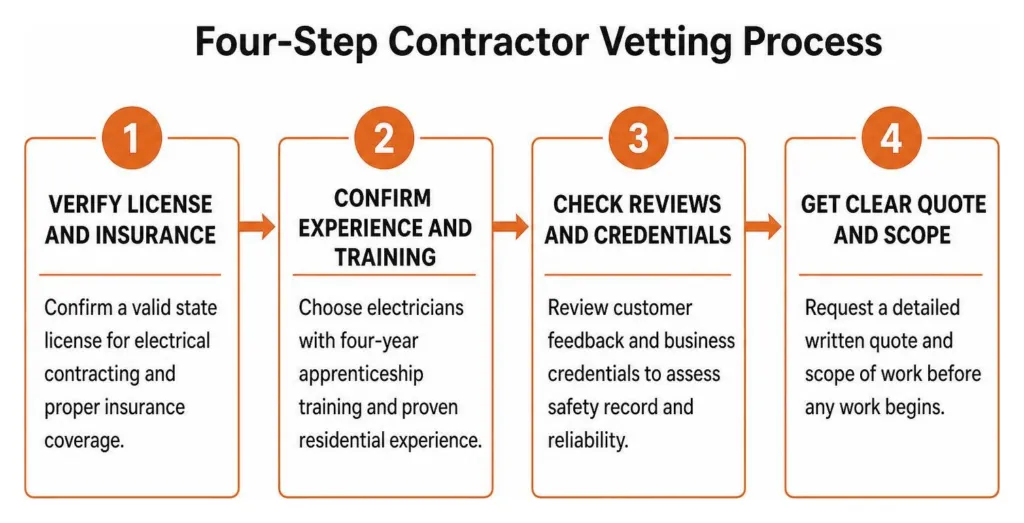
Look for licensed electricians who have completed structured, state-certified four-year apprenticeship training programs. These technicians have logged thousands of verified field hours studying electrical theory, load calculations, blueprint reading, and modern safety protocols. You can check customer feedback and business credentials across regional directories like verified electrician reviews and contractor listings to evaluate a company’s safety track record.
When you need an experienced local team for installations or emergency diagnostics, trust our expert electrical repair service in Chicago fast reliable solutions to handle your home’s wiring safely.
Vetting Local Credentials and Home Electrical Repair Near Me Quotes
When evaluating written estimates from local electrical companies, use this checklist to ensure you are comparing equivalent services:
- Active State and Municipal Licensing: Ask for the contractor’s license number and verify it through the appropriate local building department.
- Comprehensive General Liability and Workers’ Comp Insurance: Ensure the company carries at least $1,000,000 in liability coverage so you are never held liable for on-site accidents.
- Upfront Flat-Rate Pricing: Reliable contractors provide transparent, written quotes before work begins rather than vague open-ended hourly estimates. Many quality contractors will also credit their diagnostic dispatch fee directly toward the total cost if you authorize the repair.
- Permit Acquisition: The contractor—not the homeowner—must pull all required municipal building permits and schedule city inspections.
- Clear Warranty Protection: Look for companies offering clear warranties on both parts and labor.
Safety Inspections and Maintenance Discounts
The best way to prevent emergency failures is through periodic whole-home electrical safety inspections. If your home is more than 25 years old, an inspection allows an electrician to check panel torque settings, look for deteriorated wire insulation, verify grounding rod resistance, and ensure life-safety devices function properly.
Modern home safety focuses on three layers of protection:
- Ground-Fault Circuit-Interrupters (GFCI): Required in kitchens, bathrooms, garages, basements, and outdoor locations to protect against deadly water-induced shocks.
- Arc-Fault Circuit-Interrupters (AFCI): Modern breakers that detect dangerous electrical arcing (the primary cause of electrical home fires) and cut power before framing catches fire.
- Whole-Home Surge Protective Devices (SPDs): Hardwired directly into your main breaker panel to clamp high-voltage spikes caused by utility switching and lightning, protecting sensitive electronics and appliances.
Many service providers offer seasonal maintenance plans or promotional discounts that make whole-home safety inspections and safety upgrades more affordable.
Cost and Timeline Expectations for Common Electrical Services
Electrical work pricing depends entirely on the scope of the project, the accessibility of your wiring, and local permitting requirements. A simple outlet or switch replacement might run a few hundred dollars, while comprehensive whole-home rewiring or a main service upgrade requires a significant investment in specialized labor and code-compliant materials.
For a broader breakdown of residential and commercial repair standards, visit our top-rated electrical repair shop Chicago your guide to reliable service.
Here is a summary of standard repair costs and average project timelines across the Northwest Suburbs and Chicagoland:
| Electrical Service Project | Typical Estimated Cost Range | Average Project Duration |
|---|---|---|
| Diagnostic Service Call / Troubleshooting | $80 – $250 (often applied to repair) | 1 to 2 hours |
| Standard Outlet / Switch Replacement | $150 – $350 | 1 to 2 hours |
| GFCI / AFCI Outlet Installation | $175 – $400 | 1 to 2 hours |
| Single Circuit Breaker Replacement | $150 – $300 | 30 to 60 minutes |
| Dedicated Appliance Circuit (240V) | $400 – $1,200 | 2 to 4 hours |
| Level 2 EV Charger Installation | $600 – $2,200 (excluding charger unit) | 4 to 8 hours |
| 200-Amp Main Service Panel Upgrade | $1,500 – $4,000 | 6 to 10 hours (1 day) |
| Standby Home Backup Generator Installation | $4,500 – $12,000+ | 1 to 2 weeks (permits/gas/install) |
| Whole-Home Rewiring (Older House) | $6,000 – $18,000+ | 3 to 7 business days |
Average Project Timelines for Home Electrical Repair Near Me
Understanding how long a repair or installation takes helps you plan your schedule and minimize disruptions:
- Minor Repairs (Outlets, Switches, Breakers): A single breaker swap or outlet repair typically takes 30 minutes to 2 hours once troubleshooting identifies the fault.
- EV Charger Installations: Level 2 home charging stations generally take 4 to 8 hours. If your charger is situated in an attached garage adjacent to the basement panel, installation is straightforward. If conduit must be run through finished ceilings or across a yard to a detached garage, the job may take a full working day.
- Service Panel Upgrades: Replacing an outdated 100-amp panel with a modern 200-amp load center typically takes 6 to 8 hours of on-site labor. The power must be disconnected by the utility company, the old equipment removed, the new panel wired and grounded, and utility reconnection coordinated.
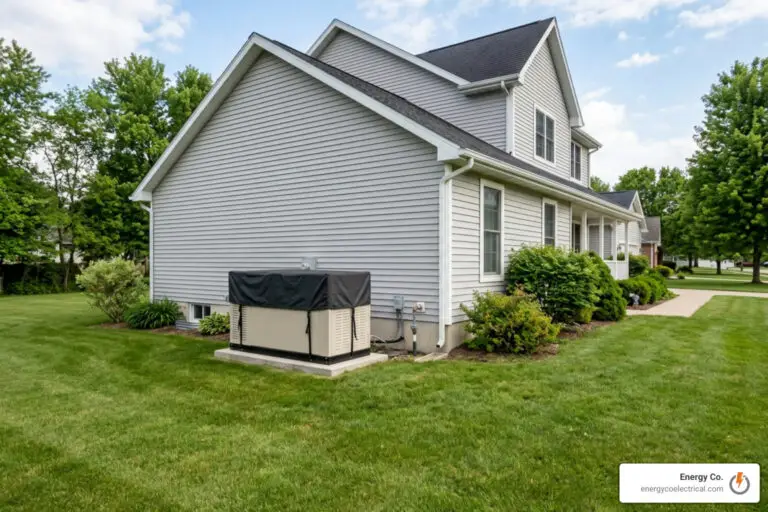
- Standby Generator Systems: A complete whole-home generator installation requires 1 to 2 weeks overall. While physical mounting and electrical transfer switch wiring only take 1 to 2 days, the total timeline includes municipal permitting, gas line plumbing, and final utility/city sign-offs.
Frequently Asked Questions About Residential Electrical Repairs
How much does a typical 200-amp panel upgrade cost?
A 200-amp service panel upgrade typically costs between $1,500 and $4,000. Key factors affecting the total cost include the age of your home, the condition of the existing service entrance cable, the number of individual branch circuits that need to be transferred, whether a new external meter socket or grounding electrode system is required, and local municipal permit fees.
Do I need a municipal permit for home electrical repairs?
For simple maintenance—like replacing an existing light switch, swapping a faulty standard outlet, or changing an identical light fixture—municipal permits are generally not required.
However, any major electrical modification does require a permit and subsequent municipal inspection. This includes upgrading your main electrical panel, adding new branch circuits, running subpanels, installing Level 2 EV charging stations, and whole-home backup generator installations. Pulling permits ensures the installation meets local building codes and protects your home’s insurance coverage.
Why did half my house lose power without tripping a breaker?
If lights and outlets across several unrelated rooms suddenly go dead while other parts of the home work normally—and no breakers have tripped in your panel—you have likely experienced a dropped phase (a partial phase outage).
Residential power is supplied through two 120-volt service lines (legs) from the utility transformer, combining to deliver 240 volts. If one of these utility lines fails due to storm damage, a blown street fuse, or a loose connection at your main service lugs or meter base, half of your 120-volt circuits will lose power entirely, and 240-volt appliances (like your central air conditioner, electric dryer, or oven) will fail to run. Contact your utility provider and a licensed electrician immediately to determine whether the issue sits on the utility side or inside your main service entrance.
Conclusion
Your home’s electrical infrastructure is the hidden engine that powers your daily life. When lights flicker, breakers trip, or outdated panels struggle to keep up with modern demands, ignoring the issue puts your home and family at risk of dangerous electrical shocks and structure fires.
At Energy Co., our licensed, insured, and experienced electricians are dedicated to providing safe, code-compliant, and durable electrical repairs throughout the Chicagoland area. Whether you live in Schaumburg, Hoffman Estates, Elk Grove Village, Rolling Meadows, Palatine, Roselle, Streamwood, Hanover Park, Arlington Heights, Mount Prospect, or Cicero, we have the local expertise to upgrade your systems safely.
Contact Energy Co. today to schedule your comprehensive safety inspection or browse our trusted local electrical repair services to get your home’s power running safely and reliably.