2026 Cost to Rewire a 1,300 Sq Ft House
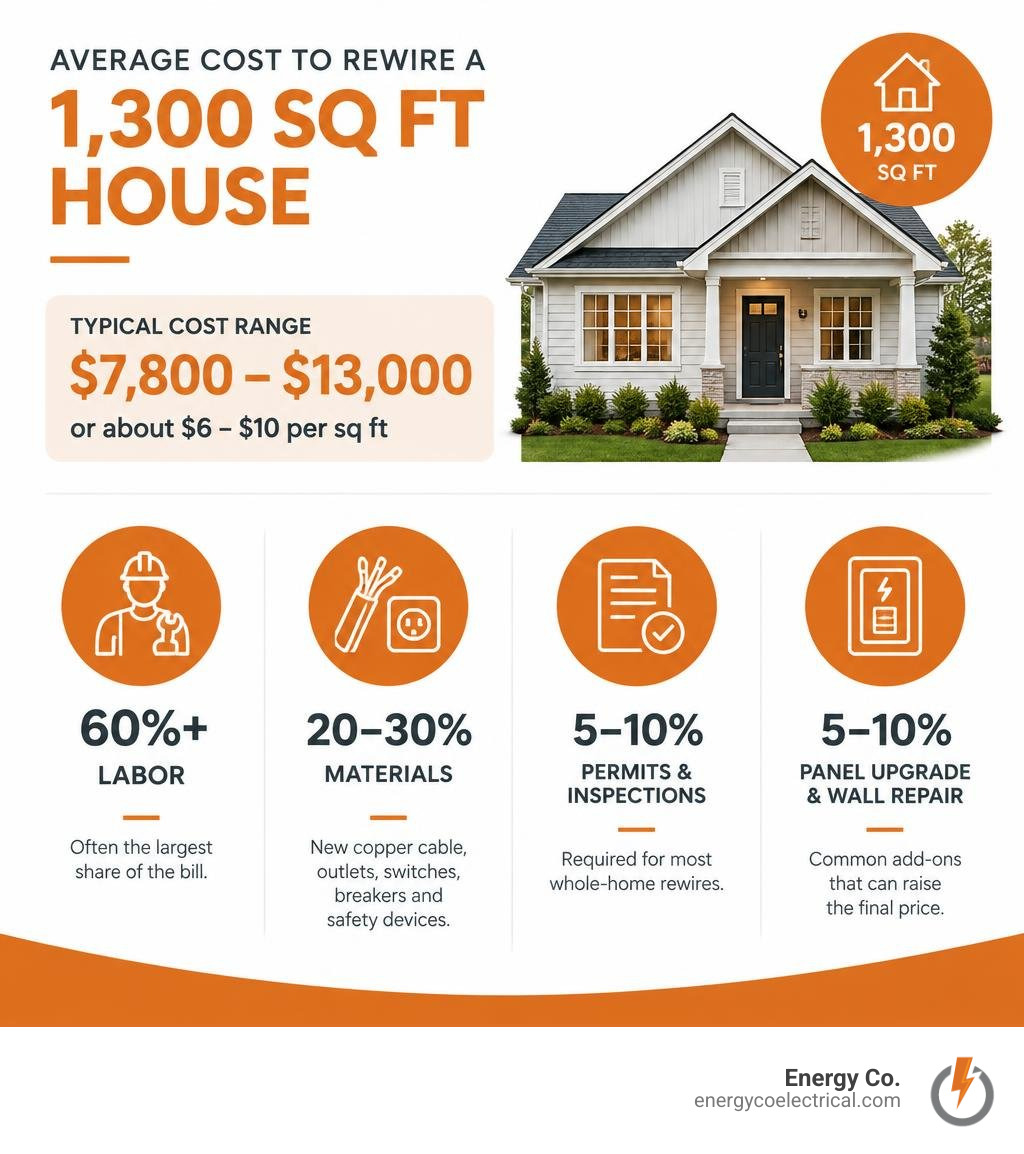
The average cost to rewire a 1300 sq ft house in 2026 is usually $7,800 to $13,000, or about $6 to $10 per square foot. A simple home with open attic or basement access may land near the low end. Older Chicago-area homes with plaster walls, limited access, knob-and-tube wiring, or a needed panel upgrade can cost more.
For a useful starting budget, plan for:
- Labor: Often the largest share of the bill, commonly 60% or more
- Materials: New copper cable, outlets, switches, breakers, and required safety devices
- Permits and inspections: Required for most whole-home rewires
- Panel upgrade and wall repair: Common add-ons that can raise the final price
A rewire is more than replacing old cable. It can solve frequent breaker trips, flickering lights, warm outlets, two-prong receptacles, and insurance concerns tied to outdated wiring. Get at least three itemized quotes, and ask each electrician whether permits, panel work, drywall patching, and cleanup are included.
I am Michał Napieralski of Energy Co., and our licensed team works on residential wiring, electrical inspections, panel upgrades, and safety repairs across the Chicago suburbs. That hands-on experience helps us explain the average cost to rewire a 1300 sq ft house and the hidden conditions that can change a quote.
Average cost to rewire a 1300 sq ft house vocab explained:
For broader context on residential electrical modernization, the National Electrical Code provides the baseline safety standards that shape whole-home rewiring requirements.
What Is the Average Cost to Rewire a 1300 Sq Ft House in 2026?
Across the United States, home rewiring ranges anywhere from $2 to $10 per square foot depending on the structure, but a mid-size 1,300-square-foot footprint sits comfortably in the $7,800 to $13,000 range for a turnkey replacement. National averages for whole-home projects often cite numbers between $8,000 and $20,000 across varied home sizes, with standard 2,500-square-foot builds running higher. For a cozy three-bedroom, one-bathroom ranch or bungalow of 1,300 square feet, the baseline stays manageable—provided no severe structural complications exist.
In Cook County and the surrounding Northwest Suburbs—such as Arlington Heights, Schaumburg, Palatine, and Mount Prospect—local building codes play a defining role in pricing. Municipalities in our area follow strict safety regulations that often call for specific conduit assemblies (like EMT or flexible metal conduit) or advanced Arc-Fault Circuit Interrupter (AFCI) protection on nearly every living circuit.
Permit and inspection fees in Chicagoland typically add $200 to $900 depending on the local building department. Working with a team that understands local municipal codes prevents costly failed inspections and rework.
Labor vs Materials in the Average Cost to Rewire a 1300 Sq Ft House
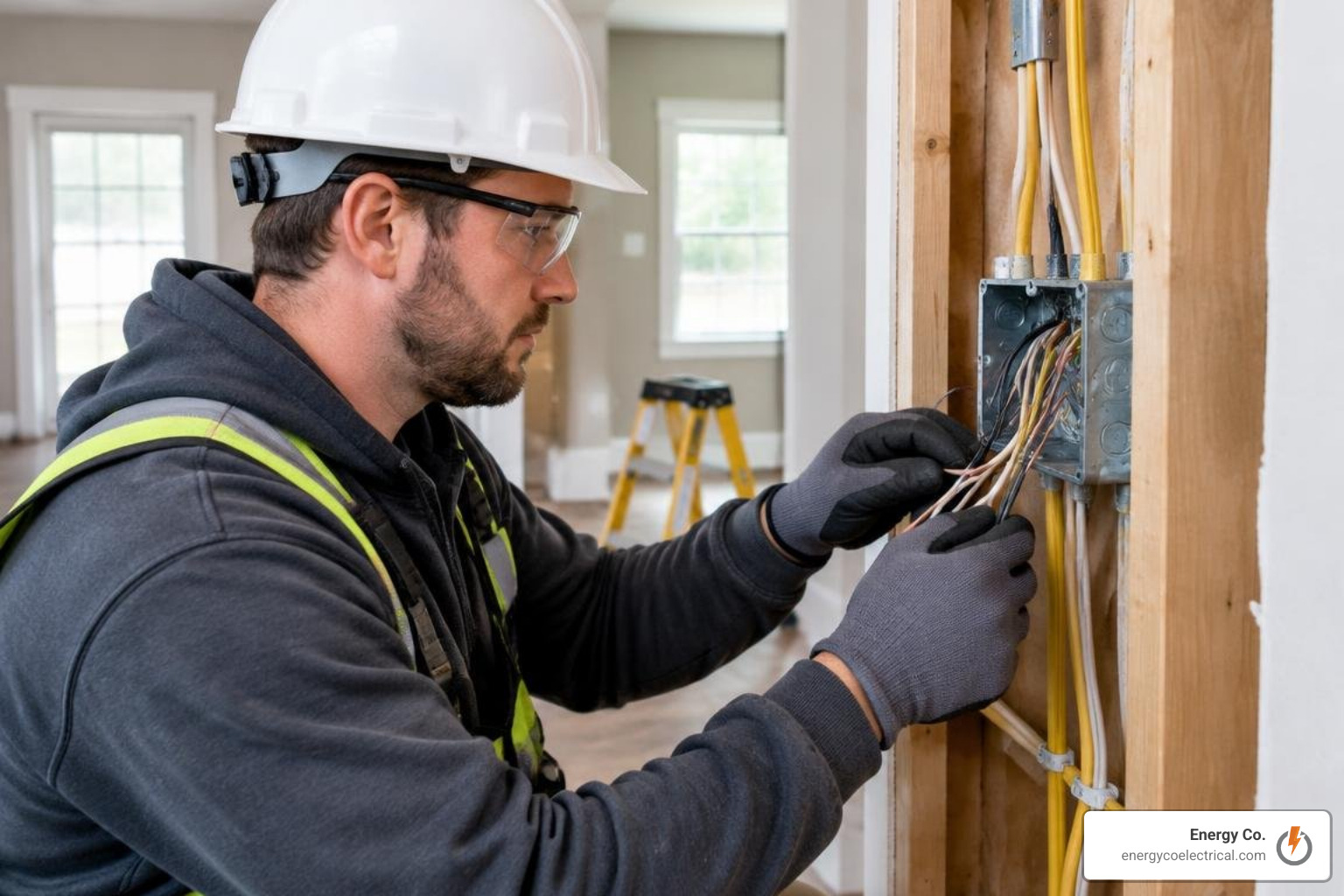
Rewiring is a labor-intensive craft. Unlike open-frame new construction, retrofitting an existing building requires precision fishing through finished cavities, navigating framing members, and mapping existing loads. Consequently, skilled labor accounts for roughly 60% to 70% of the total invoice, while raw materials represent 20% to 30%, with permits and disposal making up the remainder.
Material prices have seen shifts, with copper wire prices increasing due to global electrical demand, EV infrastructure, and grid modernizations. High-grade Romex (NM-B) and commercial-grade THHN copper conductors require careful budgeting.
| Cost Component | Typical Share | Estimated Cost (1,300 Sq Ft) | Key Inclusions |
|---|---|---|---|
| Electrician Labor | 60% – 70% | $4,800 – $8,500 | Cable fishing, circuit mapping, device installation, demo |
| Wiring & Rough Materials | 20% – 25% | $1,600 – $3,200 | Copper cable (14/2, 12/2, 10/3), rough boxes, conduit, fasteners |
| Devices & Trim | 5% – 10% | $500 – $1,200 | Tamper-resistant outlets, smart dimmers, GFCIs, AFCIs |
| Permits & Municipal Inspections | 3% – 6% | $250 – $800 | City application, plan reviews, rough/final inspections |
| Service Panel Upgrade (If Added) | Variable | $1,500 – $3,500 | 200-amp breaker box, whole-home surge protection, grounding |
Estimating the Average Cost to Rewire a 1300 Sq Ft House by Access and Age
Physical accessibility is the single biggest variable determining whether your project stays at $7,800 or rises toward the higher end. If an electrician can maneuver through an open, unfinished basement and a spacious attic, they can fish 80% of your new branch circuits from above and below without opening extensive channels in your walls.
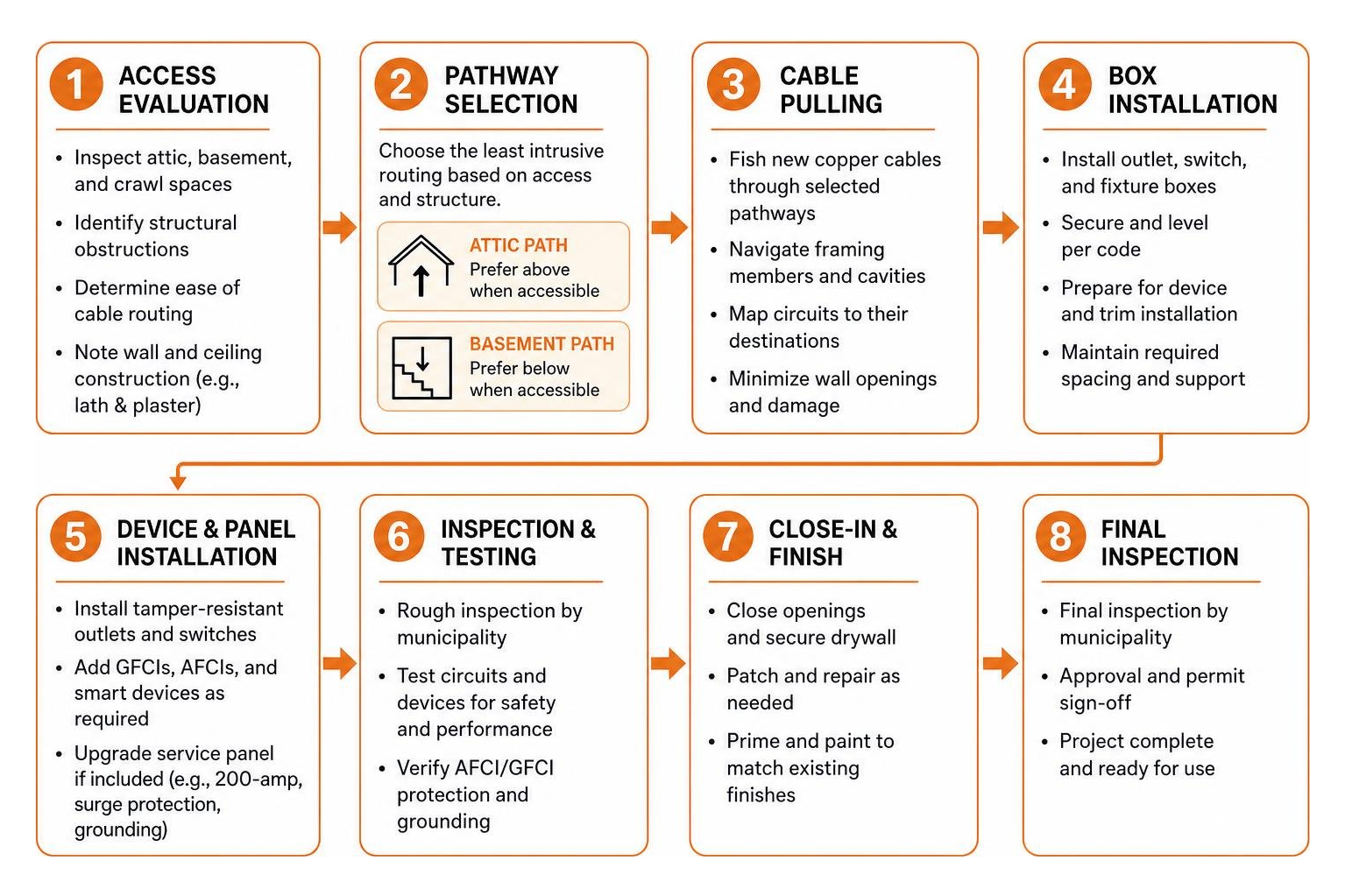
When houses feature lath-and-plaster construction—very common in classic Chicago, Cicero, and older Cook County properties—cutting, fishing, and repairing walls demands extra care. Plaster is brittle, lacks modern stud cavities in certain exterior furring runs, and requires delicate handling to avoid spiderweb cracking.
Opening finished drywall runs $5 to $8 per square foot to patch and repaint. Choosing a skilled crew for your whole house rewiring ensures the least intrusive path is taken, keeping drywall patching expenses to a minimum.
Major Factors That Impact Your Rewiring Quote
No two 1,300 sq ft layouts demand the exact same electrical load. The final number on your estimate is shaped by specific appliance choices, safety standards, and room layouts:
- Room and Circuit Count: A house with 3 bedrooms, 1 bathroom, a modern kitchen, a dining room, and a finished basement requires significantly more dedicated home runs than an open floor plan with minimal appliances.
- Dedicated Appliance Circuits: Modern code requires dedicated lines for heavy draws: refrigerators, microwaves, dishwashers, garbage disposals, laundry units, and central HVAC systems.
- AFCI & GFCI Protection: The National Electrical Code (NEC) mandates Arc-Fault Circuit Interrupters in bedrooms, living spaces, and hallways to prevent electrical arc fires, alongside Ground-Fault protection near water sources (kitchens, baths, basements, exteriors).
- Smart Home Infrastructure: Running neutral wires to every switch box, integrating smart subpanels, or running low-voltage cat6 data cabling alongside power will add to the overall rough-in scope.
Knob-and-Tube and Aluminum Wiring Remediation
Homes constructed between the late 1800s and the 1940s frequently contain active knob-and-tube (K&T) wiring, while homes built from the mid-1960s to early 1970s often feature solid aluminum branch wiring.
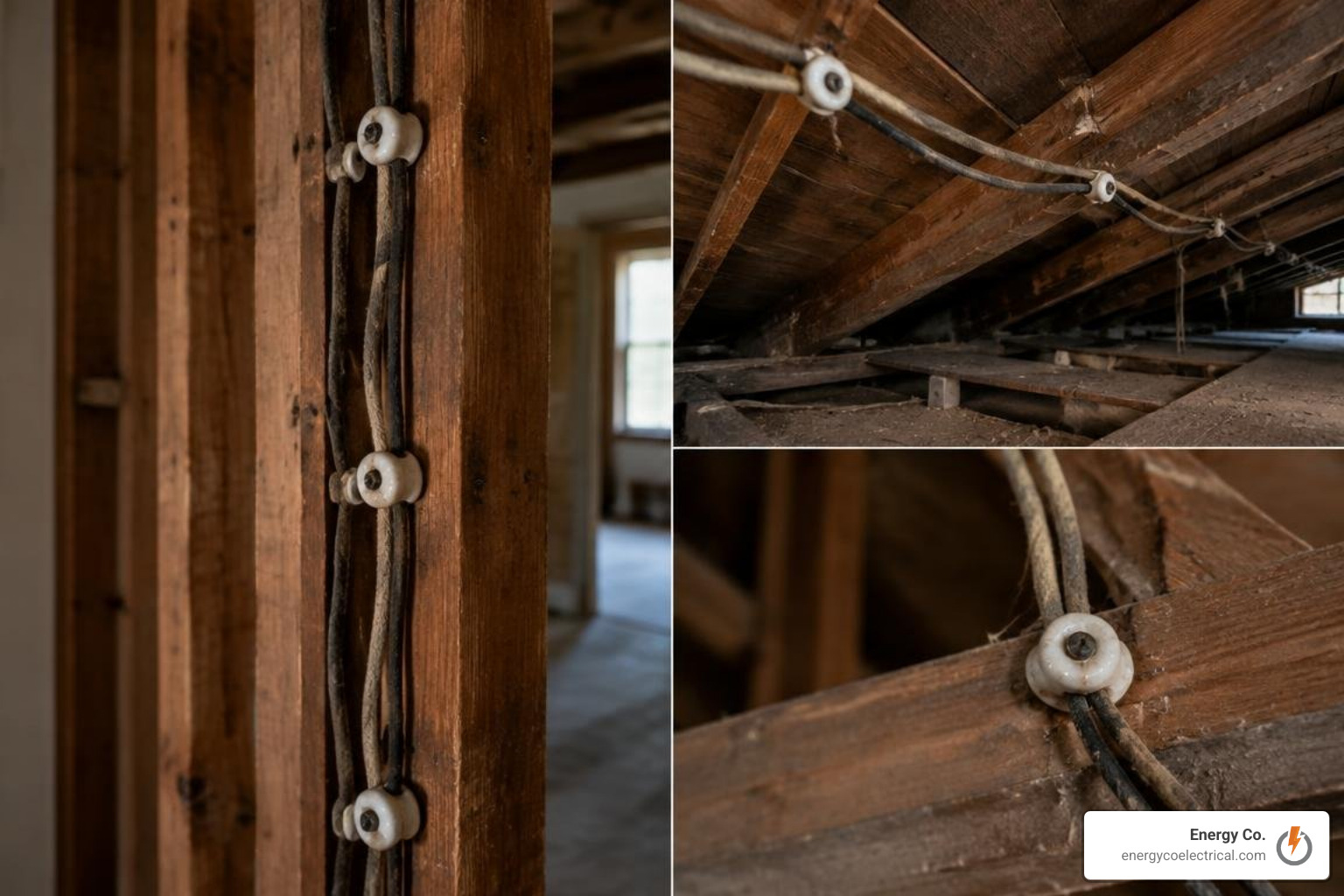
Both legacy systems present distinct hazards:
- Knob-and-Tube Hazards: K&T lacks an equipment grounding conductor (the third prong), relies on aging cloth/rubber insulation that turns brittle, and cannot be safely covered by modern thermal insulation in attics due to heat dissipation requirements. Many insurance carriers will decline or cancel coverage until active K&T is completely decommissioned.
- Aluminum Wiring Risks: Aluminum expands and contracts at higher rates than copper, causing connections at terminals and wire nuts to loosen over time, leading to oxidation, arcing, and fire risks.
Replacing these systems requires completely isolating or removing obsolete runs and pulling modern grounded copper conductors. Homeowners tackling historic properties in our area can reference our detailed breakdown on whole house rewiring in Cook County to see how local historic codes govern modernization.
Upgrading to a 200-Amp Electrical Panel
If your 1,300 sq ft home is still operating on a 60-amp or 100-amp fuse box or obsolete split-bus panel, full rewiring is the ideal time for an upgrade. Today’s households use induction ranges, high-draw air conditioning, Level 2 electric vehicle chargers, and home offices.
A modern service panel provides ample breaker spaces, dedicated surge suppression, and safe distribution. Upgrading your service at the same time as a whole-home rewire saves on permitting and labor overhead. You can explore modern options in our guide to electrical panel upgrades to plan your service expansion efficiently.
Full Rewire vs. Partial Rewire Cost Comparison
When budgeting is tight, homeowners sometimes debate whether to tackle the whole house at once or perform a partial rewire room by room.
- Partial Rewiring ($2,000 – $6,000): Focuses exclusively on high-demand, high-hazard areas like kitchens, bathrooms, or a newly remodeled basement. Kitchen rewires alone typically run $1,900 to $3,500 because of strict code mandates for multiple 20-amp small appliance branch circuits.
- Full Whole-House Rewire ($7,800 – $13,000): Decommissions all obsolete cabling, grounds every receptacle in the building, upgrades the main grounding electrode system, and gives the home a unified, compliant electrical network.
While a partial rewire lowers your initial outlay, completing the entire home in a single pass is almost always cheaper per square foot than calling an electrical crew for repeated separate visits. For broader perspective on how square footage affects project pricing, read our guide on how much to rewire an 1100 sq ft house in 2026 or explore 1500 sq ft house rewiring costs.
Practical Rewiring Timeline and Living On-Site
A full rewire on a 1,300 sq ft home generally takes between 3 and 10 working days, depending on wall access and whether the property is occupied.
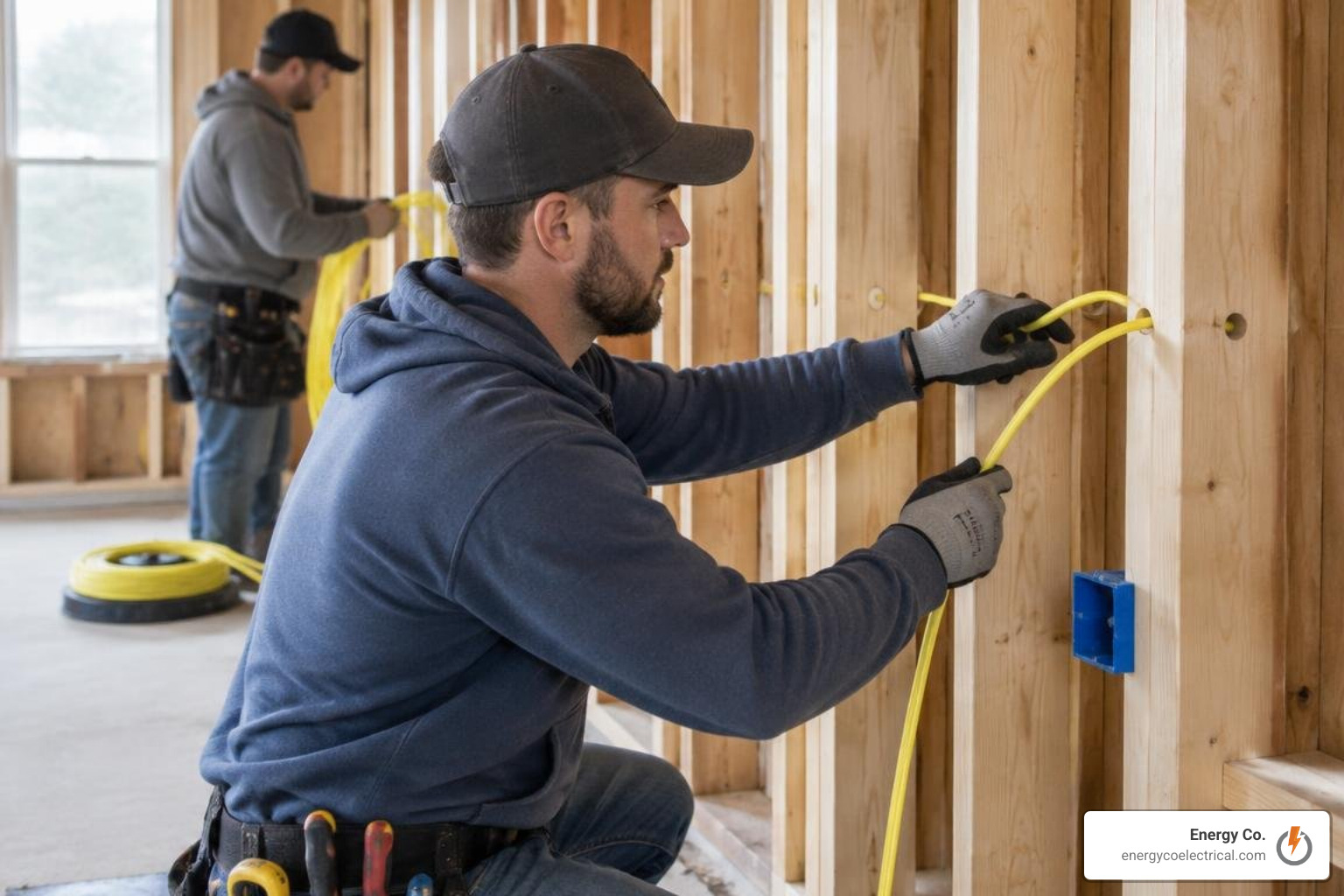
Many homeowners wonder: Can we stay in our home while the electricians are working?
In most cases, yes. A professional crew coordinates the project in organized zones:
- Daily Circuit Restoration: Power is usually cut only to the specific zones being worked on during the day, with temporary power or essential circuits (refrigerators, heating) restored before the crew leaves each afternoon.
- Dust Protection & Containment: Electricians use drop cloths, plastic sheeting, and HEPA vacuums to contain dust from plaster cuts or drywall exploratory holes.
- Staged Progression: Work begins at the service entrance and panel, moves through the attic and basement pathways, fishes drops into individual rooms, and finishes with device trim-out and final code inspections.
To ensure minimal disruption, explore our complete suite of residential electrical services tailored for occupied renovations.
Smart Ways to Save and Financing Options for Home Rewiring
A major home upgrade requires strategic planning. Here is how you can keep costs manageable without compromising on safety:
- Time Rewiring with Renovations: If you are planning to paint, remodel your kitchen, or replace flooring, schedule your electrical rough-in while walls or baseboards are accessible. This eliminates standalone drywall patching bills.
- Prepare the Work Areas: Clear furniture away from interior perimeter walls, empty closets with attic access hatches, and ensure clear pathways in your basement to save billable labor hours.
- Bundle Upgrades: Combining your rewiring with panel replacements, generator interlocks, or whole-home surge protection cuts down on separate permit filings and trip charges. Learn more about controlling panel costs in our guide on the cost to upgrade to a 200 amp panel without getting zapped.
- Financing Solutions: Many homeowners leverage Home Equity Lines of Credit (HELOCs), fixed-rate home improvement loans, or energy efficiency financing incentives available for electrical modernizations.
Frequently Asked Questions About Rewiring a 1300 Sq Ft House
What are the main signs a 1300 sq ft house needs rewiring?
Warning signs include circuit breakers that trip frequently, flickering or dimming lights when major appliances kick on, charred or warm receptacle faceplates, a persistent burning odor near outlets, and two-prong (ungrounded) wall sockets throughout living areas.
Can an electrician rewire a home without removing all the drywall?
Yes. Professional electricians use specialized flexible drill bits, magnetic wire-pulling systems, and access points through attics, crawlspaces, or basements to fish conductors inside walls. Full drywall removal is rarely needed; only small, easily patchable inspection cutouts are made where horizontal studs or fire blocks obstruct the path.
Does rewiring a 1300 sq ft home increase its resale value?
While new wiring hidden behind walls is not as visible as a kitchen remodel, it eliminates critical inspection flags during real estate transactions. Buyers gain confidence knowing the electrical system meets modern safety codes, and homes pass municipal point-of-sale inspections and insurance underwriting without costly credits or delays.
Conclusion
Rewiring a 1,300 sq ft home is one of the most vital investments you can make in your property’s safety, efficiency, and long-term functionality. By replacing brittle insulation, outdated circuits, or ungrounded wiring with modern copper conductors and code-compliant breaker protection, you protect your family from electrical fires and prepare your home for decades of reliable power.
At Energy Co., our licensed electricians bring local experience to older homes across Chicago, Cicero, Schaumburg, Hoffman Estates, Elk Grove Village, Rolling Meadows, Palatine, Roselle, Streamwood, Hanover Park, Arlington Heights, and Mount Prospect. From historic bungalow restorations to commercial wiring and residential electrical upgrades, we guarantee top-tier craftsmanship, code compliance, and safety on every project.
Contact our team today for a comprehensive on-site assessment and a transparent, itemized rewiring quote for your home.