The Average Cost to Rewire 1100 Sq Ft House in 2026
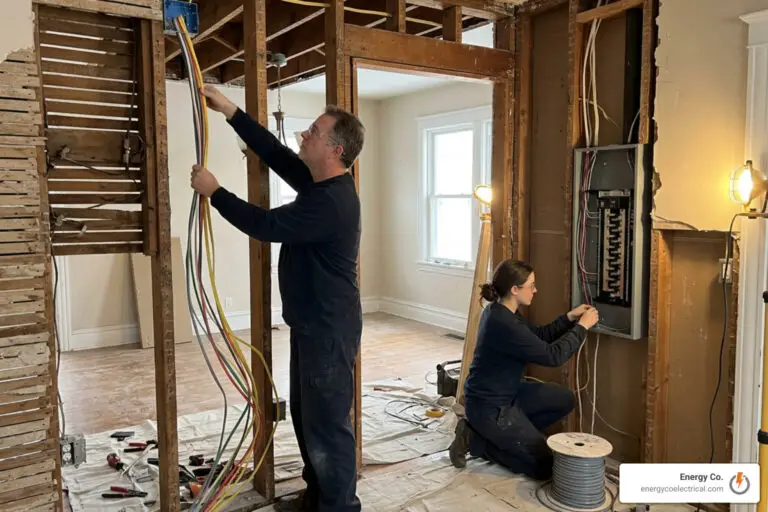
When you own an older home in the Chicago area, knowing the cost to rewire 1100 sq ft house is the first step to securing your family’s safety and future-proofing your property. Outdated electrical systems are not just inconvenient—they are a major fire hazard.
Here is a quick breakdown of what you can expect to pay for this project in 2026:
| Project Type | Typical Cost Range | Cost Per Square Foot |
|---|---|---|
| Open-Wall Rewire (During Remodel) | $4,400 – $7,700 | $4 – $7 |
| Standard Retrofit (Fishing Wire) | $6,600 – $11,000 | $6 – $10 |
| Plaster & Lath / Historic Home | $9,000 – $15,400+ | $8 – $14+ |
| Optional 200-Amp Panel Upgrade | $1,500 – $3,000 | Fixed Rate |
Many historic homes still rely on ungrounded knob-and-tube or highly active aluminum wiring. These old systems simply cannot handle today’s modern appliances, EV chargers, and smart home tech. While opening up your walls feels like a daunting project, updating your system protects your home investment and keeps your insurance company from canceling your coverage.
I am Michał Napieralski, a licensed electrician in Schaumburg, IL, and the founder of Energy Co. Over my career, I have personally guided hundreds of Chicagoland families through the process of calculating the cost to rewire 1100 sq ft house safely, transparently, and within budget.

Cost to rewire 1100 sq ft house vocab to learn:
When planning an electrical overhaul, understanding the baseline figures is essential. In 2026, the national average cost to rewire a home generally falls between $2 and $4 per square foot for basic projects under favorable conditions. However, for a standard retrofit in an existing home where walls are finished, these rates typically climb to $6 to $10 per square foot.
For an 1,100 sq. ft. home, this translates to a typical project cost of $6,600 to $11,000 for a standard retrofit. If your home has open walls due to an active renovation, the cost drops significantly because our team can access the studs directly. Conversely, if you own a historic property with plaster walls, expect the price to land on the higher end, ranging from $9,000 to $15,400 or more.
To help you visualize how a home’s footprint impacts the overall investment, we have compiled a quick comparison of average rewiring costs across typical small-to-medium residential sizes:
| Home Size | Standard Retrofit Cost Range (2026) | National Average Cost |
|---|---|---|
| 1,000 Sq. Ft. House | $6,000 – $10,000 | $8,000 |
| 1,100 Sq. Ft. House | $6,600 – $11,000 | $8,800 |
| 1,500 Sq. Ft. House | $9,000 – $15,000 | $12,000 |
To customize your project’s potential budget, you can check out Homewyse’s 2026 Cost Calculator for standard structural baselines. If you are new to the concept of home electrical upgrades, reading through A Comprehensive Guide to Rewiring Basics will give you an excellent foundation on the terminology and physical processes involved.
Full vs. Partial Cost to Rewire 1100 Sq Ft House
A common question we hear from homeowners in Hoffman Estates and Elk Grove Village is: “Do I really need to rewire the entire house, or can I get away with a partial upgrade?”
The answer depends on the current state of your system. If your home’s main electrical service is safe, but you have outdated, ungrounded wiring in specific areas, a partial rewire is a highly viable, budget-friendly option. Partial rewiring projects typically cost between $1,500 and $8,000, depending on which rooms are targeted.
We recommend prioritizing high-risk wet areas and rooms with heavy appliance demands:
- Kitchen Rewiring ($1,900 – $3,300): Modern kitchens demand multiple dedicated 20-amp circuits to run microwaves, refrigerators, dishwashers, and countertop appliances simultaneously without tripping the breaker.
- Bathroom Rewiring ($1,000 – $2,000): Bathrooms must be updated with specialized Ground Fault Circuit Interrupter (GFCI) outlets to protect your family from water-induced electrical shocks.
- Basement Rewiring ($800 – $1,500): Basements often feature exposed framing, making circuit replacement highly accessible and affordable.
While partial upgrades solve immediate safety concerns, a full rewire is always more cost-effective in the long run if you plan to stay in your home. Doing the work in piecemeal fashion means paying multiple mobilization fees, permit charges, and cleanup costs over several years. For a deeper look at how square footage scales these decisions, review The Ultimate Guide to 1500 sq ft House Rewiring Costs.
How Home Age Impacts the Cost to Rewire 1100 Sq Ft House
The year your home was built is one of the most accurate predictors of your final rewiring estimate. Chicagoland is famous for its gorgeous, historic housing stock, but these vintage properties hide unique electrical challenges behind their walls.
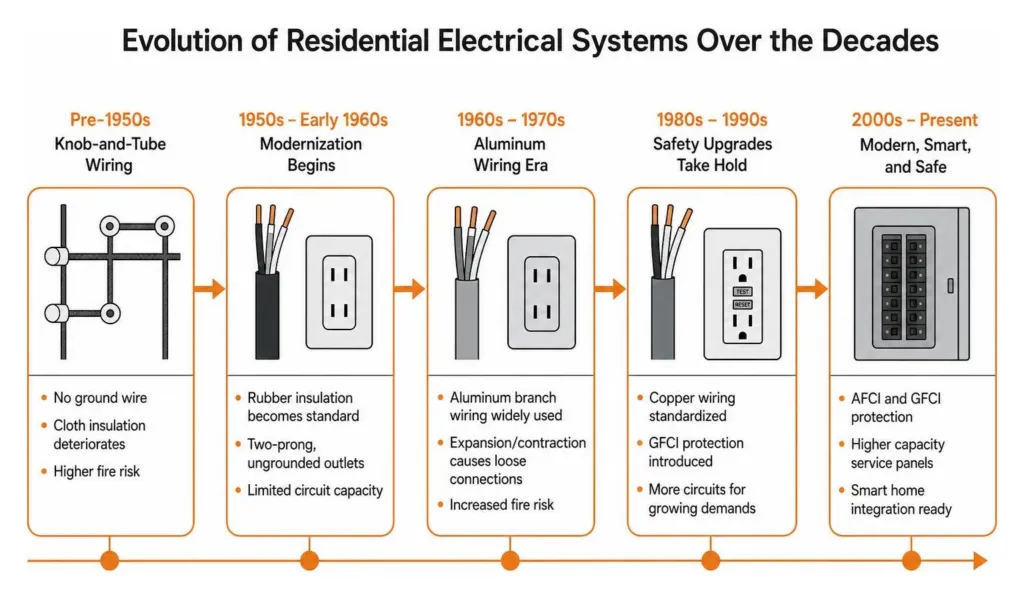
- Pre-1950s Homes (Knob-and-Tube Wiring): If your home was built before 1950, it likely features knob-and-tube wiring. This system lacks a grounding wire, and its protective cloth insulation crumbles away over time, exposing bare, live copper. Removing and replacing knob-and-tube wiring typically adds a 25% to 40% premium to your project due to the extreme care required to navigate historic plaster and lath walls.
- 1960s – 1970s Homes (Aluminum Branch Wiring): Due to copper shortages, many homes built between 1965 and 1973 were wired with aluminum. Aluminum expands and contracts rapidly under thermal loads, leading to loose connections, sparking, and electrical fires. Replacing aluminum with modern copper is highly recommended, and many local insurance carriers in Cook County will outright deny coverage until this is completed.
- Ungrounded Outlets (Post-WWII): Mid-century homes often feature two-prong, ungrounded outlets. To meet modern safety standards, we must replace these with grounded three-prong outlets or install GFCI/AFCI protection at the breaker panel.
Navigating these historic challenges requires specialized expertise. You can read more about typical pricing trends for older structures in Thumbtack’s 2026 Home Rewiring Cost Guide.
Key Cost Drivers for an 1,100 Sq. Ft. Electrical Overhaul
Every home is unique, and no two 1,100 sq. ft. layouts cost exactly the same to rewire. Several physical and administrative factors will shape your final invoice.
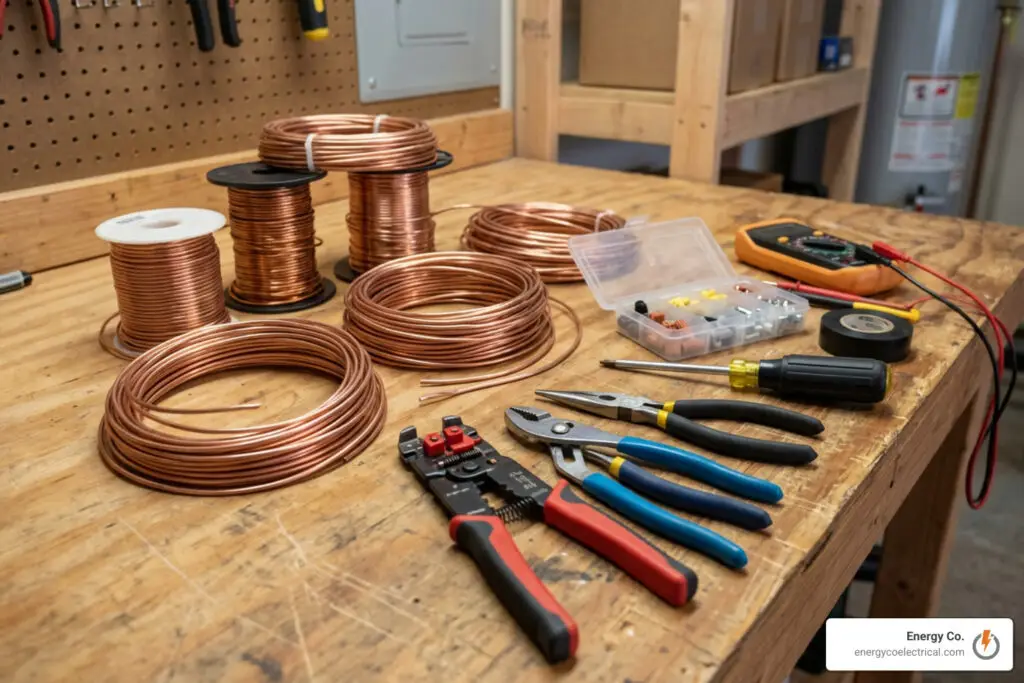
- Accessibility: If your home has an accessible attic, a crawl space, or an unfinished basement, our electricians can “fish” wires through the joists with minimal wall disruption. If you own a two-story home or a property on a concrete slab with flat ceilings, accessing the wall cavities becomes much more complex, driving up labor costs.
- Wall Construction: Drywall is relatively easy to cut, patch, and repair. Plaster and lath walls, common in older Chicago bungalows, are incredibly dense, brittle, and messy. Working with plaster requires specialized tools and significantly more time, which increases the labor rate.
- Permit Fees and Inspections: Major electrical work requires municipal building permits and official inspections to ensure code compliance. In the Chicago suburbs, permit fees typically range from $200 to $900, depending on your specific town’s fee structure.
- Home Insurance Requirements: Many homeowners initiate a rewire because their insurance company issued an ultimatum. Upgrading your system to modern copper and installing a certified breaker panel not only keeps your policy active but can also secure premium discounts of up to 10% to 20%.
Labor vs. Material Expenses
When you look at a professional electrical estimate, it is helpful to know where your hard-earned dollars are actually going.
- Labor (50% to 70% of Total): Electrical work is highly skilled, hazardous, and physically demanding. Electricians typically charge $50 to $100 per hour nationwide, but in high-demand metropolitan areas like Chicago, loaded billing rates are calculated using a 2.4x multiple of local union and market averages to cover overhead, liability insurance, worker’s compensation, and state licensing.
- Materials (30% to 50% of Total): This includes the physical components of your system—copper wiring, outlet boxes, switches, GFCI receptacles, and the service panel itself. Copper remains the undisputed gold standard for residential conductivity, and wholesale copper prices directly influence material quotes.
Chicago Conduit Codes vs. Romex Wiring
If you have researched home rewiring online, you have likely read about “Romex” (NM-B) cable. Romex is a flexible, plastic-sheathed wire that is incredibly easy to pull through wooden studs. Throughout most of the United States, Romex is the standard for residential wiring.
However, Chicago and Cook County are different.
Due to historic fire safety regulations dating back to the Great Chicago Fire, the City of Chicago and many surrounding suburbs (including Cicero and portions of Cook County) strictly mandate the use of metal conduit (EMT – Electrical Metallic Tubing) for all residential electrical installations.
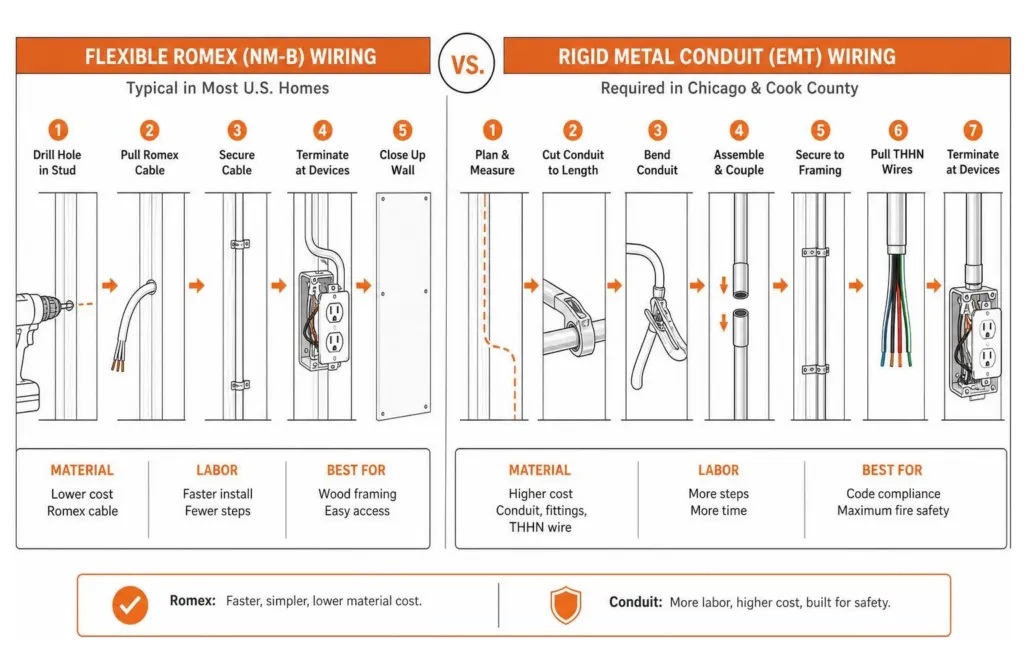
This local code requirement has a massive impact on the cost to rewire 1100 sq ft house:
- Material Cost: Rigid steel or aluminum conduit pipes, metal junction boxes, and individual THHN copper wires cost significantly more than a simple roll of Romex.
- Labor Complexity: Instead of simply pulling a flexible cable through a hole, our electricians must precisely bend metal pipes using specialized hand benders, couple them together, secure them to the framing, and then pull individual wires through the completed pipe system. This easily doubles the labor hours required for a rough-in.
When hiring an electrician, it is vital to work with a team that deeply understands these unique local regulations. To learn more about why these rules exist and how they protect your family, read our guide on Chicago Electrician What You Need to Know.
Additional Expenses Beyond Basic Rewiring
When budgeting for an electrical overhaul, do not forget to account for the mandatory system upgrades that must accompany new wiring to satisfy the National Electrical Code (NEC).
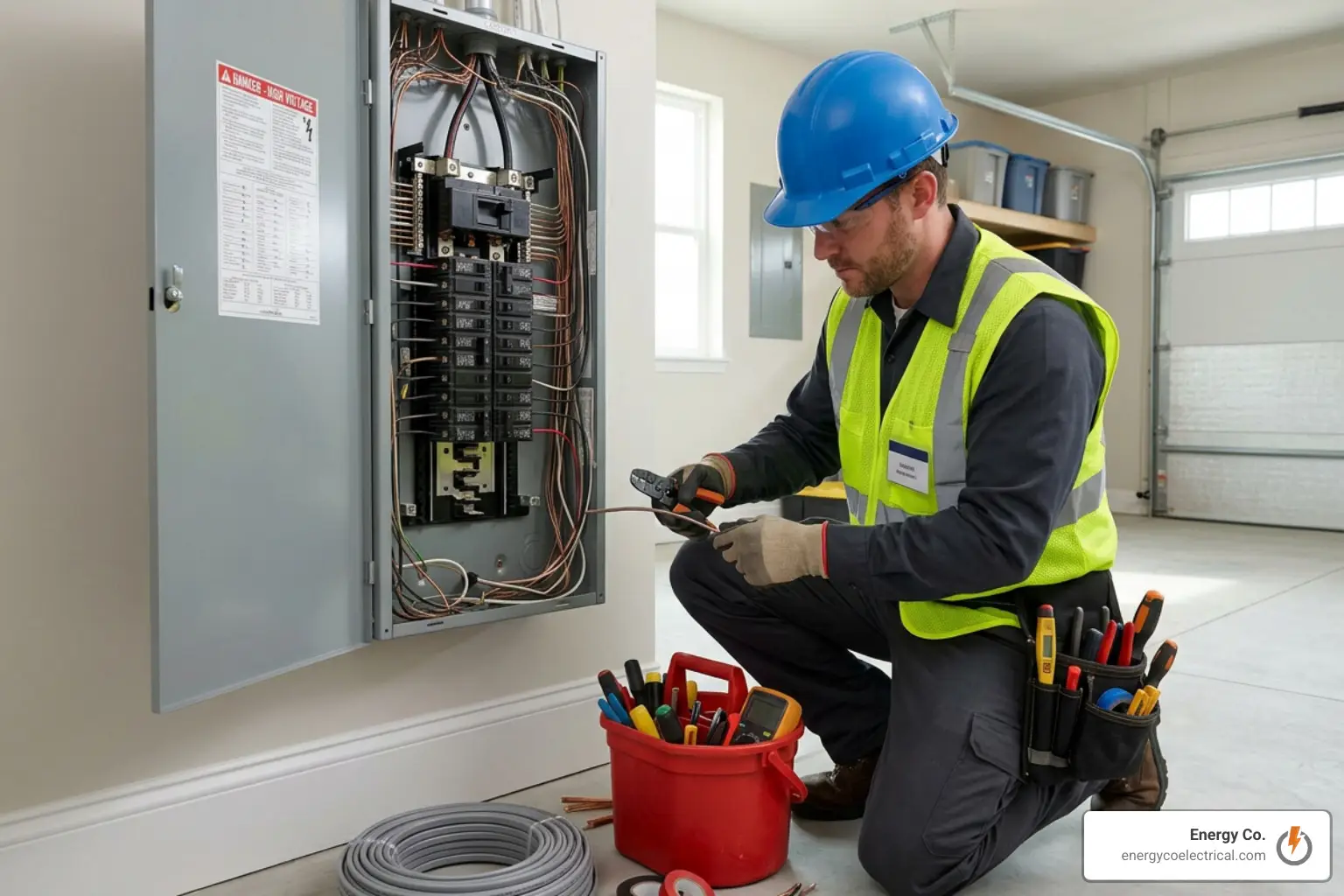
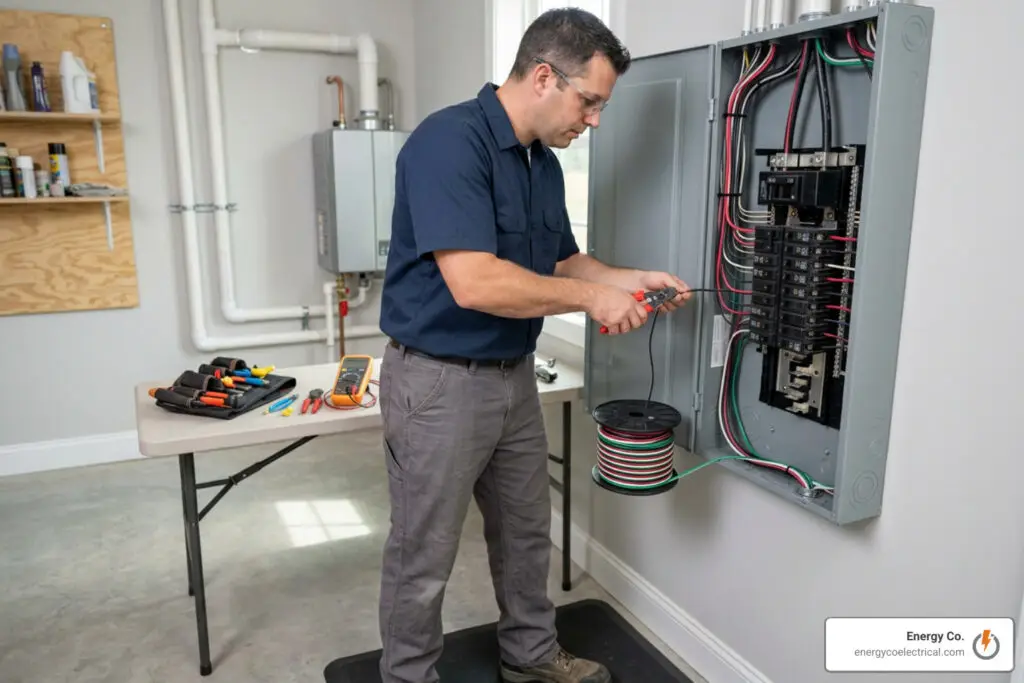
- Electrical Panel Upgrade ($1,500 – $4,000): If your 1,100 sq. ft. home still runs on an outdated 60-amp or 100-amp service panel—or worse, an old fuse box—you must upgrade to a modern 200-amp service panel. This ensures your home can safely distribute power to modern climate systems, kitchen appliances, and EV chargers. For a detailed breakdown of these costs, see How Much to Swap the Box: Your Guide to Electrical Panel Upgrade Costs.
- GFCI and AFCI Protection: Modern codes require Ground Fault Circuit Interrupters (GFCIs) in all wet areas (kitchens, bathrooms, basements, garages) and Arc Fault Circuit Interrupters (AFCIs) on bedroom and living area circuits to prevent sparking fires.
- Smart Home Integration ($2,000 – $7,000): While the walls are open, many homeowners choose to run low-voltage wiring for smart thermostats, security cameras, built-in speaker networks, or dedicated home office ethernet lines.
Can You Rewire an 1,100 Sq. Ft. House Without Removing Drywall?
The short answer is yes, absolutely!
Skilled residential electricians utilize a technique known as wire fishing. Instead of gutting your entire home’s drywall, we make small, strategic access holes (usually about the size of a single-gang outlet box) near the ceiling and floor. Using flexible fiberglass rods, magnetic retrieval kits, and specialized guide wires, we can pull new cables or push conduit through the empty spaces inside your wall cavities.
While wire fishing saves you from a massive, dusty demolition project, it does come with a few trade-offs:
- Higher Labor Cost: Fishing wire through closed walls is a slow, meticulous process that requires immense patience and skill.
- Unsecured Wires: In non-conduit jurisdictions, fished wires cannot be stapled to the interior framing studs. While perfectly safe and code-compliant for retrofits, stapled wiring is technically more secure.
- Inevitable Patching: Even the most talented electrician will need to make some cuts. You should budget between $300 and $800 per room for professional drywall patching and painting once the electrical work is complete. Drywall repair typically consumes 25% to 30% of a homeowner’s total renovation budget.
To ensure your home’s structure is respected and handled with care, it pays to hire a team with extensive retrofit experience. You can find out how to choose the right partner by reading our guide on how to Find the Best Residential Electrician in Chicago for Your Home Needs.
Frequently Asked Questions About Home Rewiring
To help you plan your upcoming project with confidence, we have compiled answers to the most common questions our clients ask.
How long does it take to rewire an 1,100 sq. ft. home?
For an 1,100 sq. ft. home, a professional retrofit rewire typically takes 3 to 7 business days.
If the home is a new construction or completely gutted to the studs, the rough-in phase takes 2 to 3 days, and the final trim-out (installing outlets, switches, and fixtures) takes an additional 1 to 2 days.
During a retrofit, we highly recommend making arrangements to stay with family or at a local hotel. While we work room-by-room to minimize disruption, there will be temporary power outages, dust, and active work zones that can make daily life difficult—especially if you work from home or have young children or pets.
What are the warning signs that my home needs rewiring?
If your home’s electrical system is struggling, it will let you know. Do not ignore these critical warning signs:
- Flickering or Dimming Lights: This indicates that your circuits are overloaded or that there is a loose connection in your main panel.
- Frequently Tripped Breakers: If running your microwave and coffee maker at the same time causes a blackout, your system lacks the necessary circuit capacity.
- A Burning Plastic Smell: This is an emergency. It means wire insulation is actively melting due to extreme heat or short circuits.
- Warm or Discolored Outlets: If your outlet covers feel warm to the touch or show brown scorch marks, shut off the breaker immediately.
- Two-Prong Outlets: These outlets indicate an ungrounded, outdated system that cannot safely power modern three-prong appliances.
Does rewiring a house increase its resale value?
Yes, a full home rewire typically increases a property’s resale value by 1% to 3%.
While a new kitchen or bathroom is more visually exciting to buyers, a fully updated, code-compliant electrical system provides something far more valuable: peace of mind. Buyers and home inspectors look closely at the electrical panel.
A home with a brand-new 200-amp copper system is instantly more attractive because the buyer knows they won’t have to deal with the mess, cost, and insurance headache of a rewire after moving in. It eliminates a major negotiating hurdle and helps your home sell faster.
Conclusion
Investing in your home’s electrical system is one of the smartest decisions you can make for your family’s safety, comfort, and financial security. While calculating the cost to rewire 1100 sq ft house involves navigating several variables—from accessibility to strict local Chicago conduit codes—the peace of mind that comes with a modern, grounded system is priceless.
At Energy Co., we take pride in serving our local communities across Chicagoland, including Schaumburg, Palatine, Arlington Heights, and Cook County. Our certified, licensed professionals bring years of local expertise to every project, backed by our absolute satisfaction guarantee.
If you are ready to upgrade your home safely and efficiently, we are here to help you explore your options. From planning your budget to navigating financing solutions like HUD Title I Property Improvement Loans, we will guide you every step of the way.
Ready to get started? Contact us today to schedule your professional home electrical evaluation, or explore our specialized Energy Co. Commercial Wiring Services for your business needs.