How to Choose Commercial Electrical Contractors You Can Trust
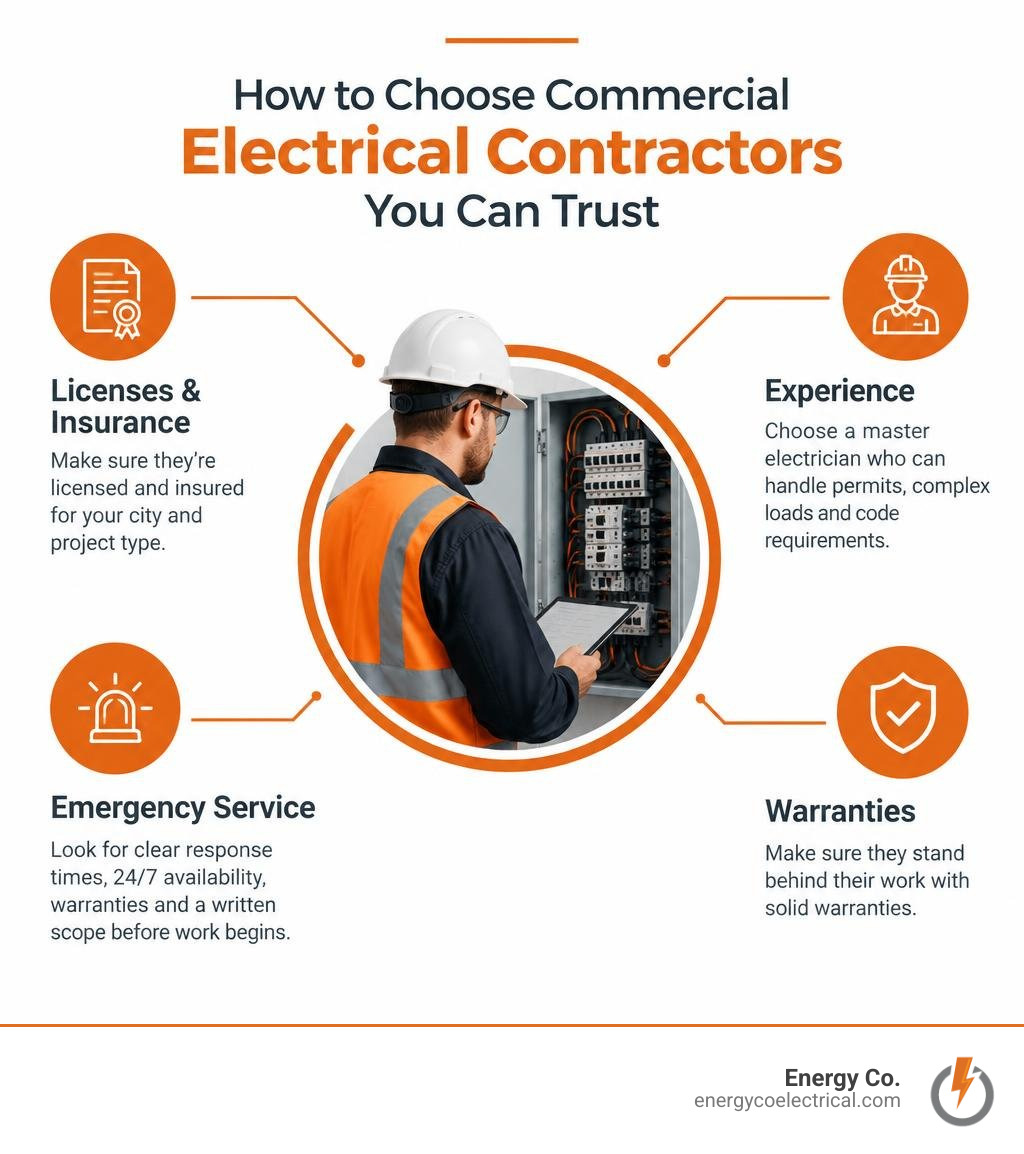
Choose a commercial electrical contractor by checking four things first:
- Licensing and insurance for your city and project type.
- A master electrician who can handle permits, complex loads, and code requirements.
- Proven experience with work like yours, from panel upgrades and fire alarms to industrial equipment or EV chargers.
- Clear emergency response, warranties, and a written scope before work begins.
For Chicago businesses, this matters even more in older buildings, where outdated panels, wiring, and lighting can create safety risks or costly downtime. The right contractor does more than fix a failed circuit. They help keep your facility code-compliant, efficient, and ready for outages, growth, and new equipment.
Commercial electrical contractors can support everything from LED retrofits and motion sensors to backup generators, UPS systems, EV charging infrastructure, troubleshooting, and large-scale tenant improvements. A qualified team should explain the options in plain language, identify capacity limits before installing high-demand equipment, and stand behind its work.
I’m Michał Napieralski, and this guide will help you compare contractors with confidence before a small electrical issue becomes a major business interruption.
Discover more about commercial electrical contractors:
Qualifications, Licensing, and Vetting for Commercial Electrical Contractors
Selecting the right trade partner is the foundation of facility safety and operational continuity. Commercial electrical systems operate at significantly higher voltages and carry vastly more complex loads than standard residential setups. A single oversight during an installation can trigger catastrophic switchgear failures, costly production shutdowns, or severe fire hazards.
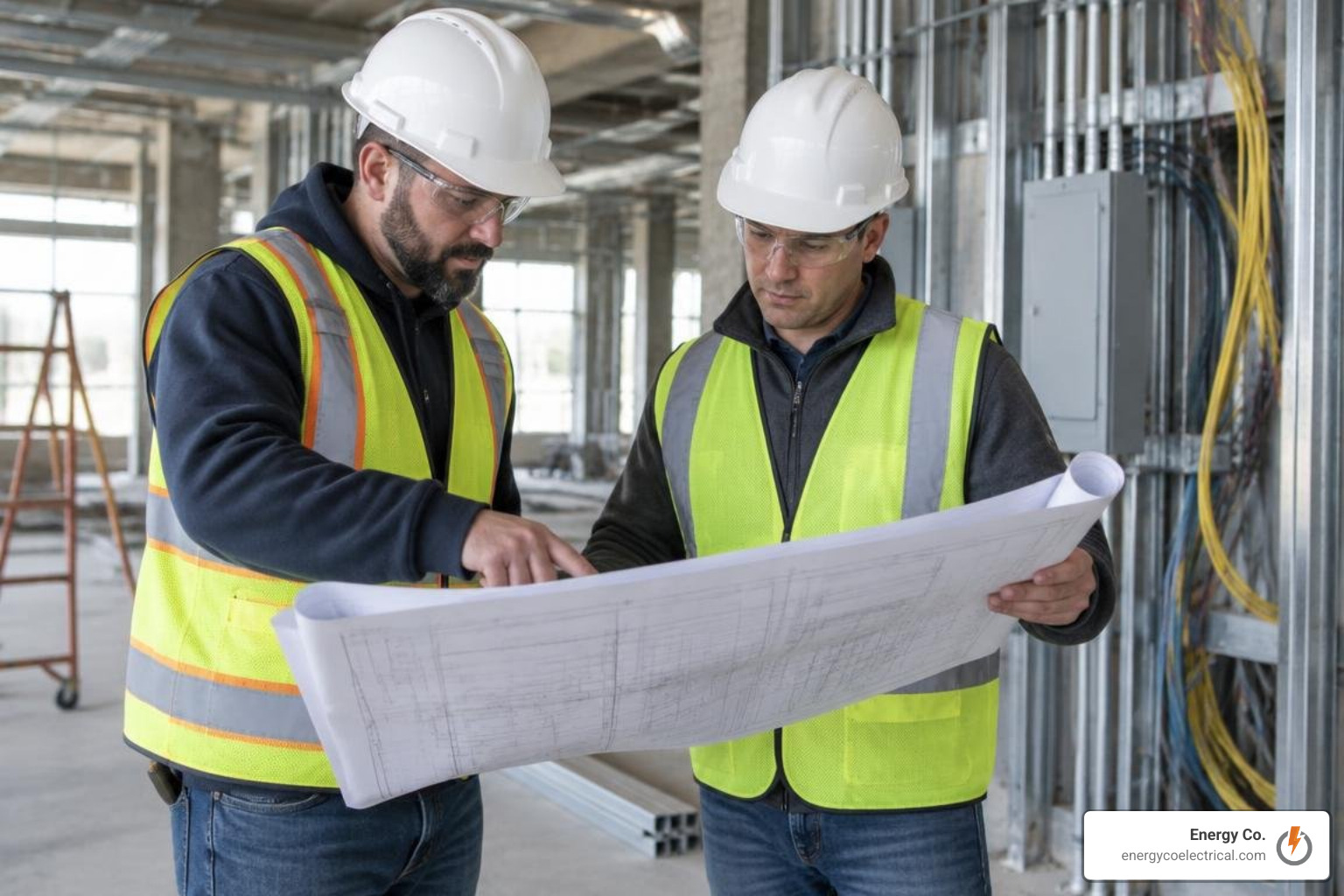
To protect your enterprise, you must thoroughly evaluate potential candidates before allowing them on your job site. When finding the right local commercial electricians, make sure to verify:
- Active municipal trade licenses in your specific jurisdiction (e.g., Chicago, Cook County, or surrounding Northwest Suburbs).
- Proof of comprehensive general liability insurance and workers’ compensation coverage.
- A documented history of strict OSHA safety compliance on complex commercial job sites.
- Strong bonding capacity aligned with your commercial project scale.
Why Master Electrician Licenses Matter for Commercial Electrical Contractors
In commercial and industrial environments, having a licensed master electrician oversee the project is essential. A master electrician possesses the highest level of technical mastery, demonstrated through rigorous field experience and demanding examinations.
These specialists are uniquely qualified to calculate complex branch circuit loads, design sophisticated power distribution architectures, and pull the necessary municipal building permits. When dealing with high-voltage distribution networks and mission-critical power systems, the technical competency of a master electrician ensures that your facility operates safely under peak electrical demand.
Safety Standards, Code Compliance, and Workmanship Guarantees
Code compliance is an ongoing operational safeguard. Municipal codes across the Chicagoland area—especially the strict Chicago Electrical Code—mandate specific wiring methods, conduit installations, and grounding protocols to protect occupants.
A reputable electrical contractor will inspect existing systems, correct hazardous code violations, and ensure every new component complies with the National Electrical Code (NEC). To back this work, top-tier contractors provide robust one-year labor and workmanship guarantees alongside standard manufacturer equipment warranties. Incorporating these standards into your routine preventative commercial electrical system maintenance keeps your systems running reliably for years to come.
Comprehensive Commercial and Industrial Electrical Solutions
Every commercial facility has unique infrastructure needs. Whether you operate a retail store in Arlington Heights, a corporate office in Schaumburg, or a manufacturing facility in Elk Grove Village, partnering with a full-service contractor guarantees that all facets of your electrical infrastructure function as a unified ecosystem. Investing in comprehensive commercial electrical services eliminates finger-pointing between separate subcontractors and streamlines project delivery.
Specialized Systems: Fire Alarms, Troubleshooting, and Electrical Infrastructure
Modern facilities rely on sophisticated low-voltage and high-voltage integrations. Specialized commercial electrical capabilities encompass:
- Life Safety Systems: Fully integrated, addressable commercial fire alarms and emergency egress illumination designed to satisfy municipal life-safety codes.
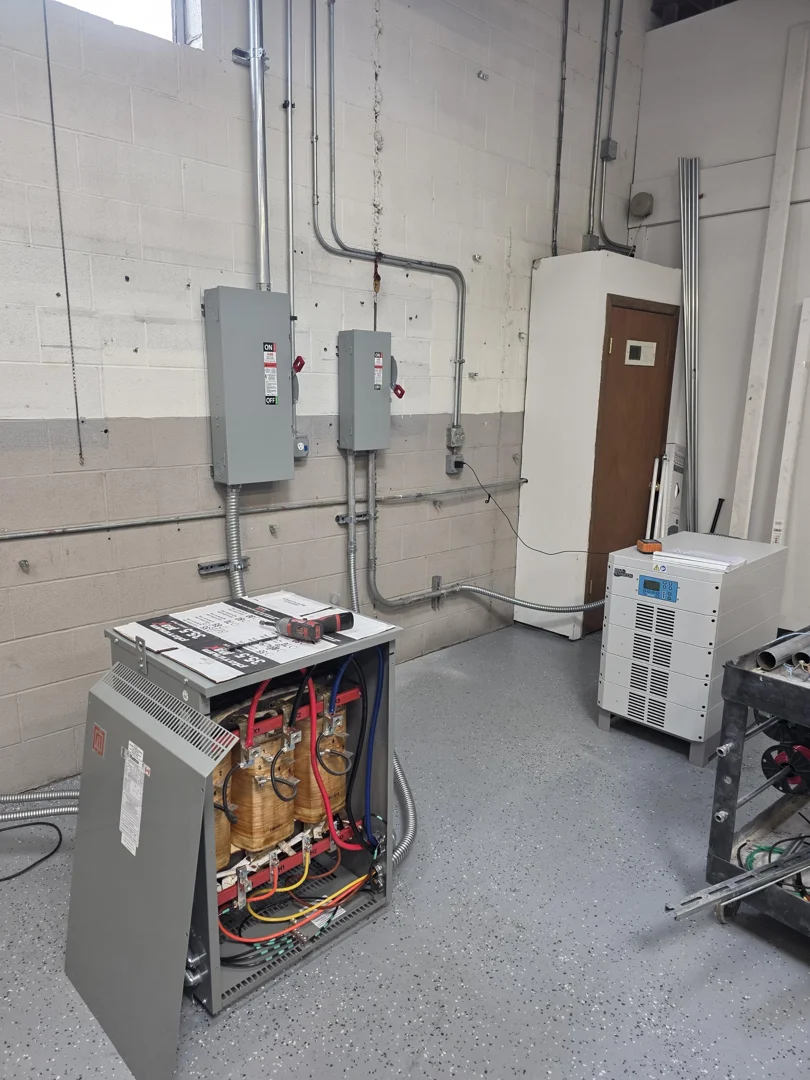
- Main Service Panels: Heavy-duty switchgear upgrades and electrical distribution panels capable of handling modern high-draw machinery.
- Precision Diagnostics: Advanced thermal imaging and circuit troubleshooting to pinpoint harmonic distortion, ground faults, and phase imbalances.
- Automated Controls: High-sensitivity motion sensors and daylight harvesting systems that lower energy use without sacrificing safety.
For a deeper technical dive into raceways and code-compliant wire gauges, review The Complete Guide to Commercial Wiring.
Large-Scale Industrial Work, Prefabrication, and BIM Coordination
Industrial manufacturing plants and large-scale commercial developments require specialized project management methods. Modern contractors utilize Building Information Modeling (BIM) and Virtual Design and Construction (VDC) to generate millimeter-accurate 3D models of all electrical runs before construction begins.
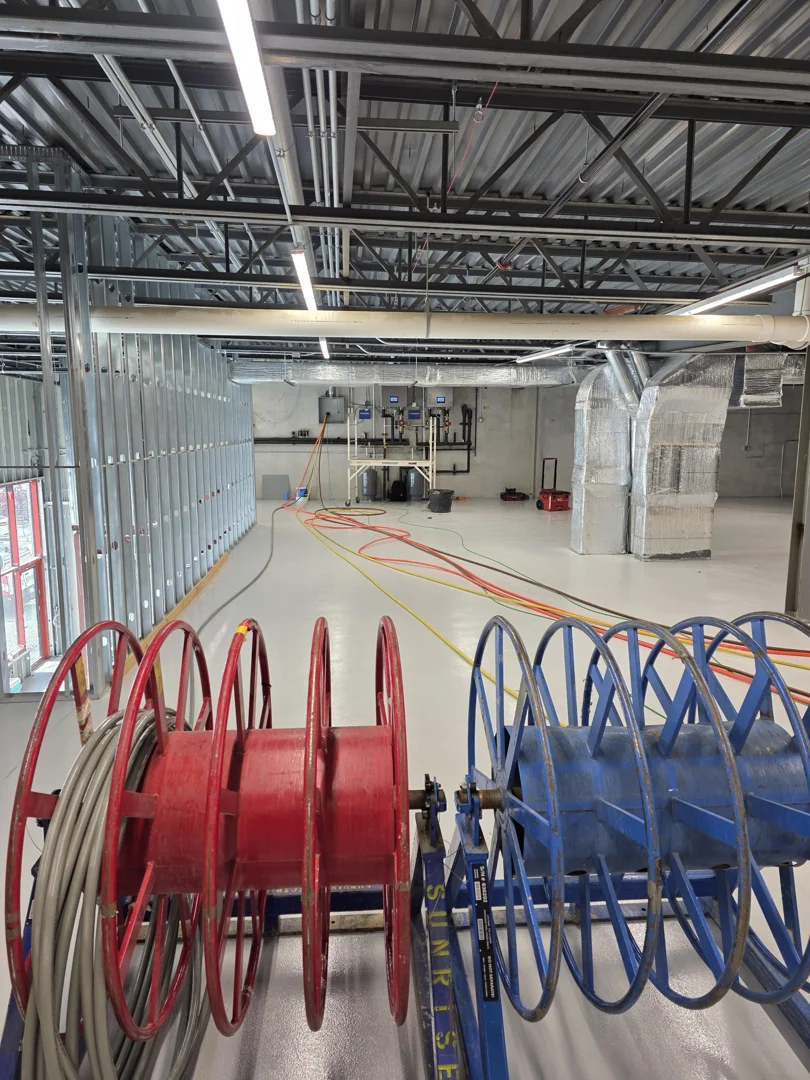
By pairing BIM coordination with off-site prefabrication, contractors assemble conduit bends, junction boxes, and complex panel configurations in a controlled shop environment. This method slashes on-site installation schedules by up to 30%, reduces material waste, and prevents field collisions with HVAC ductwork and structural plumbing.
Energy Efficiency Upgrades and Sustainable Power Solutions
Rising utility rates and modern sustainability mandates mean managing energy consumption is essential for healthy operating margins. By conducting thorough facility energy audits, commercial electrical contractors identify hidden power drains and design cost-effective efficiency roadmaps. Implementing targeted commercial electric solutions and incentives delivers immediate reductions in monthly overhead while lowering your carbon footprint.
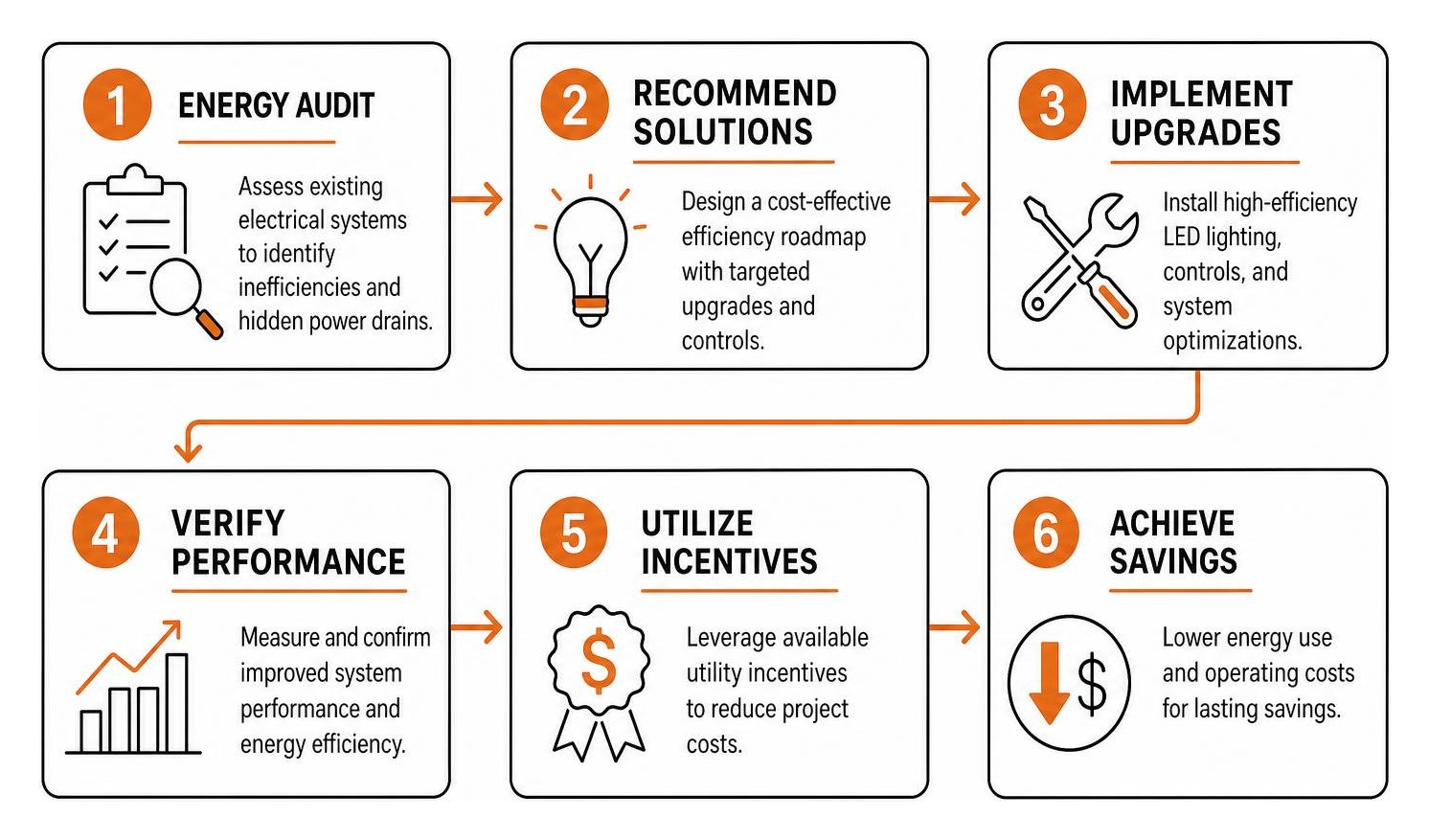
Commercial Lighting Retrofits, Controls, and Utility Incentives
Lighting represents one of the largest controllable utility expenses in commercial properties. Upgrading outdated fluorescent tubes and metal-halide lamps to modern solid-state LED systems dramatically reduces electricity draw while enhancing workplace illumination.
- Warehouse and Industrial Bays: High-bay LED luminaires improve worker visibility and reduce ambient heat generation.
- Smart Occupancy Controls: Networked motion sensors and automated dimming controls ensure fixtures operate only when spaces are occupied.
- Exterior and Safety: High-output commercial parking lot lighting enhances security while cutting outdoor energy use.
- Utility Rebates: Upgrading your fixtures allows you to capitalize on substantial utility rebate programs that offset upfront installation expenses.
Explore strategic commercial lighting upgrades and retrofits to see how comprehensive commercial lighting services deliver measurable returns on investment.
EV Charging Station Installations and Infrastructure Upgrades
The rapid electrification of vehicle fleets and increasing employee demand require commercial facilities to install electric vehicle supply equipment (EVSE). Installing Level 2 and Level 3 DC fast chargers requires more than just mounting hardware to a wall; it requires a complete infrastructure assessment.
A qualified contractor performs detailed load calculations to determine if your current main service can support the surge in power demand. When necessary, we install dedicated subpanels, heavy-gauge feeder conduits, and intelligent load-management systems. These smart systems dynamically balance power distribution across multiple charging stations, preventing expensive utility peak-demand surcharges.
Emergency Electrical Response and Critical Backup Power
Unplanned electrical outages directly threaten profitability, inventory integrity, and sensitive digital assets. Developing a comprehensive business continuity plan ensures your operations weather grid instabilities without interruption. Understanding why your facility needs a proactive electrical repair plan is the first step toward long-term resilience.
24/7 Rapid Diagnostics and Emergency Power Restoration
Electrical emergencies rarely occur at convenient times. When a main distribution panel fails or a critical transformer trips after hours, you need an emergency response team that answers the call around the clock.
Elite emergency contractors deploy fully equipped mobile service vehicles stocked with diagnostic instruments, specialized breakers, and heavy-duty cabling to stabilize the site immediately. Learn more about what commercial electrician emergency response teams do on-site during critical restoration dispatches.
Commercial Generators, UPS Systems, and Data Protection
To eliminate downtime during grid disturbances, commercial facilities rely on a multi-tiered backup power strategy:
- Uninterruptible Power Supply (UPS): Battery banks provide instantaneous, clean power the millisecond utility voltage drops, safeguarding data centers from corruption and server crashes.
- Automatic Transfer Switches (ATS): Intelligent switches isolate the building from the utility grid and signal the standby generator to start within seconds.
- Industrial Standby Generators: Natural gas or diesel generator sets deliver continuous electrical power to critical circuits for days if necessary.
- Load Bank Testing: Regular diagnostic load bank testing ensures the generator can carry its rated electrical capacity under real-world emergency conditions.
The Commercial Electrical Bidding and Selection Process
Procuring electrical contracting services requires a clear, structured bidding approach. Navigating the process effectively ensures you receive accurate pricing, realistic schedules, and transparent contractual terms. Following best practices for navigating top electrical contractor services helps you avoid surprise change orders and construction delays.
Preparing Detailed Project Scopes and Managing Bids
To receive truly competitive bids, you must supply contractors with comprehensive project documentation, including architectural plans, single-line electrical diagrams, material specifications, and firm completion deadlines.
| Evaluation Criteria | High-Tier Commercial Contractor | Low-Bid Contractor | Risk Impact |
|---|---|---|---|
| Licensing & Permits | Master Electrician on staff; pulls all city permits | Unlicensed or subcontracted permits | Fines, failed inspections, stop-work orders |
| Safety Compliance | Documented OSHA training; comprehensive EMR tracking | Minimal safety protocols | Workplace injuries, site liability, shutdowns |
| Design Capabilities | BIM/VDC modeling; off-site prefabrication | Field-fit routing on-site | Spatial clashes, schedule delays, higher labor costs |
| Warranty Coverage | 1-Year comprehensive labor warranty + manufacturer | 30-day or no written labor warranty | High out-of-pocket costs for early system repairs |
| Emergency Response | 24/7 dedicated dispatch with stocked trucks | Business hours only; slow dispatch | Extended downtime, data loss, lost revenue |
How to Vet and Select Local Commercial Electrical Contractors
When reviewing bids, do not make price your sole deciding factor. Low bids often mask inadequate insurance coverage, missing permit fees, or low-grade materials. Vet each contractor by requesting references from similar local projects, reviewing their commercial portfolio, and verifying their active standing with local licensing boards. For facilities operating across multiple municipalities, partnering with teams capable of delivering cohesive regional commercial electrical services ensures uniform quality and code adherence across all your properties.
Frequently Asked Questions About Commercial Electrical Work
How do commercial electrical requirements differ from residential standards?
Commercial facilities typically utilize three-phase electrical systems (such as 120/208V or 277/480V) to efficiently power heavy machinery and large lighting arrays, whereas residential properties primarily rely on single-phase 120/240V systems. Commercial installations also mandate heavy-gauge wiring run entirely through rigid metal conduit (EMT or RMC) for mechanical protection, strict fire-rated assemblies, and significantly higher fault-current interruption ratings to handle intense industrial loads safely.
What backup power setup is necessary to protect critical business data?
Protecting sensitive IT systems requires a coordinated two-tier backup architecture. An on-line, double-conversion Uninterruptible Power Supply (UPS) system provides immediate battery power and transient surge suppression, bridging the critical 10-to-30-second gap before an industrial standby generator starts and engages the Automatic Transfer Switch (ATS).
How quickly can a commercial electrical contractor respond to an emergency?
A dedicated commercial contractor with 24/7 emergency dispatch services will typically deploy an emergency team within two to four hours of receiving a critical outage call. Technicians arrive in fully stocked service vehicles equipped with advanced thermal imaging tools, circuit analyzers, and replacement components to diagnose and isolate faults on the spot.
Conclusion
Choosing the right electrical trade partner is an investment in the long-term safety, efficiency, and operational resilience of your facility. From complex high-voltage installations and BIM-coordinated buildouts to energy-saving LED retrofits and dependable backup power, your building’s electrical backbone requires skilled hands.
At Energy Co., our team of licensed master electricians and certified technicians brings deep local expertise in Chicagoland’s unique building codes and legacy architectures. Whether you need planned system upgrades or rapid emergency repairs, we are committed to delivering safe, code-compliant, and energy-efficient results backed by our satisfaction guarantee. Contact our team today for full-service commercial electrical services tailored to your facility’s unique operational needs.