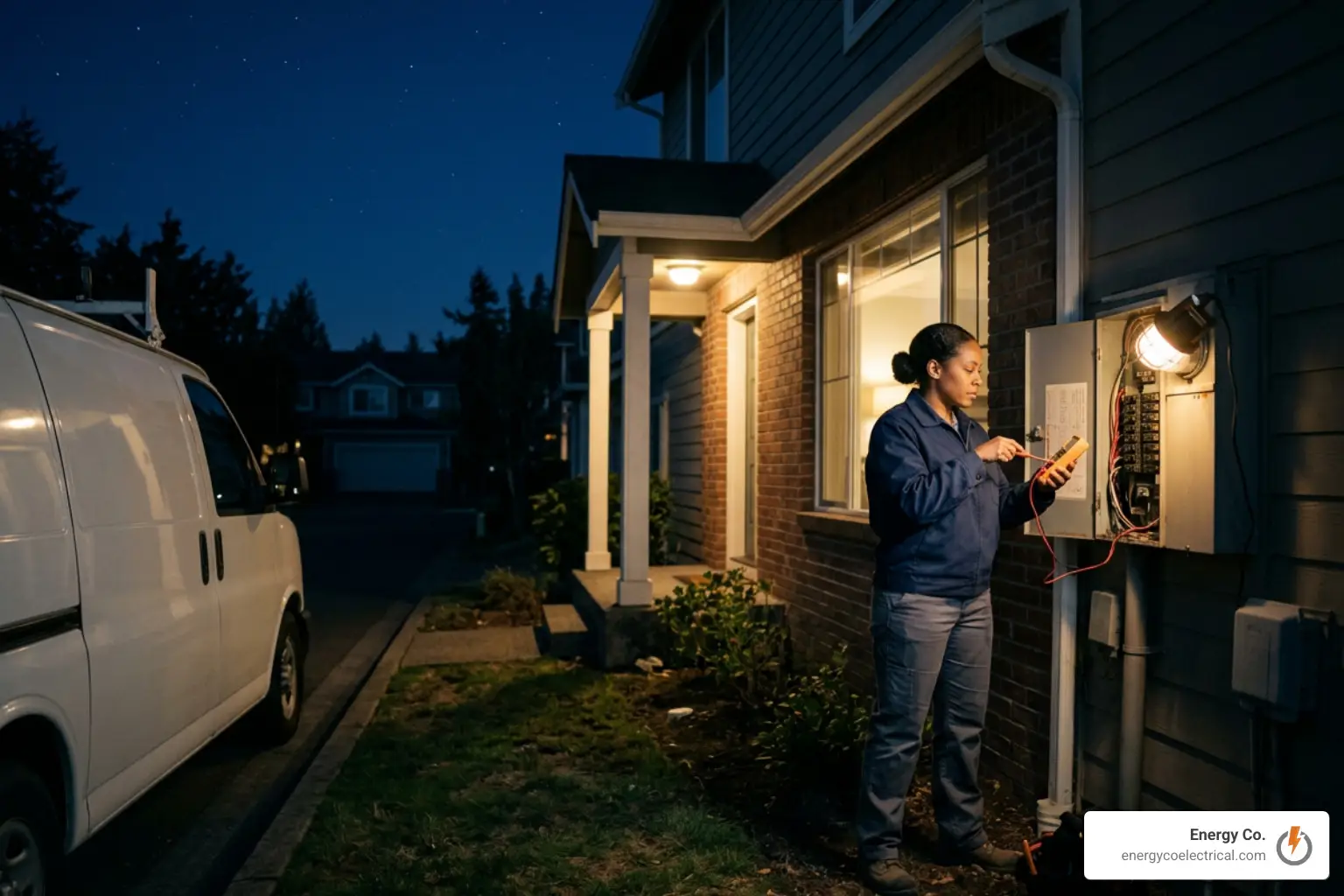
When the Lights Go Out: Why a 24 Hour Electrician Near Me Matters Most
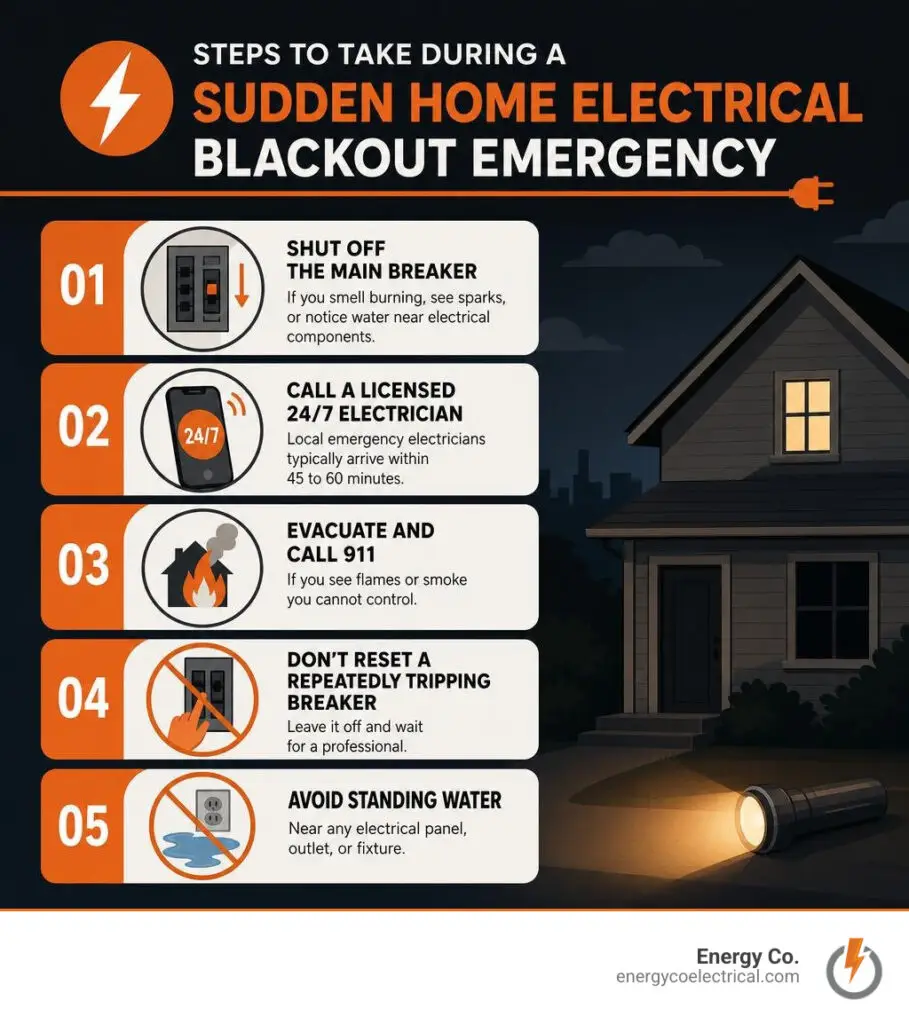
If you need a 24 hour electrician near me right now, here’s what to do immediately:
- Shut off your main breaker if you smell burning, see sparks, or notice water near electrical components.
- Call a licensed 24/7 electrician — local emergency electricians typically arrive within 45 to 60 minutes.
- Evacuate and call 911 if you see flames or smoke you cannot control.
- Don’t reset a repeatedly tripping breaker — leave it off and wait for a professional.
- Avoid standing water near any electrical panel, outlet, or fixture.
Electrical emergencies don’t care what time it is. It could be 2 AM on a Sunday, the middle of a Chicago winter storm, or the night before a major event. One moment everything is fine — the next, you’re standing in the dark with a burning smell coming from the wall and no idea what to do next.
For Chicago homeowners and business owners, this is especially real. Older homes and commercial buildings across the city often carry aging wiring, outdated panels, and infrastructure that simply wasn’t built for today’s electrical demands. A minor issue can escalate fast.
The good news? A qualified emergency electrician can usually be at your door within the hour — if you know how to find the right one quickly.
I’m Michał Napieralski, licensed electrician and founder of Energy Co., specializing in residential and commercial electrical services across the Chicago suburbs, including emergency panel repairs, circuit breaker replacement, and urgent wiring fixes — exactly the situations where a reliable 24 hour electrician near me makes all the difference. In this guide, I’ll walk you through the warning signs, the safety steps, and how to find the right help fast.
24 hour electrician near me further reading:
5 Clear Signs You Need a 24 Hour Electrician Near Me Immediately
It is easy to ignore small electrical quirks. A flickering light in the hallway or an outlet that hums slightly might seem like minor annoyances you can deal with next month. However, in our years of servicing homes from Cicero to Mount Prospect, we have seen how quickly these “quirks” turn into full-blown hazards.
Knowing the difference between a minor inconvenience and a true emergency can save your property—and your life. If you notice any of the following five warning signs, do not wait until Monday morning. You need to call a professional for Emergency Electrical Services immediately.
1. Burning Smells and Visible Smoke
If you smell burning plastic, vinyl, or a fishy, chemical odor near an outlet or switch, your electrical system is actively melting. This smell is the sound of wire insulation failing under intense heat.
When currents overload a wire or run through a loose connection, the resistance generates extreme heat. This melts the plastic protective sheath around the wires, exposing bare copper and creating a severe fire hazard. If you see actual smoke or a faint haze rising from an outlet, the situation is critical.
If this happens, do not waste time trying to figure out which appliance is causing it. Head straight to your panel, shut off the power, and read our guide on What to Do When Your Power Goes Bump in the Night to keep your family safe while help is on the way.
2. Loud Buzzing or Humming from the Breaker Box
Your electrical panel should operate in near-silence. A faint, barely audible hum when you stand right next to it can be normal, but a loud buzzing, sizzling, or clicking sound is a major red flag.
Loud buzzing usually points to electrical arcing. Arcing occurs when electricity jumps across a gap between loose connections or damaged terminals. This jump creates intense heat—often exceeding several thousand degrees—which can rapidly melt components inside your panel and trigger a devastating electrical fire.
A buzzing panel can also mean a circuit breaker is failing to trip despite a massive overload. Instead of cutting the power to protect your home, the breaker sits there vibrating and overheating. This is a severe panel failure that requires immediate professional intervention.
3. Sparking Outlets and Warm Switch Plates
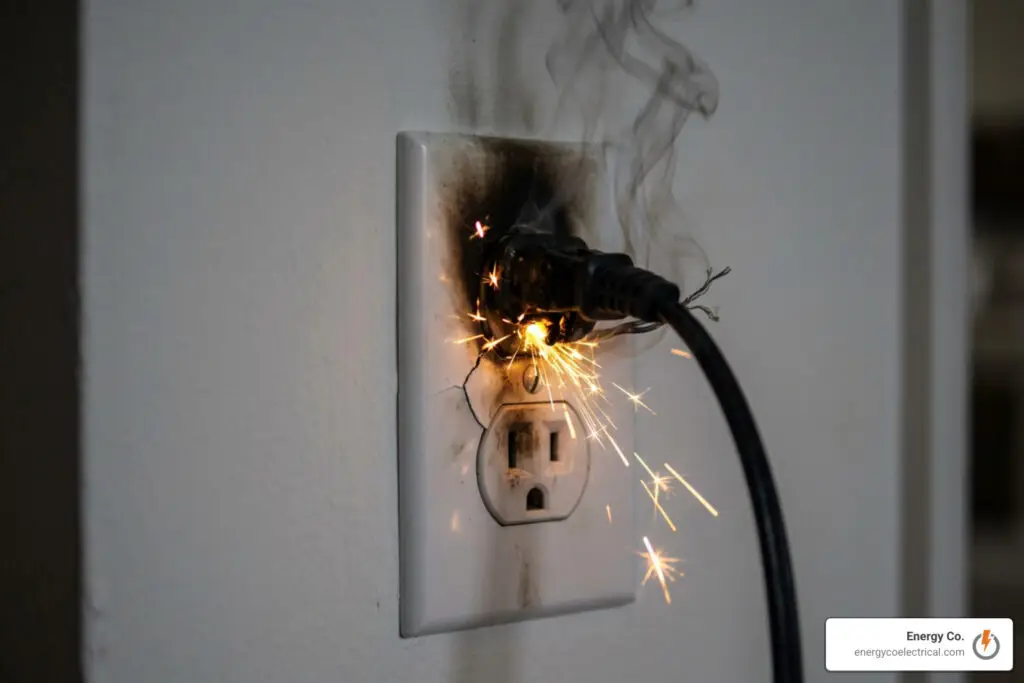
Have you ever plugged in a lamp and seen a tiny, momentary blue spark? While a tiny spark can occasionally happen when a device first draws power, bright yellow sparks, sparks that linger, or sparks that fly out of the outlet are entirely different.
Frequent or large sparks indicate:
- Loose wire connections behind the drywall.
- Cracked or degraded outlet receptacles.
- Short circuits where hot and neutral wires touch directly.
Similarly, wall switch plates and outlets should never feel warm or hot to the touch. If a switch plate feels warm, it means electricity is struggling to pass through a high-resistance connection behind the plate, transforming electrical energy into dangerous heat. This is a clear shock and fire risk that needs a licensed pro to diagnose and repair.
4. Repeatedly Tripping Circuit Breakers
A circuit breaker is a safety device designed to cut off power when a circuit carries more electrical current than it can safely handle. If a breaker trips once, you might have overloaded it by running a space heater and a hair dryer at the same time. You unplug one, reset the breaker, and go about your day.
But if a circuit breaker trips repeatedly, or if it trips again the second you try to reset it, do not force it back on.
A breaker that refuses to stay reset is warning you of an active, dangerous fault. It could be a short circuit, an overloaded circuit, or a failing breaker that has reached the end of its operational life. Forcing a tripped breaker to stay in the “on” position bypasses your home’s primary safety mechanism, which can quickly lead to overheated wires and a house fire.
5. Localized Power Outage While Neighbors Have Lights
When the power goes out, the first thing most of us do is look out the window. If the entire block is pitch black, you are likely dealing with a standard utility grid outage. You can sit back, light a candle, and wait for ComEd to resolve the issue.
However, if your house is completely dark while your neighbors’ homes are glowing brightly, the problem is localized to your property. This means the issue is on your side of the electrical meter.
A localized outage can be caused by:
- A blown main fuse or a failed main breaker.
- A damaged electrical mast or service entrance cable (often caused by fallen tree branches during Chicago storms).
- Extreme weather damage that has physically disconnected your home from the utility line.
Resolving this requires coordinated efforts between private emergency electricians and the local utility company to restore your power safely.
What to Do While Waiting for an Emergency Electrician to Arrive
Once you have identified an emergency and called a 24 hour electrician near me, the clock starts ticking. While our team at Energy Co. works to get a technician to your door as quickly as possible, what you do in those crucial minutes before we arrive can make a massive difference in preventing property damage and ensuring your family’s safety.
Before taking action, review the 5 Common Emergency Electrician Mistakes You Cant Afford to Make to ensure you do not inadvertently make a dangerous situation worse.
Here is your step-by-step safety protocol to follow while waiting for professional help.
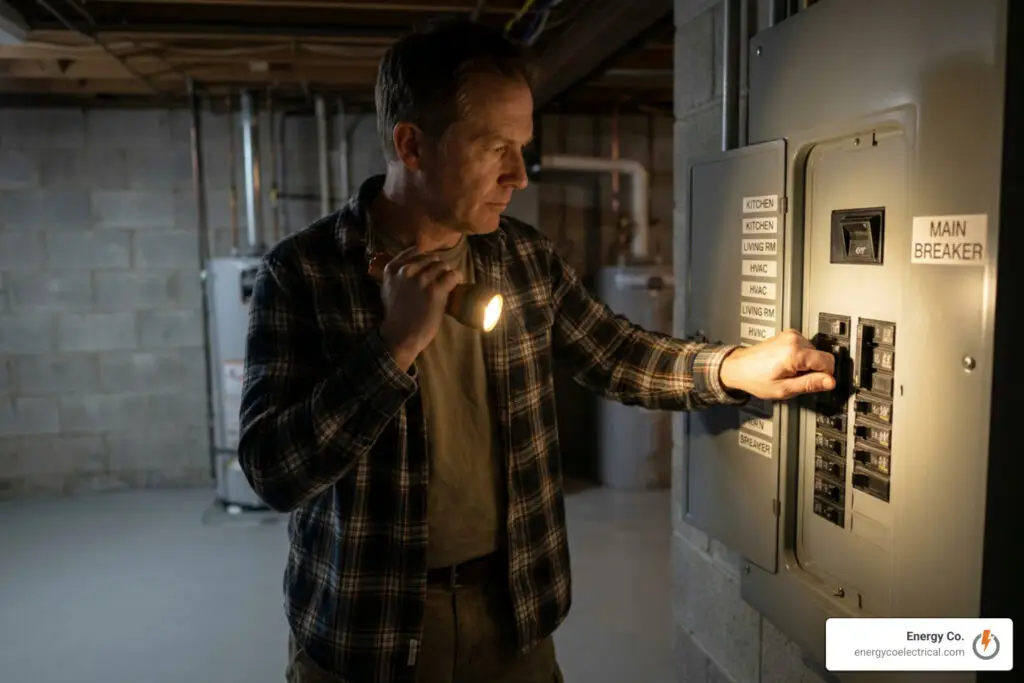
Step 1: Safely Shut Off the Main Power Supply
If you smell burning, see sparks, or suspect a serious panel issue, your first priority is to cut off the source of electricity. Locate your main breaker panel. If you can safely reach it without stepping in water or touching wet surfaces, open the door and flip the large main circuit breaker at the very top of the panel to the “OFF” position.
This simple action cuts off all electrical current entering your home’s branch circuits, instantly stopping the flow of power that is feeding the short circuit or melting your wires. If the panel is buzzing loudly, sparking, or located in a wet area, do not touch it. In that case, skip this step and focus on evacuating.
Step 2: Unplug Sensitive Electronics
If you have experienced a partial power loss or a sudden voltage spike, your appliances and electronics are at risk. Power surges can send high-voltage currents through your home’s wiring, frying the delicate circuit boards inside your computers, smart TVs, refrigerators, and chargers.
If it is safe to do so, walk through your home and unplug your most valuable electronics. This physical disconnect is the only absolute protection against devastating voltage spikes. Once the emergency electrician resolves the underlying fault and verifies the system’s stability, it will be safe to plug them back in.
Step 3: Avoid Standing Water and Metal Surfaces
Water is an excellent conductor of electricity. If your basement has flooded, a pipe has burst near your panel, or rainwater is leaking into your home, you must treat all standing water as potentially energized.
Never step into a flooded basement to turn off a breaker panel. Do not touch metal appliances, pipes, or structural metal studs if there is water nearby. A single path of current through standing water can deliver a lethal electrical shock. If water is encroaching on your electrical system and you cannot safely shut off the power, evacuate the property immediately.
Step 4: Evacuate and Call 911 if Fire is Present
If you see active flames, heavy smoke, or hear popping sounds behind your walls, do not attempt to handle the situation yourself. Electrical fires spread incredibly fast behind drywall, fueled by wooden studs and paper-backed insulation.
Gather your family and pets, evacuate the building immediately, and call 911 from a safe distance.
- Never use water on an electrical fire. Water conducts electricity and can cause severe shock or explode the fire further.
- Only use a Class C fire extinguisher if the fire is extremely small, localized to an appliance, and you have a clear escape route behind you. Otherwise, leave it to the professional fire department.
How to Choose the Right Emergency Electrical Contractor
When your lights are out and your home feels unsafe, it is easy to panic and hire the very first company that answers the phone. Unfortunately, some contractors take advantage of this urgency by charging exorbitant fees, sending unqualified technicians, or cutting corners on critical safety codes.
To protect your home and your wallet, it helps to understand how emergency electrical services are typically priced compared to standard, scheduled maintenance.
| Service Type | Average Cost Range (Chicagoland) | Key Features |
|---|---|---|
| Standard Scheduled Service | $75 – $170 per hour | Scheduled in advance; ideal for upgrades, installations, and non-urgent repairs. |
| Emergency Service Call Fee | $150 – $400 (flat dispatch fee) | Covers immediate dispatch, travel, and initial diagnostic troubleshooting. |
| After-Hours / Holiday Rate | 1.5x to 2x standard hourly rate | Applied to actual repair labor performed during nights, weekends, or holidays. |
At Energy Co., we believe in transparent, flat-rate pricing. We provide clear, upfront quotes before any repair work begins, ensuring you never face surprise trip charges or hidden fees when the job is done.
Vetting a Licensed 24 Hour Electrician Near Me
Before you let any technician touch your electrical panel, you must verify their credentials. Electrical work is highly regulated for a reason—faulty installations can lead to electrocution or house fires years down the road.
When vetting a contractor, check for these critical qualifications:
- Active State and Municipal Licensing: In Illinois and the Chicagoland area, professional electricians must be licensed. A valid license proves the technician has completed thousands of hours of supervised field training, passed rigorous safety exams, and stays up-to-date with the National Electrical Code (NEC) and local building standards.
- Comprehensive Liability Insurance: Never hire an uninsured contractor. A reputable company will carry substantial liability insurance and workers’ compensation coverage to protect your property and their workers in the rare event of an accident.
- Adherence to Modern Safety Codes: Electrical codes are updated regularly to address new technologies and safety hazards. Your electrician should be fully versed in the latest safety standards, ensuring all emergency repairs are robust and compliant.
For a deeper dive into protecting yourself during a hiring crisis, read The Ultimate Guide to Finding a Local Emergency Electrician Without Losing Your Spark.
Why You Need a Local 24 Hour Electrician Near Me in an Emergency
In an emergency, every minute counts. Hiring a national corporate franchise or a contractor dispatched from a distant county often means waiting hours for a technician to battle highway traffic.
Choosing a local, family-owned contractor based right in your community offers distinct advantages:
- Incredibly Fast Response Times: Because we live and work in the same neighborhoods you do, our trucks are already stationed nearby. Whether you need an electrician in Hoffman Estates or are looking for local electricians in Streamwood, Illinois, we can navigate local routes quickly to get to your door.
- Deep Familiarity with Local Building Codes: Chicagoland municipalities have incredibly strict electrical codes. For example, unlike many parts of the country that allow flexible Romex wiring, local codes in many Cook County suburbs require rigid metal conduit. A local expert knows these quirks inside and out, ensuring your emergency repair passes municipal inspections seamlessly.
- Community Accountability: Local businesses rely entirely on their reputation. We see our customers at the local grocery store and community events. That is why we are committed to honest service, fair pricing, and doing the job right the first time.
If you are located in the Northwest Suburbs, you can check local directories and reviews to see what your neighbors say about nearby pros:
- Find highly rated help via THE BEST 10 Electricians in SCHAUMBURG, IL.
- See trusted local options through THE BEST 10 ELECTRICIANS NEAR ELK GROVE ….
For more tips on what to look for in a local expert, check out our guide on Finding a Reliable Electrician Near Me What You Need to Know.
Frequently Asked Questions About Emergency Electrical Repairs
Can a 24-hour electrician handle both residential and commercial emergencies?
Yes. Professional emergency electrical contractors are equipped to handle both residential systems and complex commercial networks.
While residential emergencies often involve tripped breakers, failed outlets, or storm damage to a single-family home, commercial emergencies can threaten business continuity, inventory, and safety compliance. Commercial and industrial troubleshooting requires specialized knowledge of high-voltage distribution, commercial kitchens, three-phase power systems, and facility backup generators.
At Energy Co., our licensed commercial electricians are trained to isolate commercial faults quickly, minimizing business downtime and ensuring your facility meets all local safety codes.
How quickly can I expect an emergency electrician to respond?
Response times depend heavily on your location, current weather conditions, and call volume, but a local emergency electrician typically aims to arrive at your property within 45 to 60 minutes of your call.
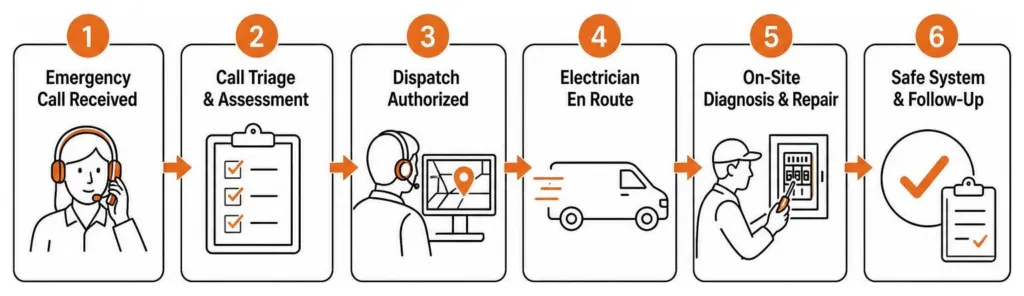
Because electrical emergencies present active safety hazards, local dispatchers prioritize these calls over routine installations. To ensure the fastest possible service, always call a contractor with a physical dispatch office located directly in your immediate service area.
How can I prevent future electrical emergencies in my home?
The single best way to handle an electrical emergency is to prevent it from happening in the first place. You can dramatically reduce your risk of unexpected system failures by taking a proactive approach to your home’s electrical health:
- Schedule Annual Inspections: A professional safety inspection can identify loose connections, aging wire insulation, and overloaded circuits before they escalate into dangerous hazards.
- Upgrade Outdated Electrical Panels: Standard residential electrical panels typically last 25 to 40 years. If your home still features an outdated panel, or a dangerous brand like Federal Pacific or Zinsco, upgrading to a modern 200-amp panel is a crucial safety investment.
- Install GFCI and AFCI Protection: Ensure Ground Fault Circuit Interrupters (GFCIs) are installed in all moisture-prone areas like kitchens, bathrooms, and basements to protect against shocks. Arc Fault Circuit Interrupters (AFCIs) should be installed in your panel to detect dangerous arcing behind your walls.
- Invest in Whole-Home Surge Protection: Installing a surge protective device directly at your main panel shields your entire home’s electrical system, appliances, and sensitive electronics from powerful voltage spikes caused by lightning or utility grid fluctuations.
Learn more about keeping your home’s systems running smoothly with our Expert Electrical Repair Service in Chicago Fast Reliable Solutions.
Conclusion
When things go dark, you do not have to navigate the stress alone. An electrical emergency can be frightening, but acting quickly, prioritizing safety, and knowing who to call can protect your family and keep your home secure.
At Energy Co., we have built our reputation across Chicago and the Northwest Suburbs—from Schaumburg and Palatine to Cicero and Roselle—by providing fast, professional, and honest electrical solutions. Whether you are dealing with a sparking outlet, a buzzing panel, or a sudden power outage, our team of fully licensed, insured pros is ready to dispatch to your door 24/7.
We stand behind every job we do with a comprehensive satisfaction guarantee, ensuring your repairs are completed safely, correctly, and fully compliant with all local building codes.
Don’t stay in the dark. If you suspect an electrical emergency, Contact Us immediately to get a local expert on the way, or Explore our comprehensive electrical services to keep your home’s power safe, reliable, and strong.