Last updated:
Electric Service Upgrade: What It Costs and What to Expect
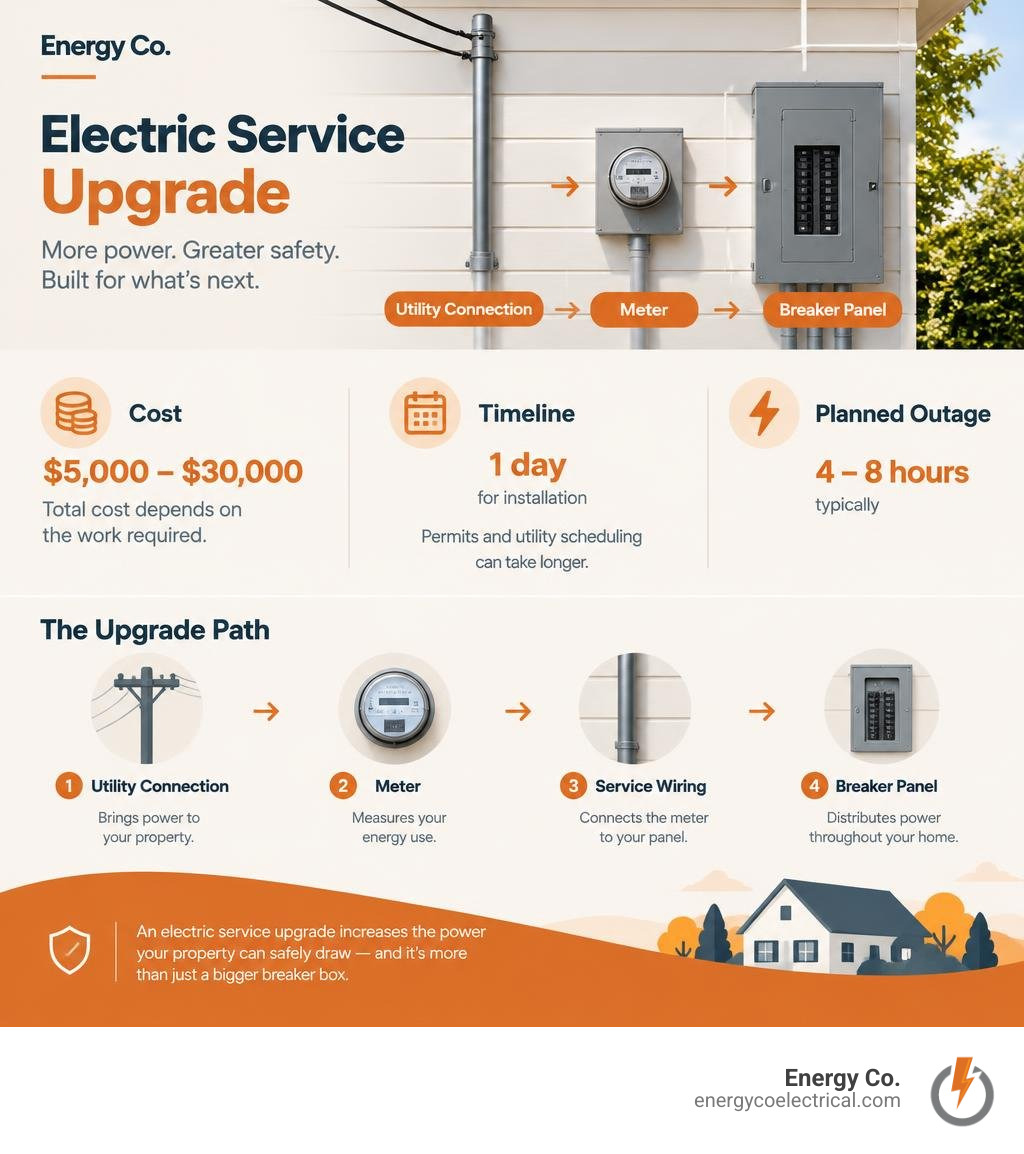
An electric service upgrade increases the power your property can safely draw. It often involves replacing the meter socket, service wiring, and main panel—not just the breaker box. A full upgrade can cost $5,000 to $30,000, depending on the work required. The installation may take one day, but permits and utility scheduling can take longer. Expect a planned power outage, often four to eight hours.
If you own an older Chicago home or building, don’t assume you need a bigger service because the panel is full or you want to add an EV charger. A licensed electrician can check your current capacity and planned loads first. I’m Michał Napieralski, and I’ll walk you through the costs, steps, and decisions that shape your project in 2026 and beyond.
Service Upgrade vs. Panel Upgrade: Core Differences and Indicators
Homeowners frequently ask us to replace their breaker box when what they actually need is an electric service upgrade. While these terms sound interchangeable, they describe very different scopes of work.
A basic panel upgrade replaces the indoor distribution enclosure—the metal box with the switches—often maintaining the exact same electrical capacity (such as swapping an obsolete 100-amp split-bus box for a modern 100-amp breaker box). A full service upgrade, by contrast, rebuilds the entire electrical highway connecting your home to the municipal power grid, increasing your total ampacity from, say, 100 amps to 200 or 400 amps.
| Component / Feature | Panel Replacement Only | Full Electric Service Upgrade |
|---|---|---|
| Primary Goal | Replace obsolete/damaged box; add physical circuit spaces | Increase total volume of power drawn from the utility grid |
| Typical Cost Range | $1,000 to $3,000 | $5,000 to $30,000 |
| Components Replaced | Interior breaker box, branch circuit breakers | Service drop/lateral, weatherhead, riser conduit, meter socket, panel, grounding electrode system |
| Utility Coordination | Rarely required (unless main power disconnect is locked) | Mandatory (utility de-energization, meter pull, grid capacity verification) |
| Typical Outage Window | 2 to 4 hours | 4 to 8 hours on installation day |
| Amperage Increase | No (retains existing 60A, 100A, or 150A limit) | Yes (typically jumps to 200A or 400A) |
Scope and Point of Demarcation
To understand why a service upgrade involves so much exterior work, you must understand the point of demarcation—the legal and physical line separating the utility company’s equipment from private property.
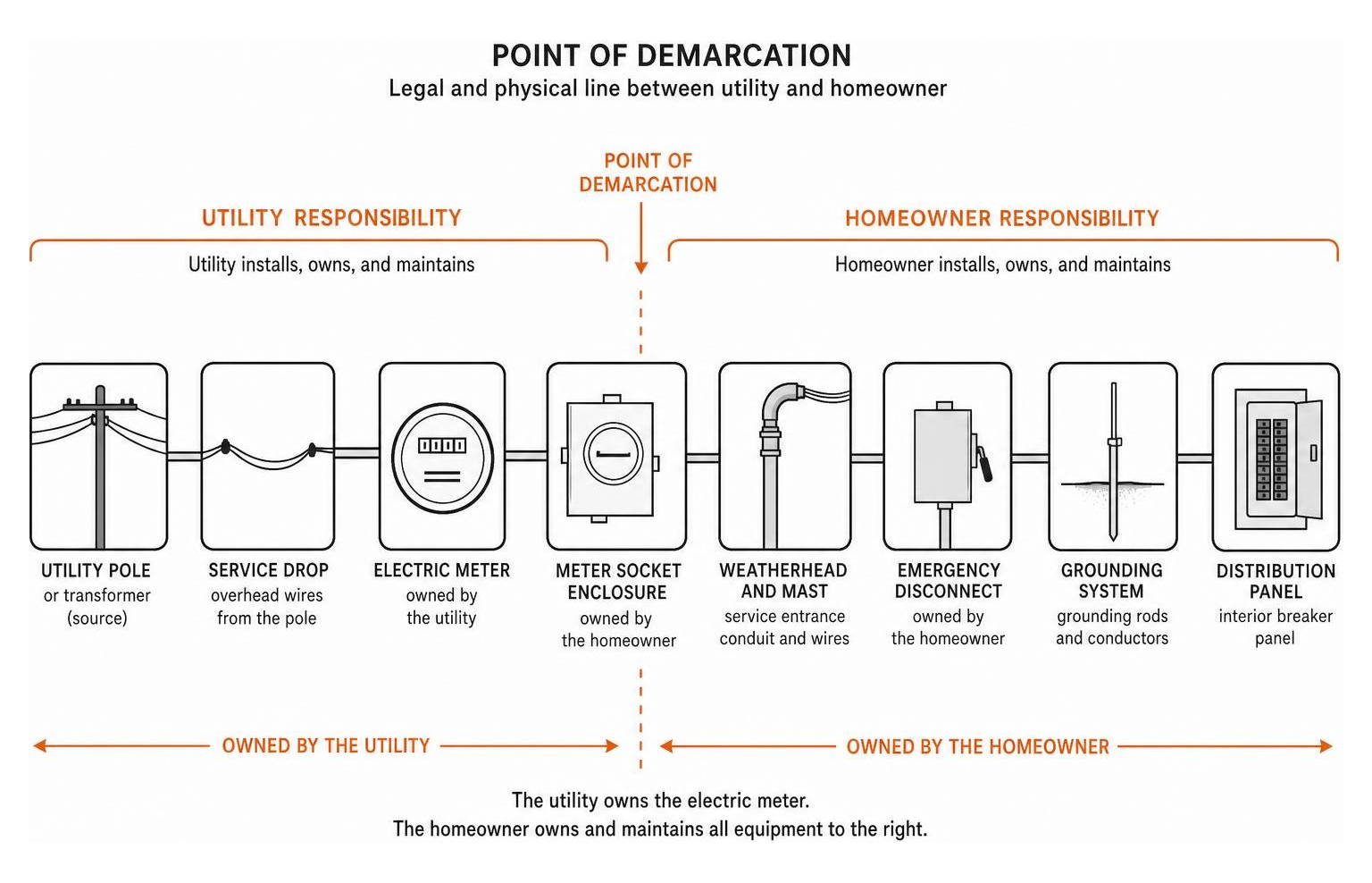
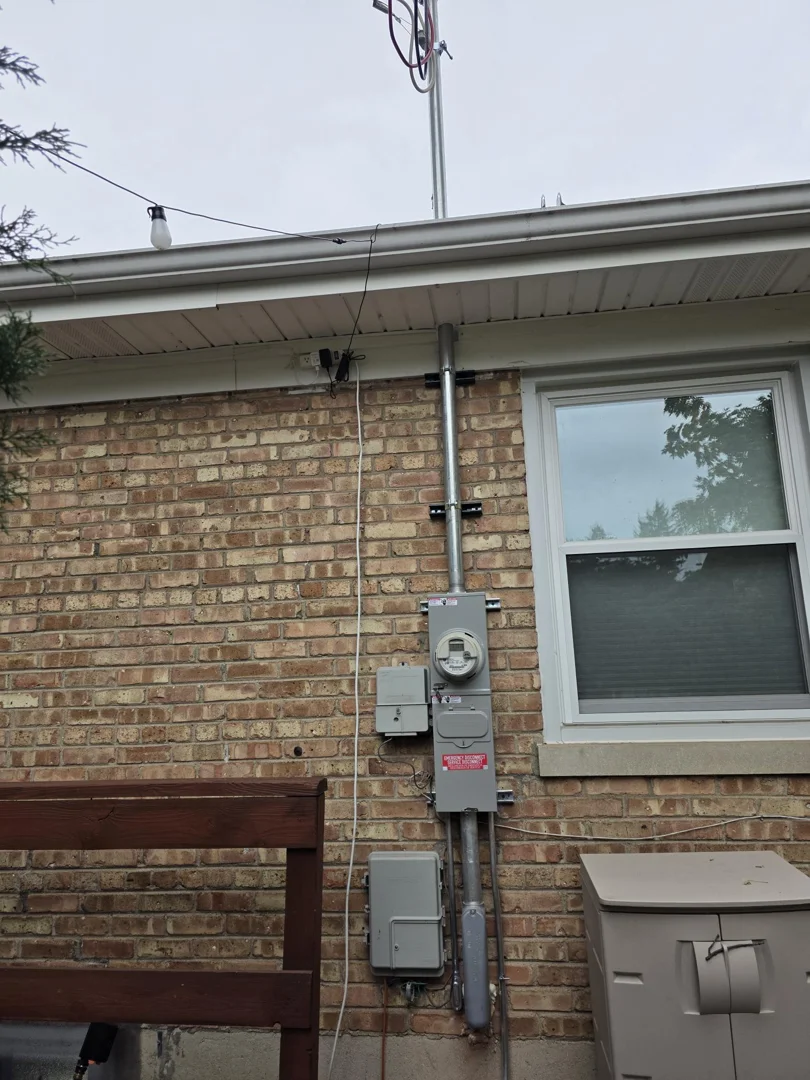
The utility company supplies overhead service drop wires from the pole or underground service lateral lines from a pad-mounted transformer. The utility owns the physical glass electric meter. However, the homeowner owns and must maintain the weatherhead mast, the service entrance conductors inside the pipe, the exterior meter socket enclosure, the exterior emergency disconnect, the grounding rod network, and the interior distribution panel.
When you expand the size of your service “pipe” to draw more power, every single private component along that pathway must be enlarged to handle the higher electrical current safely without overheating. If you want to learn more about how these interior switches work together, read our guide on demystifying your home electric panel without getting shocked.
Signs You Need an Electric Service Upgrade
How do you know when your electrical setup has reached its absolute limit? While minor issues can sometimes be solved with targeted repairs, widespread symptoms indicate your infrastructure is straining under modern demand.
Watch for these primary indicators:
- Flickering or dimming lights whenever the central air conditioner, heat pump, or clothes dryer kicks on.
- Persistent main breaker trips during peak evening hours when multiple high-draw appliances run simultaneously.
- Physical limitations, such as owning a vintage 60-amp fuse box or a 100-amp panel with no remaining physical breaker slots.
- Major electrification additions, such as installing a Level 2 electric vehicle charger, switching from gas heating to a cold-climate heat pump, or adding an induction range and a hot tub.
- Visible heat damage, buzzing sounds, or corrosion around the meter base or interior panel enclosure.
Preventing severe system damage starts with regular inspections. Establishing an electrical panel maintenance routine to prevent dangerous overloads can help identify wear before an emergency outage strikes.
Total Electric Service Upgrade Cost and Pricing Factors
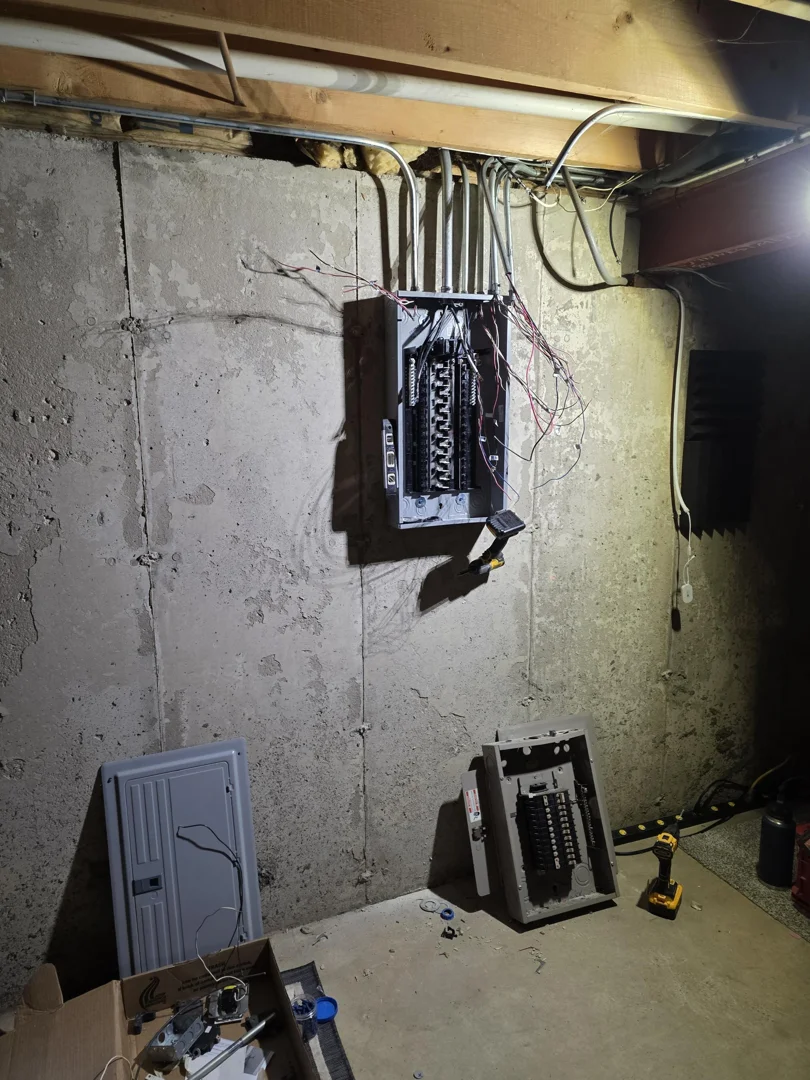
A complete electric service upgrade typically ranges from $5,000 to $30,000, with the nationwide average for a standard 100-amp to 200-amp residential service conversion settling around $7,000 to $9,500.
Why is the cost range so broad? Several variables dictate the final price tag:
- Utility Infrastructure Requirements: If your utility company must pull heavier overhead conductors or replace an overloaded pole transformer to support your new capacity, they may assess utility engineering fees ranging from $2,000 to $25,000.
- Conduit and Trenching: Underground utility lines require excavation, directional boring, and heavy PVC conduit installation, adding substantial labor compared to simple overhead mast replacements.
- Regional Labor Rates and Permitting: Stricter municipal electrical codes and union labor rates in dense urban markets like Cook County mean projects cost more than identical installations in rural regions.
- Physical Panel Relocation: Swapping equipment in the exact same spot keeps labor down, whereas moving the main panel to meet working clearance regulations increases project costs by 30% to 40%.
For a detailed analysis of material and labor expenses, check out our step-by-step guide to electric panel upgrade costs.
Cost by Amperage: 100-Amp to 200-Amp and 400-Amp
Your chosen capacity directly affects the scale and cost of the equipment:
- 100-Amp to 200-Amp Conversions ($5,000 – $9,500): This is the gold standard for modern residential properties. It provides 48,000 watts of total capacity, accommodating standard central air conditioning, an electric vehicle charger, and electric kitchen appliances without overloading the system. Review our pricing breakdown in the cost to upgrade to a 200 amp panel without getting zapped.
- 300-Amp to 400-Amp Upgrades ($9,500 – $15,000+): Homes exceeding 3,500 square feet, properties with multiple EV chargers, all-electric multi-zone heat pump systems, or large grid-tied solar arrays often require 400-amp service. This setup typically uses a 320-amp continuous (400-amp peak) meter enclosure feeding two separate 200-amp indoor breaker panels.
Pre-1960s Homes, Knob-and-Tube, and Code Updates
In older properties throughout Chicago, Cicero, and Arlington Heights, upgrading an electrical service is rarely a standalone project. Homes built before 1960 were typically designed with modest 30-amp or 60-amp services.
When modifying the main electrical service, local building departments require the installation to meet current National Electrical Code (NEC) standards. This triggers mandatory safety upgrades:
- Outdoor Emergency Disconnects: An exterior shutoff switch at the meter socket allows first responders to cut utility power without entering the structure.
- Whole-Home Surge Protection (Type 1 or Type 2 SPD): Mandatory devices installed at the main service panel protect internal electronics from grid spikes.
- Grounding and Bonding Modernization: Installing two copper grounding rods spaced at least six feet apart, along with bonding to incoming metallic water lines and gas pipes.
- Hazardous Wiring Remediation: If an upgrade reveals ungrounded branch circuits, active knob-and-tube wiring, or degraded cloth insulation, local codes often require targeted or whole house rewiring, which can add $10,000 to $30,000 to a whole-home renovation.
Rebates and Tax Incentives
Federal and local energy efficiency programs can significantly offset the upfront investment:
- Inflation Reduction Act (Energy Efficient Home Improvement Credit – Section 25C): Homeowners can claim a federal tax credit of up to 30% of the project cost (capped at $600) for panel upgrades installed in conjunction with qualified heat pumps, heat pump water heaters, or biomass stoves.
- Utility Rebate Programs: Many local electric utilities provide direct customer rebates ranging from $500 to $1,500 for qualifying service entrance and electric vehicle readiness upgrades.
The Step-by-Step Process: Timeline and Utility Coordination
Completing an electric service upgrade requires close coordination between your electrical contractor, the municipal building department, and your utility provider.
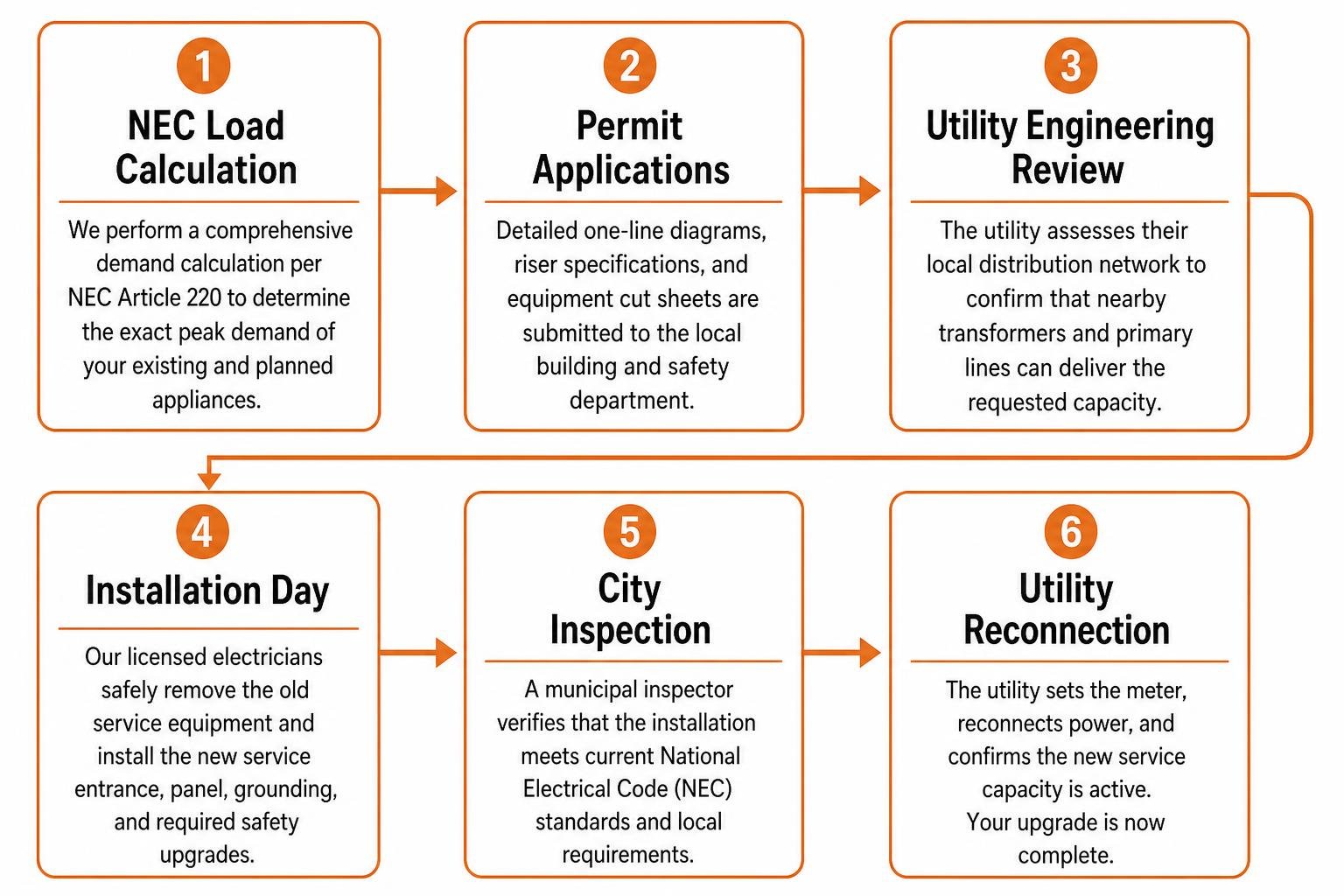
Step-by-Step Electric Service Upgrade Process
- NEC Load Calculation: We perform a comprehensive demand calculation per NEC Article 220 to determine the exact peak demand of your existing and planned appliances.
- Permit Applications: Detailed one-line diagrams, riser specifications, and equipment cut sheets are submitted to the local building and safety department.
- Utility Engineering Review: The utility assesses their local distribution network to confirm that nearby transformers and primary lines can deliver the requested capacity.
- Demolition and Rough-in Installation: On installation day, our crew removes the old service entrance conductors, mounts the new meter base, installs heavy-gauge copper wiring, sets the new interior panel, and bonds the grounding network. To understand how these components tie together inside your walls, see our breakdown on how residential electrical wiring explained from meter box to receptacle functions.
- Municipal Rough Inspection: A city inspector visits the site to verify conduit depths, wire gauge sizing, and grounding integrity.
- Utility Meter Reconnection & Final Inspection: With the city’s green approval tag issued, the utility reinstalls the glass meter, connects permanent service lines, and seals the meter housing.
Utility Coordination, Meter Disconnects, and Outage Expectations
Because our electricians must work on de-energized equipment, coordinating with the utility company is crucial. The utility must arrive on the morning of installation to pull the electric meter and drop the live overhead lines.
Standard residential service upgrades are designed as one-day installations, meaning power is typically disconnected around 8:00 AM and restored between 2:00 PM and 5:00 PM (an outage window of roughly 4 to 8 hours). However, the administrative phase—utility design approvals, easement verifications, and permit processing—often takes 3 to 8 weeks before work begins on-site.
When Full Service Capacity Is Unavoidable
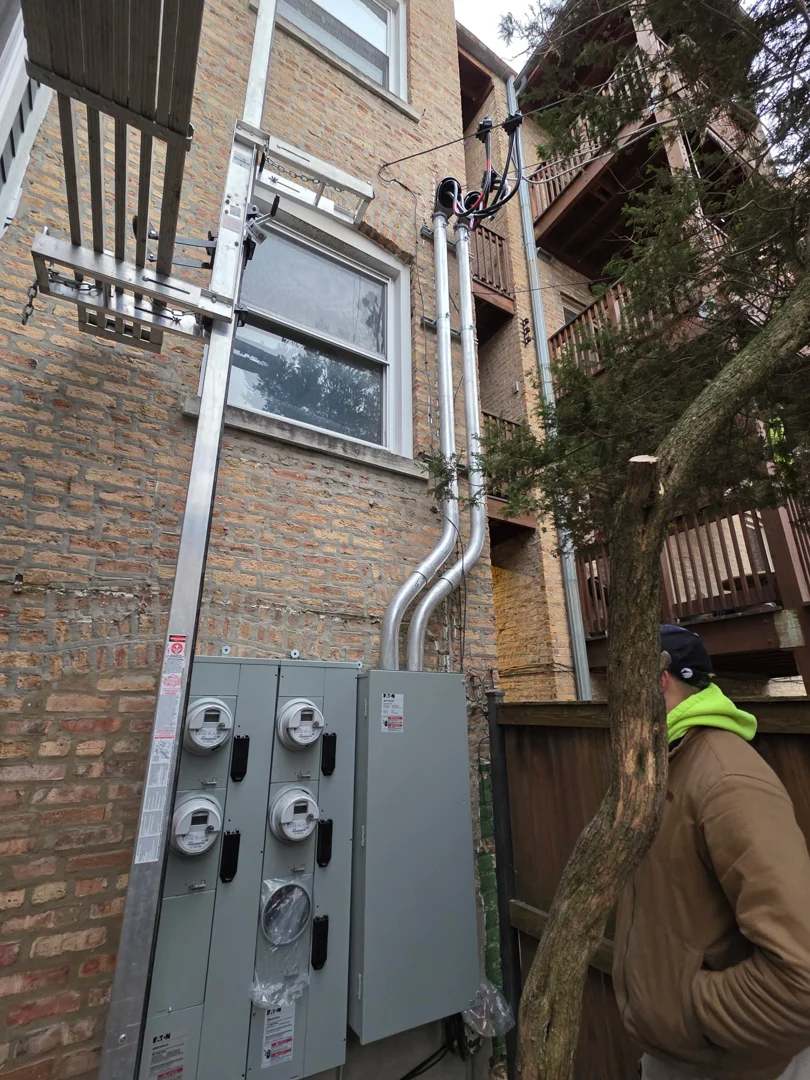
While smart load management devices, dynamic EV chargers, and circuit-sharing switches (which toggle power between a clothes dryer and a car charger) can help you stay within a 100-amp capacity, some homes simply require a full service upgrade.
A complete service upgrade is unavoidable if:
- Your property runs on an obsolete 30-amp or 60-amp service that cannot safely carry base residential loads.
- Your main service is powered through a hazardous split-bus fuse box.
- You are electrifying your entire home simultaneously (adding a multi-zone heat pump system, Level 2 EV charger, electric water heater, and induction cooking).
- The service entrance cable has frayed, cracked, or sustained water damage, creating an immediate fire hazard.
For a grounded look at how your system distributes power safely across each room, review a beginner breakdown of home electrical wiring and safety.
Frequently Asked Questions About Electric Service Upgrades
How long will my power be turned off during an electric service upgrade?
For a standard residential upgrade, your electricity is turned off for approximately 4 to 8 hours on installation day. The power is shut down in the morning when the utility de-energizes the line, and restored that afternoon once our team finishes the equipment installation and the local inspector signs off.
To prepare for this planned outage:
- Keep refrigerator and freezer doors closed to preserve internal temperatures.
- Charge all essential phones, laptops, and medical devices the night before.
- Plan alternative care for home medical equipment that relies on uninterrupted power.
Can I install a Level 2 EV charger without a service upgrade?
Yes, in many cases you can. If your home has a 100-amp or 150-amp service with moderate base electrical usage, an electrician can perform a load calculation to see if sufficient margin exists for a 240-volt, 32-amp or 40-amp charging circuit.
If capacity is tight, you can install a smart energy management system or an automatic circuit-sharing switch to share a single 240V line between your electric dryer and EV charger. However, if your home has 60-amp service or multiple high-draw electric appliances, a service upgrade to 200 amps is usually necessary. You can explore replacement options in our guide on how much to swap the box your guide to electrical panel upgrade costs.
Will upgrading my electrical service increase my home’s property value?
Yes. An upgraded 200-amp service eliminates one of the most common red flags found during real estate home inspections: an undersized or obsolete electrical system. Modern home buyers look for infrastructure that can handle electric vehicles, finished basements, home workshops, and modern HVAC systems. Upgrading your service protects your property’s resale appeal and guarantees immediate compliance with current municipal building codes.
Conclusion
Upgrading your electrical service is an investment in your property’s long-term safety, efficiency, and functional capacity. Whether you are remodeling a vintage bungalow in Schaumburg, adding high-speed vehicle charging in Naperville, or modernizing an older building in Cook County, having an appropriately sized electrical service entrance ensures your home runs reliably.
At Energy Co., our licensed, insured electrical professionals manage every phase of the project—from complex load calculations and city permitting to on-site utility coordination and panel installation. If you are ready to expand your home’s electrical capacity safely, contact our team to schedule a comprehensive service assessment and explore your options for an electrical panel upgrade.