Understanding the Kohler Whole House Generator Cost and Model Tiers
Standby backup power is an investment in whole-home security. When evaluating generator hardware, retail baseline prices vary significantly across power ratings, engine architecture, and integrated switch packages.
Standby generator hardware without installation ranges from roughly $3,395 to $18,165 depending on capacity. Complete residential backup packages bundled with an automatic transfer switch (ATS) typically fall between $4,200 and $9,000 for standard residential models. Homeowners researching official equipment lineups can Shop All Products – KOHLER Home Generators to see the full scope of factory configurations.
The table below outlines baseline equipment costs, power capacities, and standard residential applications for primary models as of August 2026:
| Kohler Model | Rated Output (LP / NG) | Baseline Equipment MSRP | Common Residential Application |
|---|---|---|---|
| 10RESV | 10 kW / 9 kW | $3,834 | Essential circuits: sump pump, refrigerator, lights, furnace fan |
| 12RESV | 12 kW / 10.5 kW | $4,283 | Modest homes: essentials plus small central AC or well pump |
| 14RCA | 14 kW / 12 kW | $4,997 | Mid-sized homes: partial whole-house power, 3-ton AC unit |
| 20RCA | 20 kW / 18 kW | $5,813 | Standard whole-home coverage: multi-ton HVAC, kitchen, laundry |
| 26RCA | 26 kW / 24 kW | $7,445 | Large homes: simultaneous dual central AC systems, heavy appliances |
| 24RCLA | 24 kW / 21 kW | $17,900 | Premium liquid-cooled: high-duty cycle, low acoustic profile |
| 38RCLC | 38 kW / 35 kW | $22,949 | Large estates: extensive mechanical loads, outbuildings |
| 48RCLC | 48 kW / 45 kW | $25,703 | Luxury properties: total continuous power without load shedding |
Hardware Tiers: How Capacity Impacts Kohler Whole House Generator Cost
Every step up in generator kilowatt (kW) capacity increases equipment cost due to larger engine displacement, beefier alternators, and heavier-gauge internal wiring.
- 10kW to 14kW Tier: Entry-level units (MSRP $3,834 to $4,997) deliver dependable emergency power for critical baseline circuits. They easily handle furnace blower fans, primary refrigeration, sump pumps, and basic lighting.
- 20kW Tier: The popular 20kW air-cooled platform (MSRP $5,813) serves as the standard whole-house benchmark for suburban homes. Equipped with PowerBoost technology, these systems deliver clean electrical power without voltage drops when major inductive loads start up.
- 26kW Tier: The 26kW platform (MSRP $7,445) is the highest-capacity air-cooled residential system available. It supports large homes with electric vehicle chargers, dual compressors, or electric water heaters running simultaneously.
Air-Cooled vs. Liquid-Cooled Generator Platforms
Generator engines are divided into two main categories: air-cooled and liquid-cooled.
Air-cooled generators run at 3,600 RPM and use internal cooling fans to circulate ambient air over the engine block. These systems provide exceptional reliability for standard residential applications up to 26kW, featuring corrosion-resistant aluminum enclosures rated to withstand winds up to 181 mph.
Liquid-cooled platforms (24kW to 60kW, starting around $17,900 MSRP) function like automotive engines, using an enclosed radiator, coolant pump, and low-speed 1,800 RPM operation. These platforms operate significantly quieter (62–64 dBA) with a deeper, lower-frequency sound profile. Liquid-cooled systems are engineered for expansive estates, commercial buildings, or properties with massive electrical demands requiring multi-day continuous runtime during severe weather grid collapses.
Critical Site Factors That Influence Installation Expenses
Hardware costs are only half of the overall equation. Installation typically accounts for 30% to 50% of the total project investment, requiring between 16 and 40 crew hours from licensed electrical contractors and qualified pipefitters.
Homeowners learning How To Safely Install A Backup Generator For Your Home will find that physical layout is the primary cost driver. Standard installation labor costs typically range from $3,000 to $8,000 depending on project complexity.
Key site factors that alter labor and material costs include:
- Trenching Distance: Placing a generator farther from electrical and fuel connections requires excavation at $15 to $25 per linear foot.
- Service Panel Modernization: Older residential infrastructure often requires panel remediation before integrating backup switches.
- Clearance Requirements: Municipal codes dictate strict separation distances from windows, doors, property lines, and combustible materials.
Automatic Transfer Switches and Service Upgrades
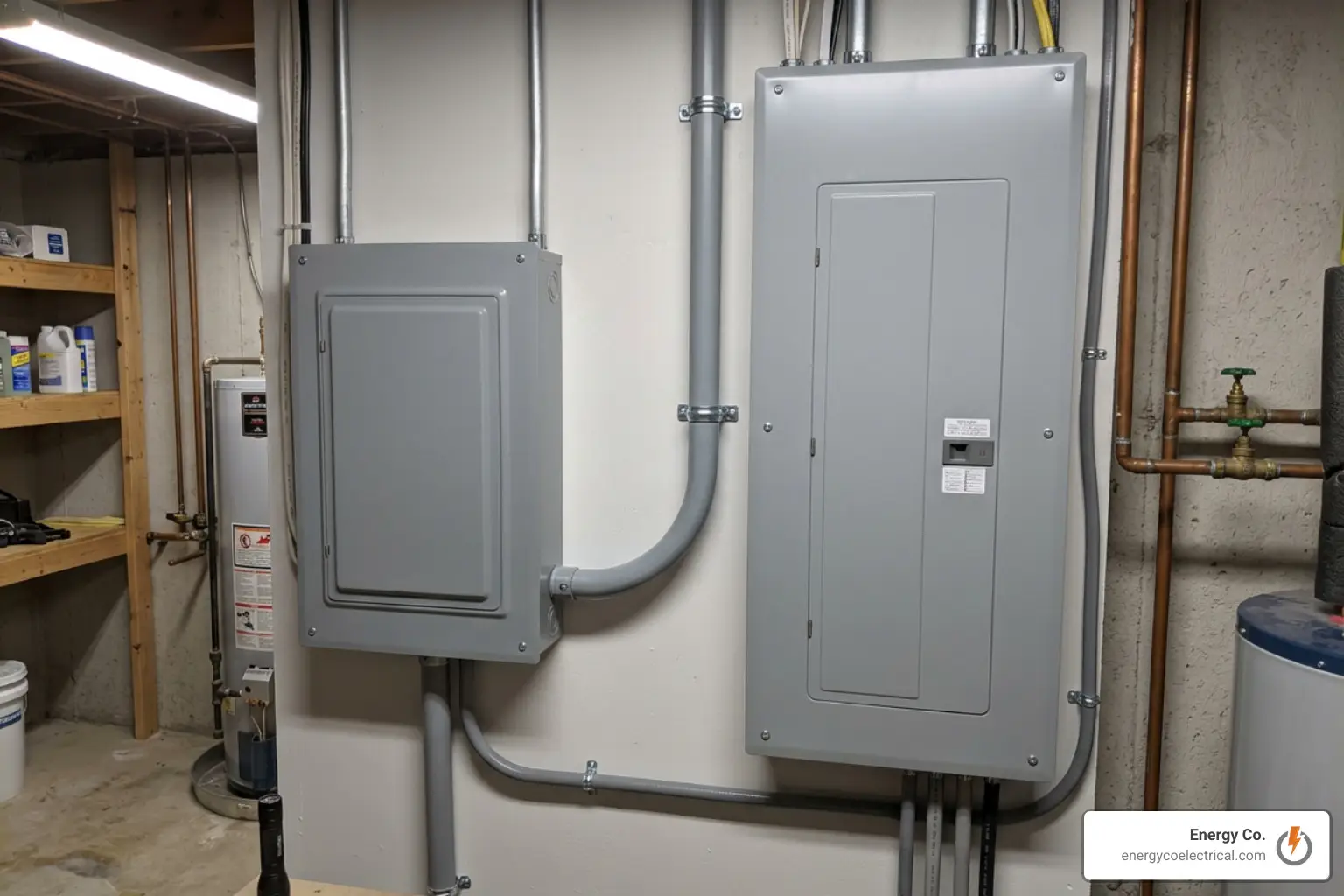
The automatic transfer switch (ATS) is the brain of your standby power system. When the utility grid goes down, the ATS disconnects the home from the grid within seconds to prevent dangerous backfeeding, starts the generator, and routes power safely to your circuits.
Standalone transfer switches range from $800 to $2,500 depending on amperage and load-management capabilities:
- 100A to 200A Service Entrance Switches: Mount between the utility meter and main panel to power the entire distribution system.
- Load-Shedding Controls: Intelligent load management modules ($1,500 to $2,500 installed) shed high-demand appliances—like a secondary air conditioner or hot tub—if total household draw nears generator capacity. This prevents stalls and often allows homeowners to install a smaller, more cost-effective generator.
- Main Electrical Panel Upgrades: Installing an ATS on a home with an outdated 60A or 100A fuse box requires a service upgrade. In these cases, review The Cost To Upgrade To A 200 Amp Panel Without Getting Zapped to budget accurately for necessary electrical modernizations.
Gas Utility Upgrades and Foundation Placement
Standby generators require significant fuel volume under full load. A 20kW generator running at 50% capacity demands roughly 200 to 275 cubic feet of natural gas per hour (approximately 250,000 to 300,000 BTUs).
Many standard residential gas meters only deliver 250,000 total BTUs for the entire house. Running a generator alongside a furnace and water heater often requires the local gas utility to upgrade the meter to a 2 PSI high-pressure system, with dedicated pressure regulators installed on household appliances. To avoid dangerous gas volume drops, follow the safety steps outlined in Dont Blow It A Guide To Standby Generator Gas Line Setup.
For equipment foundations, manufacturers permit high-density composite pads ($400 to $800) set over compacted pea gravel for standard air-cooled units. Larger liquid-cooled models require a poured, steel-reinforced concrete foundation ($800 to $2,500+) designed to support units weighing 1,000 to 3,000+ pounds.
Long-Term Value: Estimating Ongoing Kohler Whole House Generator Cost
Evaluating a standby generator requires looking at the total cost of ownership (TCO) across its expected 20- to 25-year lifespan. Whole-house generators provide significant peace of mind, prevent catastrophic basement flooding from sump pump failure, and typically recoup 50% to 75% of their total project cost in added property resale value.
Fuel Delivery and Operational Consumption Rates
Operational costs during an outage depend on your fuel source and load levels:
- Natural Gas Operation: At 50% load, a 20kW unit burns roughly 2.0 to 2.7 therms per hour. At standard residential utility rates ($0.80 to $1.20 per therm), continuous operation costs between $2.00 and $3.00 per hour ($50 to $75 per 24 hours of runtime).
- Liquid Propane (LP) Operation: Propane delivers higher energy density per unit volume, but fuel delivery costs run higher. A 20kW unit burns roughly 1.5 to 2.2 gallons per hour at 50% load, costing $3.00 to $4.50 per hour.
- Fuel Derating Factors: Generators produce slightly less power on natural gas compared to propane (typically derating by 8% to 10%). For example, a Kohler 20RCA generates 20kW on LP, but maxes out at 18kW on natural gas.
Routine Maintenance Requirements and Factory Warranty Coverage
Standby systems run automated 10-to-15-minute weekly exercise cycles to lubricate internal seals and verify system diagnostics. Professional annual maintenance service plans typically run $200 to $400, covering fresh synthetic oil, oil filters, air filters, spark plugs, and battery load testing.
Unlike engines that require manual valve lash adjustments every few hundred operating hours, Kohler residential air-cooled engines feature hydraulic lifters. This design eliminates periodic valve clearance maintenance entirely, saving homeowners between $1,500 and $2,500 in service labor over the lifespan of the equipment.
Kohler backs its residential systems with a 5-year, 2,000-hour comprehensive warranty covering parts, labor, and travel across the entire term, paired with a 10-year major component engine warranty.
Regional Climate Demands, Permitting, and Strategic Financing
Local site conditions, climate demands, and municipal regulations play a major role in final installation costs. In northern zones subject to deep ground freezes, concrete footings or trench depths must sit below the municipal frost line (often 42 to 48 inches) to prevent winter frost heaving.
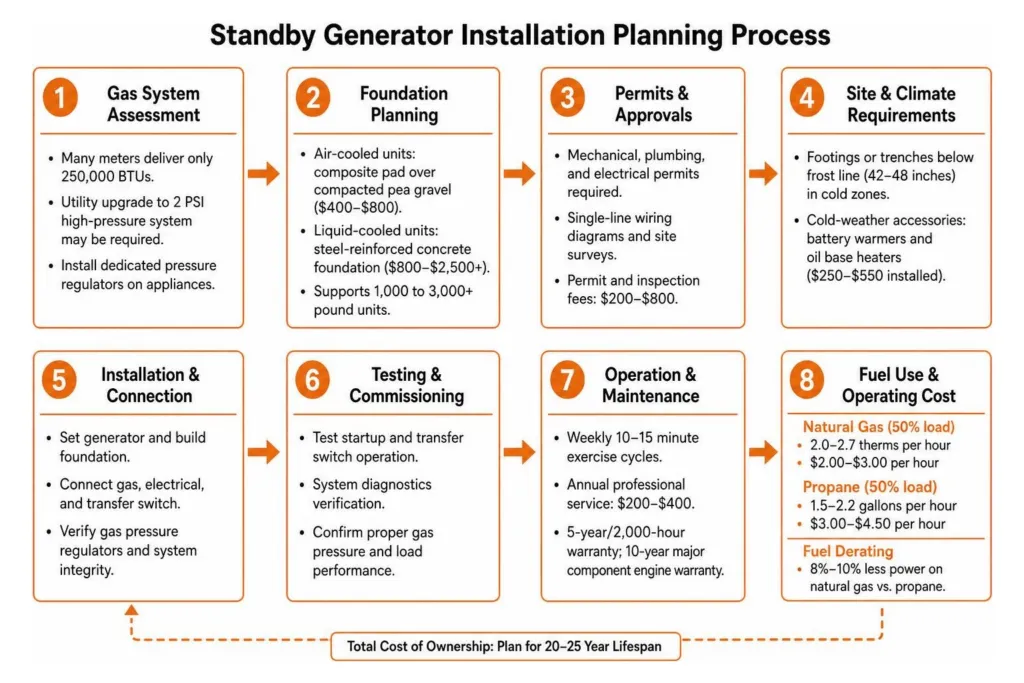
Sub-zero winter temperatures also require cold-weather accessories. Thermostatically controlled battery warmers and oil base heaters ($250 to $550 installed) ensure the engine starts quickly during freezing weather.
Municipal building departments require mechanical, plumbing, and electrical permits alongside single-line wiring diagrams and site surveys. Permit and inspection fees generally add $200 to $800 to project quotes. For detailed local guidelines, see our step-by-step breakdown on Cook County Generator Installation From Permits To Power Up. For a comprehensive view of real-time market pricing, review the Kohler Home Generator Cost and Price Guide 2026 – LatestCost – Real-Time Price Insights.
Off-Peak Installation Timing and Load-Management Savings
Homeowners can optimize project budgets using several proven strategies:
- Off-Peak Scheduling: Booking installations during late winter or mid-summer avoids the peak contractor surges seen in early spring storm periods and autumn freeze preparations, potentially saving 10% to 15% on installation labor.
- Load Management Optimization: Instead of paying an extra $3,000 to $6,000 to jump to a massive generator, pairing smart load-shedding modules with a mid-sized 14kW to 20kW unit allows you to run essential household systems without overloading the engine.
- Itemized Competitive Bids: Request itemized proposals that clearly separate hardware MSRP, transfer switch models, gas piping, concrete preparation, and municipal permit fees.
Flexible Financing Strategies and Payment Options
Because a turnkey generator system requires significant upfront capital, most homeowners spread the investment across structured financing programs:
- Authorized Dealer Financing: Low-interest or zero-interest promotional programs (ranging from 12 to 84 months) provide fixed monthly payments.
- Home Equity Lines of Credit (HELOC): Homeowners often use low-interest home equity lines to fund permanent electrical improvements, preserving household cash reserves while boosting property value.
- Personal Energy Improvement Loans: Unsecured home improvement financing offers fast approvals without placing a lien on the home.
Frequently Asked Questions About Kohler Generators
What is the average total installed cost of a Kohler standby generator?
The total turnkey price typically ranges between $10,500 and $21,000. Most standard single-family residential projects fall in the $10,925 to $13,225 bracket. Projects involving complex gas-line extensions, 200-amp service panel replacements, or liquid-cooled systems land in the upper range.
How do natural gas and propane fuel sources affect generator output?
Because liquid propane contains greater energy density per cubic foot than natural gas, standby generators produce higher rated electrical output on LP. A standard 20kW generator produces its full 20kW rating on propane, but derates to 18kW when fueled by residential natural gas lines.
What size Kohler generator is needed for a standard suburban home?
Most 2,000- to 3,000-square-foot suburban homes operate smoothly on a 14kW to 20kW standby generator. This capacity comfortably runs central air conditioning, sump pumps, refrigeration, kitchen circuits, and home office electronics. Homes larger than 3,500 square feet or those running dual central AC compressors typically require 24kW to 26kW air-cooled systems or liquid-cooled units.
Conclusion
A standby backup generator protects your family, keeps essential medical equipment and sump pumps running, and prevents costly winter pipe freezes during utility grid blackouts. Understanding equipment tiers, fuel requirements, and site preparation ensures you get a fair, comprehensive quote without surprise fees.
Our licensed team at Energy Co. specializes in whole-house standby generator installations, electrical panel upgrades, and code-compliant fuel integration. To explore turnkey pricing tailored to your property, explore The Definitive Guide To Standby Generator Installation Costs or contact us to schedule a comprehensive on-site load evaluation today.