Real-World Standby Generator Installation Costs in 2026
When homeowners begin budgeting for backup power, sticker shock often sets in quickly. A generator unit might carry an online price tag of $3,500 to $6,000, yet the total installed quote can reach $12,000 to $18,000. In the electrical trade, we often summarize this reality simply: a whole-house generator is a $4,000 to $6,000 machine bolted into a multifaceted mechanical and electrical project.
The overall expenditure splits between physical hardware and extensive trade labor. On average, equipment accounts for roughly 50% to 60% of the bill, while specialized installation labor, permitting, and site work make up the remaining 40% to 50%. National pricing models, such as the 2026 national pricing benchmark, illustrate that baseline labor alone typically runs between $4,000 and $7,000 across the country.
However, in Cook County and the surrounding Northwest Suburbs—including communities like Arlington Heights, Schaumburg, and Palatine—local factors influence the bottom line. Regional labor rates and specific municipal requirements can raise baseline costs compared to national rural averages. Navigating these local variables requires understanding all available comprehensive generator cost options before breaking ground.
System Sizing and Generator Capacity Breakdown
Sizing a standby generator is not merely a matter of matching your home’s total square footage. Instead, it involves calculating peak electrical demand, specifically the startup motor surge (inrush current) of heavy appliances like central air conditioning units, sump pumps, and electric water heaters.
- 10 kW to 12 kW Units: Best suited for smaller footprints (under 1,500 sq. ft.) or partial-home backup. These handle essential circuits: refrigerator, gas furnace blower, internet router, basic lighting, and a sump pump.
- 14 kW to 18 kW Units: Designed for mid-sized homes (1,500 to 2,500 sq. ft.). They can comfortably manage essential circuits alongside a central 3-ton air conditioner using intelligent load management.
- 20 kW to 26 kW Units: The industry standard for single-family homes (2,200 to 3,500+ sq. ft.). An air-cooled 22 kW or 24 kW model delivers seamless whole-house coverage, effortlessly starting 4-ton or 5-ton A/C units and electric appliances.
- 30 kW to 48 kW Liquid-Cooled Units: Built for larger estate homes (4,000+ sq. ft.) with multiple high-tonnage HVAC systems, swimming pool pumps, and extensive 400-amp electrical services.
| Generator Capacity (kW) | Typical Home Size (Sq. Ft.) | Coverage Scope | Average Turnkey Installed Cost Range |
|---|---|---|---|
| 10 kW – 12 kW | 1,000 – 1,500 | Essential circuits (fridge, lights, sump pump) | $7,500 – $10,500 |
| 14 kW – 18 kW | 1,500 – 2,200 | Essentials + 1 Central A/C (via load shedding) | $9,500 – $12,800 |
| 20 kW – 26 kW | 2,200 – 3,800 | Whole-home coverage (standard 200A service) | $11,000 – $15,500 |
| 30 kW – 48 kW (Liquid-Cooled) | 4,000+ | Large homes, dual A/C, complex heavy loads | $18,000 – $32,000+ |
Standby Generator vs. Portable Generator Cost Comparison
Understanding the structural differences between portable and permanent systems clarifies where your budget goes.
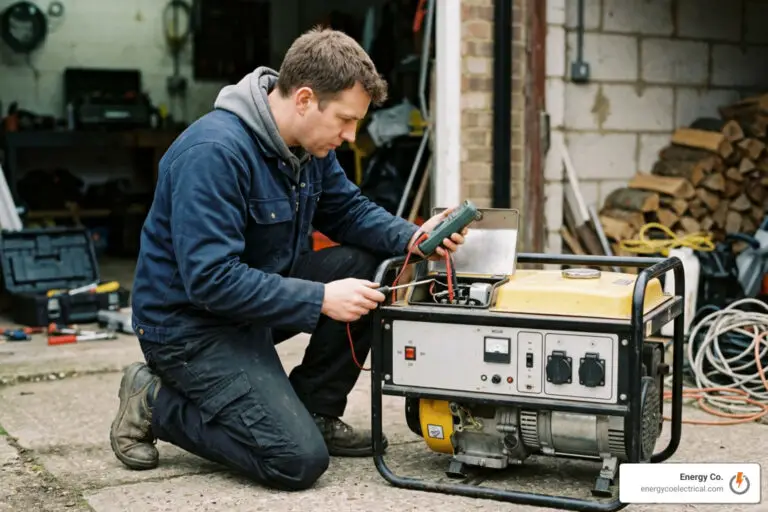
A portable generator paired with a manual transfer switch or interlock kit costs between $4,400 and $7,700 fully installed. While budget-friendly, portable units require manual operation: you must wheel the machine outside into inclement weather, connect heavy-gauge cords to an exterior inlet, manually flip breaker interlocks, and continually manage gasoline or LP cylinders. They also pose elevated carbon monoxide hazards if operated incorrectly.
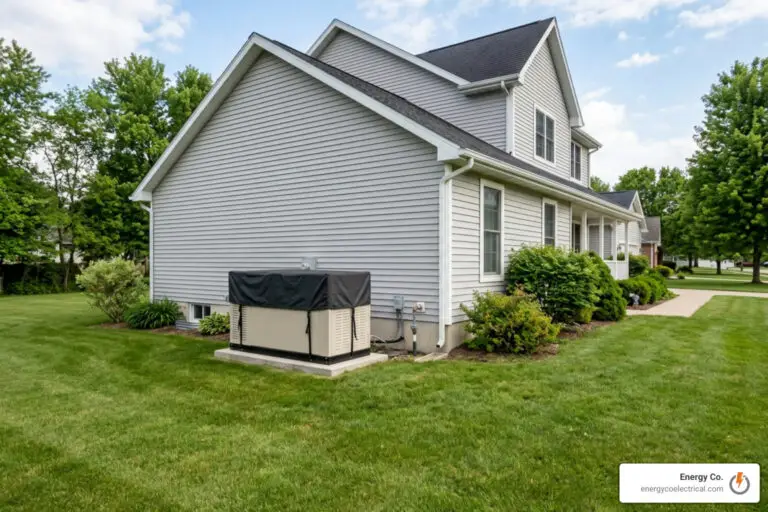
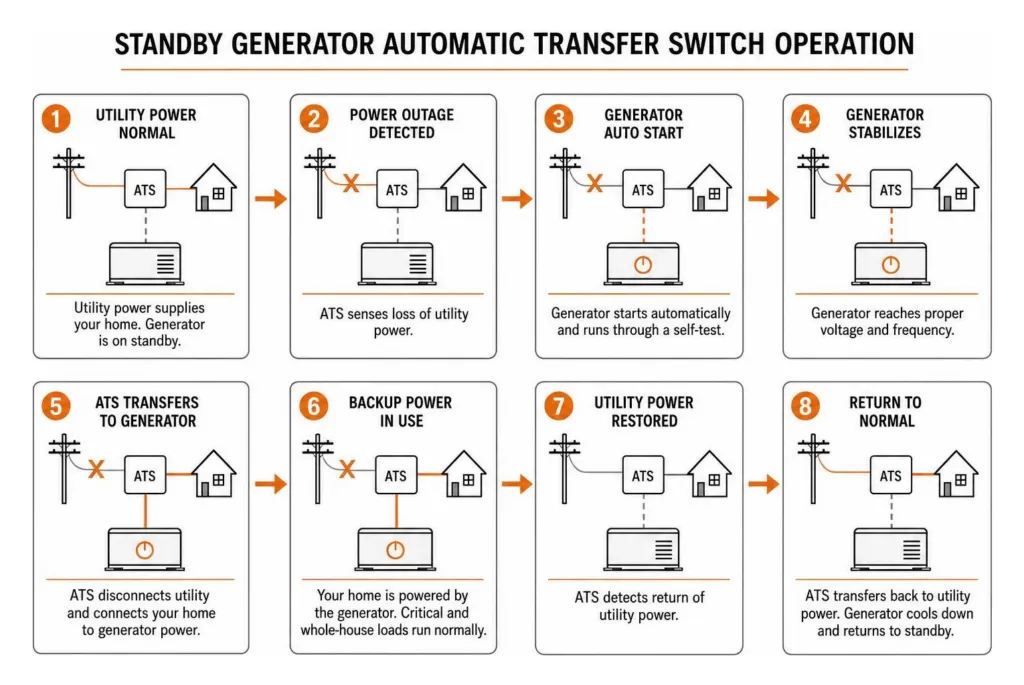
A permanently installed whole-house standby generator provides fully automatic operation. Paired with an Automatic Transfer Switch (ATS), it monitors utility power 24/7. When the grid fails, the generator starts, stabilizes, and commands the ATS to transition power to your home in under 15 seconds—even if you are out of town.
Line-Item Breakdown of Installation Expenses and Labor
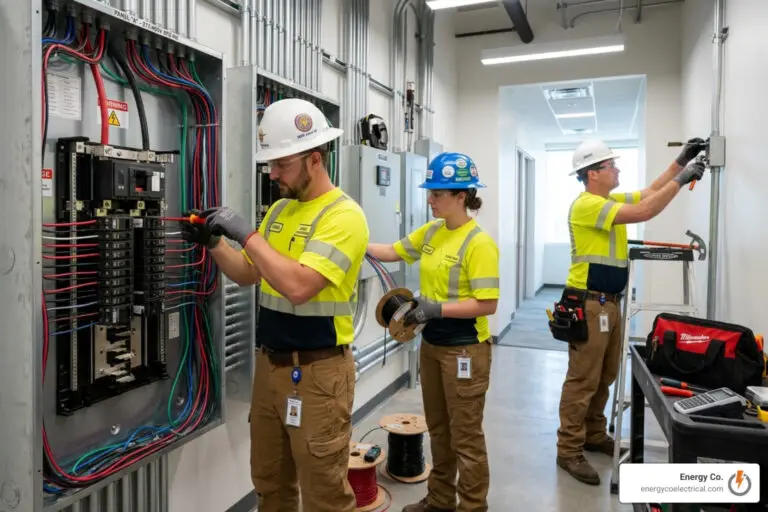
Installing a permanent backup power system involves two distinct licensed trades: a Master Electrician and a certified Mechanical/Plumbing Contractor. Adhering to essential electrical backup safety protocols ensures the installation prevents dangerous utility backfeeding and operates safely under continuous load.
Electrical Hardware, Transfer Switches, and Site Preparation
The electrical backbone of the project starts with the transfer switch. A service-rated 200-amp ATS costs between $1,500 and $3,500 installed, depending on whether it mounts indoors near the main distribution panel or outdoors beside the utility meter.
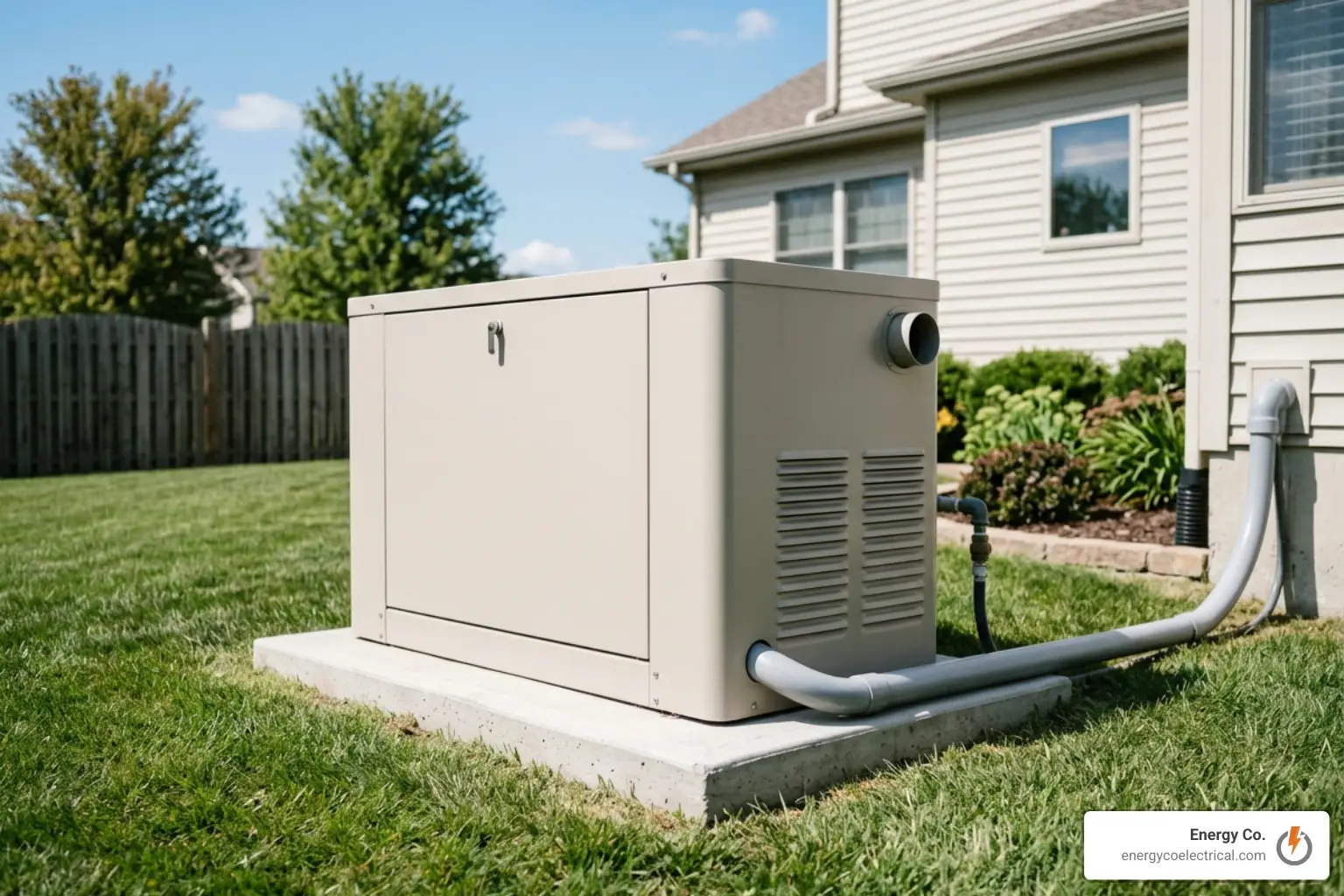
Site preparation demands a stable, level, and well-drained foundation. Installers typically utilize either a pre-formed composite equipment pad seated on a compacted gravel bed or a poured concrete slab ($400 to $1,200). Electrical labor covers running heavy copper or aluminum conductors through rigid or liquid-tight conduit, installing dual ground rods spaced at least six feet apart to comply with electrical code, and wiring low-voltage control circuits that dictate automatic start signals.
Natural Gas Lines, Propane Siting, and Fuel Delivery Requirements
Standby generators require significant fuel volume to maintain rated engine speeds under load:
- Natural Gas (NG): Continuous, on-demand supply without on-site storage tanks. However, high-output generators (such as a 22 kW unit drawing up to 280,000+ BTU/hr) frequently require extending dedicated 1-inch or 1-1/4-inch black iron piping from the meter. If your utility meter delivers low gas volume, your local gas utility may need to provide a high-volume meter upgrade ($300 to $1,500).
- Liquid Propane (LP): Provides an ideal alternative in non-piped rural or outlying properties, delivering slightly higher BTU thermal efficiency than natural gas. LP systems require dedicated storage tanks (typically 250 to 500 gallons), concrete tie-down anchoring, high-pressure regulators, and specialized underground gas poly-pipe trenching.
Critical Factors and Hidden Standby Generator Installation Costs
Older construction throughout the Northwest Suburbs (like classic homes in Cicero, Mount Prospect, or Roselle) frequently surfaces hidden electrical conditions that impact initial budget estimates.
Electrical Service Upgrades and Trenching Distances
The single largest unexpected line item is an outdated main electrical panel. If your home still operates on an original 100-amp service, split-bus panel, or ungrounded distribution board, upgrading to a modern 200-amp service panel is required before an ATS can be integrated safely. A service panel replacement adds $1,800 to $4,000 to the total project.
Trenching distance also directly dictates project pricing. If your electrical service entrance sits on the opposite side of the home from your natural gas meter, installers must trench conductors, gas piping, or both around the perimeter. Standard trenching costs run $20 to $50 per linear foot, with higher expenses when traversing concrete walkways, asphalt driveways, or complex landscaping.
Permitting, Code Compliance, and Municipal Inspection Fees
Every legitimate installation requires mechanical and electrical permits alongside formal plan reviews. National and local standards dictate strict clearances:
- NFPA 37: Dictates generator positioning, requiring minimum clearances (often 18 inches to 5 feet) from combustible walls, exterior openings, operable windows, and soffit vents to eliminate carbon monoxide intrusion risks.
- NEC Article 702: Governs optional standby systems, requiring dedicated system grounding, service isolation, and calculated load capacities per Article 220.
Municipal fees across Cook County range from $200 to $800 depending on local administrative fee schedules. You can review regional requirements directly in our breakdown of Cook County permitting procedures or inspect local guidelines via municipal generator permitting documentation.
Navigating Timelines, Estimates, and Transparent Contractor Quotes
A standby generator installation is an engineered upgrade requiring careful coordination between local building departments, utility providers, and trade technicians.
Installation Process Duration from Permits to Power-Up
While the hands-on physical installation usually wraps up in 1 to 2 days, the complete project timeline spans 3 to 6 weeks due to regulatory steps:
- Site Assessment & Engineering (Week 1): Calculating load profiles, verifying gas pressures, and mapping placement clearances.
- Permit Application & Plan Review (Weeks 2–4): Processing structural, mechanical, and electrical blueprints through the municipal building department.
- Physical Placement & Utility Trenching (Day 1 of Install): Pouring the pad, setting the unit, running gas plumbing, and laying underground conduit.
- Electrical Tie-In & ATS Installation (Day 2 of Install): Mounting the transfer switch, pulling conductors, landing sub-circuits, and bonding the system.
- Municipal Inspection & Commissioning (Week 5–6): Official inspection sign-offs, followed by a live utility outage simulation and load-bank test.
Evaluating Itemized Quotes to Lower Standby Generator Installation Costs
To avoid unexpected change orders, ensure any contractor proposal includes a complete, itemized breakdown:
- Specific generator model number, exact kW rating, and enclosure type (aluminum vs. steel).
- Automatic transfer switch model, amp rating, and integrated load-management modules.
- Excavation, trenching footage, and dedicated conduit/piping line lengths.
- Dedicated electrical panel work, including any necessary whole-house surge protective devices.
- Gas connection supplies, including manual shutoff valves, sediment traps, flexible connections, and regulator installations.
- Municipal permit acquisition fees and inspection attendance.
- Final commissioning, dynamic load testing, and comprehensive owner operational walkthroughs.
Frequently Asked Questions About Standby Generator Installation
How long does a whole-house standby generator take to install?
The physical placement and electrical wiring typically take 1 to 2 days of on-site labor. However, overall lead times usually run 3 to 6 weeks to accommodate municipal engineering reviews, permit approvals, utility scheduling, and final inspections.
Can I install a standby generator myself to save money?
No. Standby generator installation involves high-voltage utility electrical connections and high-volume combustible gas plumbing. National Electrical Code (NEC Article 702) and mechanical codes require licensed professionals. Attempting a DIY installation voids manufacturer warranties, risks home insurance non-coverage during fire or backfeed incidents, and fails municipal code compliance.
Does installing a standby generator increase home property value?
Yes. Real estate industry data shows that a professionally installed, fully permitted standby generator typically increases residential resale value by 3% to 5%, providing a solid return on investment while delivering essential peace of mind during severe weather.
Conclusion
A standby generator protects your home against grid failure, preventing flooded basements, frozen plumbing, food spoilage, and climate-control loss. While total project costs range from $7,000 to $20,000 depending on home size, gas infrastructure, and panel capacity, partnering with licensed trades ensures your system operates safely and reliably for decades.
At Energy Co., our licensed electricians specialize in navigating the architectural layouts, electrical panels, and municipal codes unique to Chicago and the Northwest Suburbs. To review tailored options for your home, explore our definitive guide to standby generator installation costs or reach out to schedule an on-site evaluation today.