Plan a Safe, Permitted Generator Installation in Palatine
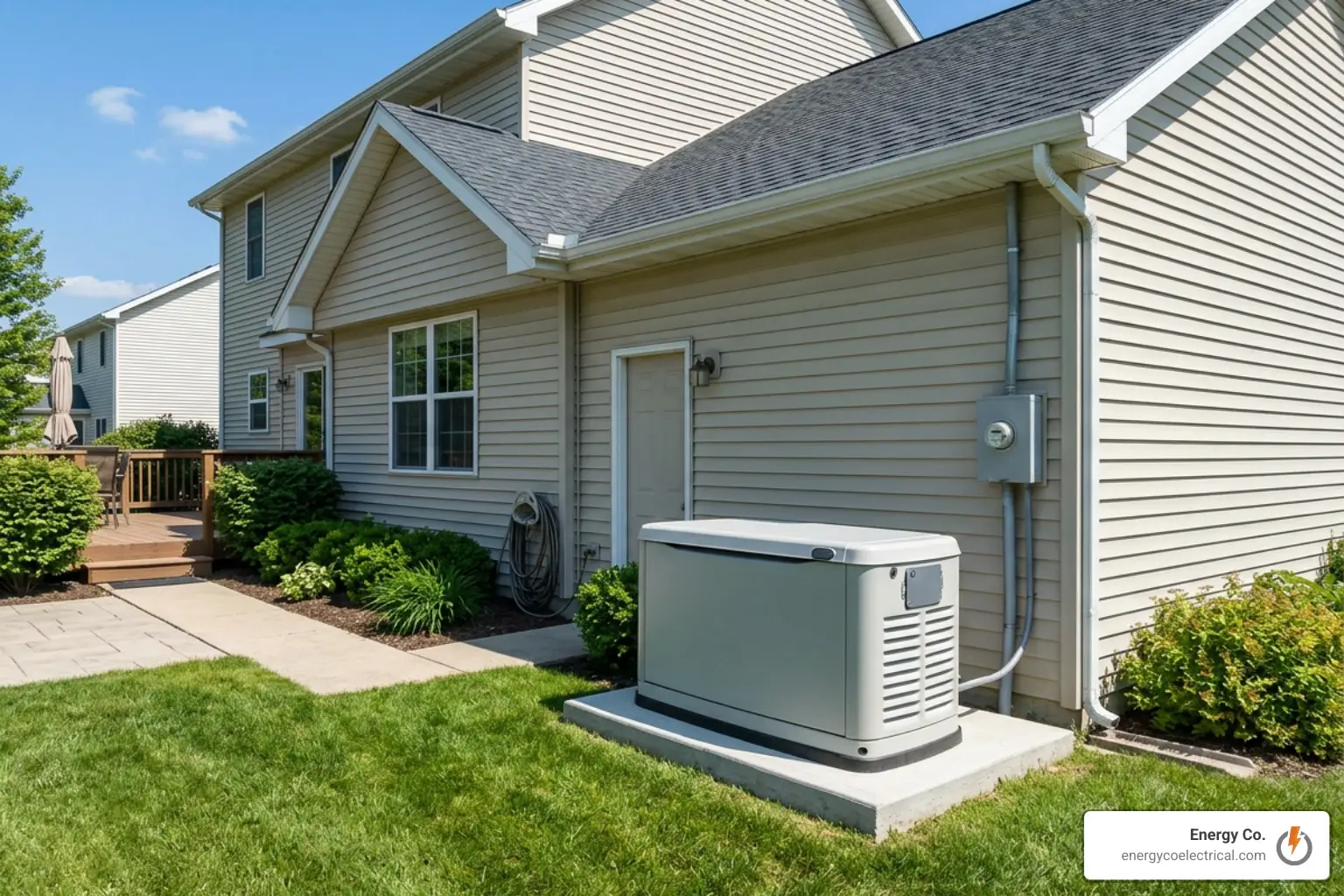
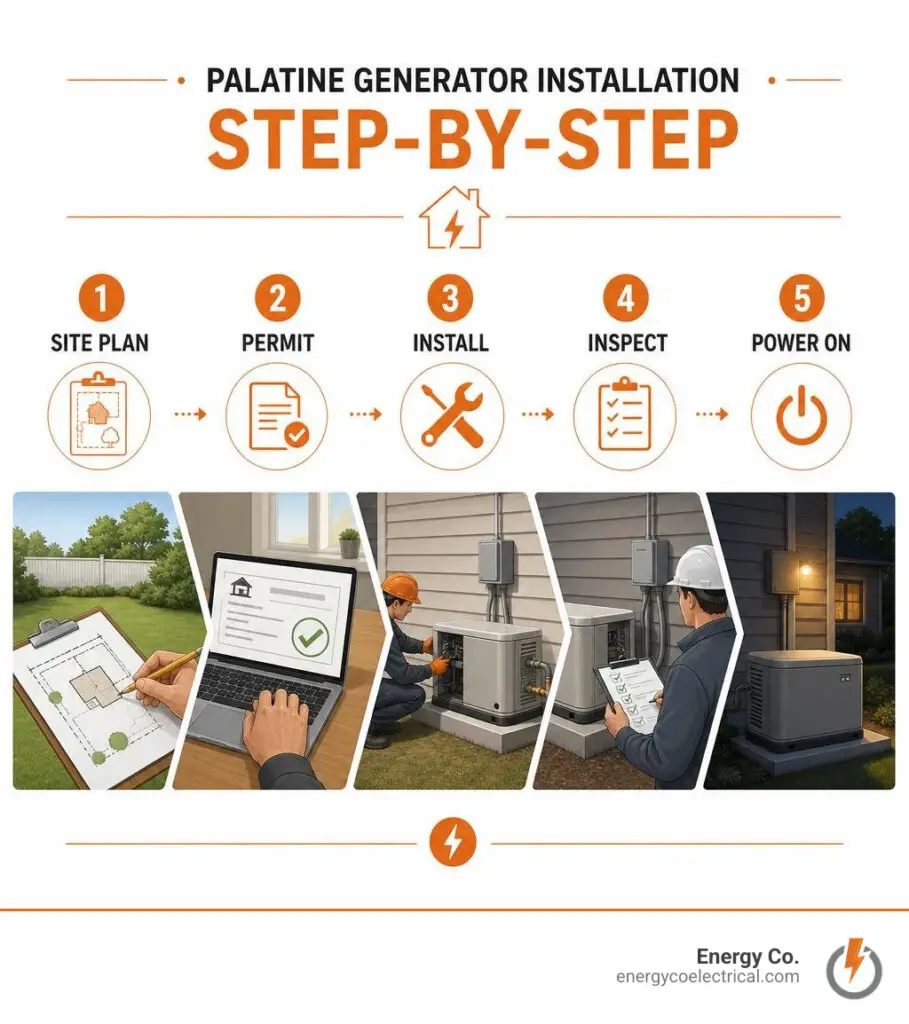
For a smooth generator installation in Palatine, homeowners should hire a registered, bonded electrical contractor and plan the location before ordering equipment. The unit generally belongs in a side or rear yard, at least 2 feet from the lot line, with the needed clearances from the home, doors, windows, and combustible surfaces. Your installer should also prepare the permit documents, submit them through the Village’s online portal, and coordinate required inspections before the system goes live. Here is what to expect from generator installation Palatine homeowners can rely on.
A properly installed standby generator can keep critical circuits running during an outage, but it is not a simple plug-in appliance. In Palatine, the project involves zoning review, electrical and gas work, a level non-combustible pad, and Village inspections. Express permits are reviewed in about 5 days, cost $103 per item, and are valid for 90 days after issuance.
In this guide, you will learn what to place on the plat of survey, which clearances matter most, how inspections work, and where HOA rules may add another step.
I am Michał Napieralski of Energy Co., an electrician serving Schaumburg and the Chicago suburbs with code-focused electrical installations, panel upgrades, and safety inspections. Our experience with generator installation in Palatine helps homeowners connect backup power safely while preparing for the local permit and inspection process.
Helpful backup power guides:
Municipal Regulations for Generator Installation in Palatine
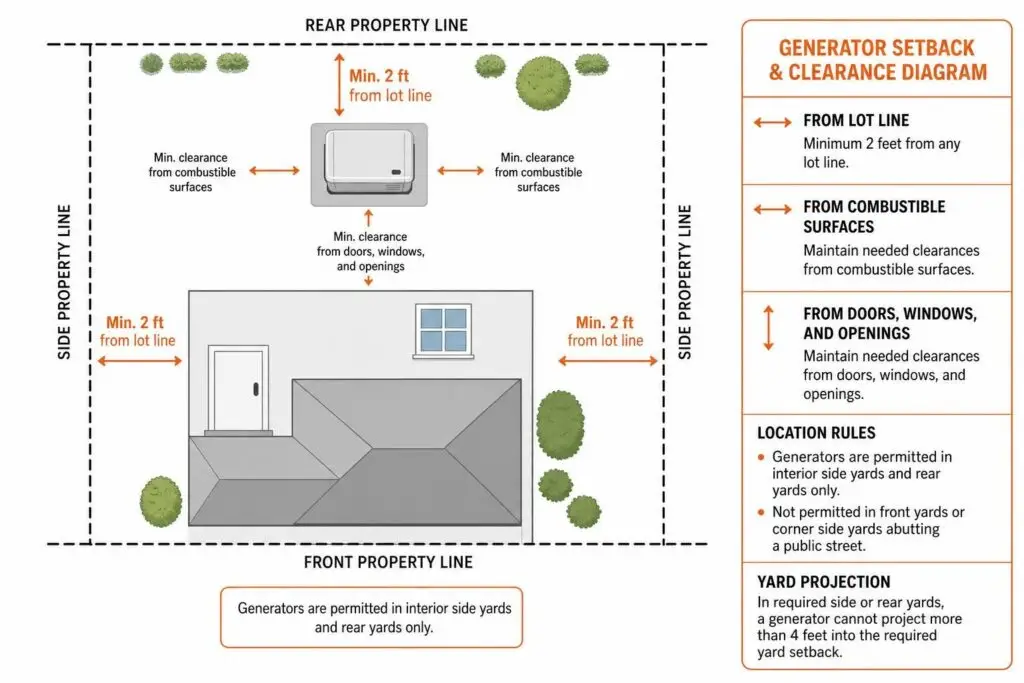
Navigating local municipal codes is the first step toward getting continuous power up and running. When we help homeowners safely install a backup generator, the initial task is ensuring the equipment aligns with Palatine’s specific zoning requirements.
In the Village of Palatine, permanent electric standby generators must be positioned within an interior side yard or a rear yard. They are strictly prohibited within front yards or any corner side yard that abuts a public street. Beyond simple yard restrictions, the Village enforces strict spatial boundaries:
- Yard Projection: In required side or rear yards, a permanent standby generator cannot project more than 4 feet into the required yard setback.
- Property Line Setback: The generator must maintain a minimum 2-foot setback from any lot line under all circumstances.
Adhering to these setback baselines ensures your equipment remains accessible for maintenance, respects neighbor boundaries, and clears local zoning reviews without unnecessary revision delays.
Fire Safety Standards and Clearance Thresholds
Standby generators produce heat and exhaust gases during continuous operation, making clearance to combustible structures a critical life-safety parameter. The Village of Palatine enforces strict spacing rules to mitigate fire risks:
- Combustible Walls and Overhangs: Standby generators must sit at least 5 feet away from combustible exterior walls, soffits, and roof overhangs unless the unit’s manufacturer documentation specifically certifies that closer placement is tested and approved.
- Openings and Air Intakes: Generator exhaust ends must maintain at least a 5-foot clearance from operable windows, exterior doors, vents, and any fresh air intakes.
- Vegetation and Landscaping: Shrubbery and decorative screening must allow sufficient perimeter ventilation and wide service access for technicians.
Lot Coverage Rules and Plat of Survey Requirements
Before issuing a permit, the Palatine Community Development Department evaluates total lot and building coverage. These calculations prevent overcrowding and ensure adequate stormwater drainage across residential parcels:
- Building Coverage: In municipal zoning terminology, building coverage encompasses roofed main structures, detached garages, and any permanent accessory structure that exceeds 16 inches in height from finished grade.
- Plat of Survey Submittal: Homeowners must provide an accurate, scaled plat of survey showing all existing physical structures, driveways, patios, and lot lines. The proposed generator placement must be clearly drawn to scale on this document, indicating exact distances to property boundaries, the main dwelling, and adjacent utility meters.
Palatine Permitting and Documentation Checklist
Obtaining proper municipal approval requires a complete documentation package. When managing a Cook County generator installation, assembling clear schematics accelerates the approval pipeline.
A complete Palatine generator permit packet includes:
- A fully executed, signed contractor contract showing the scope of work.
- The manufacturer’s technical specification cut sheet and installation manual.
- A marked, scaled plat of survey demonstrating yard setbacks and distance to openings.
- A detailed one-line electrical wiring diagram showing the transfer switch, conduit sizes, breaker amperages, and grounding configuration.
- A fuel supply schematic indicating the natural gas or liquid propane pipe sizing, length of run, and regulator specifications.
Navigating Online Permitting for Generator Installation in Palatine
All residential generator permit applications in Palatine must be processed digitally. The Village handles these applications through an online system:
- Express permits are exclusively available online at our Citizen Self Service Portal. Please visit the link below to register and apply.
- Property owners or their registered electrical contractors must create a portal profile, upload all required PDF engineering drawings, and complete property owner verification.
- The online system provides direct status updates, allowing applicants to resolve plan examiner questions quickly.
Express Permit Fees, Plan Reviews, and Expiration Timelines
Palatine classifies standard residential generator setups under express review parameters, providing a predictable schedule for homeowners.
| Metric | Specification | Details |
|---|---|---|
| Permit Fee | $103.00 per item | Standard residential building/electrical fee |
| Plan Review Timeline | 5 business days | Express review via online portal |
| Permit Validity | 90 days | Work must commence and progress within 90 days of issuance |
| Permit Extension | Case-by-case | Formal written request required before expiration |
Step-by-Step Construction, Utility, and Inspection Guidelines
Executing a durable generator setup requires coordinated mechanical and electrical work. Working with our professional certified team ensures every phase adheres to current building and electrical codes.
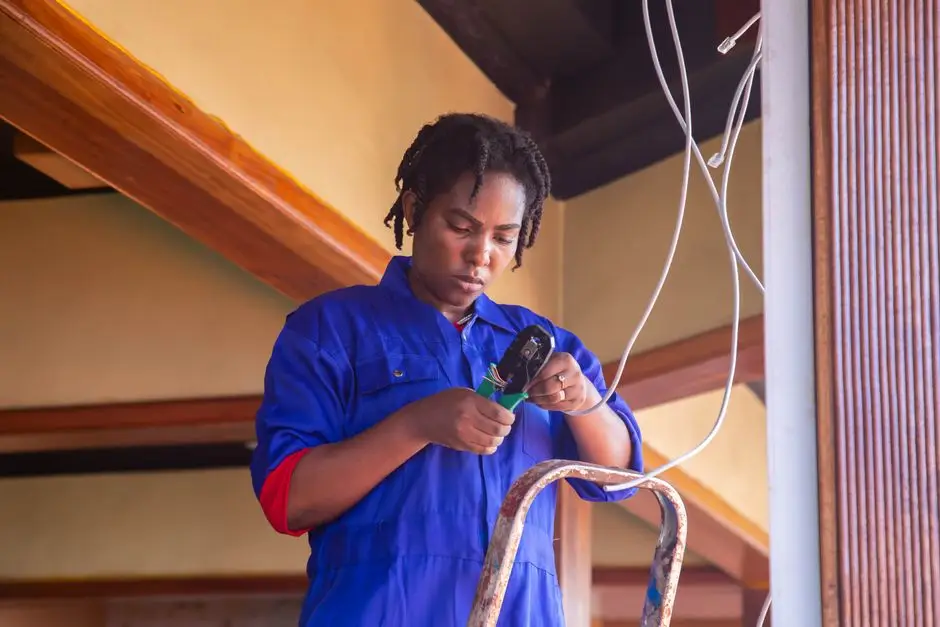
Every contractor performing installation work in Palatine must be actively registered and bonded with the Village’s Community Development Department before pulling permits or breaking ground.
Technical and Electrical Requirements for Generator Installation in Palatine
Proper mechanical mounting and utility routing ensure dependable operation when severe Chicagoland weather hits:
- Mounting Foundation: Generators must be mounted on a level, non-combustible base. This is typically achieved with a poured concrete slab or a manufacturer-rated composite pad set over a tamped aggregate base.
- Electrical Connections: Wiring connecting the generator to the indoor automatic transfer switch (ATS) must be run inside approved raceways or direct-burial conduit at code-specified depths. Manufacturer-supplied wiring harnesses must be cut neatly to length; leaving coiled, excess slack inside or outside the enclosure is not permitted.
- Gas Infrastructure: Connecting to natural gas requires proper pipe sizing to supply the generator’s required BTUs during full-load startup. For an in-depth look at fuel delivery, read Don’t Blow It A Guide to Standby Generator Gas Line Setup. If you are balancing overall system investments, reviewing The Definitive Guide to Standby Generator Installation Costs can help establish your budget.
Village Inspections and HOA Compliance
Palatine enforces a multi-phase inspection protocol to verify structural, plumbing, and electrical safety:
- Underground Rough-In Inspection: Scheduled once utility trenches are dug and gas piping/electrical conduit are laid, prior to backfilling. The inspector verifies trench depth, warning tape, and pipe integrity.
- Final Inspection: Conducted once the generator, pad, gas regulator, and transfer switch are fully installed. The electrical contractor must be present on site with the stamped, Village-approved job plans. The inspector requires full interior access to inspect the main electrical panel and transfer switch wiring.
- HOA Covenant Autonomy: While Palatine reviews projects strictly against municipal building and zoning codes, Homeowners Associations (HOAs) enforce separate private covenants. The Village does not require or verify HOA approval before granting a building permit. Obtaining HOA design review approval remains the homeowner’s responsibility to prevent private compliance disputes.
Frequently Asked Questions About Palatine Generator Projects
Does the Village of Palatine Require HOA Approval Before Issuing a Generator Permit?
No. The Village of Palatine does not require proof of HOA approval to issue a generator permit. However, municipal permit issuance does not override your subdivision’s CC&Rs (Covenants, Conditions, and Restrictions). You should obtain written clearance from your HOA architectural board prior to ordering equipment to ensure compliance with neighborhood aesthetic rules.
What Inspections Are Required for a Residential Standby Generator in Palatine?
Palatine requires two formal inspections: an underground inspection covering the open trench for electrical conduit and gas lines, and a final inspection after complete assembly. During the final inspection, the electrical contractor must be on site with the stamped physical plans, and the inspector must be given direct interior access to the main distribution panel and transfer switch.
What Are the Minimum Setback Clearances for a Home Generator in Palatine?
Generators must maintain a minimum 2-foot setback from any property lot line and cannot project more than 4 feet into a required side or rear yard. In addition, units must sit at least 5 feet away from combustible building walls, overhangs, and any operable windows, doors, or exhaust openings.
Conclusion
Installing a standby generator in Palatine provides peace of mind across every season, shielding your home against storm-related outages and extreme Midwest temperatures. Navigating setback requirements, zoning reviews, fuel line installations, and electrical tie-ins is simple when you partner with experienced professionals who understand local Cook County guidelines.
Whether you need dedicated residential electrical services or comprehensive backup power planning, we manage the entire process from initial site surveys to final Village sign-offs. Explore our reliable generator installation solutions or contact us today to schedule a site evaluation and power your home safely.