Fast, Safe Help for Chicagoland Emergency Electrical Repair
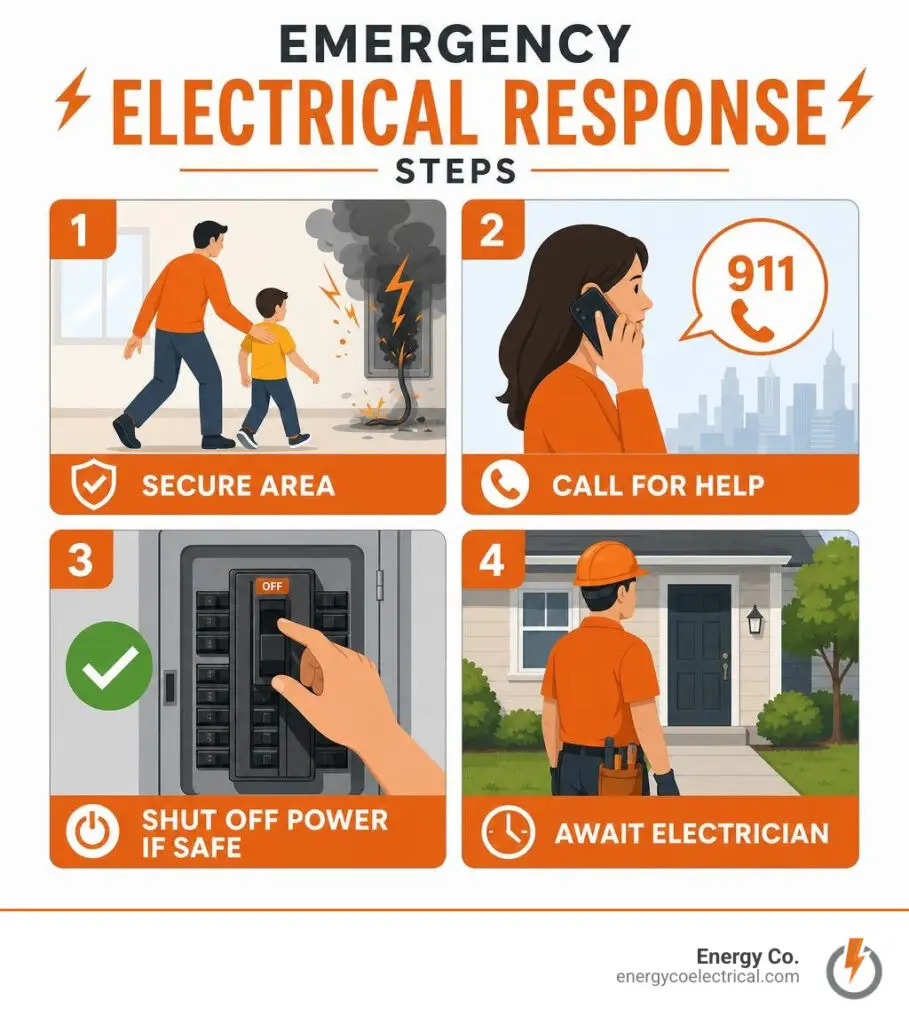
For chicagoland emergency electrical repair, treat sparks, smoke, burning-plastic odors, a hot electrical panel, damaged wires, or water near electricity as urgent. Move people away from the hazard, call 911 if there is fire or immediate danger, and contact a licensed 24/7 electrician. If it is safe to do so, turn off the main breaker – but never touch a wet panel, exposed wire, or downed utility line.
Weekend problems often follow Chicago-area thunderstorms, snow and ice, or extreme heat. A qualified emergency electrician may reach downtown Chicago in 30 minutes or less, while many suburban calls take roughly 45 to 60 minutes, depending on weather and traffic.
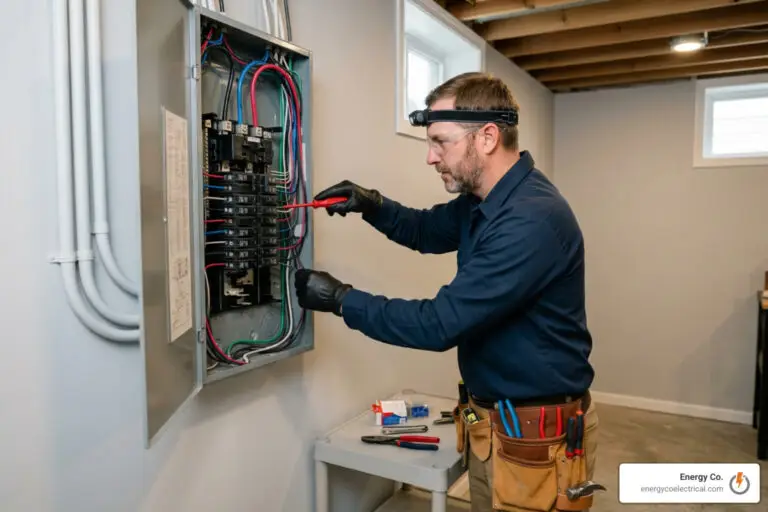
I am Michał Napieralski of Energy Co., a Schaumburg electrician serving residential and commercial customers with panel upgrades, breaker replacement, wiring repair, and safety-focused electrical work. In this guide, I will explain how to handle chicagoland emergency electrical repair safely and choose a reliable local professional when time matters.
Chicagoland emergency electrical repair definitions:
Identifying Common Weekend Electrical Emergencies in Chicago
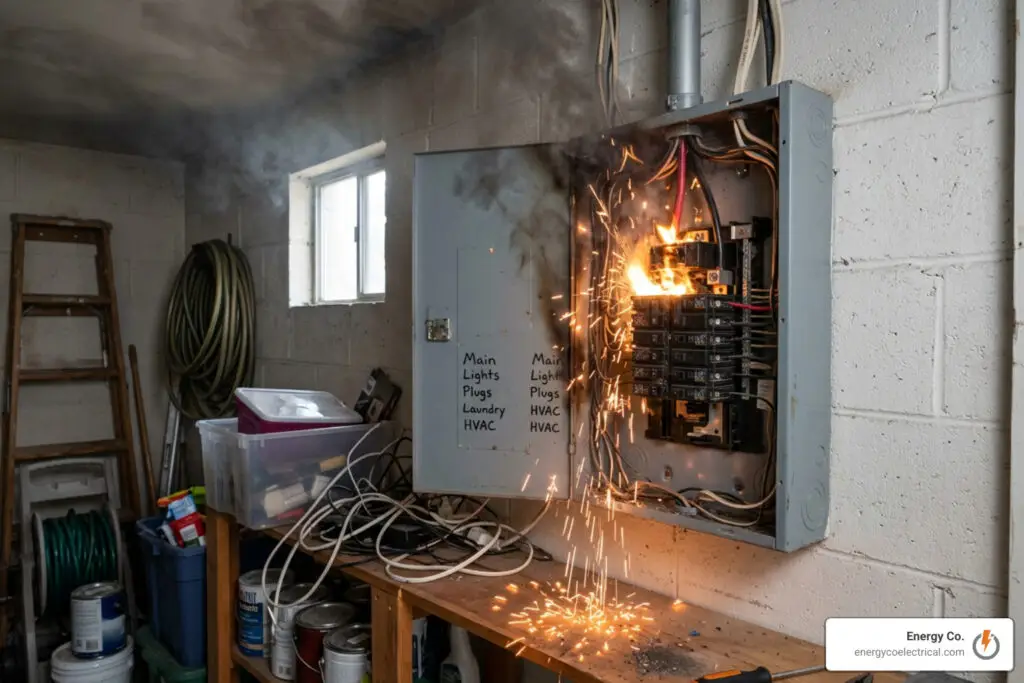
Electrical emergencies rarely operate on a convenient 9-to-5 schedule. In our years serving property owners across Cook County and the Northwest Suburbs, we notice that severe system breakdowns peak on weekends when whole families are home running major appliances, charging electronics, and pushing older distribution systems past their limits.
Nationwide, electrical fires account for approximately 13% of all residential fires, with most stemming directly from overloaded circuits, deteriorated components, or improper wiring. The U.S. Consumer Product Safety Commission highlights that electrical malfunctions trigger roughly 51,000 home structure fires annually, claiming nearly 500 lives and causing over $1.3 billion in property damage. The City of Chicago logged over 2,500 electrical-related emergency calls to 311 in a single year, with localized power outages, exposed arcing wires, and smoking panels leading the dispatch logs.
Recognizing early warning signals prevents catastrophic losses. If you notice sudden dimming or buzzing, reviewing why is my house flickering diagnosing home electrical problems and how to fix them helps determine whether the issue is isolated or grid-wide. When specific switches fail, emit fishy smells, or spark, prompt outlet switch troubleshooting is essential to isolate the affected branch before heat builds up inside wall cavities.
Weather-Driven Grid Failures and Storm Damage
Chicago’s climate puts intense stress on exterior and interior infrastructure. Nearly 70% of electrical emergencies throughout the region happen during extreme weather conditions, including summer microbursts, severe thunderstorms, winter blizzards, and extended sub-zero cold snaps.
During severe summer storms, high winds bring heavy tree limbs down onto overhead service drops, pulling electrical meters away from building exteriors. In winter, freeze-thaw cycles allow moisture to enter compromised outdoor conduit, where it expands, cracks fittings, and causes immediate ground faults. When the grid fluctuates during severe weather, knowing what to do when your power goes bump in the night ensures you can protect expensive electronics and keep your family safe until repairs are made.
Vintage Wiring and Knob-and-Tube Hazards
The architectural history of Chicago—from classic brick bungalows in Cicero to historic two-flats and Victorians across the city—adds complexity to weekend repairs. Many older properties still house active or partially abandoned knob-and-tube wiring, cloth-sheathed lines, or undersized 60-amp fuse boxes.
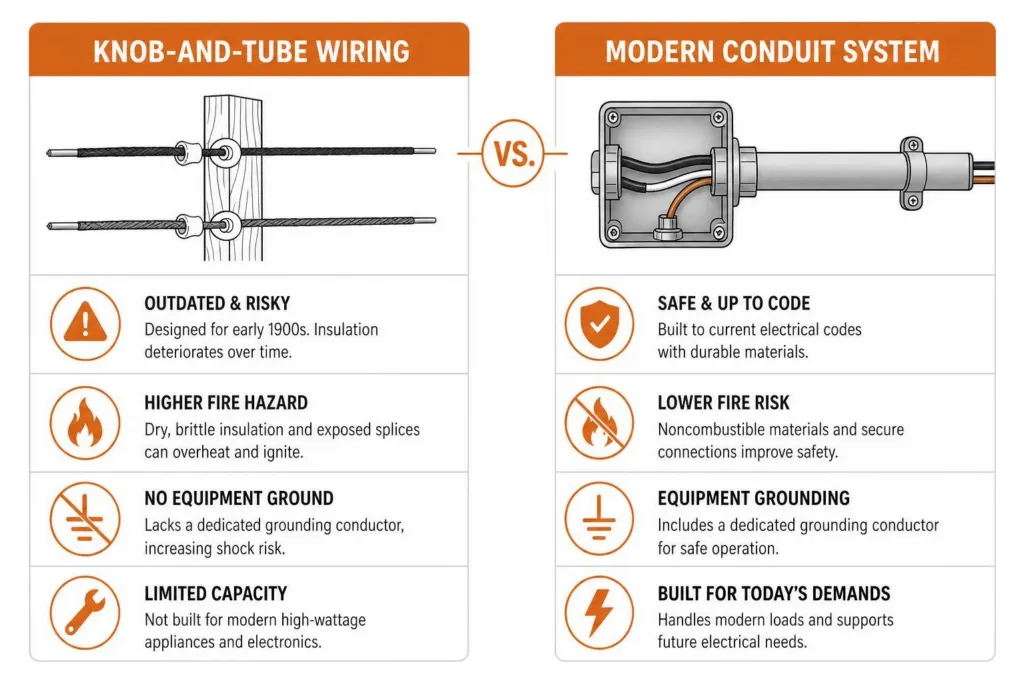
Knob-and-tube lacks a dedicated equipment grounding conductor. Over decades, surrounding thermal insulation, unpermitted modifications, and heat cause the original varnished cloth insulation to dry out, crumble, and leave energized conductors bare inside partition walls. When modern high-wattage devices like portable space heaters, portable air conditioners, and induction cookware overload these circuits, splices overheat rapidly. If your property features these legacy systems, finding a chicago electrician who wont blow a fuse over knob and tube ensures your technician understands vintage assemblies and the necessary remediation techniques.
How to Vet a Chicagoland Emergency Electrical Repair Contractor
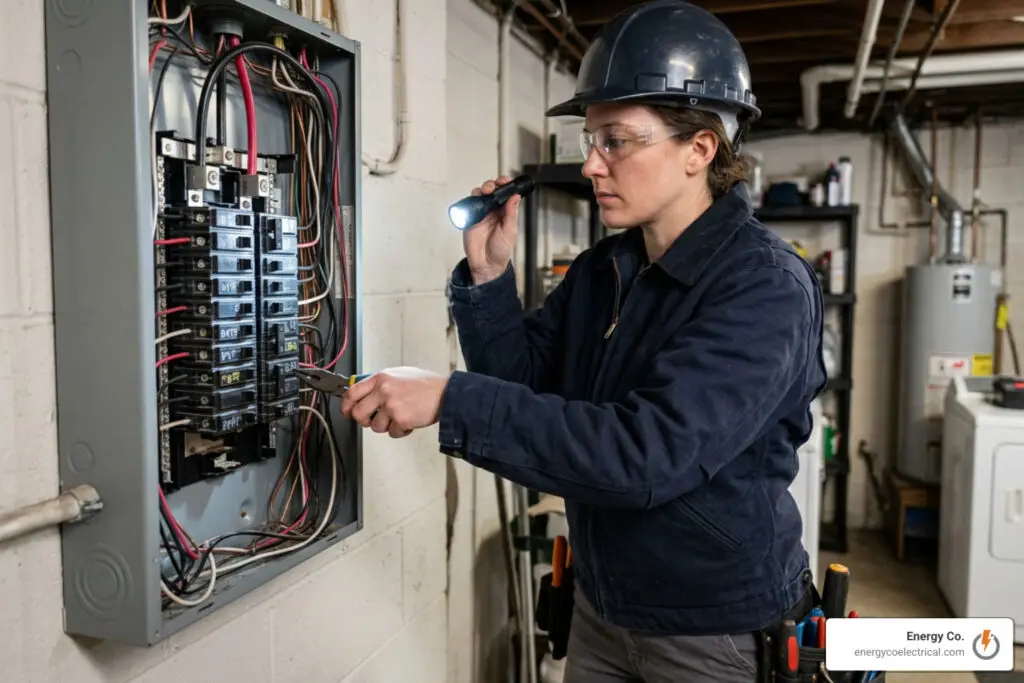
When an emergency hits on a Saturday night or Sunday afternoon, panic can cloud decision-making. In Cook County alone, there are more than 1,200 licensed electrical contractors, but only roughly 15% offer true 24/7 on-call emergency response with fully equipped service vehicles.
Choosing an unqualified or uninsured handyman during an urgent situation invites severe safety hazards, code violations, and denied insurance claims. We always advise home and business owners to rely on shock-proof your home finding the best licensed electricians nearby to verify certifications, insurance coverage, and municipal standing before granting access to your main service panel.
| Region / City Area | Typical Emergency Response Window | Primary Factors Influencing Arrival Time |
|---|---|---|
| Downtown Chicago | 20 – 30 Minutes | High-density proximity, building freight elevator access, parking |
| Near North / West Sides | 30 – 45 Minutes | Arterial traffic flow (e.g., Kennedy/I-90, Eisenhower/I-290) |
| Northwest Suburbs (Schaumburg, Arlington Heights, Palatine) | 35 – 50 Minutes | Route 53 / I-90 corridor access, localized weather conditions |
| West Suburbs (Hanover Park, Streamwood, Roselle, Cicero) | 40 – 60 Minutes | Local road grid transit, suburban dispatch routing |
Step-by-Step Vetting for Chicagoland Emergency Electrical Repair
When you call an on-call contractor during off-hours, take two minutes to run through a quick verification checklist:
- Verify Municipal Licensing: Ensure the contractor holds a current Supervising Electrician license valid in Chicago or the specific suburb where work will occur.
- Confirm 24/7 Availability: Double-check that you are speaking with an active dispatch team rather than an automated answering machine that holds messages until Monday morning.
- Ask About Truck Stock: A well-prepared emergency team carries commercial-grade breakers, rigid conduit, wire, and safety disconnects directly on their vans.
- Evaluate Experience: Review the ultimate guide to finding a local emergency electrician without losing your spark to confirm the contractor handles complex troubleshooting and understands local structural quirks.
- Avoid Rushed Commitments: Reviewing 5 common emergency electrician mistakes you can’t afford to make helps you steer clear of unverified contractors demanding upfront cash with zero documentation.
Understanding Costs and Estimates for Chicagoland Emergency Electrical Repair
Emergency electrical repairs carry different fee structures than standard scheduled upgrades due to after-hours staffing, rapid dispatch logistics, and holiday coverage. In the Chicagoland area, standard emergency service call fees and initial diagnostic assessments generally range from $150 to $500. Depending on the complexity—such as replacing melted bus bars, repairing water-damaged meter sockets, or isolating buried line faults—total emergency repairs can exceed $1,000.
Transparent contractors clearly communicate their emergency dispatch fees, hourly labor rates, and hardware pricing before starting any physical repairs. You can explore how to find an affordable electrician without getting shocked by the bill to budget effectively. For specific component failures, understanding the shocking truth about the cost for electrician to replace circuit breaker gives you a clear baseline of standard equipment and labor costs across our service areas.
Immediate Safety Protocol While Waiting for Service
The moments between hanging up the phone with dispatch and our technician arriving at your door are critical for protecting your property and family. Take deliberate steps to stabilize the environment:
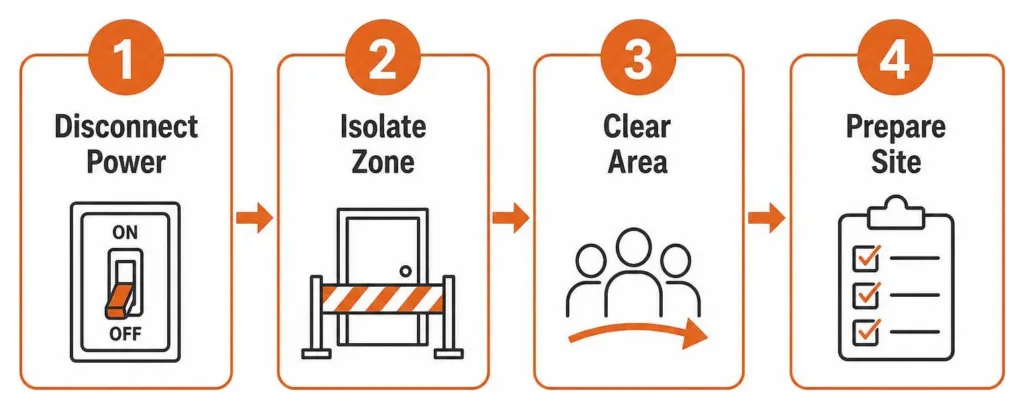
- Evacuate the Immediate Area: Keep children, pets, and family members away from the room, panel, or fixture exhibiting smoke, humming, or arcing.
- Locate the Main Service Disconnect: If the main panel is dry, clear of obstructions, and safe to access, switch the primary breaker to the “OFF” position to de-energize the entire structure.
- Avoid Wet Environments: If water is pooling near the breaker panel, basement subpanel, or flooded outlets, do not step into the water or touch any equipment. Wait for our crew or the fire department to disconnect power externally.
- Have Fire Extinguishers Ready: Only use a Class C-rated dry chemical extinguisher on an active electrical fire. Never apply water to energized electrical equipment.
- Prepare Property Access: Clear hallways, unlock perimeter gates, secure domestic pets, and ensure exterior entry points are well-lit for our incoming technicians.
For a detailed walkthrough of overnight safety procedures, consult our 24-hour emergency electrical repair guide for homeowners.
Critical Dos and Don’ts for Breakers and Panels
When a circuit trips repeatedly or your panel hums under heavy load, correct handling prevents small component issues from escalating into major electrical fires.
- DO reset a tripped breaker only once after unplugging recently connected appliances. If it immediately clicks back to the center tripped position, leave it alone.
- DON’T hold or tape a circuit breaker handle in the “ON” position. Breakers trip to prevent wires from overheating inside your walls; forcing them closed removes that safety protection.
- DO inspect the panel surface using the back of your hand with light touch—if the steel enclosure feels noticeably hot, shut down the main if safe.
- DON’T attempt to remove the dead-front panel cover yourself. Exposed bus bars carry lethal voltages even when individual branch switches are open.
If your panel continues tripping or shows signs of thermal stress, schedule professional circuit breaker repair immediately. Reviewing electrical repairs dos and donts for beginners helps prevent well-intentioned DIY mistakes that could cause electrical shocks or equipment damage.
Navigating Chicago Electrical Codes and Building Regulations
Performing electrical repairs in the Chicagoland footprint requires strict compliance with distinct regional standards. While the National Electrical Code (NEC) serves as the baseline nationwide, the City of Chicago enforces the Chicago Electrical Code—widely recognized as one of the strictest municipal codes in the country.
The primary difference lies in the mandatory use of metal raceways. Unlike most suburbs that allow non-metallic sheathed cable (Romex / NM cable) inside residential wood frame construction, Chicago requires all wiring within city limits to run inside rigid metal conduit, intermediate metal conduit (IMC), or electrical metallic tubing (EMT). Flexible metal conduit (Greenfield) is strictly limited to short equipment connections. This mandate ensures that nails, screws, and rodents cannot penetrate active conductors, substantially reducing structure fires across densely populated neighborhoods.
Furthermore, if you are leasing property, local statutes like the Chicago Residential Landlord and Tenant Ordinance (RLTO) govern response times and habitability standards regarding loss of primary power and heat during winter. Tenants and property managers can read navigating the rlto for electrical repairs in your chicago apartment to understand legal repair windows and disclosure requirements. To stay fully compliant across both city and suburban jurisdictions, refer to our comprehensive primer on chicago electrician what you need to know.
Frequently Asked Questions About Weekend Electrical Repairs
How fast can an emergency electrician reach my Chicagoland home?
Response times depend on your exact location, the time of day, and weather conditions. For downtown Chicago and high-density neighborhoods, our technicians typically arrive in 30 minutes or less. Across Cook County and the Northwest Suburbs—including Schaumburg, Hoffman Estates, Elk Grove Village, Palatine, Rolling Meadows, Roselle, Streamwood, Hanover Park, Mount Prospect, and Arlington Heights—our average transit and dispatch window ranges between 35 and 60 minutes.
What qualifies as an urgent electrical emergency versus a routine repair?
An issue is an active emergency if it poses immediate risks of fire, electrocution, or major property loss. This includes visible sparks, active arcing, scorching around outlets, hot electrical panels, burning plastic smells, water contacting electrical systems, or sudden total power loss while neighboring homes still have power.
Routine repairs include cosmetic fixture changes, loose decorative switch plates, adding new outlets, or single-outlet failures where all other branch devices operate normally. If an Arc-Fault Circuit Interrupter (AFCI) repeatedly trips during light use, review our guide to stop the trip a guide to arc fault breaker repair and costs to determine whether you need same-day dispatch or a scheduled weekday appointment.
Can I perform DIY electrical troubleshooting during an emergency?
We strongly advise against attempting DIY repairs during an active electrical emergency. Energized panels, shorted circuits, and compromised wiring carry severe risks of electrocution and arc flash injuries. While you can safely run basic tests—such as unplugging heavy appliances or resetting a single standard breaker once—you should leave interior panel diagnostics, wiring splices, and meter base repairs to licensed professionals. For safe diagnostic steps, explore the easiest way to troubleshoot electrical problems.
Conclusion
Electrical failures never wait for a convenient time. When your lights fail, your breaker panel buzzes, or storm winds pull down service connections, having a trusted partner ready to dispatch makes all the difference.
At Energy Co., we provide dependable, code-compliant residential, commercial, and industrial electrical solutions across Chicago, Cicero, and the entire Northwest Suburban region. Our licensed, background-checked technicians bring deep expertise in historic building wiring, modern panel design, and local electrical codes, all backed by our satisfaction guarantee. Don’t spend your weekend worried about hidden hazards or sitting in the dark—reach out to our 24/7 dispatch team for reliable emergency electrical services right away.