Understanding AFCI Technology and Common Trip Causes
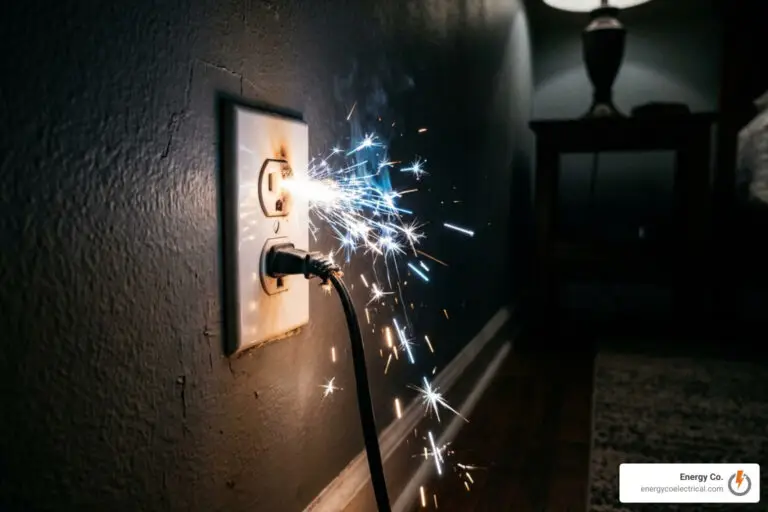
Arc Fault Circuit Interrupter (AFCI) technology acts as an advanced safety monitor inside your breaker box. While traditional breakers simply measure the volume of electricity passing through to stop an overload, AFCI breakers process electronic signatures. They actively evaluate current patterns to detect unintended electrical arcing—a intense discharge of electricity across an air gap that generates severe heat and serves as a primary source of residential electrical fires. This guide explains arc fault breaker repair, the most common causes and typical costs.
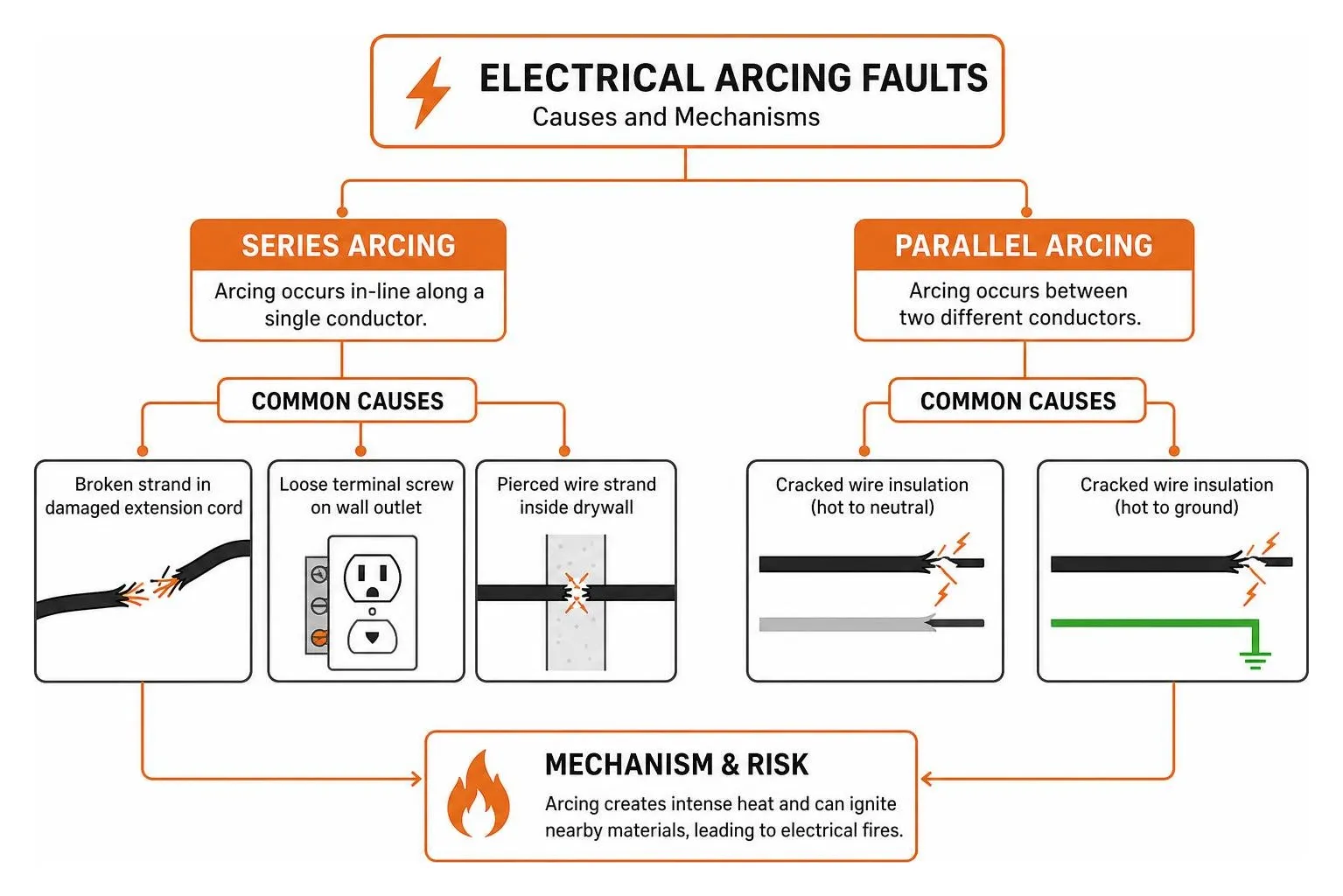
AFCIs are designed to recognize two major types of arcing conditions:
- Series Arcing: Occurs in-line along a single continuous conductor. Common culprits include a broken strand inside a damaged extension cord, a loose terminal screw on a wall outlet, or a pierced wire strand inside drywall.
- Parallel Arcing: Occurs when electricity leaps between two different conductors, such as between the hot wire and the neutral wire, or between a hot wire and the ground. This typically stems from cracked wire insulation or severe mechanical damage.
Modern electrical standards, including the National Electrical Code (NEC), require AFCI protection across virtually all living spaces in newly constructed or remodeled homes. Knowing how these devices operate is the first step toward effective Demystifying Your Home Electric Panel Without Getting Shocked.
What Distinguishes Arc Fault Breakers from Standard Breakers?
Standard thermal-magnetic circuit breakers operate on basic mechanical triggers: heat generated by a steady overload or a magnetic reaction triggered by a massive short-circuit current spike. However, dangerous arcing can occur at lower current levels (under 15 or 20 amps) that won’t trip a standard breaker.
AFCI devices use internal microprocessors to continuously sample high-frequency current waveforms thousands of times per second. By evaluating these dynamic waveform signatures, the breaker distinguishes harmless operational arcs—like the brief spark inside a running vacuum motor—from hazardous, chaotic arcing patterns that pose a fire risk.
| Feature | Standard Breaker | GFCI Breaker | AFCI Breaker |
|---|---|---|---|
| Primary Focus | Equipment & wiring protection | Shock & electrocution prevention | Structural fire prevention |
| Detection Method | Thermal/magnetic overload | Current imbalance (4–6 mA) | Microprocessor waveform analysis |
| Primary Location | Whole-home baseline | Kitchens, baths, outdoors | Bedrooms, living spaces, hallways |
Common Triggers Behind Nuisance and True Trips
When dealing with a tripping breaker, distinguishing between a true safety threat and a “nuisance” trip is critical. Common causes include:
- Damaged or Pinching Wiring: Cable crushed by heavy furniture against wall plugs, or wires pierced by drywall screws during recent DIY projects.
- Faulty Appliances and Electronics: Aging appliances with worn motor brushes (like older vacuums) or damaged power cords with frayed jackets.
- Incompatible Electronics: Certain inexpensive LED dimmers, electronic light ballasts, or surge protectors can leak subtle radio frequency noise back into the circuit, confusing sensitive AFCI microprocessors.
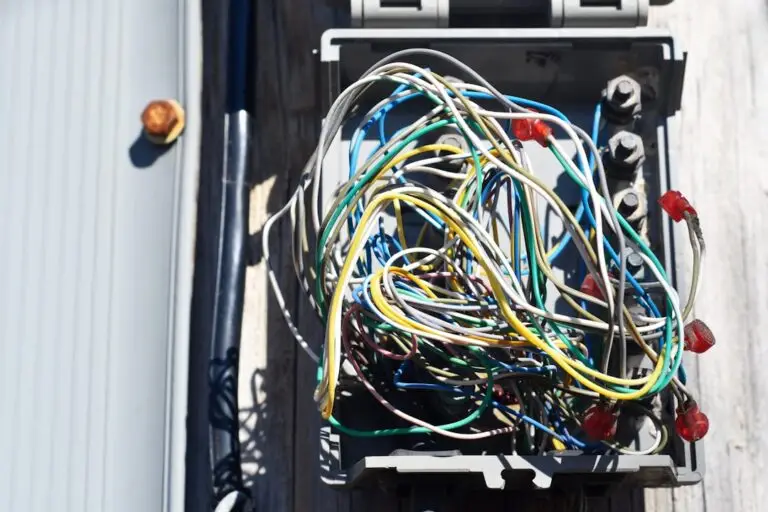
- Loose Wiring Connections: Loose wire-nut terminations inside junction boxes, or wires improperly attached to outlet terminals.
- Environmental Factors: Dust or debris accumulation inside wall receptacles creating minute conductive paths.
Step-by-Step Troubleshooting and Diagnostic Process
When your AFCI trips, systematic isolation is the fastest path to identifying the root cause without taking unnecessary risks.
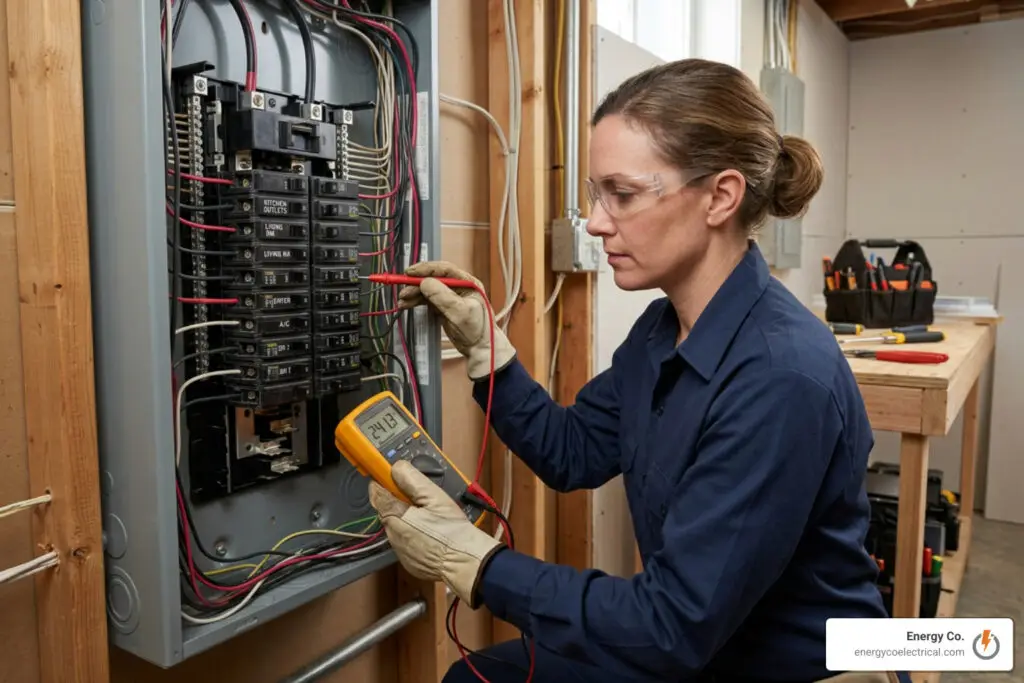
DIY Diagnostics Before Calling for Arc Fault Breaker Repair
Before scheduling an Arc fault breaker repair visit, you can isolate whether the issue stems from an open circuit, a plugged-in device, or a faulty breaker by following this procedure:
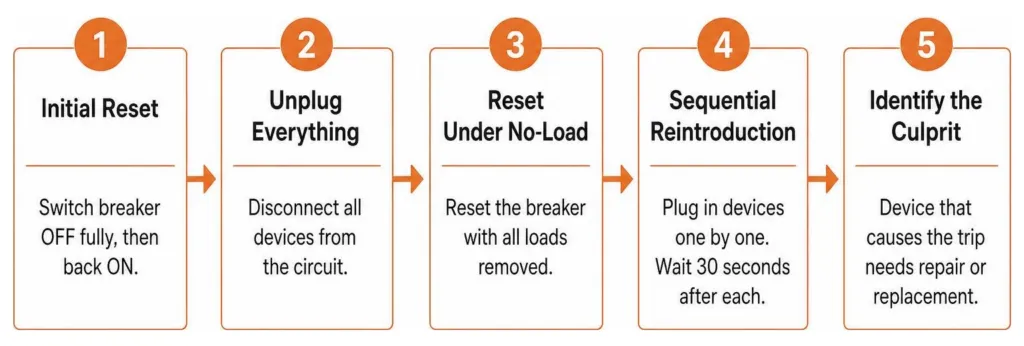
- Perform the Initial Reset: Push the breaker handle firmly to the “OFF” position until it clicks, then flip it back to “ON”. If it trips immediately, do not force it.
- Unplug Everything: Disconnect all appliances, lamps, surge protectors, and chargers from every outlet on that specific circuit.
- Reset Under No-Load: Reset the breaker again with all loads removed. If it stays on, your permanent wall wiring is likely intact, and an appliance is responsible.
- Sequential Reintroduction: Plug devices back into the circuit one by one. Wait at least 30 seconds after plugging in each item to see if the breaker reacts.
- Identify the Culprit: If plugging in a specific item (such as an old space heater or lamp) causes an immediate trip, that device contains internal damage and requires repair or replacement.
For more detailed diagnostic steps on home wiring issues, review our guide to The Easiest Way to Troubleshoot Electrical Problems.
How to Test and Identify a Faulty Breaker vs Damaged Wiring
If the breaker continues to trip with nothing plugged in, the issue lies within the wall wiring, a loose connection, or the AFCI device itself.
AFCIs carry an operational lifespan of 10 to 15 years on average. Over time, internal electronics can fail, or the physical latching mechanism can weaken. To test the breaker’s internal functionality:
- Use the Built-in Push-to-Test Button: Modern AFCI units feature a dedicated “TEST” button on the front face. Pressing this button introduces an artificial internal test signal. If the breaker is receiving power but fails to trip when the button is pressed, the internal sensing circuit has failed, and the breaker must be replaced. Refer to the manufacturer’s GE AFCI Breaker Instructions for specific test rocker directions (such as phase-to-neutral or phase-to-ground tests).
- Check Status Indicators: Modern AFCI units include diagnostic LED lights that flash specific sequences upon reset, indicating whether the last trip was caused by an arc fault, ground fault, or simple overload.
Arc Fault Breaker Repair and Professional Replacement Guidelines
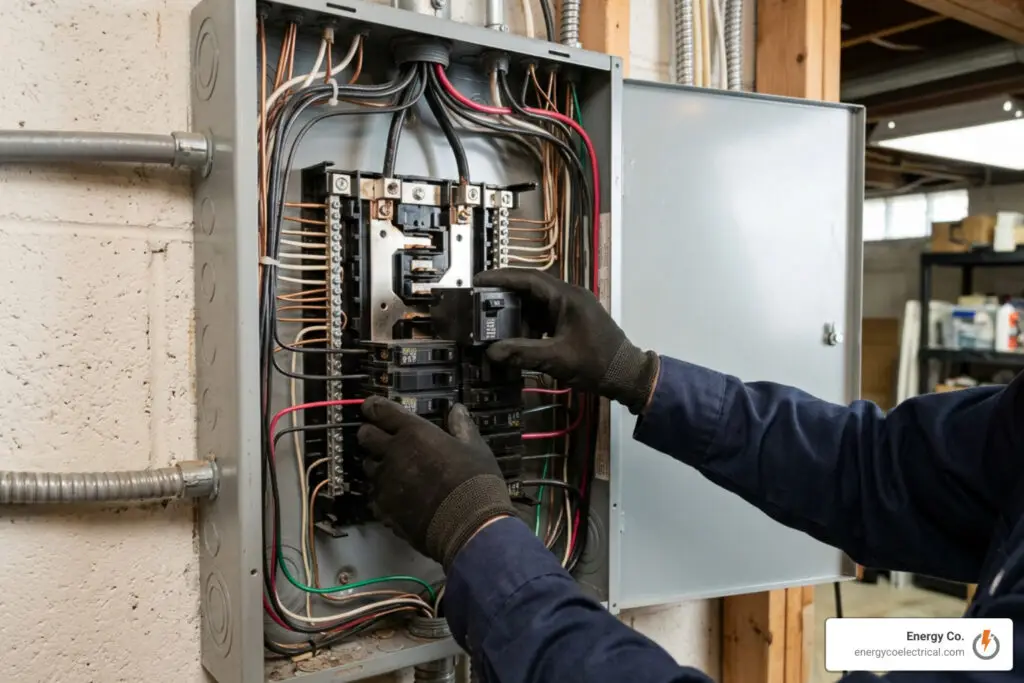
DIY vs Professional Arc Fault Breaker Repair Options
While testing plugged-in appliances is safe for homeowners, opening the main panel to replace a circuit breaker introduces severe safety hazards, including direct exposure to energized bus bars, severe shock, and dangerous arc flash risks.
Field repair of an AFCI breaker’s internal components is not permitted under UL 1699 safety standards; if the internal detection circuit or switch breaks, the entire unit must be swapped out. While swapping a component seems simple, underlying circuit faults often remain unaddressed without professional diagnostics.
Reviewing safety best practices on Electrical Repairs Dos and Donts for Beginners is strongly advised before attempting any home panel maintenance.
Replacement Costs, Panel Compatibility, and NEC Codes
When replacing an AFCI, brand compatibility is non-negotiable. Circuit breakers are UL-listed for specific electrical panel enclosures (e.g., Square D breakers in Square D panels). Installing mismatched brands voids equipment warranties and violates local building codes.
Under the current NEC 2023 standards, AFCI protection is mandated across all 15A and 20A 120V circuits supplying living spaces in dwelling units—including bedrooms, family rooms, dining rooms, kitchens, hallways, and laundry areas.
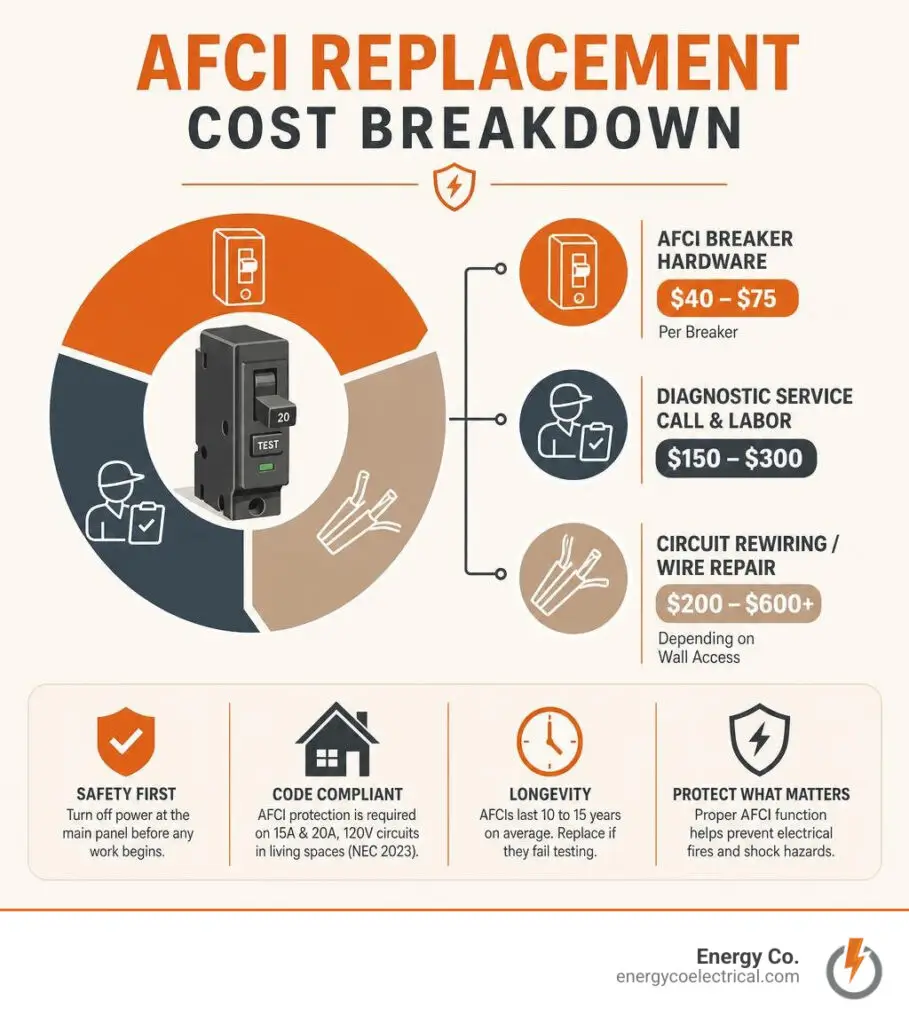
| Service Scope | Estimated DIY Cost | Professional Electrician Cost |
|---|---|---|
| AFCI Breaker Hardware Only | $40 – $75 per breaker | $40 – $75 (materials included in job quote) |
| Diagnostic Service Call & Labor | $0 (Personal labor) | $150 – $300 |
| Circuit Rewiring / Wire Repair | Minimal (materials) | $200 – $600+ (depending on wall access) |
| Total Expected Project Range | $40 – $75 | $200 – $450 |
To learn more about breaker replacement pricing, check out our guide on The Shocking Truth About the Cost for Electrician to Replace Circuit Breaker.
Frequently Asked Questions About Arc Fault Breaker Issues
Can an arc fault breaker be repaired internally?
No. AFCI breakers are sealed, micro-processor-controlled safety components governed by strict UL 1699 specifications. They are not field-repairable. If internal components fail, the built-in test button fails to trip the mechanism, or the internal sense board degrades, the complete unit must be removed and replaced with a brand-new breaker. For additional context on panel components, consult our overview of Circuit Breaker Repair.
Why does my AFCI breaker trip when it rains?
Tripping during heavy rain usually points to moisture entering an outdoor outlet box, exterior light fixture, or an underground conduit feed connected to that circuit. Water creates a conductive bridge between hot, neutral, or ground conductors. This micro-leakage causes arcing waveforms that trigger sensitive AFCI breakers. Inspecting outdoor receptacles for damaged weatherproof covers and sealing exterior wall penetrations usually resolves this issue.
What local electrical code rules affect Chicago AFCI requirements?
The City of Chicago operates under a unique building code that requires metal conduit (EMT) for all residential electrical installations, rather than plastic-sheathed NM cable (Romex). While rigid metal conduit provides superior physical protection against wire damage, improper pulling techniques or burrs on cut conduit edges can strip wire insulation inside the pipe. This leads to hidden arcing faults against the grounded metal conduit. For a detailed breakdown of local requirements, read about The Shocking Truth About Chicago AFCI Requirements.
Conclusion
A tripping arc fault breaker should never be treated as just a minor inconvenience—it is an active safety system protecting your home and family from serious fire hazards. By systematically unplugging devices and running basic reset tests, you can easily determine whether the issue stems from a faulty lamp or requires deeper electrical investigation.
When basic troubleshooting doesn’t solve the problem, or if you suspect hidden wiring damage, call on licensed professionals. Energy Co. provides expert panel diagnostics, code-compliant updates, and fast Arc fault breaker repair throughout Chicago, Schaumburg, Hoffman Estates, Arlington Heights, and across Cook County. Contact us today via our Residential Electrical Services to schedule an inspection and ensure your home stays safe and secure.