Last updated:
Commercial Electrical Maintenance: What to Look for in a Provider
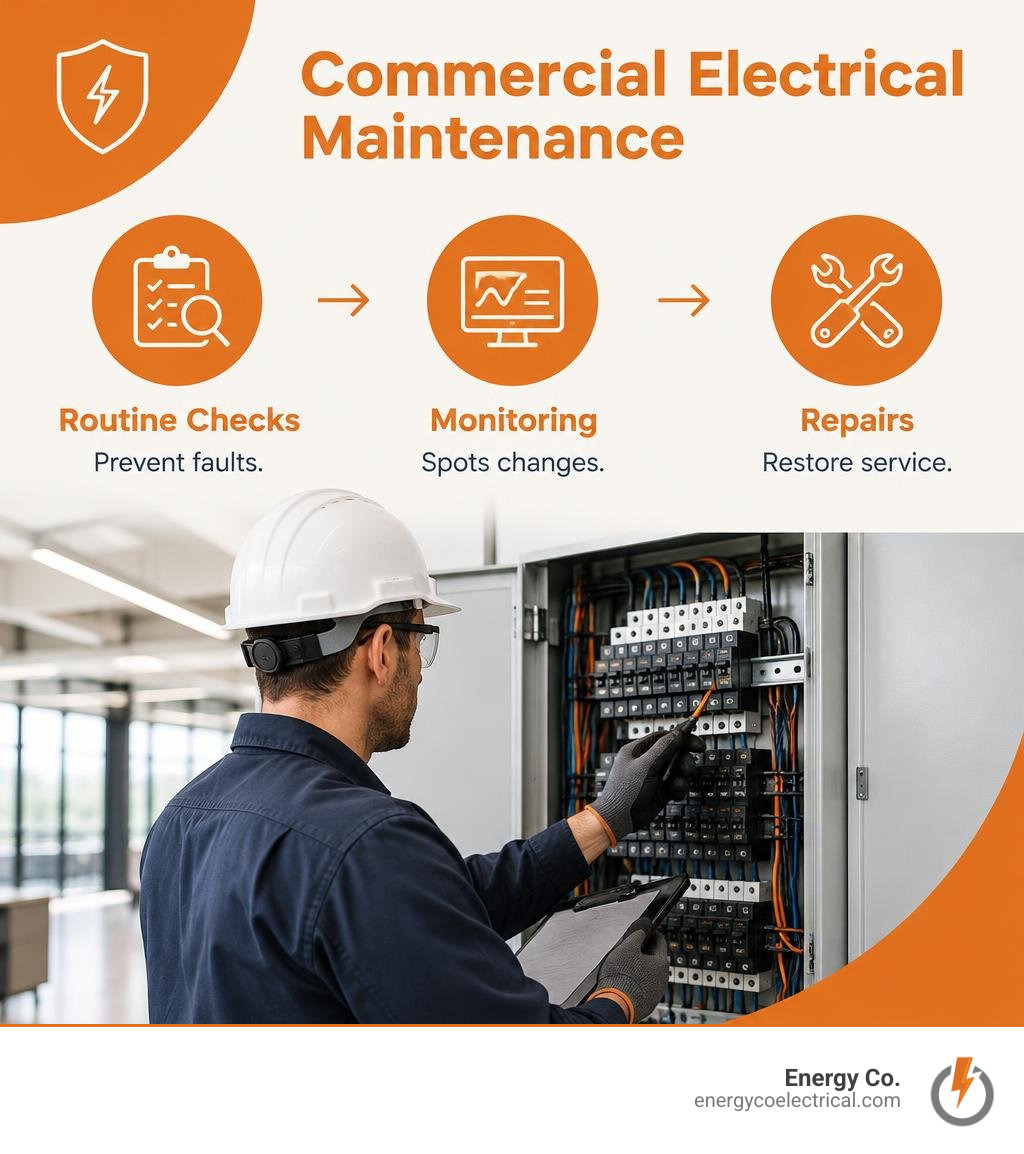
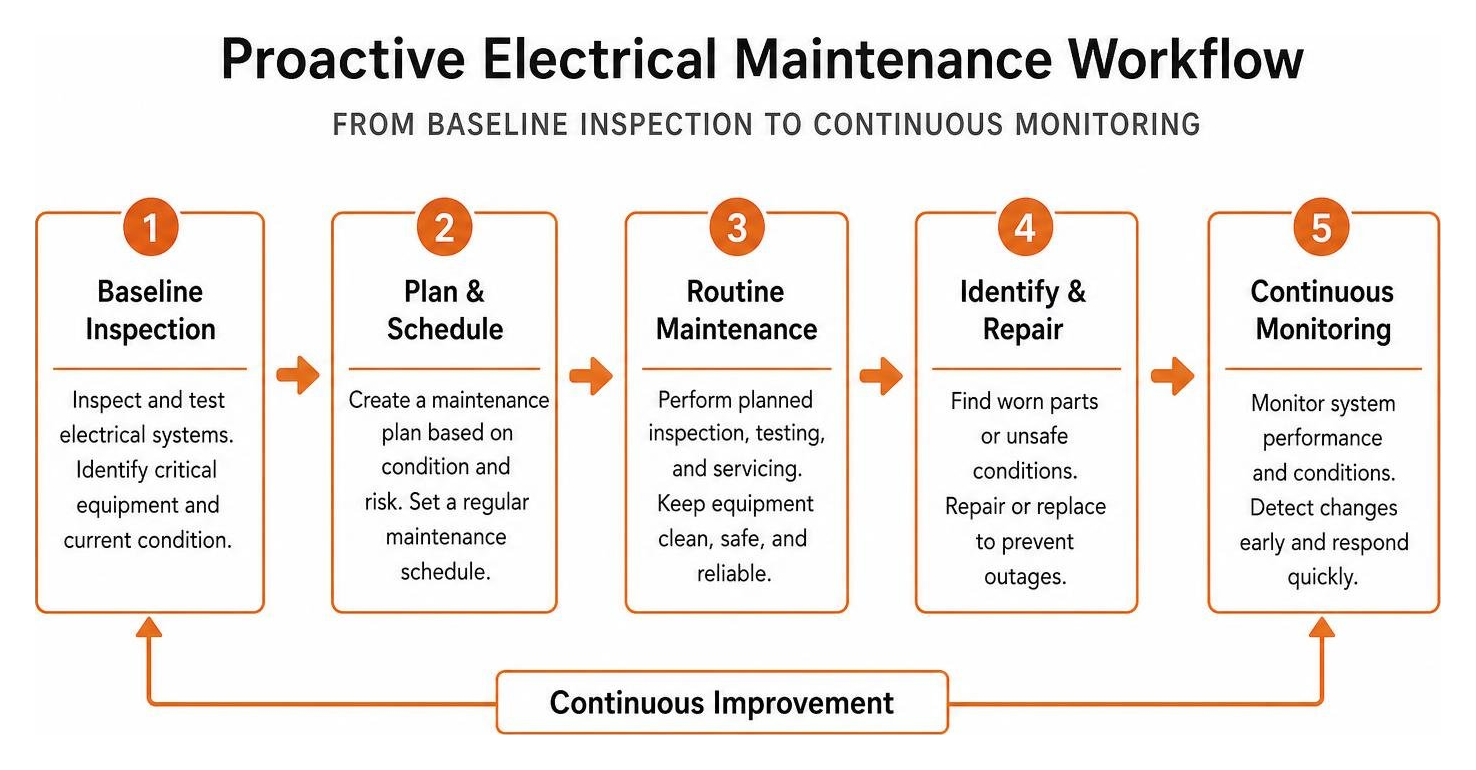
Commercial electrical maintenance is the planned inspection, testing, and repair of a business’s electrical systems. It helps catch worn parts and unsafe conditions before they cause an outage. For a Chicago business, a good plan starts with a list of critical equipment, a schedule based on its condition, and a clear process for fixing problems.
Table of Contents
Choosing a provider? Look for licensed electricians with commercial experience, a written scope of work, clear safety practices, and the ability to respond when power fails. That matters even more in older buildings, where an electrical issue can quickly disrupt tenants, staff, or customers.
I’m Michał Napieralski, and I’ll walk you through what a sound maintenance plan covers and how to assess the people who carry it out.
Why Commercial Electrical Maintenance Is Vital for Facility Safety and ROI
Running a facility across Chicagoland—whether an office building in Arlington Heights, a retail store in Cicero, or a logistics hub in Elk Grove Village—requires uninterrupted, dependable power. Electrical infrastructure is largely out of sight, but neglecting it carries severe operational and financial consequences. Many building managers dont get zapped by poor commercial electrical system maintenance only after experiencing an unexpected outage or severe equipment breakdown.
Proactive upkeep directly protects your balance sheet and your workforce. When electrical distribution equipment operates cleanly, connections are torqued correctly, and phase loads remain balanced, overall energy efficiency climbs. A structured preventive maintenance strategy can reduce facility energy consumption by 10% to 15% and extend overall equipment operating life by 20% to 30%.
Regular servicing also sharply cuts down emergency repairs, protects against dangerous arc-flash hazards, and helps satisfy insurance underwriters. Many commercial insurance carriers offer premium reductions of 10% to 25% when organizations present documented compliance with national electrical maintenance standards.
| Factor | Proactive Maintenance Approach | Reactive Breakdown Approach |
|---|---|---|
| Operational Downtime | Planned, controlled maintenance windows | Unplanned, catastrophic outages during business hours |
| Direct Repair Costs | Predictable, budgeted labor and parts | Premium emergency rates, rush shipping, high component costs |
| Equipment Lifespan | Extended by 20% to 30% through regular care | Premature equipment replacement and asset degradation |
| Energy Consumption | Reduced by 10% to 15% through balanced loads | Elevated draw from loose connections and degraded conductors |
| Safety & Liability | Controlled risk, tested safety devices, code compliance | High arc-flash risks, fire hazards, potential regulatory citations |
Preventive vs. Predictive vs. Corrective Commercial Electrical Maintenance
A well-rounded electrical program balances three distinct maintenance strategies:
- Preventive Maintenance: Time- or calendar-based servicing performed on scheduled intervals. It involves cleaning switchgear, torquing terminals, inspecting commercial wiring, and verifying circuit breaker mechanical operations.
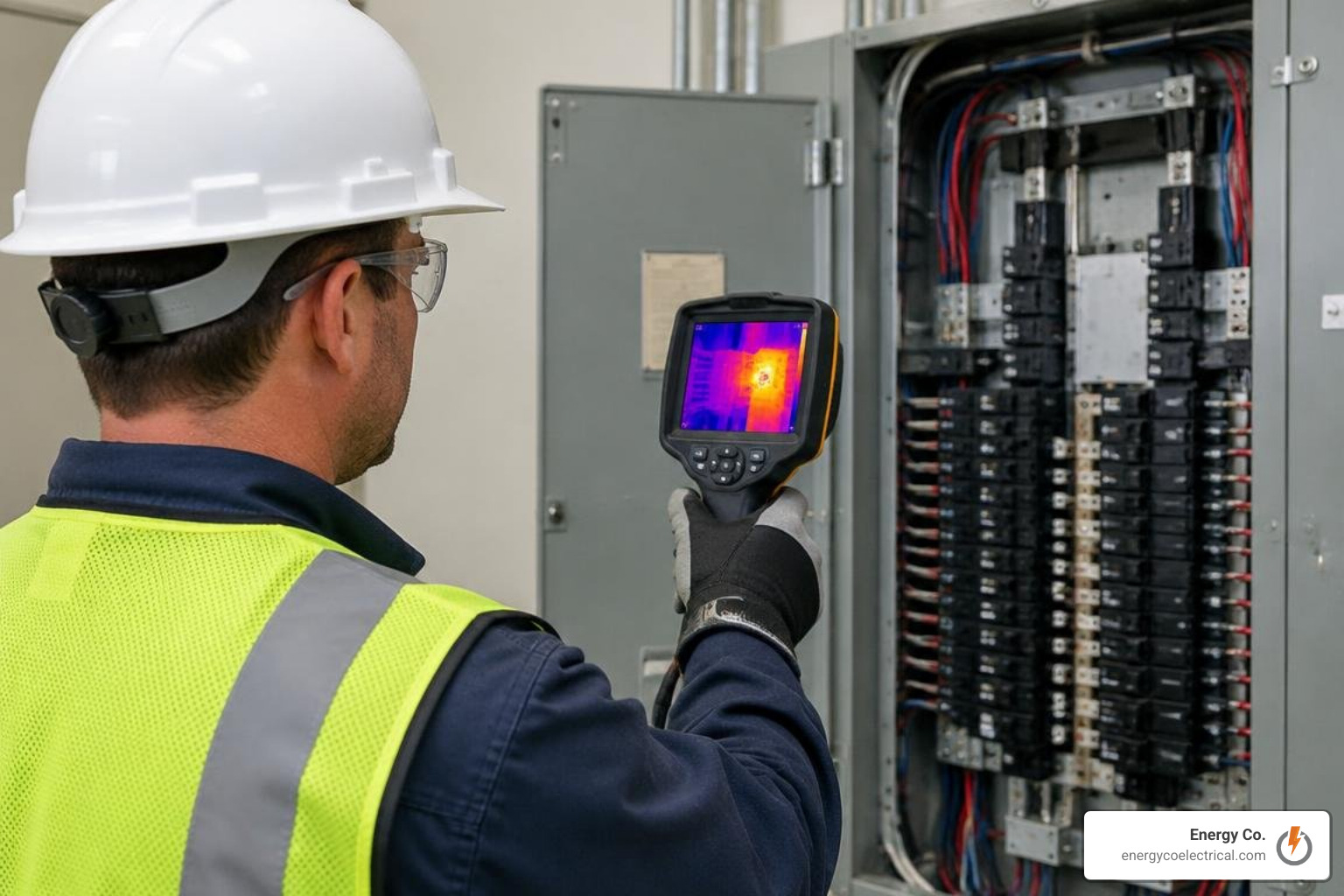
- Predictive Maintenance: Data-driven monitoring that tracks asset conditions in real time or during routine diagnostics. Using thermal imaging, continuous infrared sensors, and vibration analysis, technicians identify heat anomalies or insulation degradation before any component fails.
- Corrective Maintenance: Targeted repair or replacement executed after an inspection uncovers a defect, or following a minor failure.
Relying exclusively on corrective maintenance—running components until they burn out—creates massive business disruptions. That is precisely why your chicago business needs a proactive electrical repair plan that balances scheduled servicing with modern diagnostic testing.
Regulatory Standards: Navigating NFPA 70B and NFPA 70E Mandates
Commercial electrical compliance has evolved dramatically. Historically, NFPA 70B was viewed as a voluntary guideline. However, the National Fire Protection Association reclassified it into an enforceable standard. Facility leaders navigating these updates can review Eaton’s technical white paper on Understanding NFPA 70B electrical equipment maintenance standards to see how mandatory language shifts expectations across commercial properties.
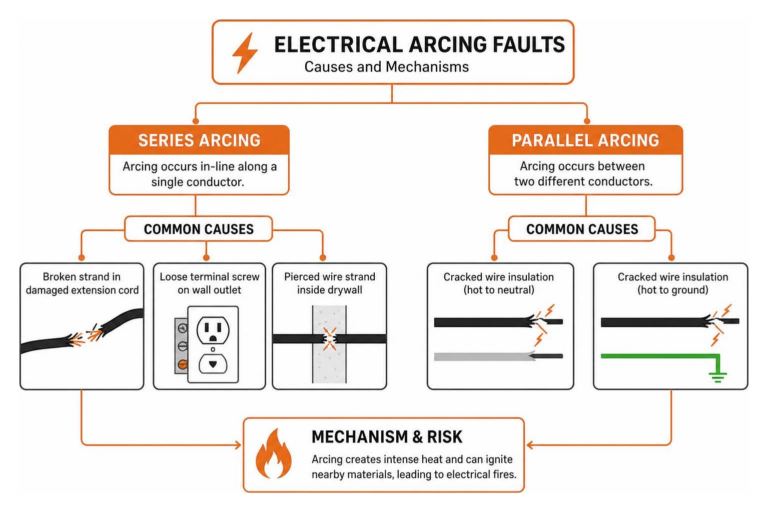
While NFPA 70E establishes safety protocols to protect workers from arc-flash and shock hazards, NFPA 70B governs the mechanical and electrical integrity of the equipment itself. They work hand-in-hand: you cannot claim that an electrical panel provides safe working conditions under NFPA 70E unless you maintain documented proof of its maintenance condition under NFPA 70B.
Although OSHA does not directly author NFPA standards, federal and local inspectors routinely enforce them under OSHA’s General Duty Clause when unmaintained switchboards or subpanels lead to workplace incidents. Pairing these guidelines with proper installation practices from the complete guide to commercial wiring ensures total regulatory alignment and keeps your staff protected.
Mandatory 5-Year System Studies and Condition-Based Assessments
Under current standards, facilities must maintain up-to-date power system engineering studies. NFPA 70B sets mandatory intervals not to exceed five years for:
- Short-Circuit Studies: Verifying that protective devices can safely interrupt maximum fault currents without exploding.
- Protective Device Coordination Studies: Ensuring upstream and downstream breakers trip in proper sequence to isolate faults locally.
- Incident Energy (Arc-Flash) Analyses: Determining accurate blast energy levels to calculate required personal protective equipment (PPE) ratings and update panel warning labels.
Facility managers can explore real-world implementation strategies in the 5-Year electrical maintenance planning guidelines, which explain how to coordinate these engineering reviews alongside regular equipment condition assessments.
Equipment must be evaluated and categorized into three condition tiers:
- Condition 1 (Good): Well-maintained equipment operating in clean environments with regular service history.
- Condition 2 (Fair): Operable equipment with minor wear, requiring standard maintenance cycles.
- Condition 3 (Poor): Aging or stressed equipment showing signs of thermal distress, moisture, or missed maintenance, requiring immediate service and shortened inspection cycles.
Essential Pillars of a Comprehensive Electrical Maintenance Program (EMP)
A compliant Electrical Maintenance Program (EMP) is a complete operational framework rather than a simple annual inspection sheet. As highlighted in the ultimate commercial electrical inspection survival guide, having detailed documentation and accurate schematics is critical during code inspections and insurance reviews.
An effective EMP rests on several core components:
- Asset Inventory and Single-Line Schematics: A complete index of transformers, switchboards, panelboards, disconnects, and motor control centers, supported by updated single-line diagrams.
- Circuit Breaker Primary and Secondary Injection Testing: Verifying that electronic trip units and mechanical linkages open within precise manufacturer tolerances under simulated fault conditions.
- Transformer Servicing and Oil Analysis: Inspecting dry-type windings or sampling dielectric fluid in liquid-filled units to detect insulation breakdown.
- Ground Fault Protection System Testing: Ensuring ground fault relays trip properly to protect personnel and prevent arcing ground fires.
- Lighting and Controls Maintenance: Verifying automated control panels, contactors, and energy efficiency fixtures, often coordinated through shining a light on commercial lighting services and retrofits.
Routine Inspection Schedules: Monthly, Quarterly, and Annual Protocols
A structured EMP breaks down service items into recurring timeframes to prevent minor wear from turning into equipment failure:
- Monthly Tasks: Test and log emergency exit signs and egress units using emergency lighting installation services for local businesses as a standard for pathway reliability. Run backup diesel generators under no-load or light-load conditions, and inspect primary electrical rooms for debris or water intrusion.
- Quarterly Tasks: Inspect exterior security fixtures and controls alongside commercial parking lot lighting. Exercise automatic transfer switches (ATS) under real or simulated loads, and check HVAC motor starter contacts.
- Annual and Multi-Year Protocols: Conduct full-building infrared thermographic surveys under peak load to detect loose lugs and thermal imbalance. Perform breaker timing tests, transformer insulation resistance (Megger) checks, and clean switchgear bus bars during scheduled maintenance shutdowns.
Planning Facility Shutdowns and Selecting Expert Service Providers

Major maintenance—such as busway cleaning, main switchboard servicing, and breaker testing—often requires a planned power shutdown. In commercial properties across Chicago, Schaumburg, and Rolling Meadows, planning an outage demands clear communication and tight project controls.
Successful shutdowns begin 12 to 18 months ahead of time:
- Develop a Clear Scope of Work: Identify every panel, transformer, and transfer switch to be serviced, leveraging your latest infrared reports to prioritize repairs.
- Author a Method of Procedure (MOP): Write a step-by-step technical script detailing switching sequences, Lockout/Tagout (LOTO) protocols, testing steps, and re-energization procedures.
- Coordinate with Local Utilities and Tenants: Work with utility providers (such as ComEd) to schedule service disconnects and negotiate optimal shutdown windows. Provide commercial tenants with written notices well in advance.
- Prepare Emergency Contingencies: Keep spare parts, replacement breakers, and mobile backup generators on standby. Knowing what commercial electrician emergency response teams do on site ensures your team is ready if a main breaker fails to reclose after servicing.
How to Choose a Qualified Partner for Commercial Electrical Maintenance
Not every electrical contractor is equipped to handle complex commercial distribution gear. Choosing the right partner requires vetting technical capabilities, local code knowledge, and safety records. Facility owners can reference a practical guide to finding a qualified commercial electrical contractor to structure their vendor evaluation.
When evaluating maintenance contractors, verify that they offer:
- Licensed master electricians with direct commercial switchgear experience.
- Deep familiarity with local Chicagoland building requirements and historical wiring methods.
- Advanced diagnostic equipment, including calibrated infrared cameras and primary injection test sets.
- Comprehensive safety records and strict adherence to NFPA 70E safety practices.
Working with an experienced team ensures that you receive top commercial electrician services in chicago expert solutions for your business tailored specifically to your building’s unique electrical demands.
Training, Certifications, and Industry Career Pathways
Modern commercial systems require highly trained technicians capable of navigating automation, digital trip units, and complex motor controls. Electricians often begin by earning formal credentials through vocational institutions or community college programs. A foundational education—such as an industrial electrical certificate—provides practical lab experience with variable frequency drives (VFDs), programmable logic controllers (PLCs), and safety fundamentals.
- Earning Potential: Entry-level technicians typically earn around $20 per hour, with the average annual salary for experienced industrial electrical maintenance technicians reaching $66,624.
- Industry Demand: Steady industrial activity maintains solid demand for skilled technicians who understand complex power systems.
- Specialized Expertise: As facilities integrate smart metering and complex manufacturing systems, technicians with specialized skills deliver essential support across diverse industrial electrical services.
Frequently Asked Questions About Commercial Electrical Maintenance
How often does NFPA 70B require commercial electrical testing?
Testing frequencies depend directly on equipment condition assessments and operating environments. While visual inspections and operational checks often occur monthly or quarterly, infrared thermographic surveys are generally required at least once per year. Major power system studies—including short-circuit, protective device coordination, and arc-flash incident energy analyses—must be updated at intervals not to exceed five years, or sooner whenever significant system modifications occur.
What is the financial return on investment for proactive electrical maintenance?
Proactive electrical maintenance delivers measurable financial returns by preventing costly emergencies and extending equipment life. On average, facilities see a 10% to 15% reduction in overall energy waste by eliminating phase imbalances and loose high-resistance connections. In addition, routine care extends the service life of major electrical assets by 20% to 30%, reduces the risk of unplanned business downtime, and qualifies businesses for insurance premium discounts of up to 25%.
Can in-house maintenance staff manage NFPA 70B compliance independently?
In-house teams can manage basic visual inspections, monthly emergency lighting tests, and simple filter changes if they are qualified under NFPA 70E safety rules. However, comprehensive compliance typically requires specialized diagnostic gear—such as high-voltage insulation testers, thermal imagers, and primary injection sets—as well as specialized engineering software for system studies. Most facilities utilize a hybrid model, pairing internal maintenance staff for routine checks with licensed commercial electrical contractors for annual diagnostic testing, calibration, and power studies.
Conclusion
A reliable electrical infrastructure is the backbone of any safe, productive business. Establishing a compliant, forward-looking maintenance plan safeguards your facility against unexpected power losses, lowers your operational overhead, and keeps you fully compliant with modern safety mandates.
At Energy Co., we provide dependable residential, commercial, and industrial electrical solutions throughout Chicagoland, including Chicago, Schaumburg, Elk Grove Village, Mount Prospect, Palatine, and Cicero. Whether you manage an older commercial building requiring modernization or need a structured maintenance partner, our licensed professionals deliver complete safety and reliability backed by our satisfaction guarantee. Explore our comprehensive commercial electrical services today to keep your facility powered, compliant, and operating at peak performance.