Last updated:
How to Plan a Commercial Lighting Installation Budget
To budget for commercial lighting installation, start with a lighting audit and a clear list of areas to upgrade. Then choose fixtures and controls, get an itemized quote, check for utility rebates, and plan the work around business hours. Include permits, wiring changes, and final testing in the budget so the lowest fixture price does not become a costly project.
In older Chicago buildings, existing wiring and panel capacity can change the scope. A site assessment helps you spot those costs before work begins.
I’m Michał Napieralski, and I’ll walk you through the five steps from the first audit to the final inspection.
Why Modern Commercial Lighting Installation Delivers Measurable ROI
Upgrading your commercial lighting is one of the most effective capital improvements you can make for your facility. Outdated metal halide, high-pressure sodium, and fluorescent systems are notorious energy drains. Modern solid-state LED systems consume at least three to four times less electricity than traditional options. By exploring the bright side of energy savings and led retrofit financial benefits, facility managers regularly cut lighting-related energy costs by 50 percent or more.
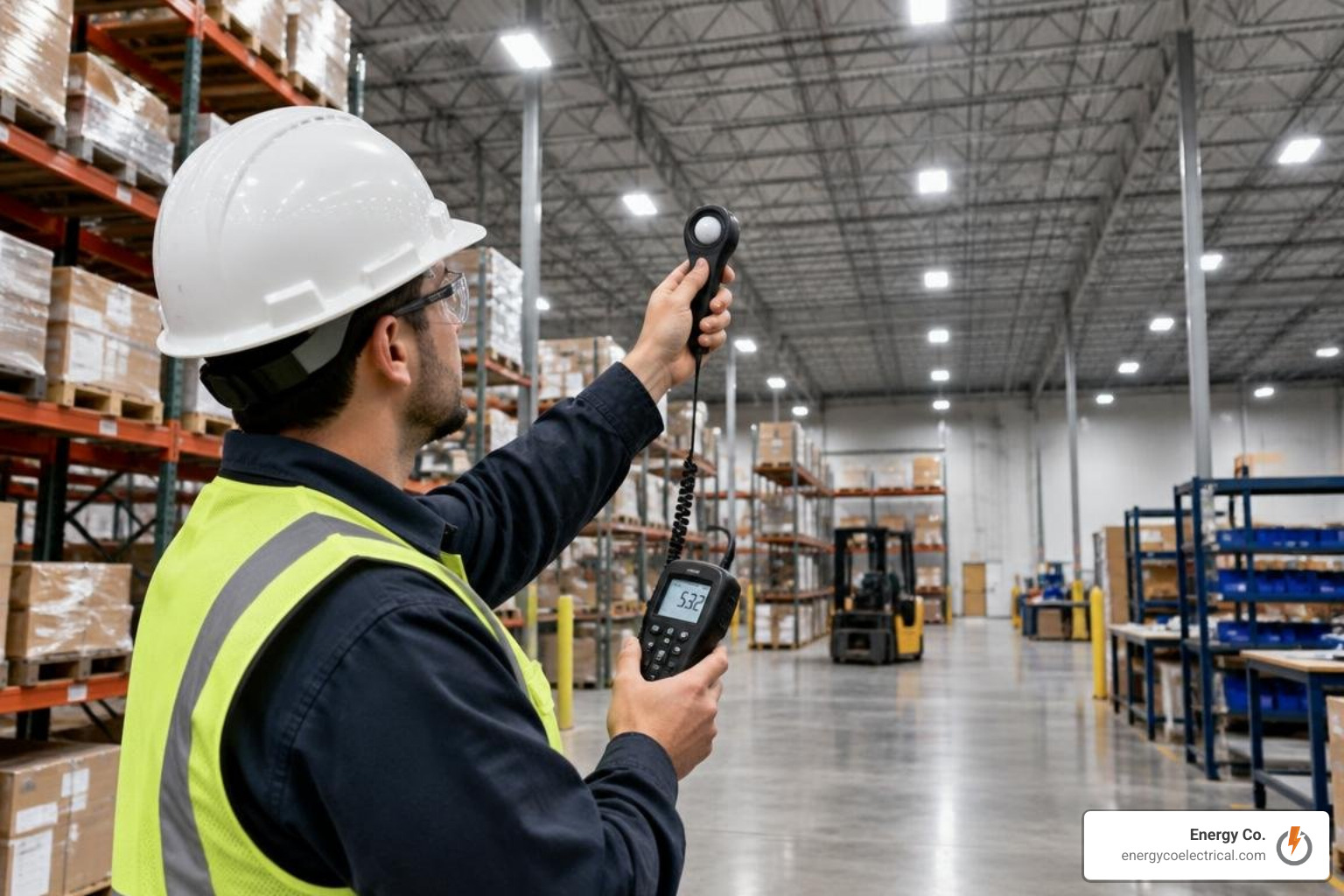
The return on investment (ROI) extends far beyond lower utility bills. Commercial LEDs boast an operational lifespan of 50,000 to 100,000 hours—meaning they last so long you might actually forget what a replacement bulb looks like. This extreme longevity virtually eliminates ongoing maintenance expenses, scissor lift rentals, and ladder-climbing disruptions. In high-ceiling warehouses or busy retail floors, cutting maintenance dispatches can save thousands of dollars annually.
A professional installation also delivers tangible operational gains:
- Workplace Productivity and Safety: Improved color rendering and glare reduction decrease employee eyestrain and headaches while boosting visual acuity on manufacturing floors.
- Environmental Sustainability: LEDs contain zero hazardous mercury, simplify building waste management, and directly contribute to corporate decarbonization goals.
- Dispelling Cost Myths: A common misconception is that LED retrofits carry prohibitive upfront costs. When factoring in utility rebates, tax deductions, and rapid energy payback, these projects frequently generate positive cash flow within months.
Real-world federal initiatives mirror these results. For instance, the ESPC ENABLE Project at U.S. Department of Energy Headquarters Reduces Lighting Energy Use by roughly 50 percent across massive square footage, proving that modern lighting engineering pays for itself at scale.
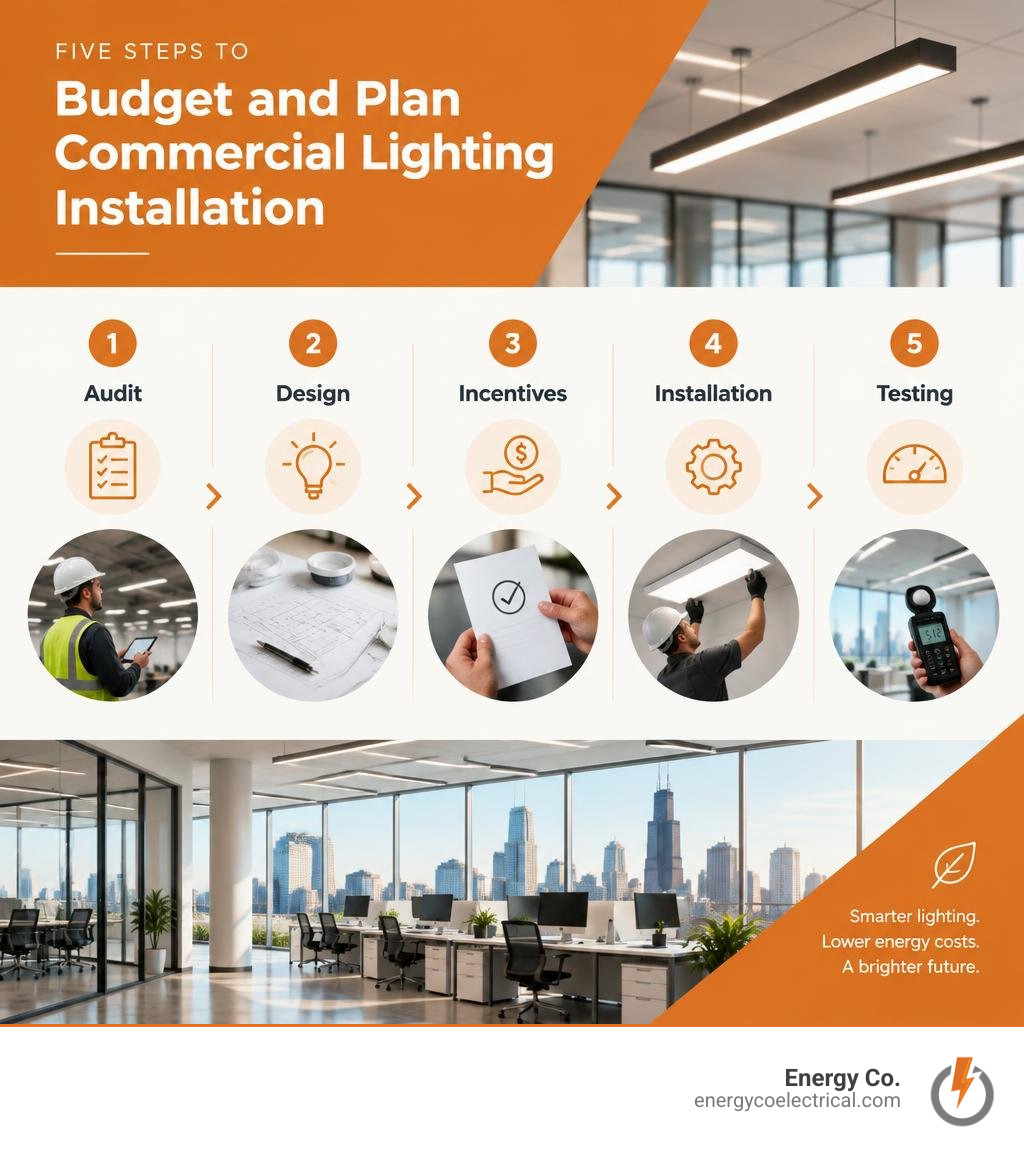
The 5-Step Process for Planning Your Commercial Lighting Upgrade
Budgeting and executing a lighting project requires careful planning to prevent scope creep, code delays, or facility downtime. Following a structured project roadmap ensures every dollar is accounted for from audit to commissioning.
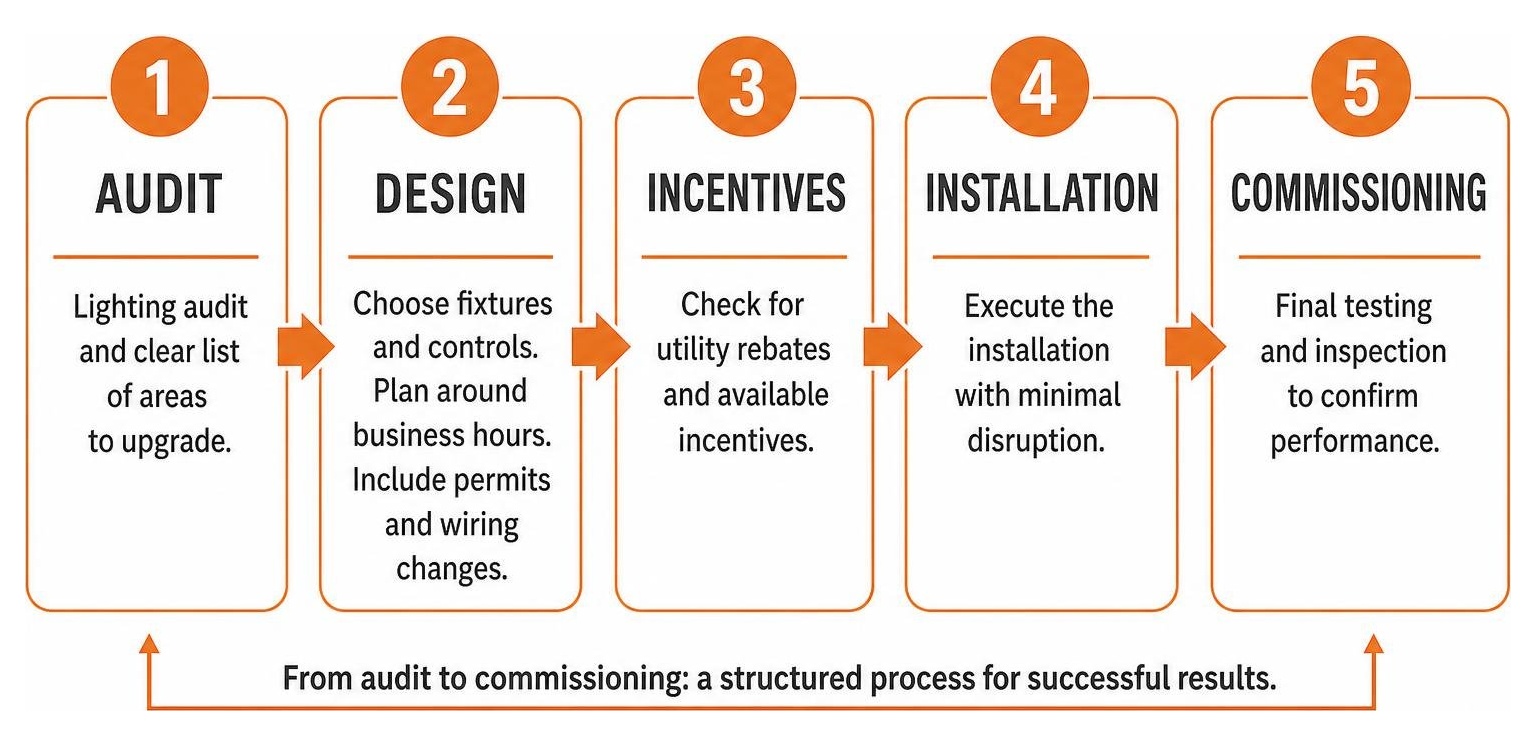
Step 1: Comprehensive Energy Audit and Photometric Assessment
Every successful lighting strategy begins with a thorough facility audit. We calculate your current baseline energy usage, evaluate fixture hours, and identify problem areas with uneven illumination.
Using computer-aided design (CAD) software and lighting rendering tools like AGI32, our team maps foot-candle distribution and lux levels across your layout. This data-driven model ensures your new design meets Illuminating Engineering Society (IES) standards before you buy a single fixture. By shining a light on commercial lighting services and retrofits, facility managers gain a precise blueprint for uniform, high-efficiency illumination.
Step 2: System Engineering and Fixture Selection
Commercial spaces demand tailored fixture specifications:
- High-Bay Fixtures: Ideal for warehouses and industrial plants requiring high lumen output and advanced heat dissipation.
- Troffers and Flat Panels: Suited for corporate offices, medical suites, and schools where low-glare, uniform light is critical.
- Architectural Luminaires: Engineered for retail environments and client-facing spaces where visual aesthetics and a high Color Rendering Index (CRI of 90+) showcase products accurately.
During this stage, we also engineer advanced controls. Implementing daylight harvesting sensors, automatic dimming, and zoned switching through chicago smart lighting the future is energy efficient architecture squeezes an additional 15 to 30 percent in energy reductions out of your system.
Step 3: Rebate Capture, Tax Incentives, and Financing
You should never pay full list price for commercial energy upgrades. Local utilities offer generous commercial rebate programs that significantly offset initial equipment and labor costs.
Navigating the paperwork can feel overwhelming, but reviewing the business guide to commercial electric solutions and incentives makes it straightforward to capture every available dollar. Combine these with federal programs like the Section 179D Energy Efficient Commercial Buildings Deduction, and you can accelerate depreciation write-offs. To maximize your return, learn how you can save green by going green with chicago commercial lighting upgrades through utility-approved contractor networks and capital leasing options that create immediate net-positive cash flow.
Step 4: Professional Commercial Lighting Installation and Electrical Rough-In
Once materials arrive and permits are approved, physical installation begins. Our licensed electricians evaluate service panels, verify breaker capacity, and install robust conduit routing designed to support both current needs and future expansions.
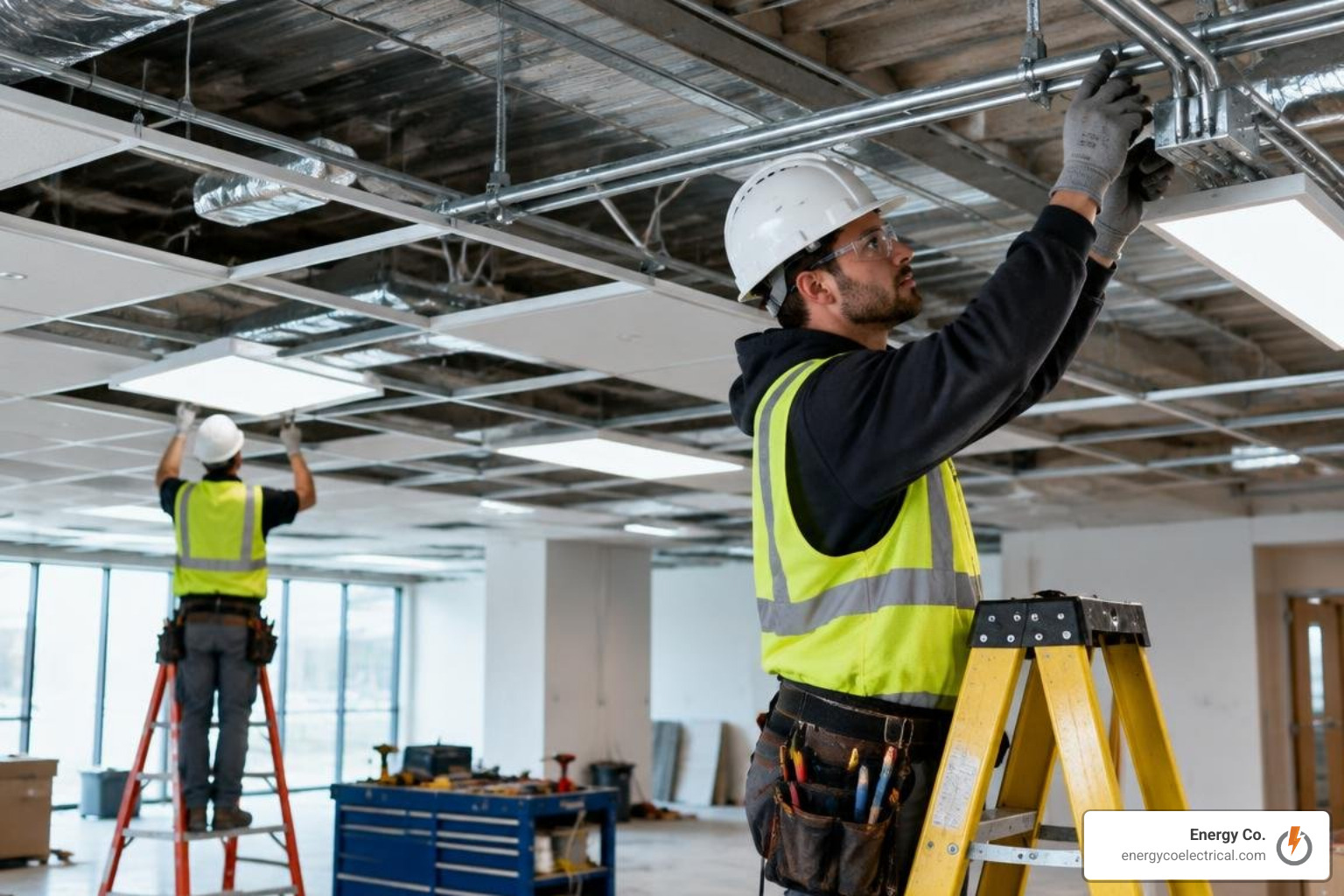
Reviewing the complete guide to commercial wiring highlights why professional electrical work matters: proper load balancing prevents tripped breakers and nuisance outages. For active facilities, work can be scheduled during off-hours, split shifts, or phased zones to guarantee zero interruptions to your daily operations.
Step 5: Commissioning, Control Programming, and Final Inspection
Physical mounting is only part of the process. In Step 5, we program occupancy sensors, calibrate ambient light thresholds for daylight harvesting, and verify multi-zone network controls.
Life-safety lighting must also be integrated. Our technicians test automatic transfer switches and battery-backup units using dedicated emergency lighting installation services for local businesses protocols. After rigorous load testing, we facilitate the final municipal electrical inspection to certify your property meets all local safety and energy codes.
Commercial Lighting Project Scope: Retrofits vs. New Construction
Choosing the right project approach depends on your building’s current electrical infrastructure, budget constraints, and long-term goals.
| Metric | Plug-and-Play LED Tubes (Type A) | Ballast-Bypass Retrofit (Type B/C) | Full LED Fixture Replacement | Networked Smart Fixtures (New Build) |
|---|---|---|---|---|
| Upfront Equipment Cost | Low | Low to Moderate | Moderate to High | High |
| Labor & Installation | Minimal | Moderate | Moderate to High | High |
| Energy Savings | 30% – 40% | 45% – 55% | 50% – 65% | 65% – 80%+ |
| Rated Lifespan | 30,000 – 50,000 hrs | 50,000 hrs | 50,000 – 100,000 hrs | 100,000+ hrs |
| Typical Payback Period | 6 – 12 Months | 12 – 18 Months | 18 – 30 Months | 24 – 36 Months |
| Best Suited For | Temporary leases, fast fixes | Existing functional housings | Aging infrastructure, full refreshes | New builds, tenant buildouts |
Turnkey Retrofits and Smart Fixture Upgrades
If your existing fixture housings, troffers, or high-bay reflectors are structurally sound, a retrofit is the fastest, most cost-effective path forward. Understanding how to retrofit led lighting the right way allows you to choose between direct-wire conversions and driver replacements.
In many settings, choosing the smart way to retrofit fluorescent lighting to led without rewiring offers a rapid upgrade path. However, removing aging magnetic or electronic ballasts altogether via direct-wire retrofits yields superior long-term reliability and eliminates future ballast failure points.
Comprehensive Commercial Lighting Installation for New Builds and Buildouts
For ground-up construction, extensive interior remodels, or tenant buildouts, starting fresh is the best approach. New construction electrical design allows for optimized circuit layouts, dedicated low-voltage control pathways, and tailored architectural fixtures.
New build designs also extend outside the four walls. Exterior security, illuminated signage, and commercial parking lot lighting can be integrated into centralized control panels, ensuring customer safety, perimeter visibility, and consistent automated scheduling from day one.
How to Vet and Select a Qualified Commercial Electrical Contractor
Commercial electrical systems operate under high voltages, complex codes, and tight business schedules. Partnering with the wrong vendor can lead to costly delays, failed inspections, and safety hazards.
When evaluating prospective contractors, verify the following qualifications:
- Licensing, Bonding, and Insurance: Ensure the contractor holds active municipal and state electrical licenses, comprehensive liability insurance, and full worker’s compensation coverage.
- Safety Protocols: Inquire about their formal safety program and OSHA compliance record. A reliable contractor maintains strict site safety standards.
- Commercial Portfolio and Local References: Look for verified experience handling facilities similar to yours, whether industrial plants, medical clinics, retail centers, or commercial offices. Working with a top rated lighting contractor in chicago expert services for your project ensures familiarity with regional building architectures and inspection requirements.
- Turnkey Project Management: Choose a team that manages the entire project lifecycle—from photometric design and permitting to utility rebate filing and post-installation warranty support through full-service commercial electrical services.
Frequently Asked Questions About Commercial Lighting
What is the typical payback period for a commercial LED lighting upgrade?
Most commercial LED installations achieve full payback within 12 to 36 months. Projects that run fixtures 16 to 24 hours per day (such as manufacturing plants, parking structures, and healthcare facilities) often see an ROI in under one year. Payback is accelerated when combining daily electricity reductions, eliminated maintenance costs, and utility rebate incentives.
How do local municipal building codes impact commercial lighting upgrades?
Local building and energy conservation codes establish strict limits on allowable Lighting Power Density (watts per square foot). Codes modeled after ASHRAE 90.1 and the International Energy Conservation Code (IECC) also mandate automatic shutoff controls, daylight responsive controls, and specific emergency egress lighting levels. Professional electrical contractors ensure every design complies with local municipal codes and passes safety inspections without delay.
Can a facility remain open during a lighting installation?
Yes. Experienced commercial electricians routinely work in active facilities without disrupting business operations. Work can be scheduled during off-hours, overnight shifts, or organized in phases across designated sections. Using rolling safety barriers and clean work practices ensures employees and customers remain completely safe and undisturbed.
Conclusion
A well-planned commercial lighting upgrade lowers operating overhead, improves workplace safety, and enhances the visual atmosphere of your property. By following a structured five-step approach—from audit and engineering to rebate processing, professional wiring, and precision commissioning—you can maximize your return on investment while avoiding unexpected costs.
At Energy Co., we bring decades of licensed expertise to commercial and industrial facilities across Chicago and the Northwest Suburbs. Whether you need a turnkey LED retrofit for an existing warehouse or a comprehensive electrical buildout for a new corporate facility, our licensed professionals ensure your project is completed on time, within budget, and backed by our satisfaction guarantee.
Visit our commercial lighting solutions page today to request your facility assessment and start lowering your operating costs.