Why the Right Electrical Installation and Maintenance Book Can Change Your Career
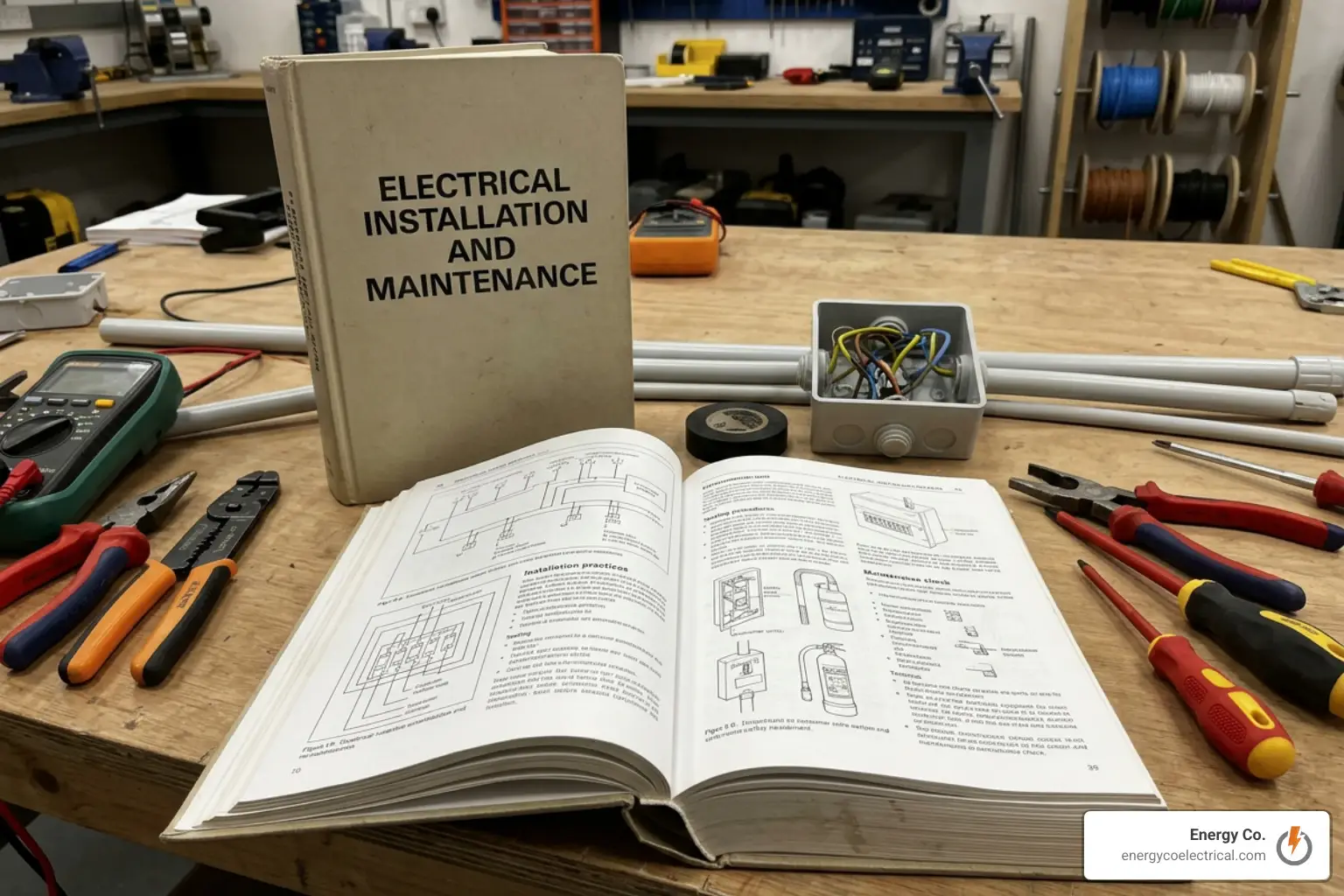
Whether you’re just starting out or have years of field experience, a great electrical installation and maintenance book is one of the most valuable tools you can own. The right book can take you from confused apprentice to confident professional — covering everything from basic wiring and earthing to advanced troubleshooting and regulatory compliance.
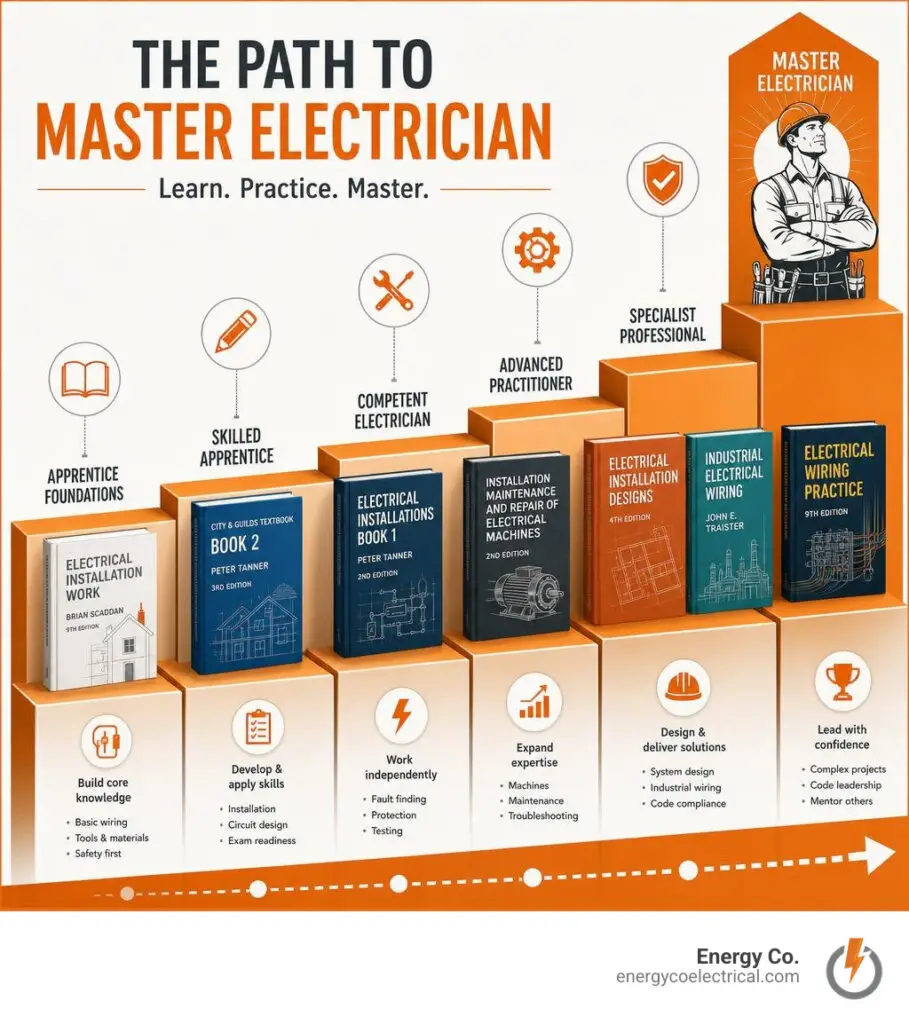
Here are the top electrical installation and maintenance books worth knowing about:
| Book Title | Best For | Pages |
|---|---|---|
| Electrical Installation Work by Brian Scaddan (9th Ed.) | Beginners & students | ~300 |
| City & Guilds Textbook: Book 2 by Peter Tanner (3rd Ed.) | Level 3 apprentices & exam prep | 520 |
| Electrical Installations Book 1 by Peter Tanner (2nd Ed.) | Level 2–3 apprentices | 480 |
| Installation Maintenance and Repair of Electrical Machines (2nd Ed.) | Engineering students & technicians | 525 |
| Electrical Installation Designs (4th Ed.) | Contractors on small installations | 272 |
| Industrial Electrical Wiring by John E. Traister | Industrial professionals | 539 |
| Electrical Wiring Practice (9th Ed.) | Australian/NZ electricians & apprentices | 22 chapters |
These books span a wide range of skill levels and specializations — from domestic rewiring to high-voltage industrial systems.
Electrical work is genuinely complex. The gap between knowing how something works and knowing how to install it safely is wide. That gap is exactly where good reference books earn their keep.
Think about it this way: the very first electrical safety rules weren’t written by safety advocates — they were written by insurance companies in the 1880s to protect themselves from fire claims. From those early “Phoenix Rules” of 1882, electrical standards have evolved into comprehensive national and international frameworks like BS 7671 in the UK and the National Electrical Code (NEC) in the US. A solid electrical book gives you that full picture — history, theory, and practical application.
I’m Michał Napieralski, a licensed electrician and the founder of Energy Co., with decades of hands-on experience in residential and commercial electrical installation and maintenance across the Chicago suburbs. I’ve consulted many an electrical installation and maintenance book throughout my career, and in this guide I’ll share the ones that actually deliver results — for beginners and seasoned pros alike.
Handy electrical installation and maintenance book terms:
Choosing the Right Electrical Installation and Maintenance Book
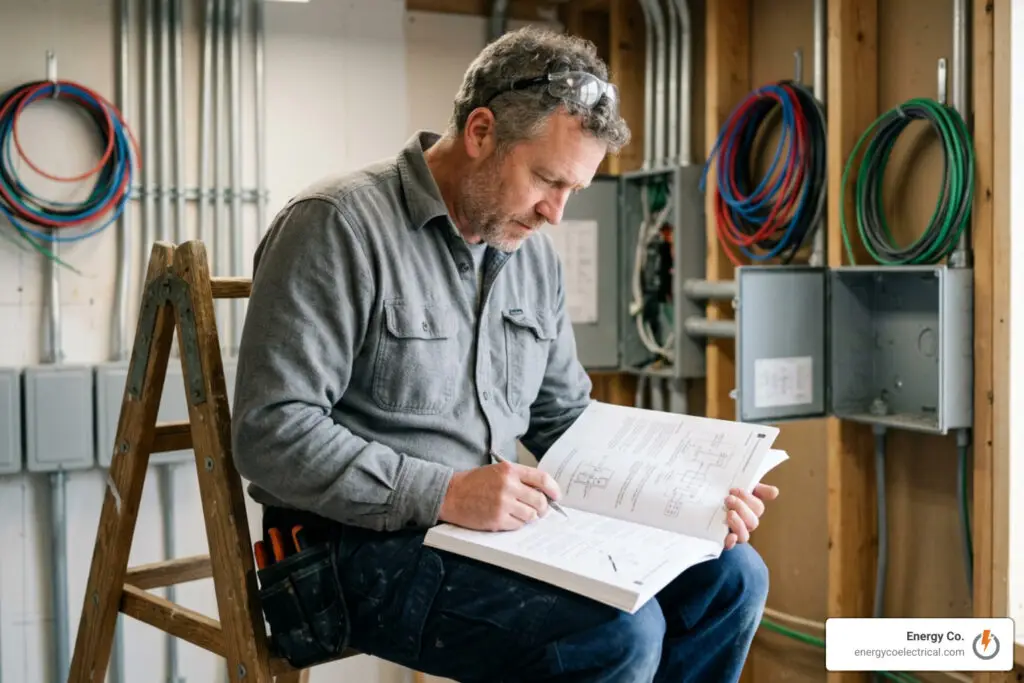
Finding the perfect electrical installation and maintenance book depends heavily on where you are in your career. If you buy a book that is too theoretical, you will find yourself staring at complex differential equations when you actually just need to know how to wire a three-way switch. Conversely, a book that only contains simple wiring diagrams will not help you pass rigorous licensing exams or design complex commercial power networks.
The best books strike a fine balance between theoretical knowledge and hands-on procedures. They do not just show you what to do; they explain why you are doing it. When you understand the “why,” you can adapt to unexpected challenges on the job site—whether you are working in a modern home in Schaumburg or upgrading the service in a historic building in Palatine.
To help you choose, let’s explore how these books structure their content and how they can guide you through both daily field challenges and professional advancement.
Essential Topics in an Electrical Installation and Maintenance Book
A truly comprehensive electrical installation and maintenance book should act as a complete roadmap for electrical systems. When evaluating a textbook, look for these critical, non-negotiable topics:
- Earthing and Grounding Systems: This is the bedrock of electrical safety. A good guide will explain the physics of earth resistance, how to measure it using specialized electrodes, and how to design systems that safely redirect fault currents.
- Electrical Safety and Risk Assessments: Books like those by Trevor Linsley emphasize systematic risk control, covering the five steps of risk assessment and the proper use of Personal Protective Equipment (PPE).
- Troubleshooting and Diagnostics: Diagnostic flowcharts and logical troubleshooting sequences are vital. You need to know how to isolate a fault systematically rather than guessing.
- Commissioning and Testing: Before a system is energized, it must be rigorously tested. Authority guides cover insulation resistance testing (using a Megger), loop impedance testing, and polarity checks.
For a deeper dive into these practical procedures, Electrical Installation, Maintenance and Testing is a fantastic resource that details the exact testing methods used to verify that a system is safe to commission.
How to Use an Electrical Installation and Maintenance Book for Exam Prep
For apprentices and students, textbooks are not just reference guides—they are the key to passing trade exams and securing professional certifications. In the United Kingdom, qualifications like the City & Guilds and EAL courses require a highly structured understanding of electrotechnical theory and safety laws.
To prepare effectively, you should look for textbooks that map directly to your curriculum. For instance, The City & Guilds Textbook: Book 2 Electrical Installations Third Edition – Construction Books is specifically aligned with Level 3 apprenticeships and advanced diplomas. It features contextual math and English practice, end-of-chapter questions, and synoptic assignments designed to mirror actual exam conditions.
Similarly, utilizing resources like Electrical Installations – Book 1, 2nd Edition by Peter Tanner | PDF | Common Law | Occupational Safety And Health allows apprentices to master fundamental principles before moving on to complex installation design. When studying for exams:
- Do not skip the math: Practice calculations for cable sizing, voltage drop, and earth loop impedance until they become second nature.
- Focus on the “why” behind the code: Knowing the exact regulation number is helpful, but understanding the physical hazard the regulation prevents is what makes you a great electrician.
Top Recommended Books for Electrical Installation and Maintenance
Let’s take a closer look at the specific books that have shaped the industry. Over the years, several authors have established themselves as the gold standards for electrical education.
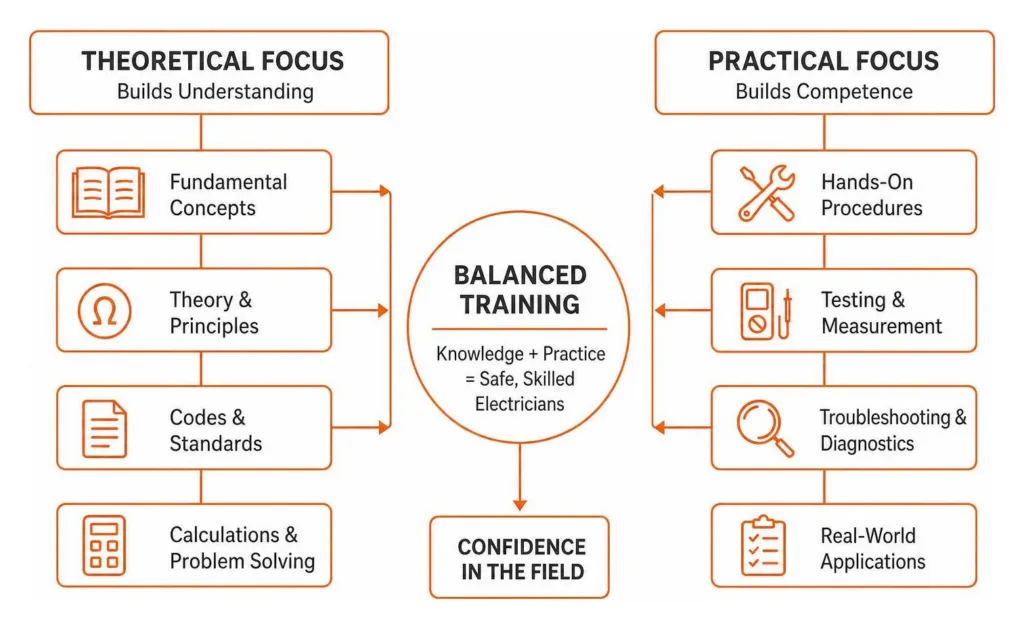
Whether you need a book focused on design, a practical on-site reference, or a deep dive into industrial machinery, these authors provide the structure you need.
Best Books for Beginners and Apprentices
If you are just starting out, you want a book that avoids dense jargon and explains concepts step-by-step.
- Brian Scaddan’s Electrical Installation Work (9th Edition): This book is famous for its subject-led approach. Instead of strictly following a dry syllabus, Scaddan writes in a conversational, highly accessible style. It is perfect for those learning from scratch, covering basic design, installation, and testing, while incorporating modern elements like LED lighting installations.
- Trevor Linsley’s Advanced Electrical Installation Work: This is an excellent companion text. Linsley does a brilliant job of tracing the history of electrical supply and explaining the practical application of safety laws, making complex legal frameworks easy to digest.
To supplement your reading with quick, highly practical tips on what to do (and what not to do) when you are first handling tools, check out our guide on Electrical Repairs Dos and Donts for Beginners. Once you have mastered those basics, you can move on to understanding the core concepts of home circuitry with our A Comprehensive Guide to Rewiring Basics.
Authoritative Guides for Advanced Professionals
For experienced journeymen, industrial technicians, and electrical contractors, beginner textbooks will not suffice. You need advanced references that tackle complex engineering calculations, high-capacity systems, and niche installation designs.
- John E. Traister’s Industrial Electrical Wiring: Design, Installation, and Maintenance: This is a purely practical, problem-solving manual. Traister completely bypasses basic theoretical discussions to focus on real-world issues. It is packed with details on electrical calculations, overcurrent protection, low-voltage terminations, and wiring methods for heavy electric motors.
- Alan Smith’s Electrical Installation Designs (4th Edition): Published in association with Wiley, this 272-page book is highly popular among contractors. You can find more details on this reference at Electrical Installation Designs, 4th Edition | Wiley. It is an invaluable guide for designing small-scale, highly specialized installations—such as marinas, caravan parks, street lighting, and agricultural projects—while ensuring strict compliance with evolving wiring regulations.
- McGraw Hill’s Electrical Wiring Practice (9th Edition): Serving the Australian and New Zealand markets, this comprehensive text bridges the gap between traditional power wiring and modern telecommunications. It features dedicated chapters on coaxial and structured copper communication cabling, reflecting the modern electrician’s expanding role. Learn more about this resource at Electrical Wiring Practice 9th Edition — McGraw Hill Australia New Zealand.
Key Differences: Residential, Commercial, and Industrial Guides
As you advance in your career, you will quickly realize that residential, commercial, and industrial electrical systems are entirely different beasts. A book that excels at explaining how to wire a smart home will be of little use when you are standing in front of a 4000A industrial switchboard.
The primary differences lie in the voltage levels, the complexity of the distribution networks, and the environmental conditions the equipment must withstand.
Residential Wiring and Smart Home Systems
Residential wiring books focus heavily on single-phase systems, branch circuit design, and increasingly, smart home automation and green energy. Modern residential guides cover:
- EV Charger Installations: Performing load calculations to ensure a home can support a Level 2 charger without overloading the main panel.
- Smart Home Integration: Wiring structured media centers, home automation hubs, and energy-efficient LED retrofits.
For homeowners and apprentices looking to understand these residential upgrades, we recommend checking out The Homeowner Guide to Buying a 200 Amp Electrical Panel to understand capacity needs. If you are planning an upgrade, our Step-by-Step Guide to Electric Panel Upgrade Costs breaks down the financial side.
Additionally, if you are looking into the logistics of full home upgrades, explore The Ultimate Guide to 1500 Sq Ft House Rewiring Costs or learn how to modernize a home’s aesthetic and efficiency with our Upgrade Your Ceiling a Step-by-Step Recessed Lighting LED Retrofit Guide.
Commercial and Industrial Power Distribution
Commercial and industrial guides operate on a completely different scale. They deal with high-capacity power distribution, three-phase systems, and heavy-duty machinery.
- Commercial Systems: These typically range from 120V to 480V, with service capacities running from 200A up to 4000A. Textbooks in this category focus on commercial conduit bending, three-phase load balancing, transformer installation, and emergency standby systems.
- Industrial Environments: Industrial guides focus on process controls, motor control centers (MCCs), and protective devices. Because downtime in a factory or distribution center in Elk Grove Village or Rolling Meadows can cost thousands of dollars per minute, these books place a massive emphasis on preventive maintenance and predictive testing. This includes teaching technicians how to use thermal imaging cameras to detect hot spots in switchgear before a catastrophic failure occurs.
Addressing Wiring Regulations and Safety Standards
No matter how neat your wiring looks, if it does not comply with local and national safety codes, it is a hazard. Every authoritative electrical installation and maintenance book must be anchored in a specific regulatory framework.
In the United States, the ultimate authority is the National Electrical Code (NEC), published by the NFPA. However, local municipalities often have their own specific amendments. For example, the City of Chicago has historic, incredibly strict electrical codes (such as Chicago Title 15 Fire Prevention) that mandate the use of metal conduit (EMT) in residential wiring where other parts of the country allow NM cable (Romex).
If you are working in the UK, your training will be built around BS 7671 (the IET Wiring Regulations). Books like Linsley’s or Scaddan’s explain how complying with these non-statutory guidelines satisfies statutory laws like the Electricity at Work Regulations 1989.
Understanding these codes is the first step in troubleshooting safely. If you are facing an unexpected electrical issue, you can read about practical diagnostic steps in our guide on The Easiest Way to Troubleshoot Electrical Problems.
Frequently Asked Questions about Electrical Installation Books
What is the most authoritative electrical installation and maintenance book for beginners?
For beginners, the most highly recommended book is Brian Scaddan’s Electrical Installation Work. Its subject-led approach makes it incredibly easy to read, and it does not bury the reader in advanced mathematics right away. For those in a structured apprenticeship, Peter Tanner’s Electrical Installations Book 1 is the gold standard for mastering basic principles and safety protocols.
How do these books address local vs. international wiring regulations?
Most textbooks are written with a specific region in mind. Books published in the UK (like those by Peter Tanner or Trevor Linsley) are strictly aligned with BS 7671 and European harmonized standards. Books published in the US focus on the National Electrical Code (NEC). It is crucial to buy a book that aligns with the regulations of the area where you intend to practice. If you are working in Chicago or the surrounding Northwest Suburbs, you must supplement these books with the specific municipal codes of your local area.
Can I learn how to troubleshoot complex industrial machinery from a textbook?
A textbook can teach you the systematic diagnostic steps, the physics of how the machines operate, and how to safely perform preventive maintenance. For example, books on industrial machines cover transformer oil purification and circuit breaker testing in great detail. However, textbook knowledge must be paired with hands-on practice. You cannot safely troubleshoot a three-phase motor or a high-capacity switchboard without field experience under the supervision of a licensed professional.
Conclusion
A great electrical installation and maintenance book is an investment in your career, your safety, and the safety of everyone who steps into the buildings you work on. From the basic principles of earthing to the complexities of three-phase industrial power distribution, these books provide the theoretical foundation that turns a standard installer into a true master of the trade.
But remember, even the best textbook cannot replace the hands-on expertise, specialized diagnostic tools, and deep local code knowledge of a licensed professional.
Whether you need a complete system installation, a complex commercial upgrade, or emergency troubleshooting in Chicago, Schaumburg, Hoffman Estates, or anywhere across Cook County, we are here to help. At Energy Co., our licensed, local experts bring decades of practical experience to every job, backed by our satisfaction guarantee.
Ready to ensure your electrical systems are safe, efficient, and fully code-compliant? Contact us today at Top-Rated Electrical Installation Service in Chicago to schedule a service with our expert team!